

Ships to you
Ships to you
SKU: AP.493
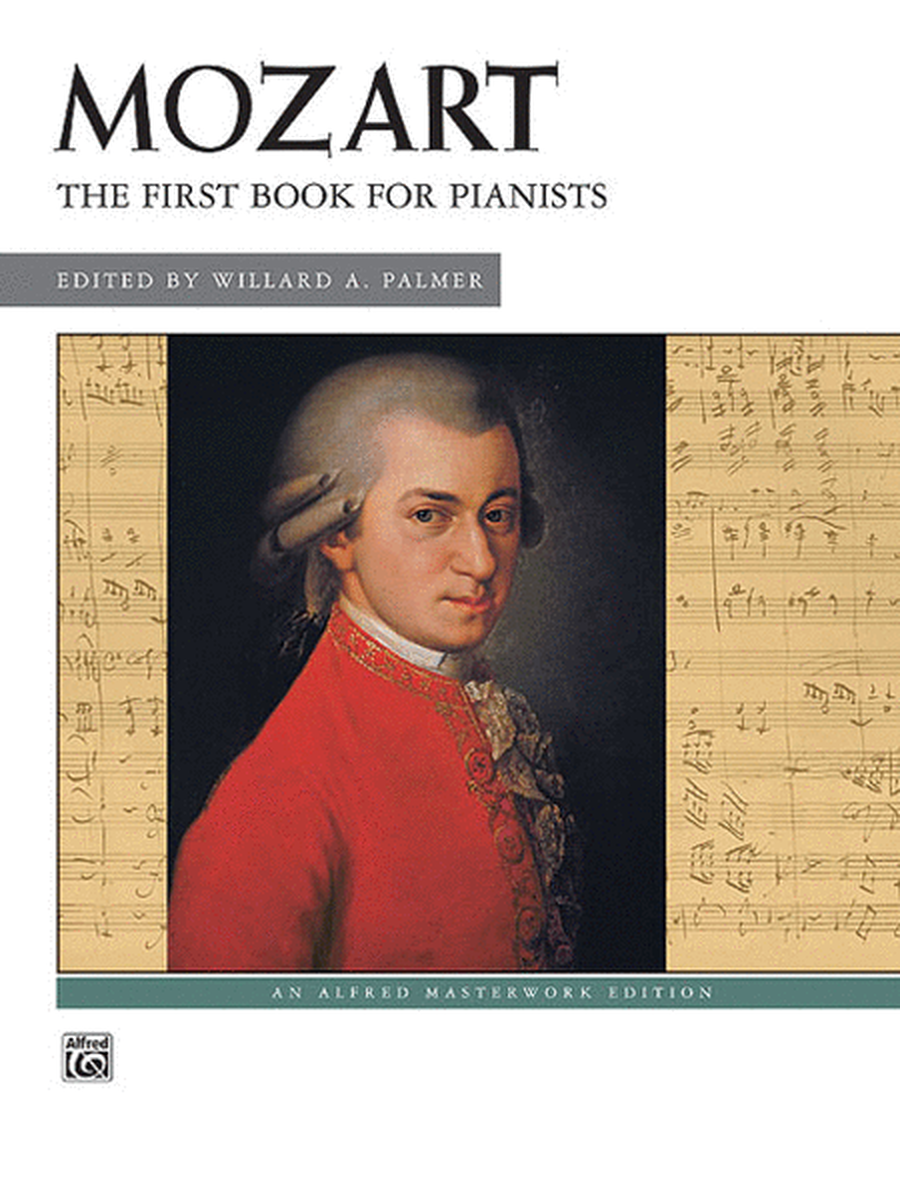
Composed by Wolfgang Amadeus Mozart. Edited by Willard A. Palmer. Graded Standard Repertoire; Masterworks; Piano Collection. Alfred Masterwork Edition. Classical; Masterwork. Book. 24 pages. Alfred Music #00-493. Published by Alfred Music (AP.493).ISBN 9780739019603. UPC: 038081017686. English.
Thoroughly researched from original sources, this volume contains 12 works in dance and other traditional keyboard forms. Mozart's easiest works from the early- and mid-compositional periods are included, together with Dr. palmer's discussion of ornamentation, staccato and legato in the composer's music. Editorial suggestions appear in the score in gray print. This is an excellent collection that introduces intermediate pianists to the mature Classical style typified in Mozart's works. This title is available in MakeMusic Cloud. A Federation Festivals 2020-2024 selection.
|
A T.
December 21, 2010
what a pleasure!
This is an ideal introduction to the playing of Mozart. Many of the pieces are from Mozart's early years, which are conversation-starters already! The defining characteristics of this music are reasonably predictable tonal progressions (including gently-predictable deceptive cadences!), frequent two-part harmony, frequent Alberti bass, tonic-dominant-tonic cadences, and rhythmic variations in the right hand.The tonal progressions are endearingly familiar, which allows concentration on mastering the difference between triplets and straight eighths and sixteenths. The accompanying CD is a great resource as well.I think that the most rewarding aspect of Mozart's music is actually his rhythmic sense, so as soon as a student is confident in key-finding throughout the grand staff, and has mastered moving both hands in broken octaves, I encourage the study of these pieces.
|
See Similar Sheet Music and Digital Downloads