Details
- Instrument:
- Piano Piano Accompaniment Tenor Saxophone Saxophone Solo
- Publishers:
- jmsgu3
- Series:
- ArrangeMe
- Format:
- Score and Part
- Item types:
- Digital
- Level:
- Early Intermediate
- Usages:
- Easter Communion School and Community
- Number of Pages:
- 7
SKU: A0.549164
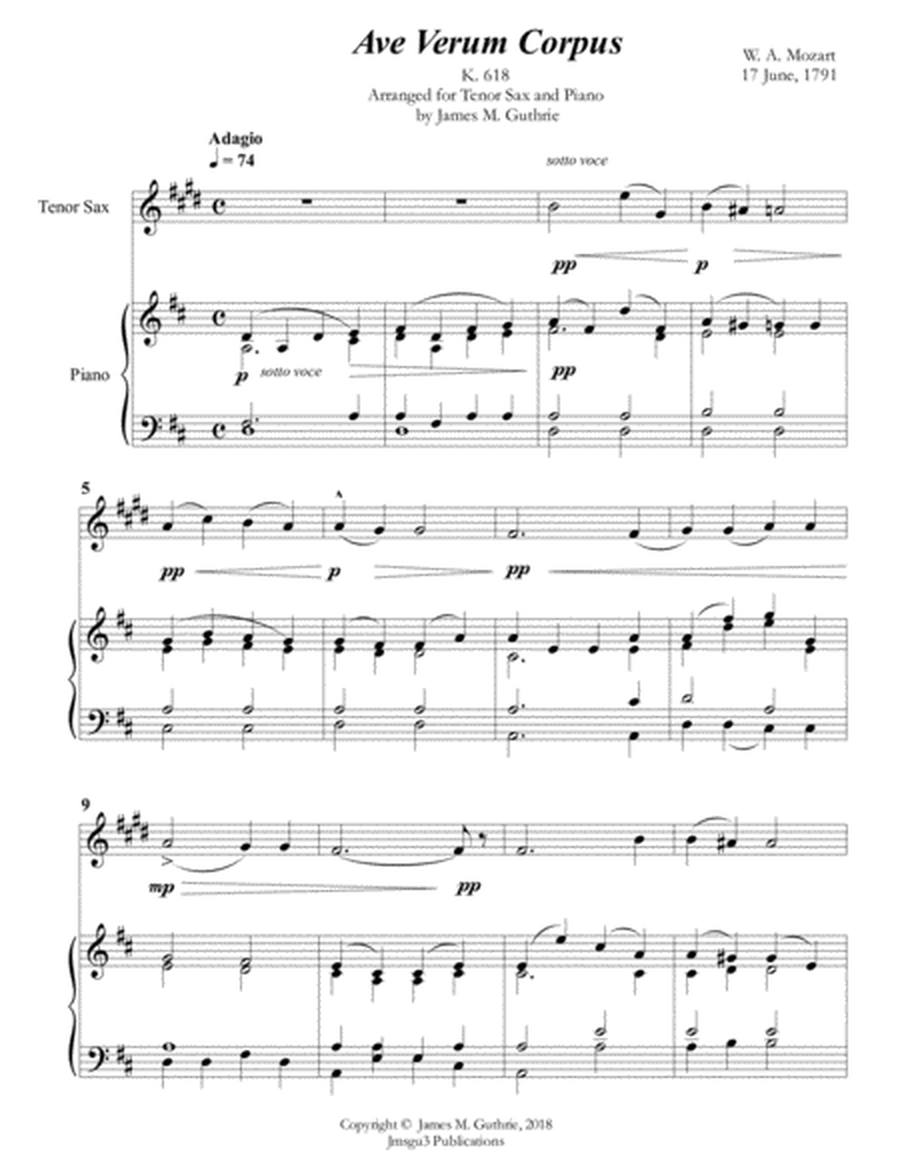
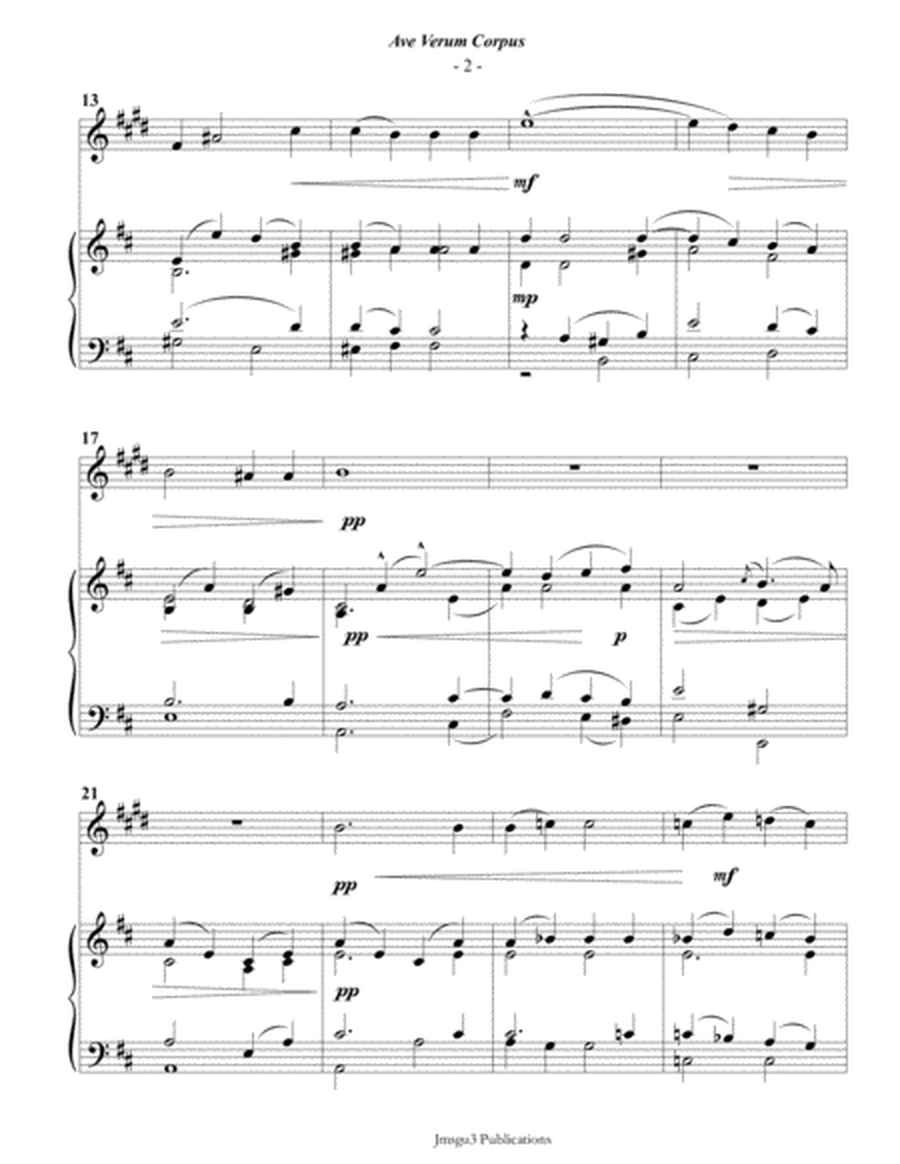
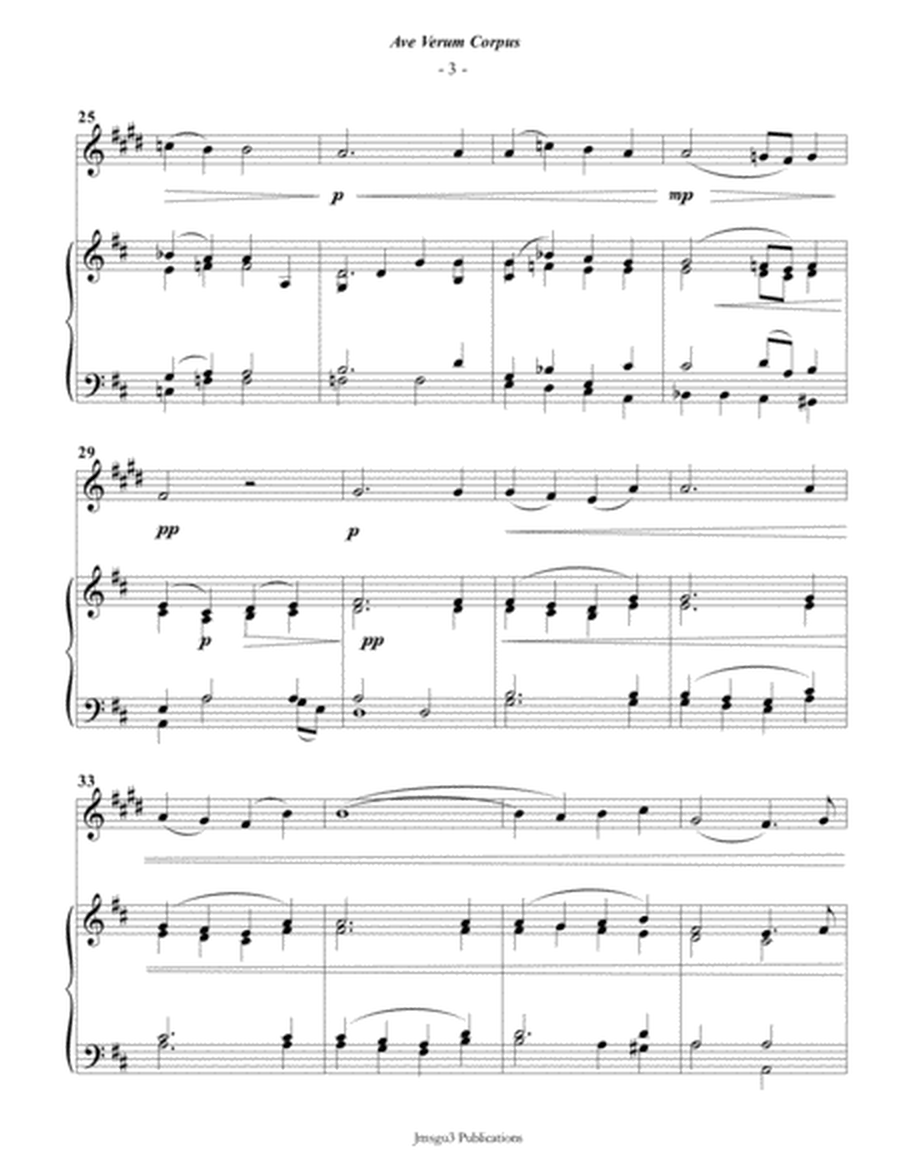
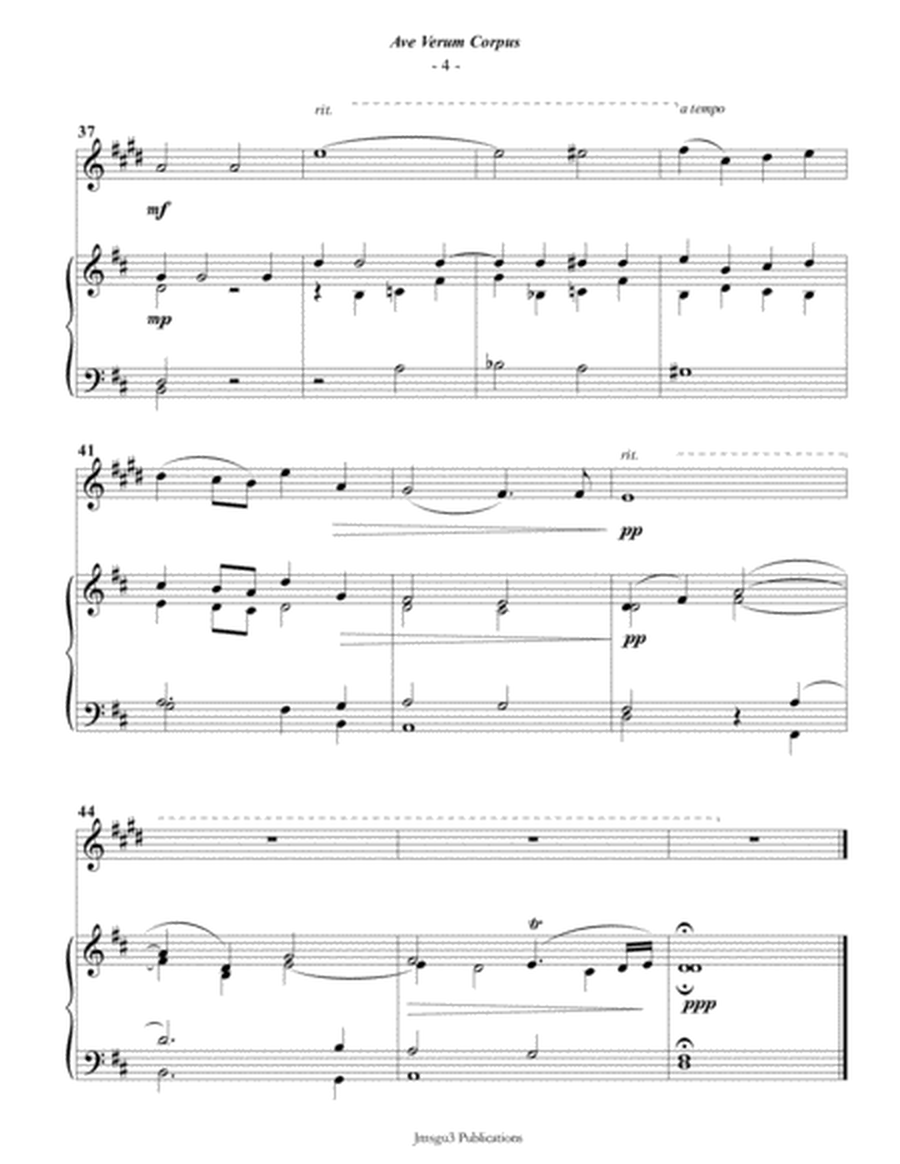
Composed by W. A. MOZART (1756 - 1791). Arranged by James M. Guthrie, ASCAP. Classical,Easter,Standards. Score and part. 7 pages. Jmsgu3 #3454789. Published by jmsgu3 (A0.549164).
Ave verum corpus
First of all, Mozart composed a most noteworthy motet in Latin entitled Ave verum corpus. This translates in English as Hail, true body. The motet is certainly listed as K.618 in the Köchel Catalog. This is a chronological catalog of Mozart’s compositions consequently published by Ludwig von Köchel. Seems like Mozart probably composed this motet in the last year of his life. Likewise, he worked on his final opera, the Magic Flute, as well as his Requiem Mass at the time. Mozart wrote it for the feast of Corpus Christi. He scored it for SATB choir, string instruments, and a small organ. Hence, while the Requiem is a more melodramatic work, the motet expresses, even more, the Eucharistic thoughts with rather simple means, well-matched for the church choir in a small town.
Early Years
Wolfgang Amadeus Mozart (1756 – 1791), was a productive and significant Austrian classical composer. Mozart displayed unusual musical capability from his earliest childhood. It seems like he was already capable on the keyboard and violin at the age of two. He started composing at age five and performed before European royalty.
Middle Period
At 17, Mozart was working as a musician at the Salzburg Royal court but grew agitated from boredom and traveled to search for a more interesting job. While visiting Vienna in 1781, he was summarily dismissed from his Salzburg job. Nevertheless, he decided to stay in the capital (Vienna), where he achieved much fame but little economic haven. Throughout his concluding years in the Capital, he composed many of his most famous works: symphonies, operas, and concertos.
Final Period
The conditions surrounding his death have been much the subject of much conjecture and mythology. He composed more than 600 works, many recognized as high points of symphonic, chamber, concertante, choral, and operatic. He is among the most everlastingly popular classical composers, and his impact is substantial on succeeding Western art music.
About ArrangeMe
This product was created by a member of ArrangeMe, Hal Leonard's self-publishing community for independent composers, arrangers, and songwriters. Discover unique arrangements of popular titles and original compositions from diverse creators. The length, difficulty, and pricing are determined by the arranger or composer.
About Digital Downloads
Digital Downloads let you instantly access sheet music on your computer, tablet, or mobile device. Print your sheet music anywhere, anytime, or play it straight from your device—no internet connection is required after download.
Each Digital Download includes a watermark with your name, purchase date, and the number of copies purchased. You may only print or use the number of copies purchased. Redistribution or unauthorized printing is prohibited.
- ArrangeMe:
- jmsgu3
- Series:
- ArrangeMe
- Instrument:
- Piano and Keyboard Piano Piano and Keyboard Piano Accompaniment Woodwinds Saxophone Tenor Saxophone Woodwinds Saxophone Saxophone Solo
- Publisher:
- jmsgu3