Details
- Ensembles:
- Concert Band
- Genres:
- March
- Composers:
- Joseph Compello
- Publishers:
- Carl Fischer Music
- UPC:
- 680160919925
- ISBN:
- 9781491161333
- Format:
- Score Set of Parts Score and Parts
- Item types:
- Physical
- Level:
- Grade 2
- Musical forms:
- March
- Artist:
- Joseph Compello
- Usages:
- School and Community
- Number of Pages:
- 163
- Size:
- 9 x 12 inches
- Shipping Weight:
- 4.25 pounds
SKU: CF.YPS250
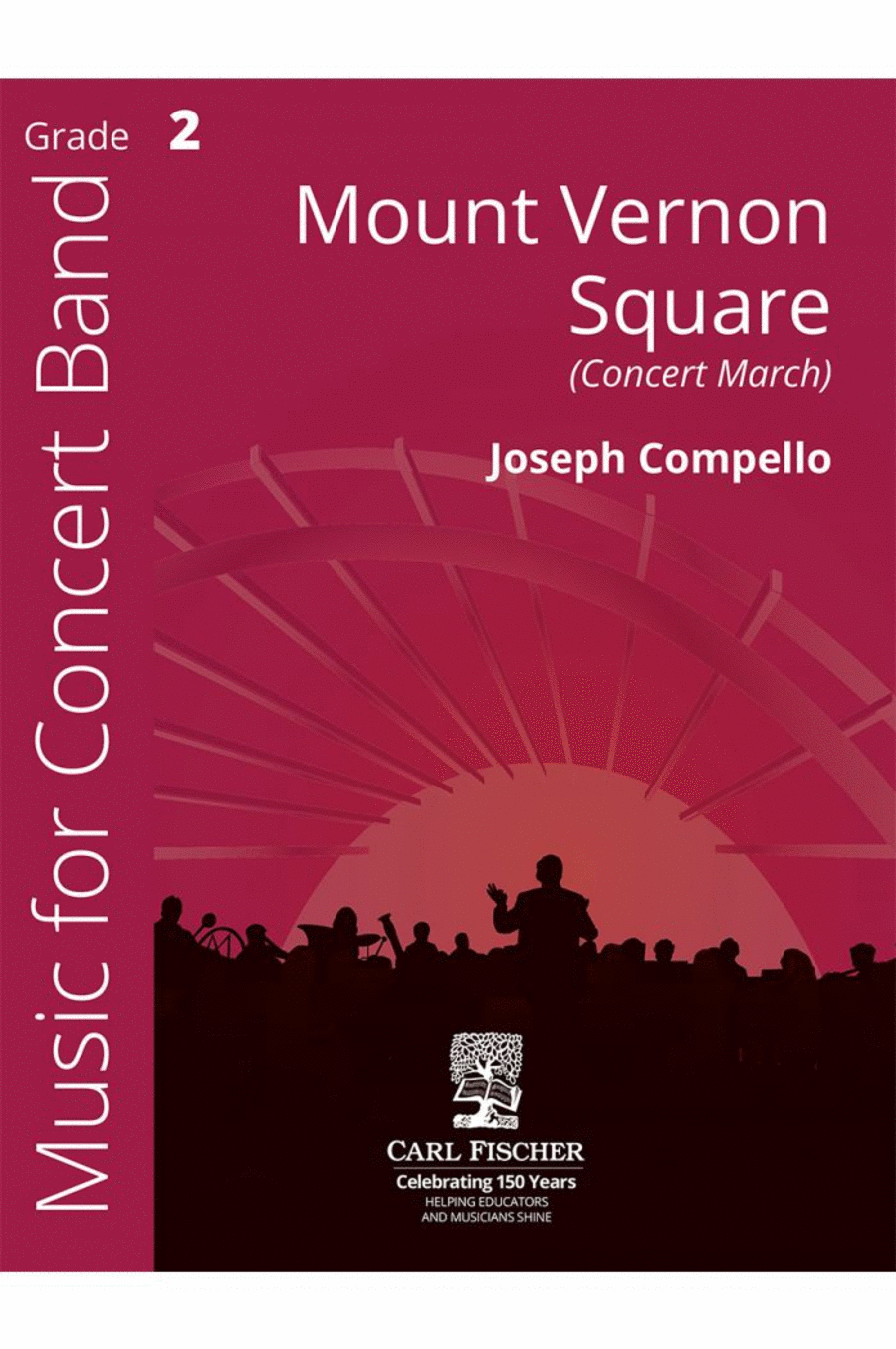
Concert March. Composed by Joseph Compello. Folio. Yps. Score and parts. 163 pages. Duration 0:02:43. Carl Fischer Music #YPS250. Published by Carl Fischer Music (CF.YPS250).ISBN 9781491161333. UPC: 680160919925. 9 x 12 inches.
Mount Vernon Square derives its title from the location of the Peabody Conservatory of Music in Baltimore, Maryland. It was here that the composer Joseph Compello took his first classes in Music Theory from Professor Haven Hensler, to whom this march is dedicated. After hearing this march performed on piano as part of final exam requirements in a Music Theory course, Professor Hensler encouraged further exploration of music composition, leading Compello into a prolific career writing pieces like this theme, now years later arranged for full band as a concert march. Performance Notes The form of the march is a standard A-BB-Trio-C-A. Melodically, much of the march is based on the figure contained in mm. 8 and 9. Tempo, articulation, and dynamics in a standard march style are essential to a successful interpretation. Pay particular attention to dynamics in the second strain at m. 41. Strive for a legato diminuendo at the transition in mm. 63-65. The melody in the Trio (m. 70) will also require smooth articulation from low brass and woodwinds. The Euphonium counter-melody will be played only during the repeat of the Trio. The Breakup Strain (m. 87) is, of course, powerfully marcato as is the reprise of the first theme at m. 109.
Mount Vernon Square derives its title from the location of the Peabody Conservatory of Music in Baltimore, Maryland. It was here that the composer Joseph Compello took his first classes in Music Theory from Professor Haven Hensler, to whom this march is dedicated. After hearing this march performed on piano as part of final exam requirements in a Music Theory course, Professor Hensler encouraged further exploration of music composition, leading Compello into a prolific career writing pieces like this theme, now years later arranged for full band as a concert march.Performance NotesThe form of the march is a standard A-BB-Trio-C-A. Melodically, much of the march is based on the figure contained in mm. 8 and 9. Tempo, articulation, and dynamics in a standard march style are essential to a successful interpretation. Pay particular attention to dynamics in the second strain at m. 41. Strive for a legato diminuendo at the transition in mm. 63-65. The melody in the Trio (m. 70) will also require smooth articulation from low brass and woodwinds. The Euphonium counter-melody will be played only during the repeat of the Trio. The Breakup Strain (m. 87) is, of course, powerfully marcato as is the reprise of the first theme at m. 109.
- More by this Composer:
- Joseph Compello Joseph Compello B-Flat Clarinet Joseph Compello Bass Clarinet Joseph Compello Snare Drum
- Artists:
- Joseph Compello
- Ensemble:
- Concert Band
- Publisher:
- Carl Fischer Music