Details
- Genres:
- Christian Classical Period
- Composers:
- Michael Haydn
- Publishers:
- Carus Verlag
- Series:
- Stuttgart Urtext Edition
- ISBN:
- 9790007091439
- Format:
- Score
- Item types:
- Physical
- Musical forms:
- Mass
- Artist:
- Michael Haydn
- Usages:
- Mass
- Main Key:
- C major
- Size:
- 8.27 x 11.69 inches
- Number of Pages:
- 72
- Shipping Weight:
- 0.71 pounds
SKU: CA.5031400
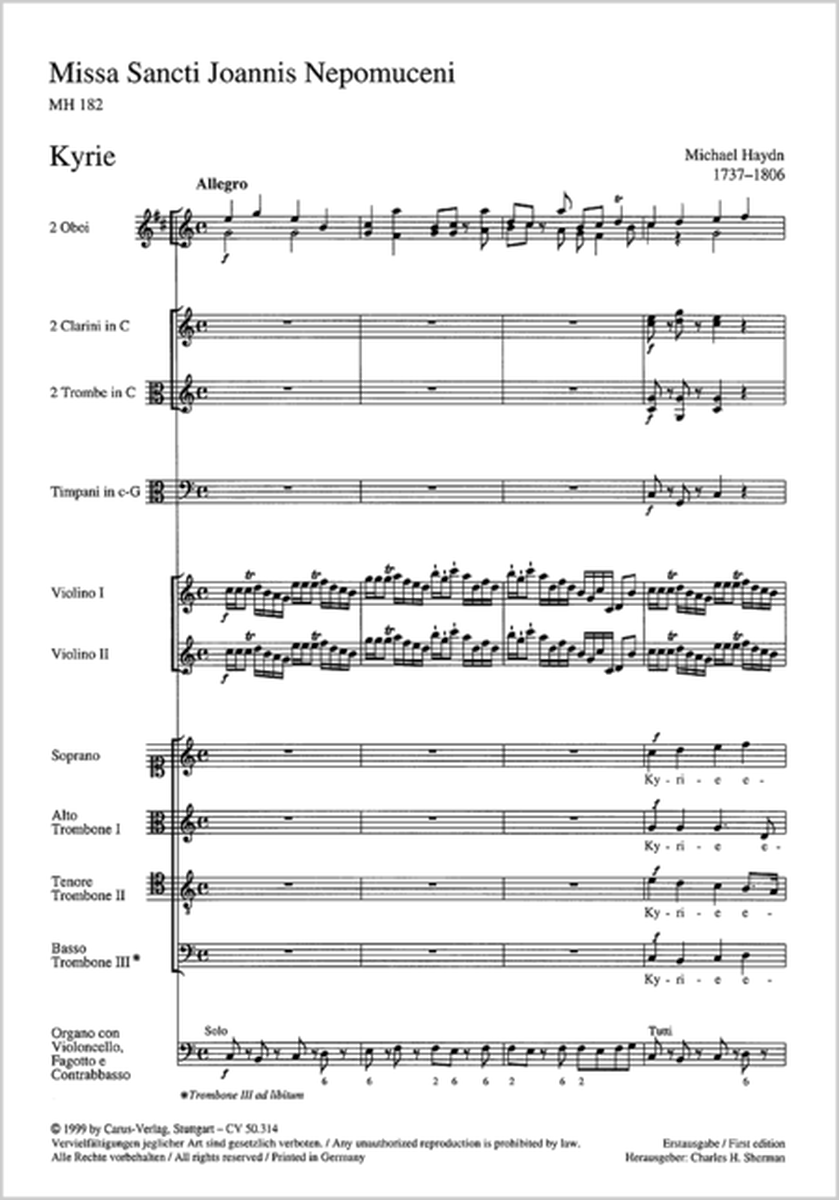
Composed by Michael Haydn. Edited by Charles H. Sherman. This edition: urtext. Stuttgart Urtext Edition: Johann Michael Haydn. Carus digital: Sheet music as PDF. Sacred vocal music, Masses, Latin. Full score. Composed 1772. MH 182. 72 pages. Duration 20 minutes. Carus Verlag #CV 50.314/00. Published by Carus Verlag (CA.5031400).ISBN 9790007091439. 8.27 x 11.69 inches. Key: C major. Language: Latin.
Haydn’s Missa Sancti Joannis Nepomuceni, dated 21 May 1772, is dedicated to the Bohemian martyr and patron "Saint of bridges," Johannes Nepomuk (ca. 1340–1393, canonized in 1729). Despite the addition of woodwinds and brass to the three-part string section, the Mass is in a comparatively simple, compact form as was expressly required by Count Hieronymus Colloredo, Haydn’s second employer in Salzburg. Even in the final sections of the Gloria and Credo Haydn forgoes not only vocal virtuosity, but also the polyphonic artifices which traditionally characterize these passages in the Mass. Like the Missa Sancti Amandi (1776), the Nepomuk Mass does not employ vocal soloists.
- More by this Composer:
- Michael Haydn Michael Haydn Choir Michael Haydn Piano Accompaniment Michael Haydn Voice
- Series:
- Stuttgart Urtext Edition
- Artists:
- Michael Haydn
- Publisher:
- Carus Verlag