Details
- Instrument:
- Double Bass Piano Accompaniment Tenor Voice Alto Voice Soprano Voice Bass Voice Voice Solo
- Ensembles:
- 4-Part SATB Mixed Choir
- Genres:
- Christian Classical Period
- Composers:
- Wolfgang Amadeus Mozart
- Publishers:
- Baerenreiter Verlag
- ISBN:
- 9790006457540
- Format:
- Vocal Score
- Item types:
- Physical
- Musical forms:
- Mass
- Artist:
- Wolfgang Amadeus Mozart
- Arrangers:
- Martin Focke
- Usages:
- Mass
- Main Key:
- C minor
- Size:
- 10.63 x 7.48 inches
- Number of Pages:
- 74
- Shipping Weight:
- 0.61 pounds
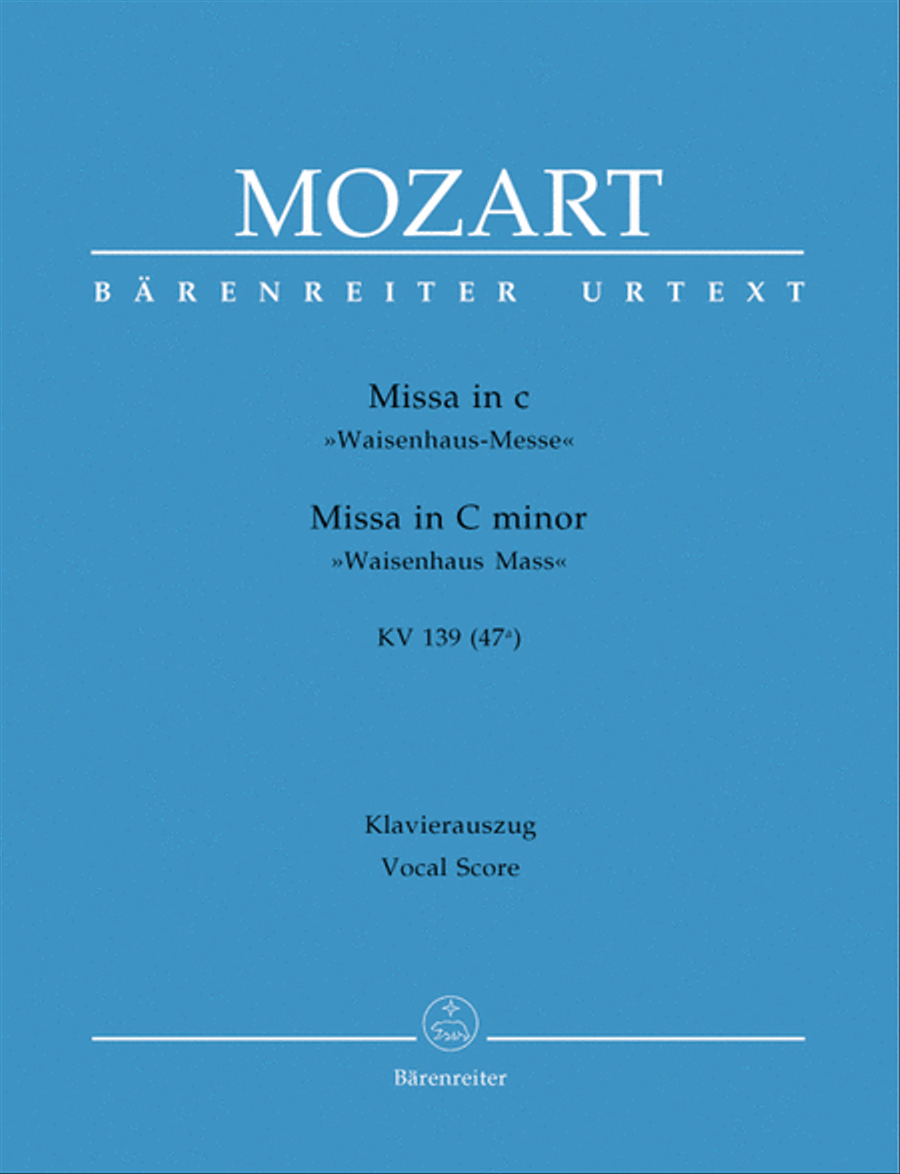
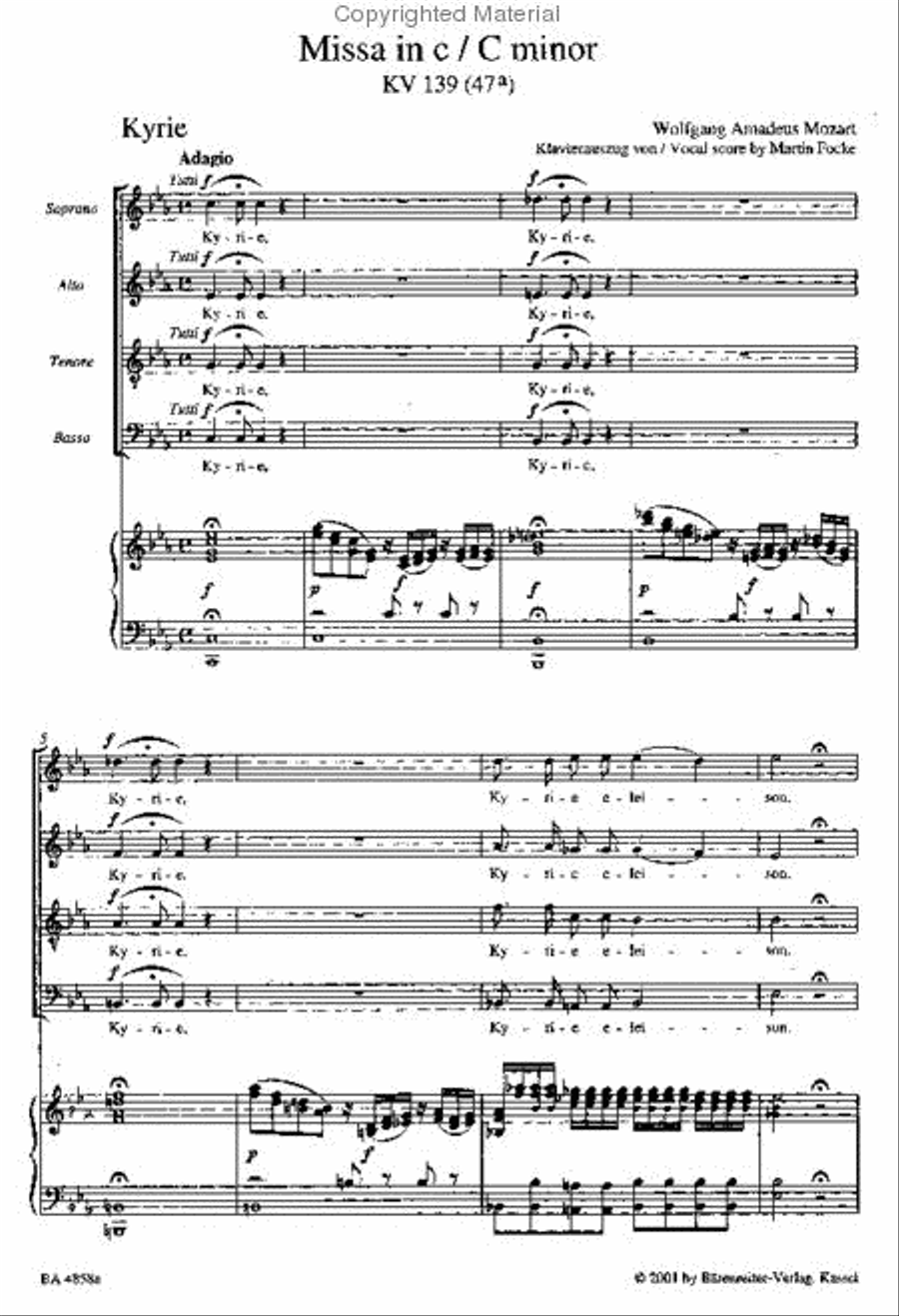
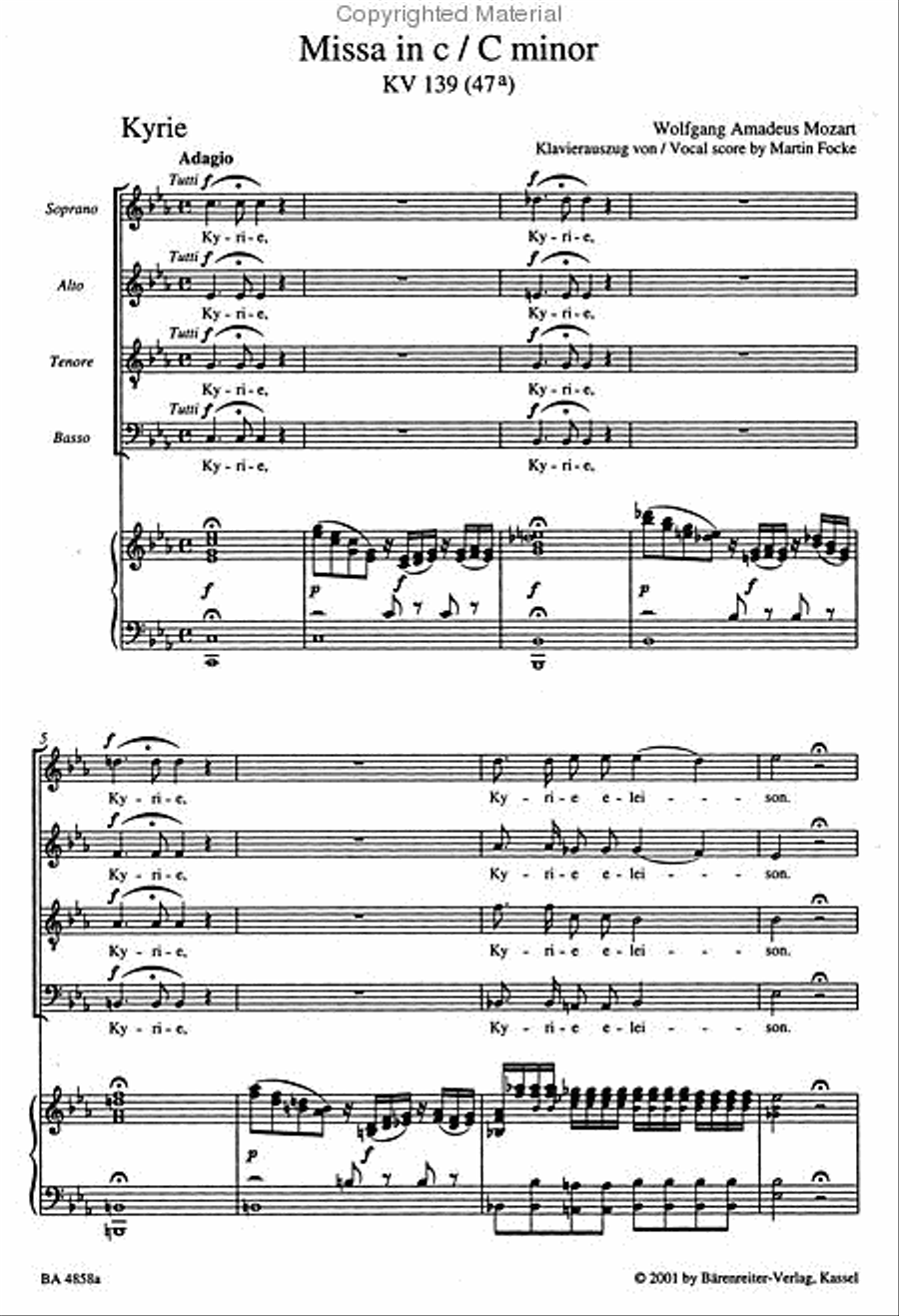
SATB voice solos, SATB choir, piano (Soprano Voice Solo, Alto Voice Solo, Tenor Voice Solo, Bass Voice Solo, SATB Choir , 2 Ob, 2 Trp, 2 Trp, 3trombone, timpani, 2 V, 2 Va, Bassi(Vc, double bass, bassoon), Org) - Level 3
SKU: BA.BA04858-90
Composed by Wolfgang Amadeus Mozart. Edited by Walter Senn. Arranged by Martin Focke. This edition: urtext edition. Stapled. Barenreiter Urtext. Messen, Klassik (Masses, Classical). Vocal Score. K. 139 (47a). 74 pages. Duration 43 minutes. Baerenreiter Verlag #BA04858-90. Published by Baerenreiter Verlag (BA.BA04858-90).ISBN 9790006457540. 10.63 x 7.48 inches. Key: C minor. Text Language: Latin.
Mozart had barely turned twelve when he composed and conducted his Missa solemnis in C minor, K.139, to inaugurate a new orphanage on Vienna's Rennweg in 1768.
This astonishing early work adheres to the form of a Neapolitan cantata mass, in which the separate movements ("Gloria","Credo"etc.) are themselves made up of self-contained choruses, ariosos and ensembles.
This frequently heard Mass is characterized by a sharp contrast between its cheerful underlying C major mood and gloomy dramatic passages in the minor mode.
- More by this Composer:
- Wolfgang Amadeus Mozart Wolfgang Amadeus Mozart Piano Wolfgang Amadeus Mozart Piano Accompaniment Wolfgang Amadeus Mozart Violin
- Instrument:
- Strings Double Bass Piano and Keyboard Piano Accompaniment Vocal Voice Tenor Voice Vocal Voice Alto Voice Vocal Voice Soprano Voice Vocal Voice Bass Voice Vocal Voice Voice Solo
- Ensemble:
- 4-Part SATB Mixed Choir
- Publisher:
- Baerenreiter Verlag