
Details
- Instrument:
- Choir
- Ensembles:
- SSATB
- Genres:
- Christian Baroque Period
- Composers:
- Gregorio Allegri
- Publishers:
- Carus Verlag
- ISBN:
- 9790007004781
- Format:
- Score
- Item types:
- Physical
- Artist:
- Gregorio Allegri
- Usages:
- Good Friday
- Main Key:
- G minor
- Size:
- 8.27 x 11.69 inches
- Shipping Weight:
- 1.25 pounds
Coro SSATB/SSAB - Grade 3
SKU: CA.153900
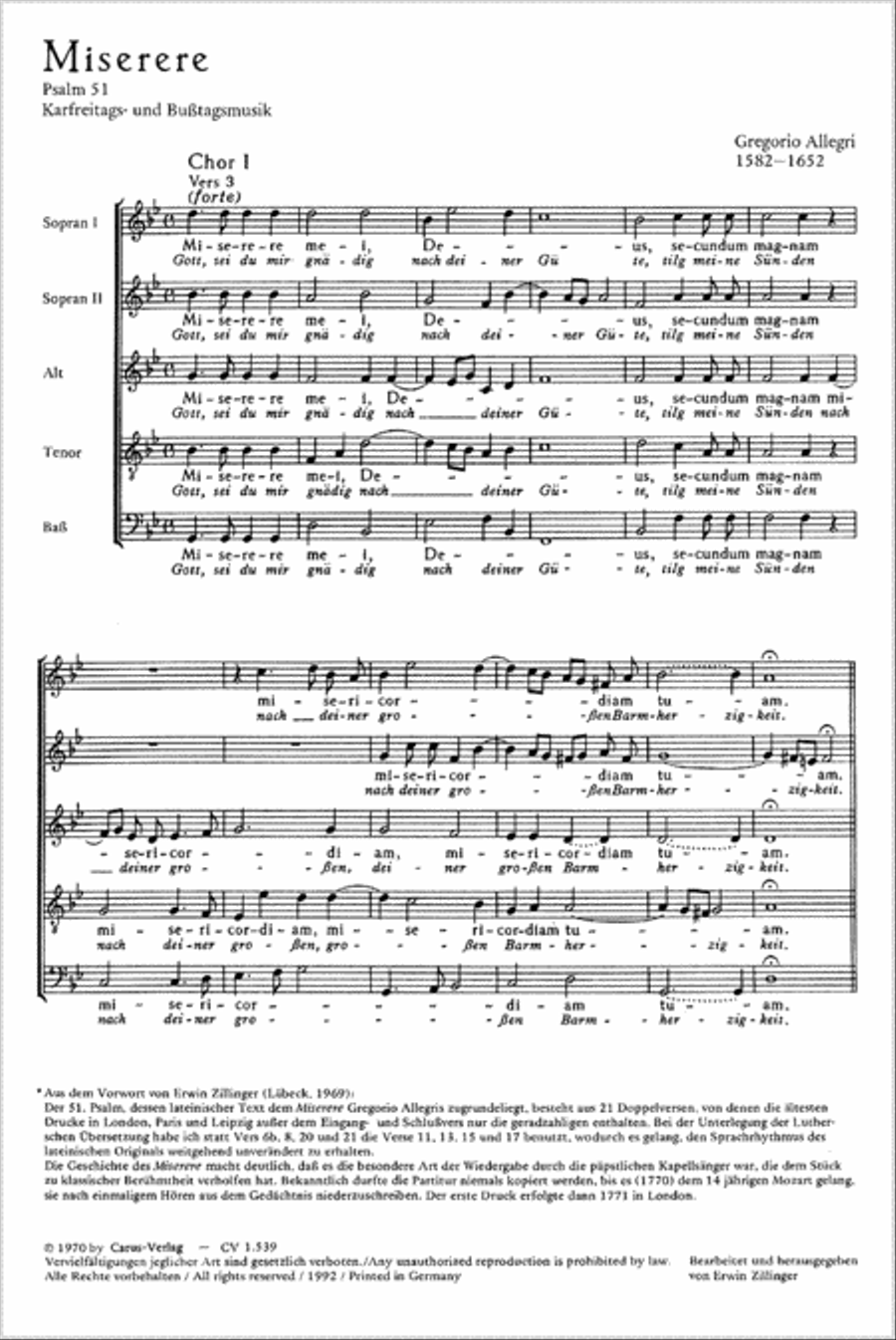
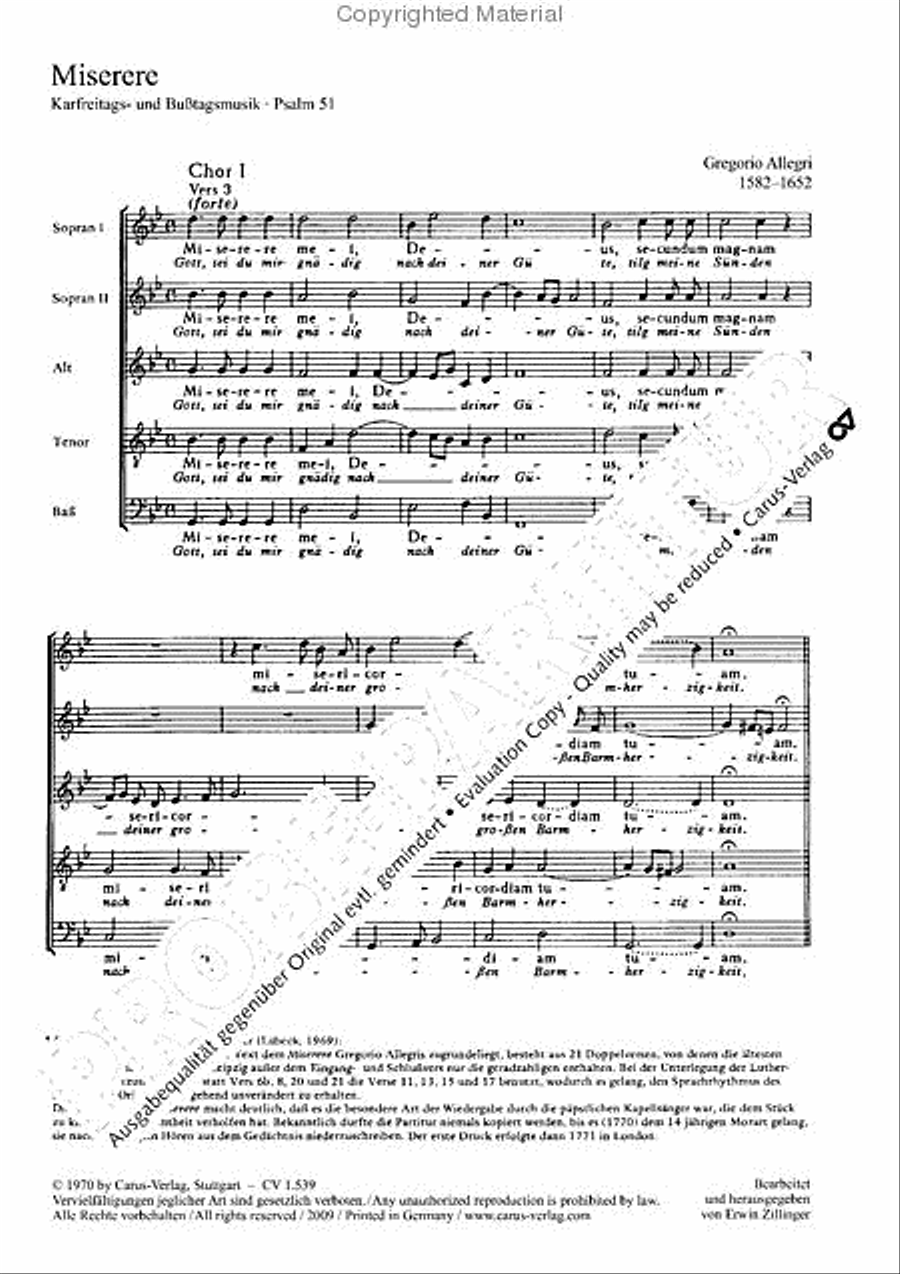
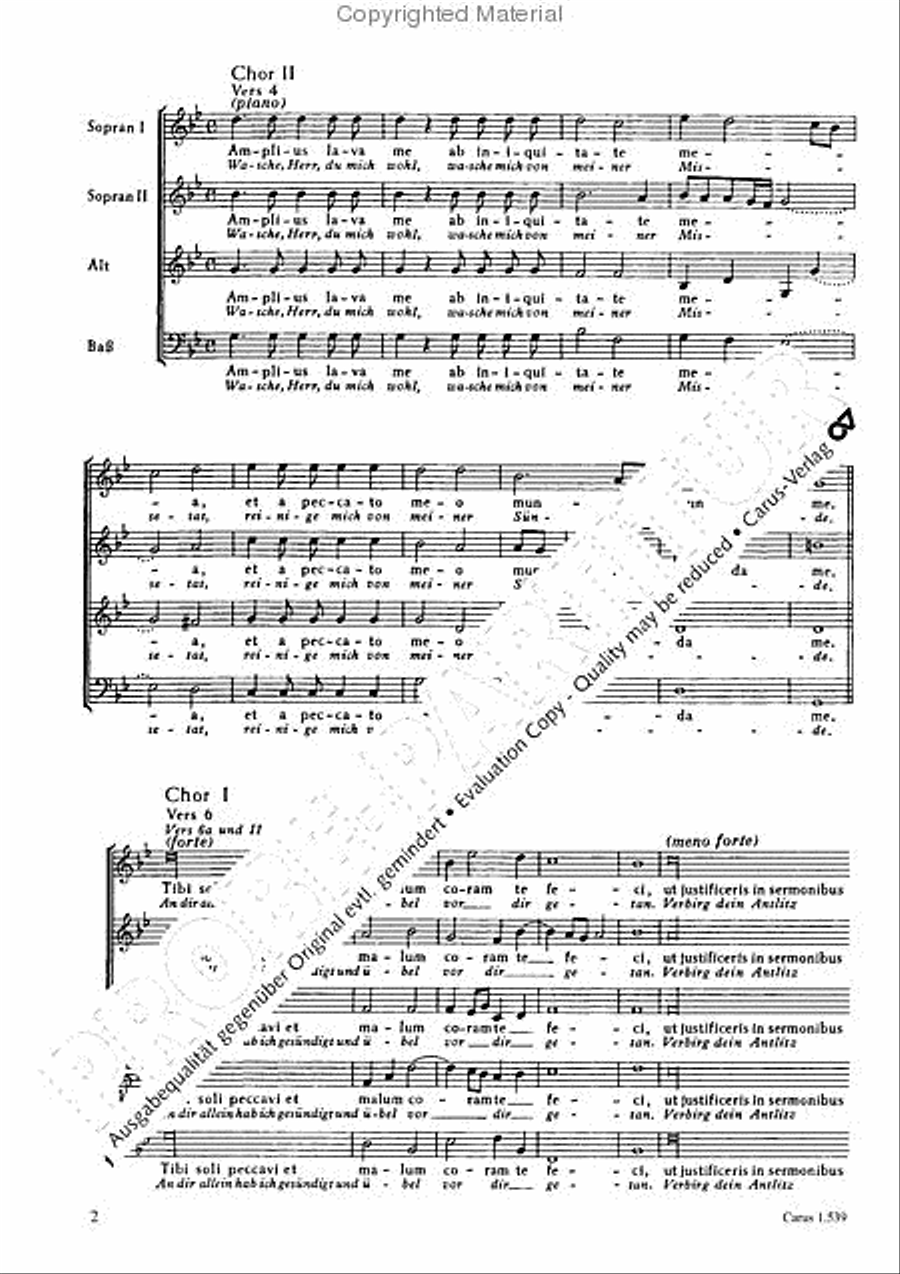
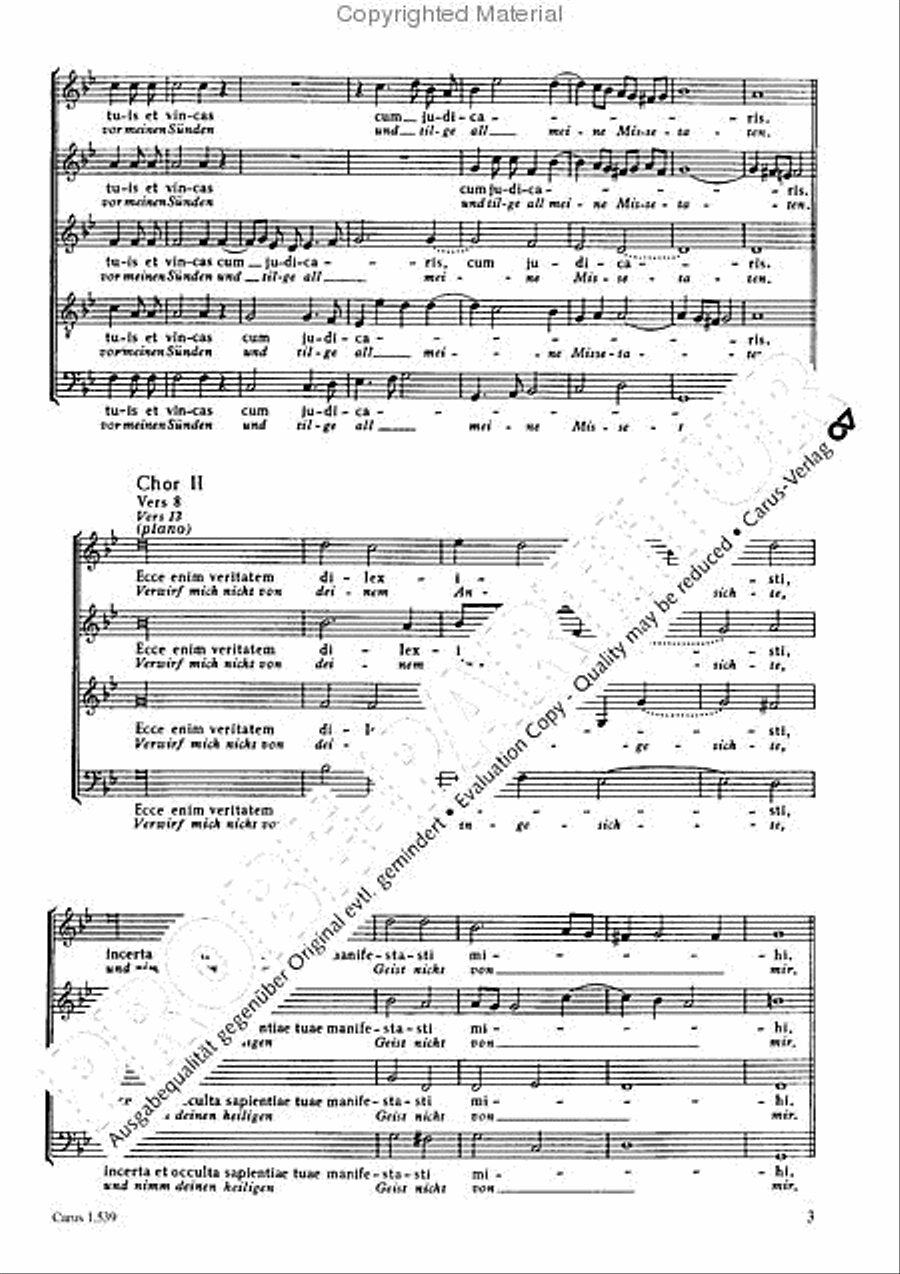
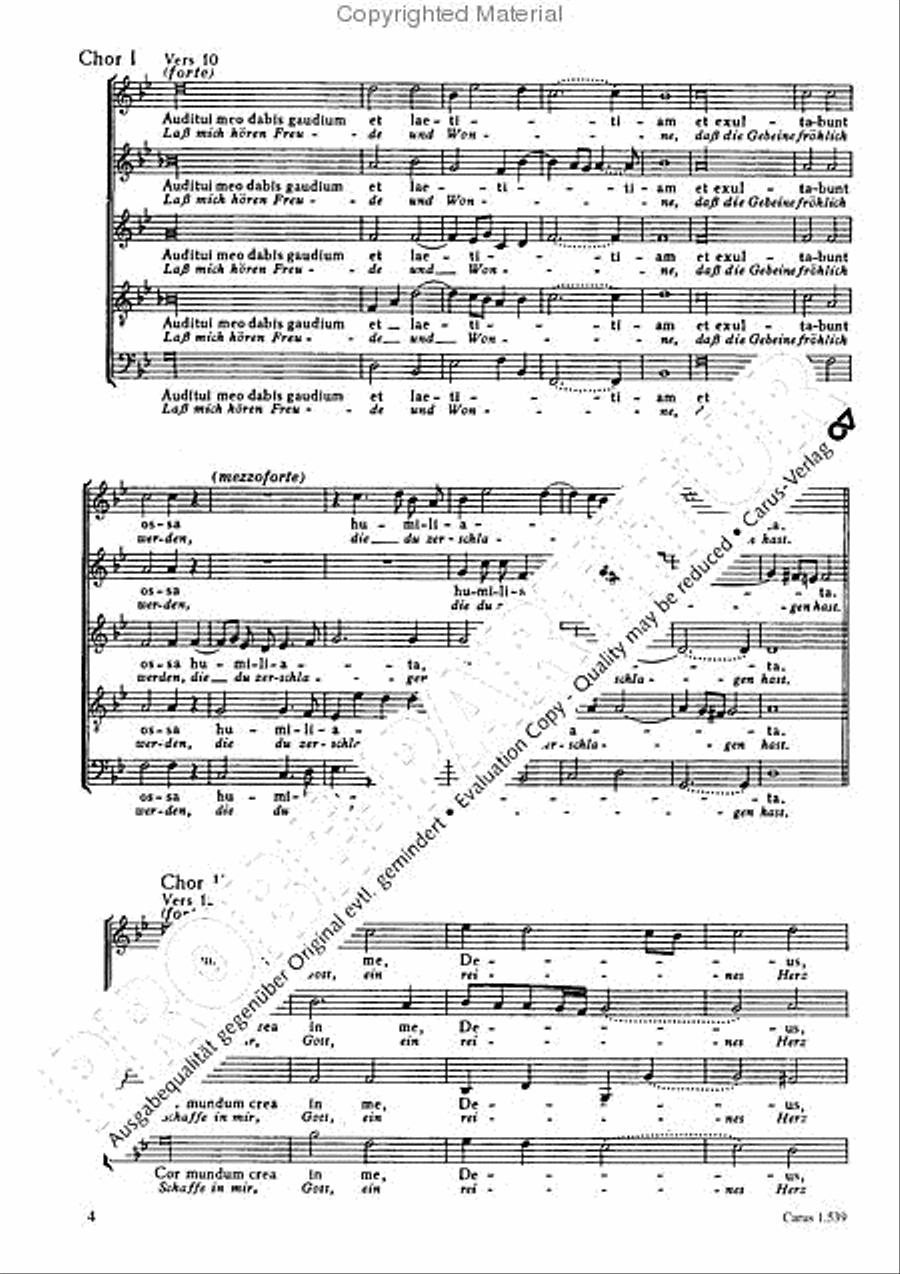
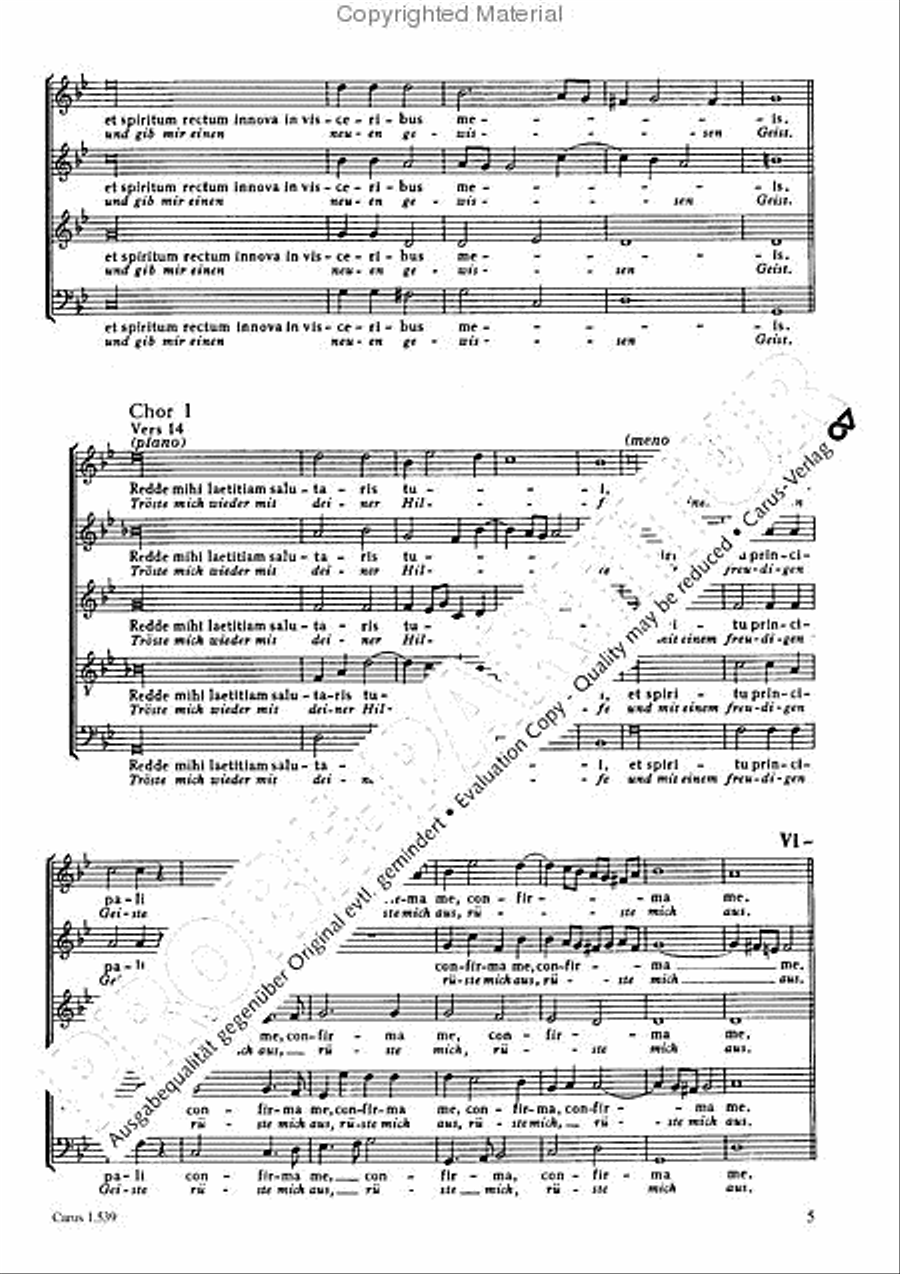
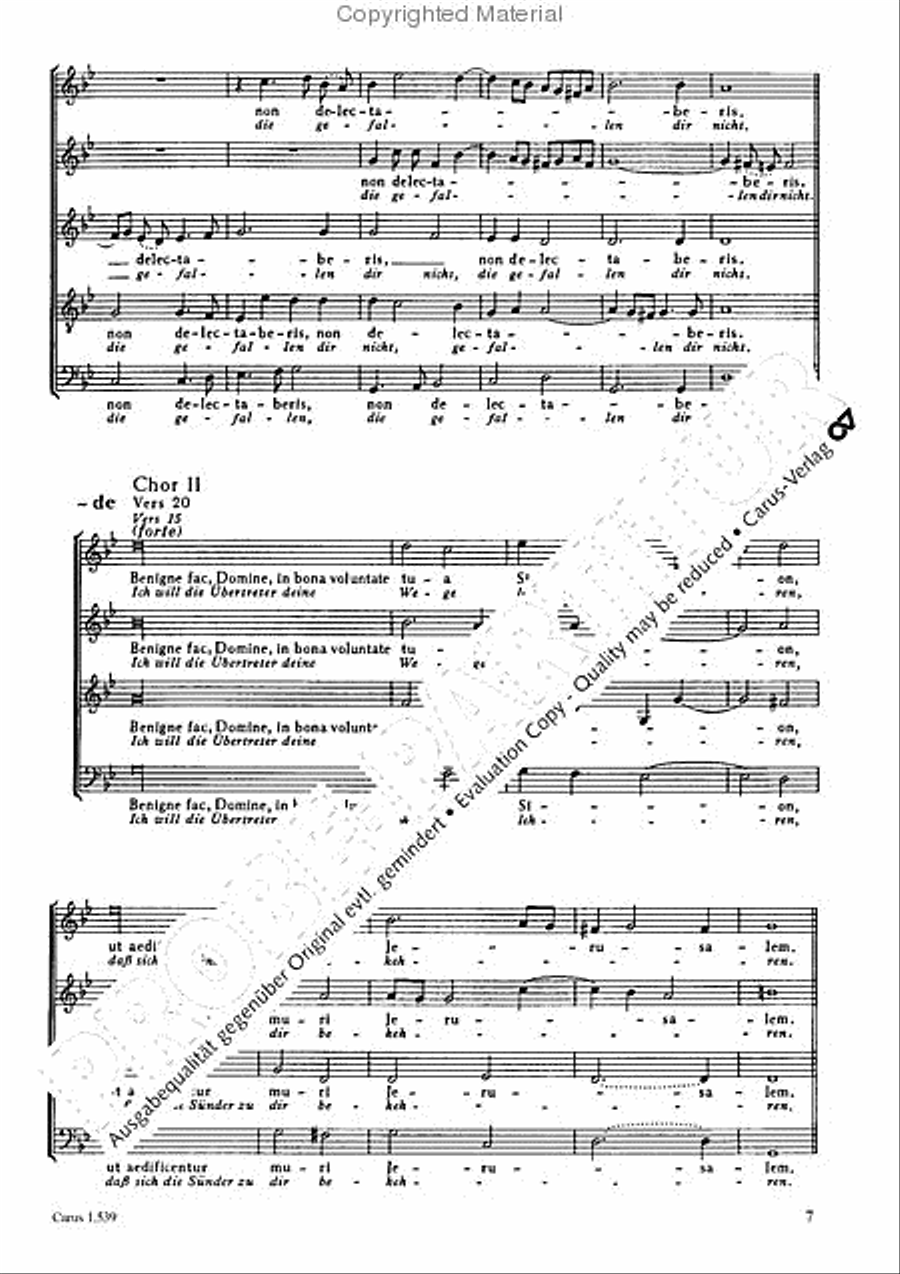
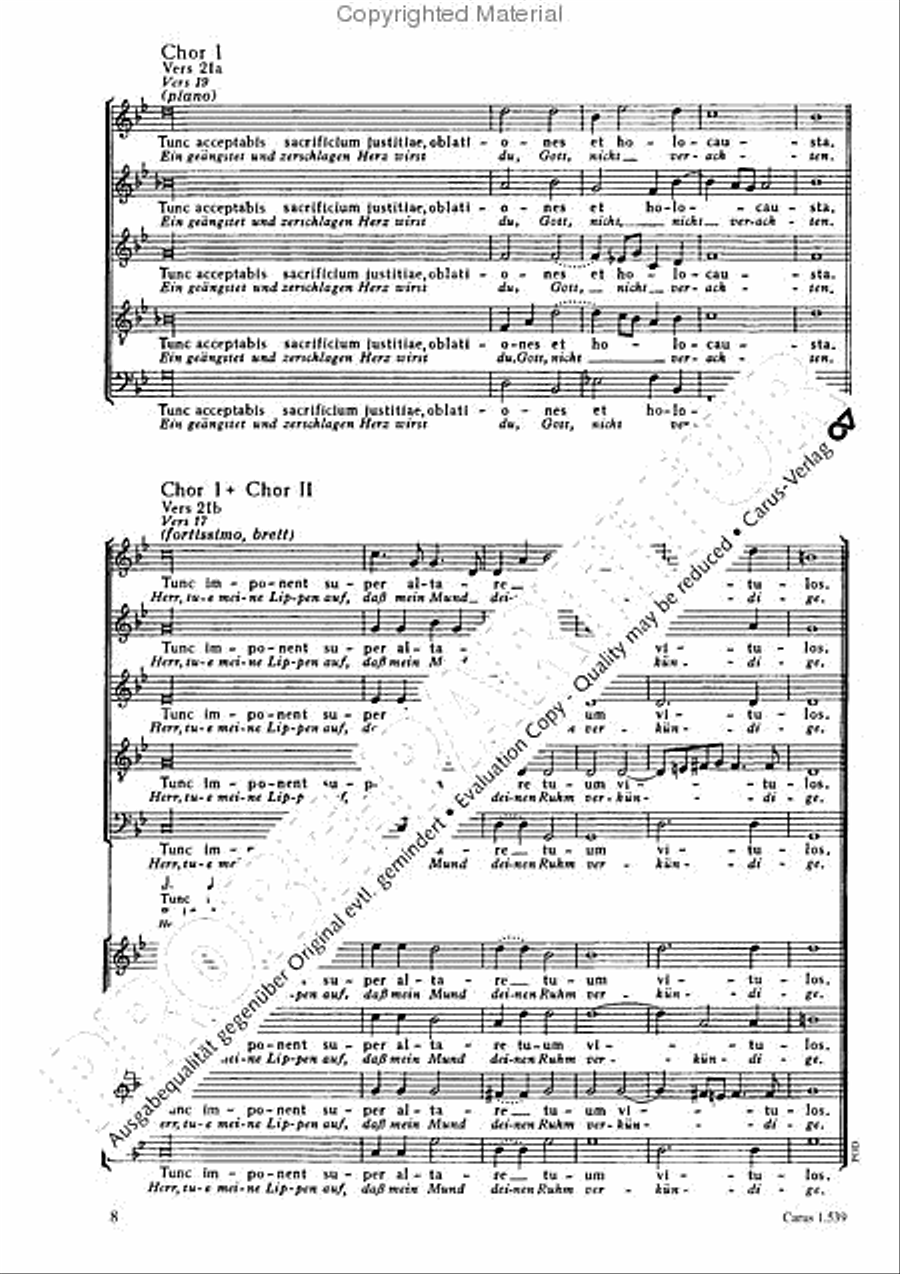
Karfreitags- und Bußtagsmusik. Composed by Gregorio Allegri. Edited by Erwin Zillinger. Arranged by Erwin Zillinger. Genres / texts frequently set to music: Sacred vocal music. Sacred, Motets; Use during church year: Lent and Passiontide. Score. Duration 12 minutes. Carus Verlag #CV 01.539/00. Published by Carus Verlag (CA.153900).ISBN 9790007004781. 8.27 x 11.69 inches. Key: G minor. Language: Latin/German.
For centuries Allegri's Miserere has captivated the world of music. Originally sung in the Sistine Chapel, it was the unique performance by the papal singers and the extraordinary abilities of the castrati that made the piece world-famous. The unrivalled combination of composition and performance lent the Miserere a mystical aura that moved generations of listeners, for instance, the young Wolfgang Amadeus Mozart and the British music historian Charles Burney in the 18th century.
- More by this Composer:
- Gregorio Allegri Gregorio Allegri Choir Gregorio Allegri Double Bass Gregorio Allegri Voice
- Artists:
- Gregorio Allegri
- Ensemble:
- SSATB
- Publisher:
- Carus Verlag