


Ships to you
Ships to you
SKU: HL.48011048
Piano Solo. Composed by Bela Bartok. BH Piano. 20th Century, Hungarian and Instructional. Instructional book. With standard notation, introductory text and instructional text. 36 pages. Boosey & Hawkes #M060080012. Published by Boosey & Hawkes (HL.48011048).ISBN 9781423493044. UPC: 073999780796. 9x12 inches.
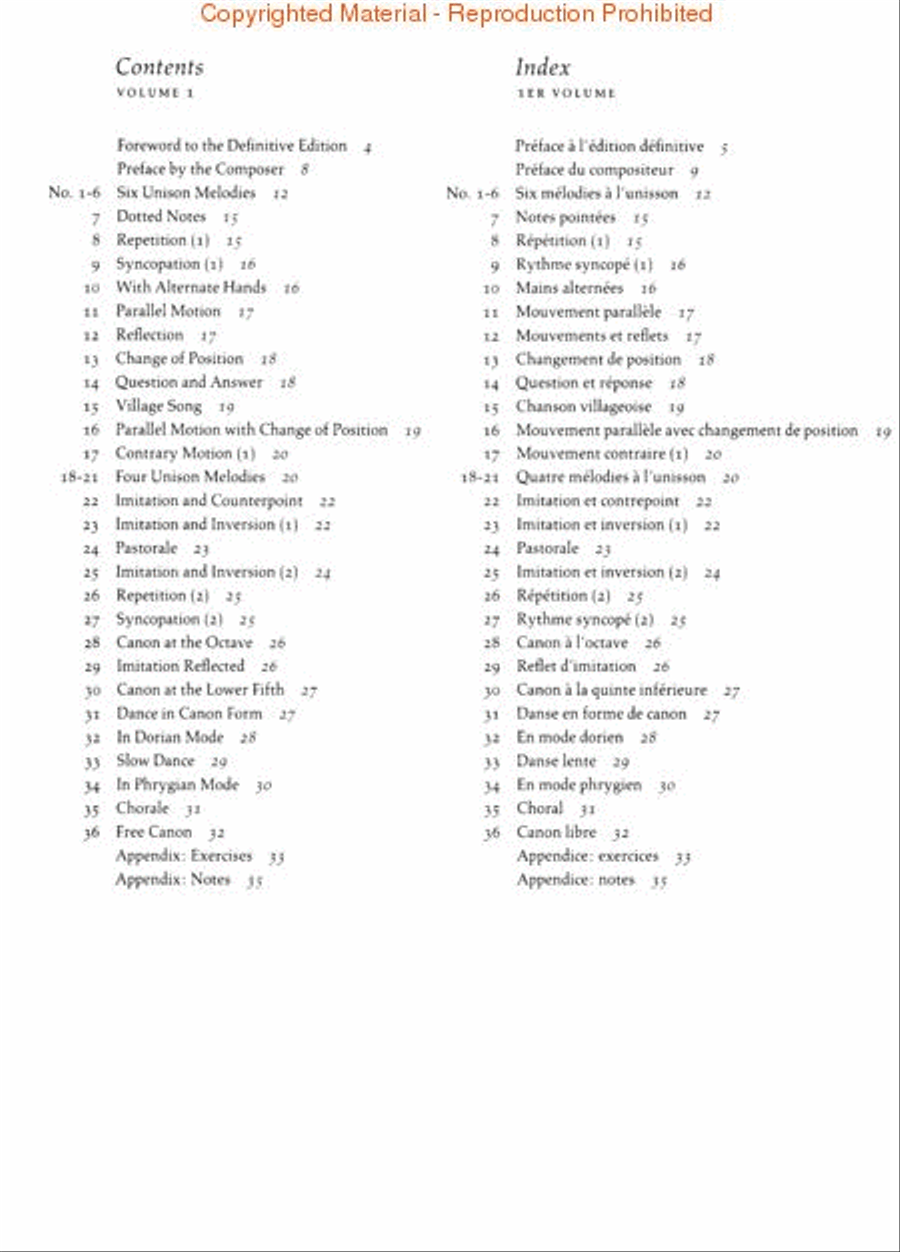
The definitive edition (1987) of the piano teaching classic. Includes an introduction by the composer's son Peter Bartok. In 1945 Bela Bartok described Mikrokosmos as a cycle of 153 pieces for piano written for didactic purposes, seeing them as a series of pieces in many different styles, representing a small world, or as the world of the little ones, the children. Stylistically Mikrokosmos reflects the influence of folk music on Bartok's life and the rhythms and harmonies employed create music that is as modern today as when the cycle was written.ngarian. The 153 pieces making up Mikrokosmos are divided into six volumes arranged according to technical and musical difficulty. Major teaching points highlighted in Mikrokosmos 1: Unison melodies, Question and answer, Imitation and Inversion.
|
Anonymous
September 24, 2020
great for musically experienced piano beginner
This was great for my teenage son, who is a quite proficient woodwind player and has plenty of music theory under his belt. He wants to get some keyboard experience and likes this course much better than an adult beginner course that I also bought for him, which spends too much time covering music theory at a level that is far too elementary for him. The songs in this book are musically interesting and let him focus on his two main tasks, which are getting his fingers in the right places and getting up to speed with bass clef. Although the course is progressive, there is no explanation of the music theory, which is perfect since my son doesn't need to learn what a quarter note is; he already knows the fundamentals. He is using the book for self-study with a little guidance from me on proper hand position. I cut my own musical teeth on Bartok's 44 violin duos back in the day, and I much prefer listening to these delightful pieces than to yet another rendition of Hot Cross Buns.
|
|
|
Katie
April 11, 2015
Charming Sounds, Satisfying Challenges
A fine body of music suitable for the training of a 9-and-up aged pianist from beginning to advanced levels. Marked by strong melodic lines and hand independence, the songs throughout all the volumes range in sound from familiar to exotic and explore tonalities of pentatonic folk music, chromatics, modes and layering of two different key signatures between left and right hands. Musical forms include canons, inventions, theme and variations and more while time signatures range from simple 4/4 time to 6/4 and 3/2. When supplemented with a good theory book and another beginning book such as Suzuki volume 1, students of Mikrokosmos will become intelligent, thoughtful piano players with a mature sense of musical line and direction and advanced hand independence. I love Mikrokosmos!
|
|
|
Anonymous
October 21, 2011
Bartok Mikrokosmos I
This is a wonderful beginner's series for the adult student and can also be used for children who are studying the piano seriously. However, I would recommend a prep series and a note speller before assigning this volume to children.
|
|
|
Anonymous
September 13, 2011
Bartok Microcosmos
Everty piece in these volumes is a tiny masterpiece. What an act of love Bartok this was for his young son. Amazing what the child can learn here, even when his hand is quite small.
|
|
|
S.Pie
June 15, 2011
difference between blue and pink?
I know this isn't a comments section, but I was wondering if there's a difference (apart from the price) between the pink and blue versions of this 6 volume series. Thanks.
|
|
|
Jacobien
July 06, 2010
Great for the adult beginner
I love this book: it guided me through my first steps on the piano and that was a very good experience. Contrary to other beginner methods, this one makes you play in all kind of key and modes, not only in C-major. The tunes are surpring and interesting. The only thing that can be frustrating for beginners is the metronome numbers given; I never got to that speed. Now after two years of practice, I use the summer vacation to start all over and play them at the mentioned speed.
|
See Similar Sheet Music and Digital Downloads