622959
May Peace be unto you
622959
622959
622959
Copyright Material for Preview Only - Sheet Music Plus
SB vocal soli, SATB choir, oboe, violin, basso continuo (Soli SB, Coro SATB, Ob, Vl solo, Bc) - Grade 2
SKU: CA.3115800
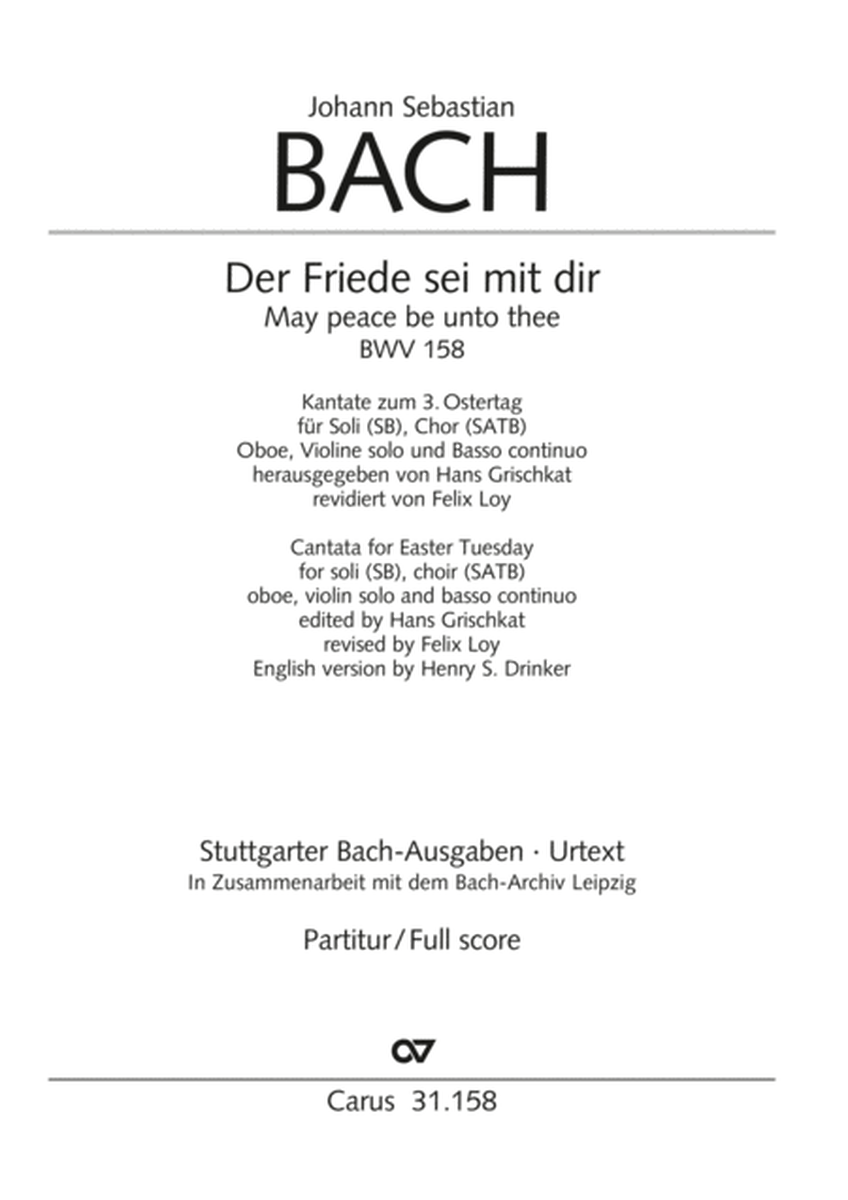
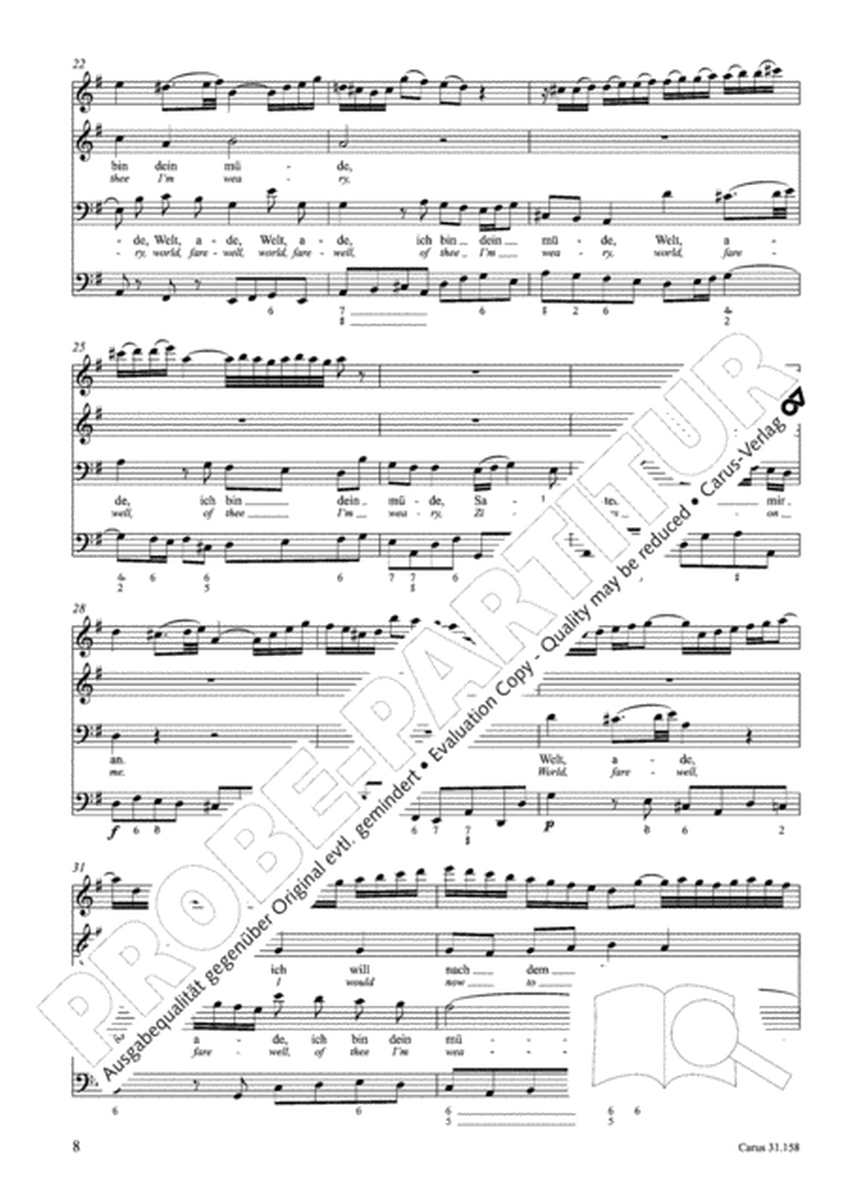
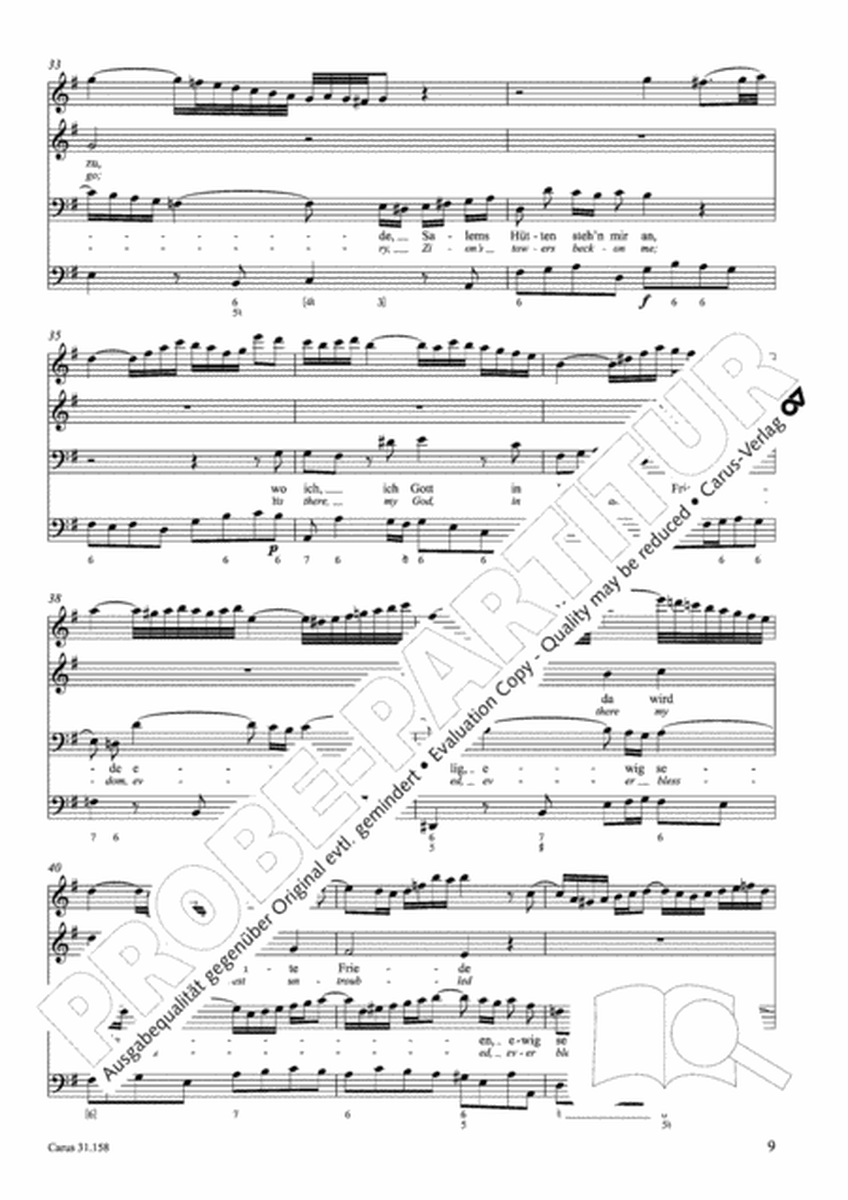
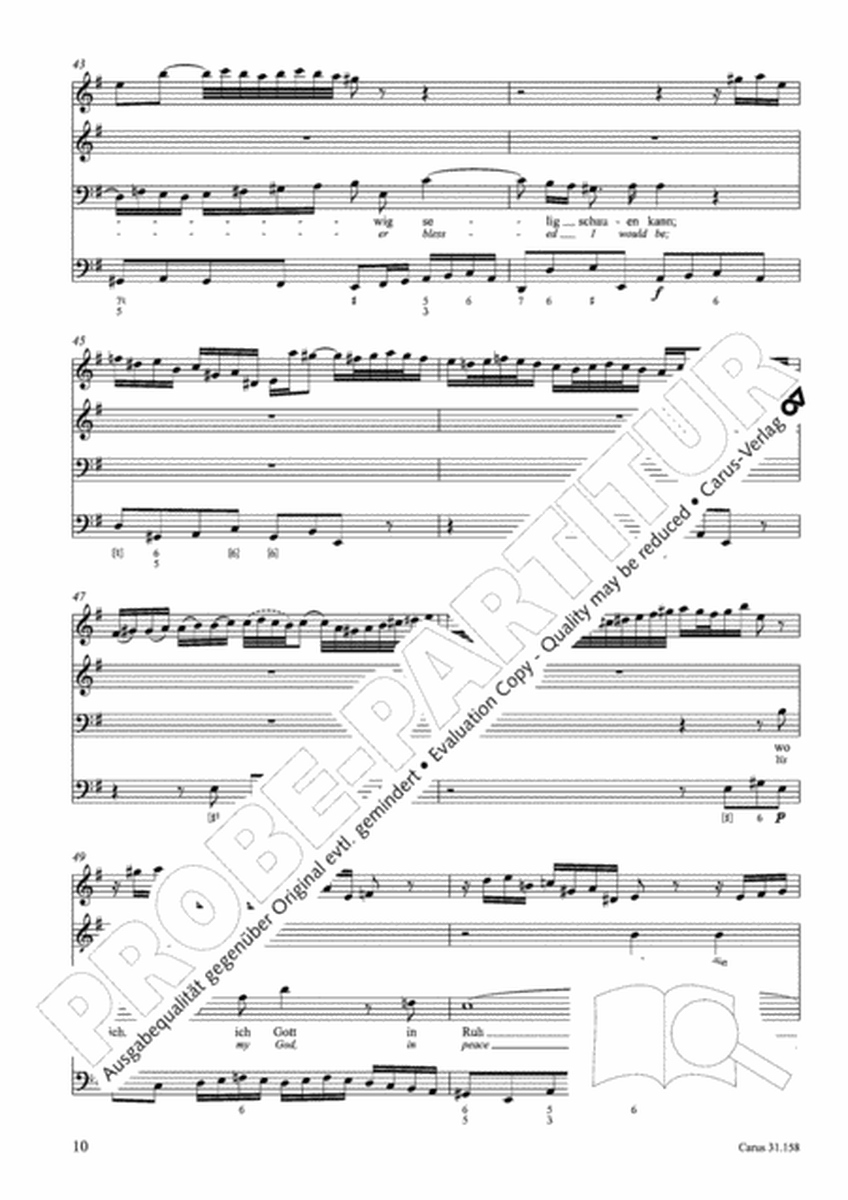
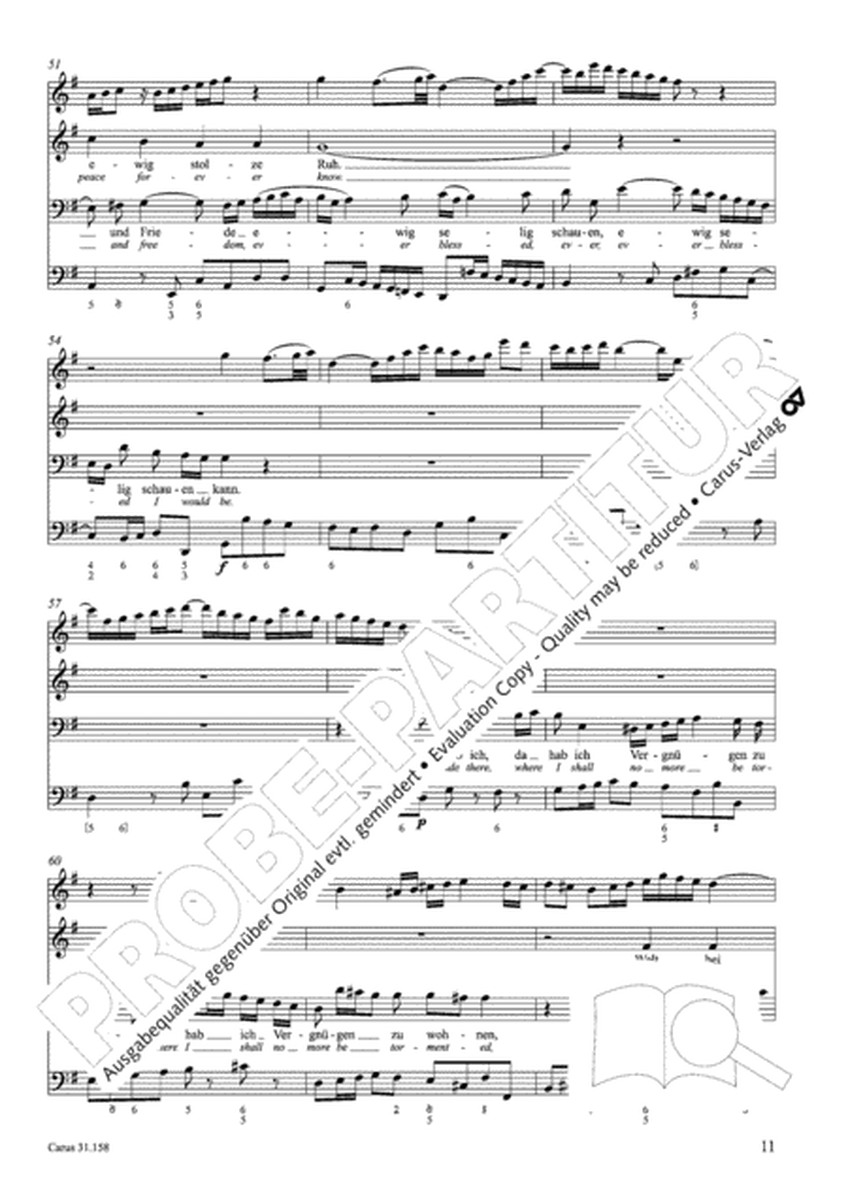
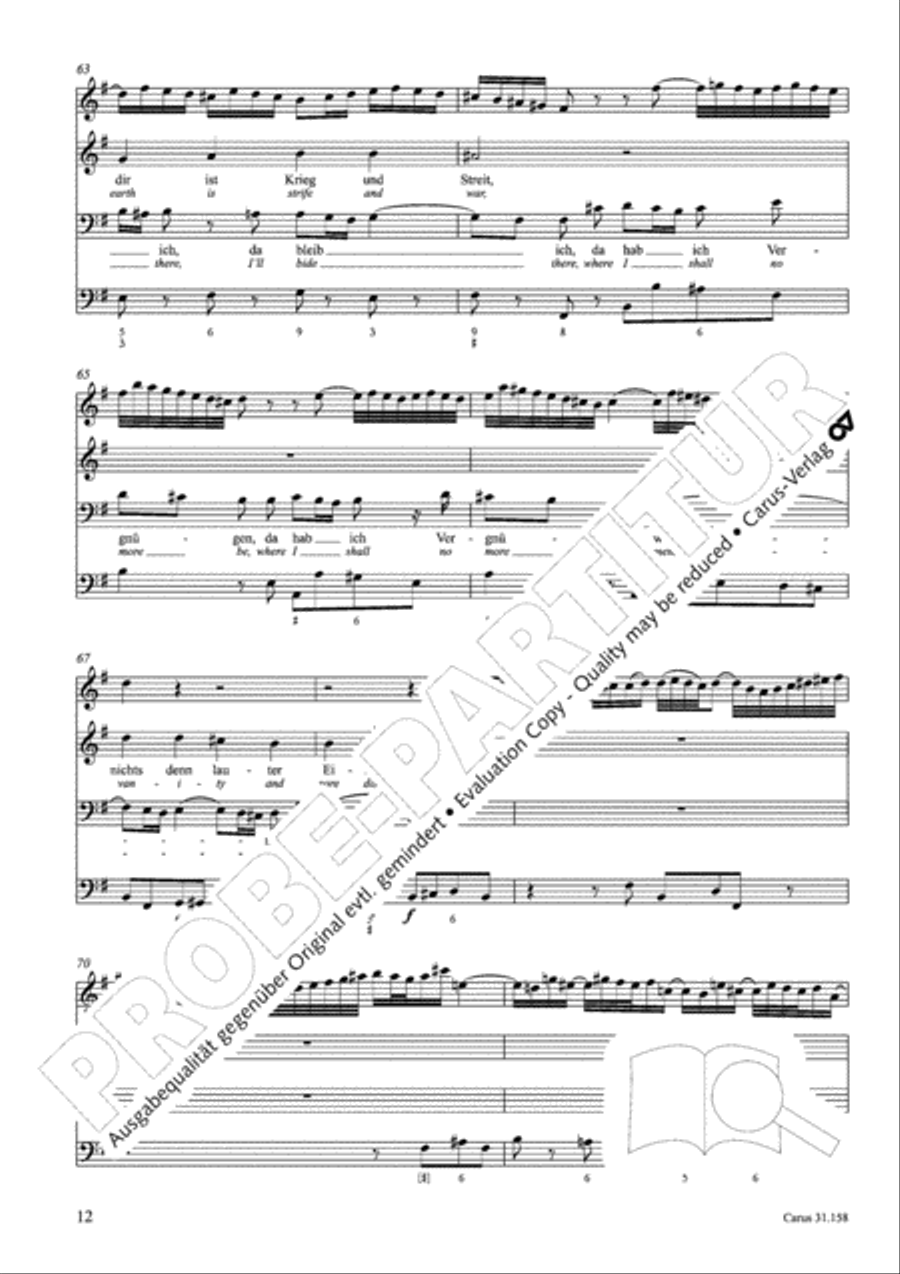
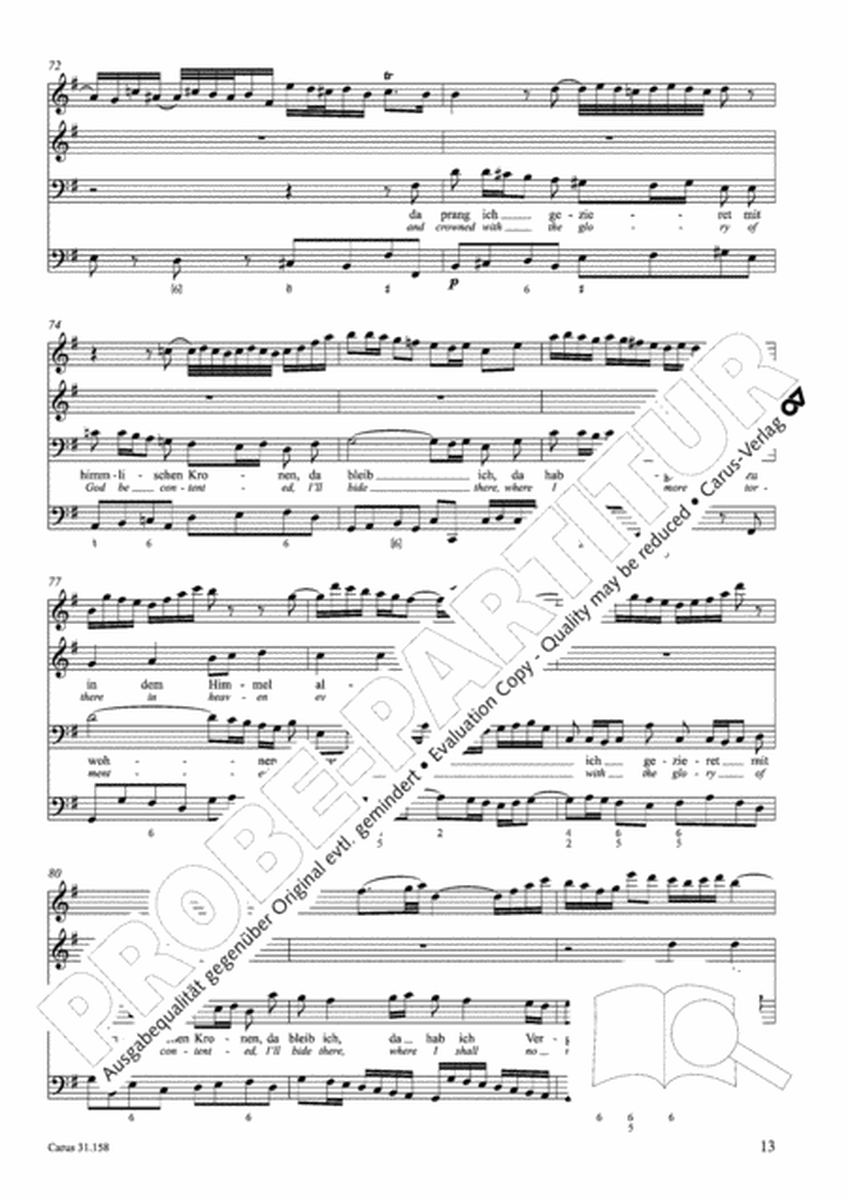
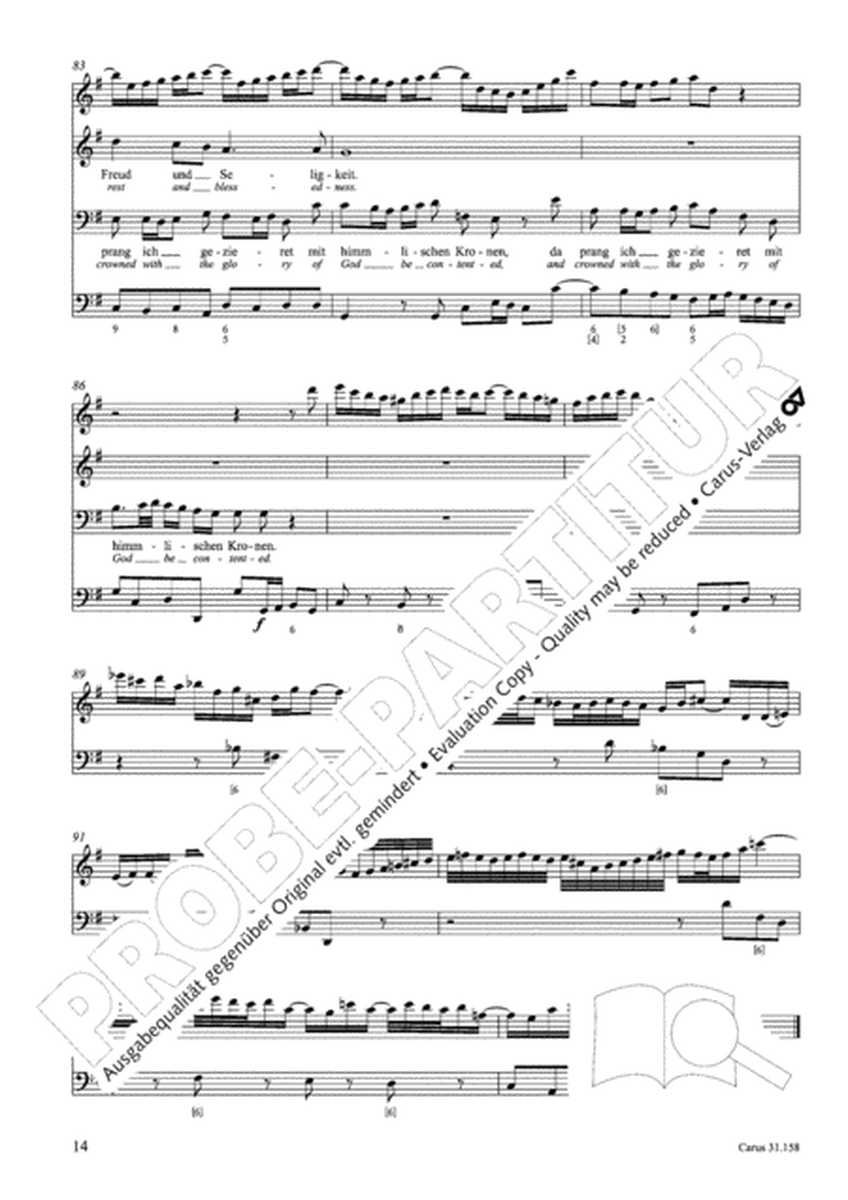
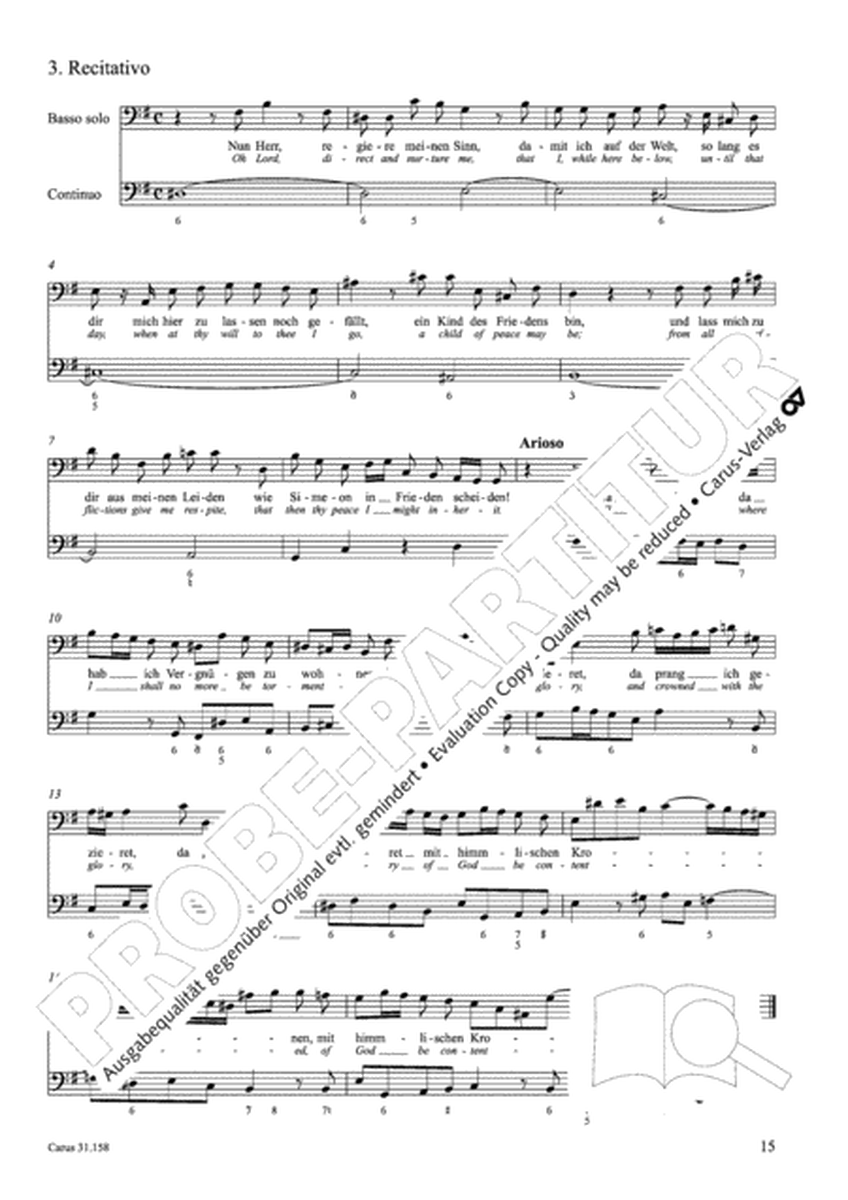
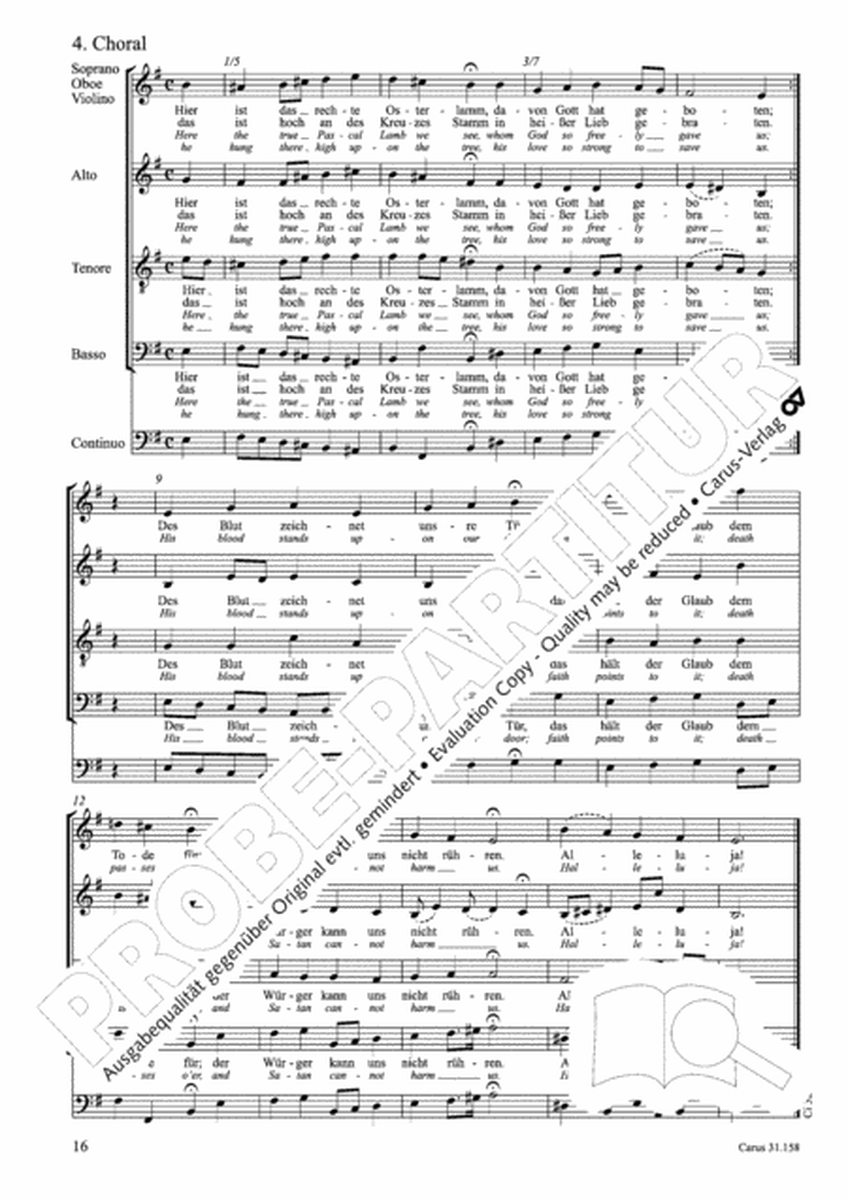
Cantata for the Purification of Mary or 3rd day of Easter. Composed by Johann Sebastian Bach. Edited by Felix Loy; Hans Grischkat. This edition: urtext. Stuttgart Urtext Edition: Bach vocal. Carus digital: Sheet music as PDF. Sacred vocal music, Cantatas, Special days, Easter and Eastertide. Full score. Composed 1723/1735. BWV 158. 16 pages. Duration 12 minutes. Carus Verlag #CV 31.158/00. Published by Carus Verlag (CA.3115800).
ISBN 9790007049607. 8.27 x 11.69 inches. Key: D major / e minor. Language: German/English.
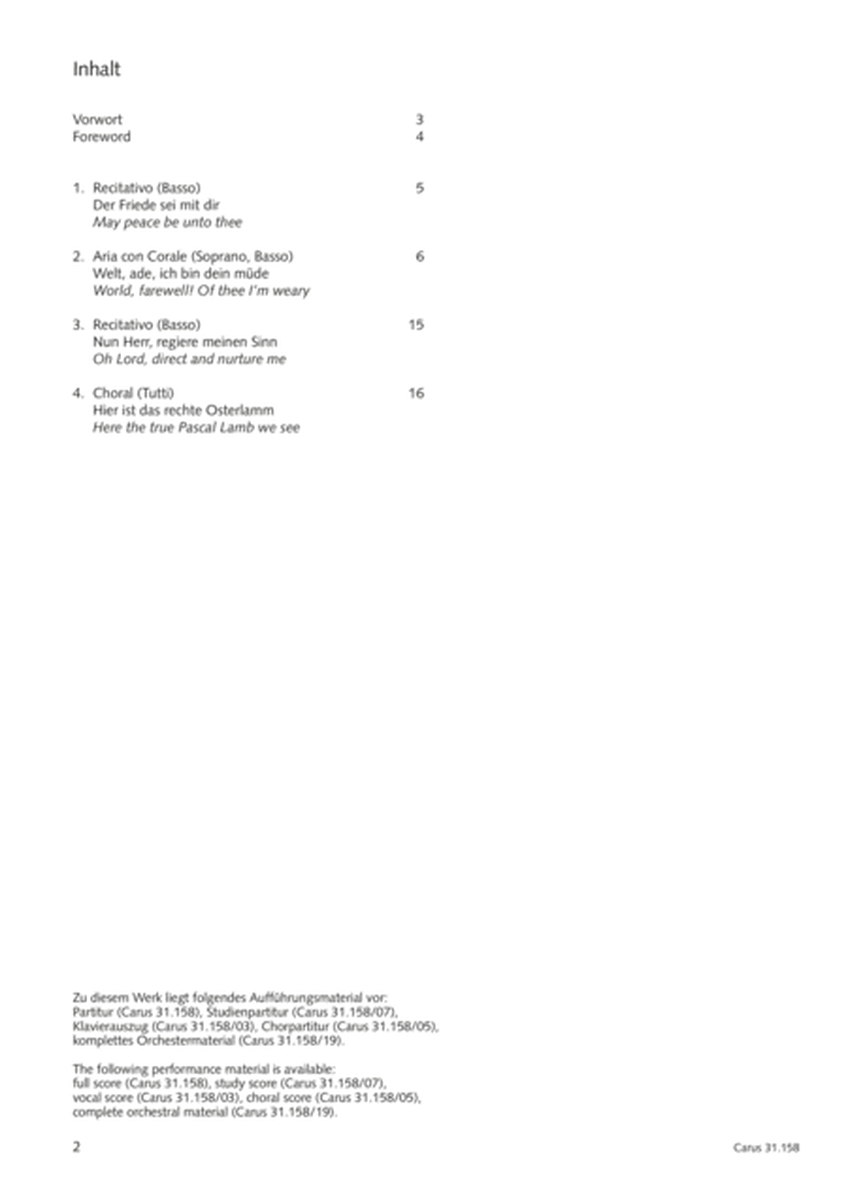
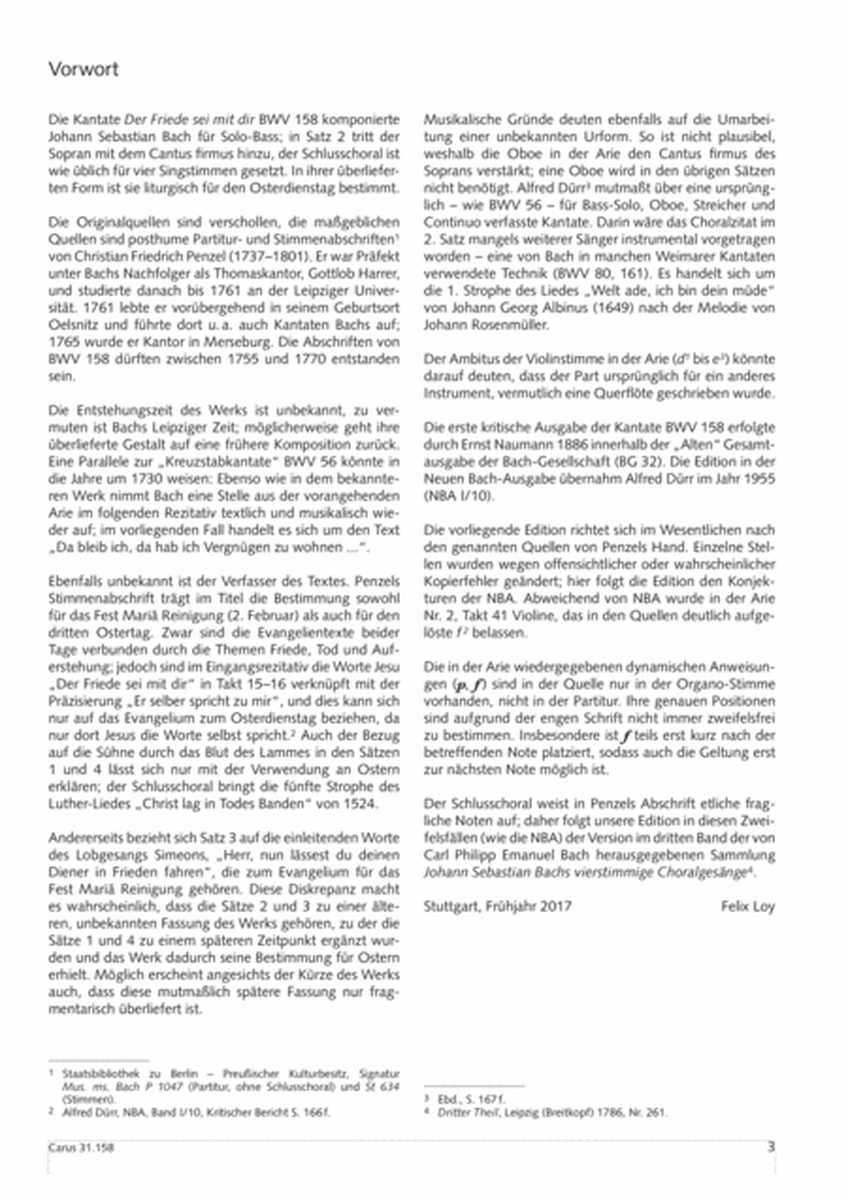
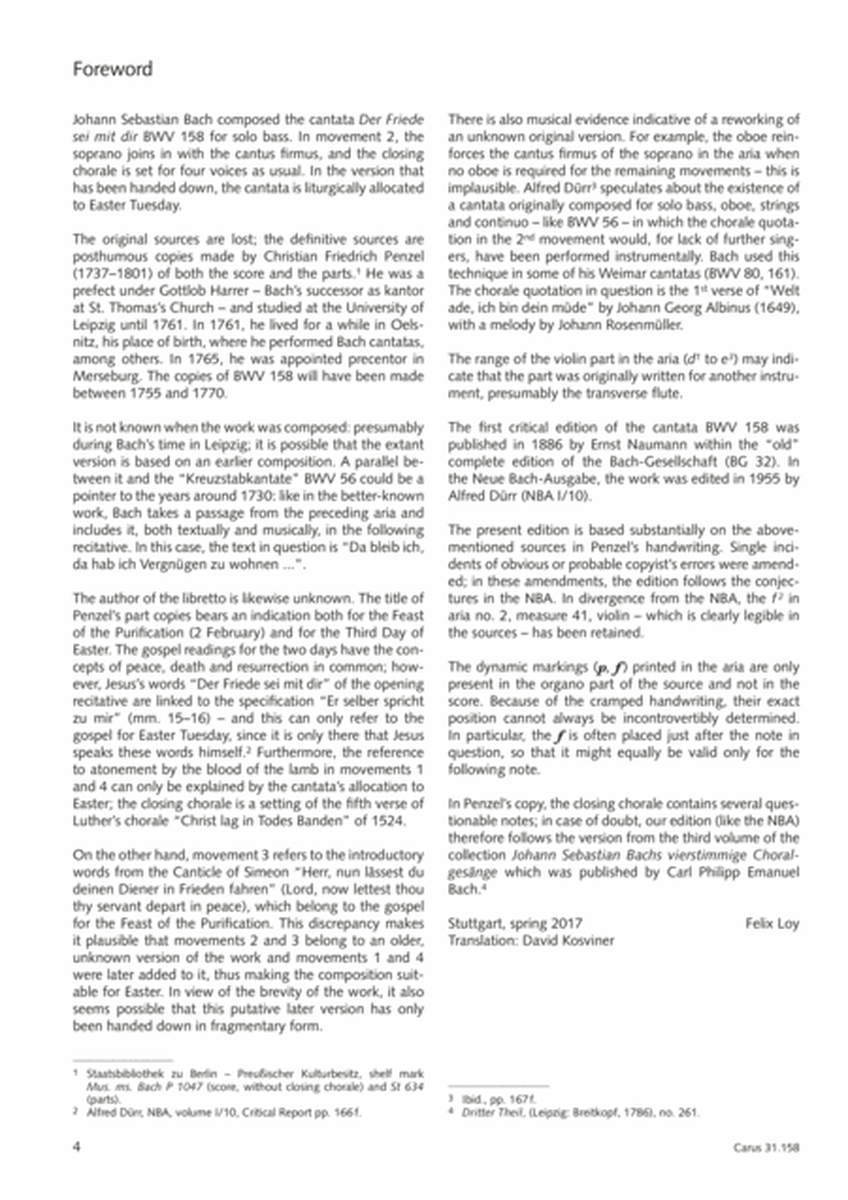
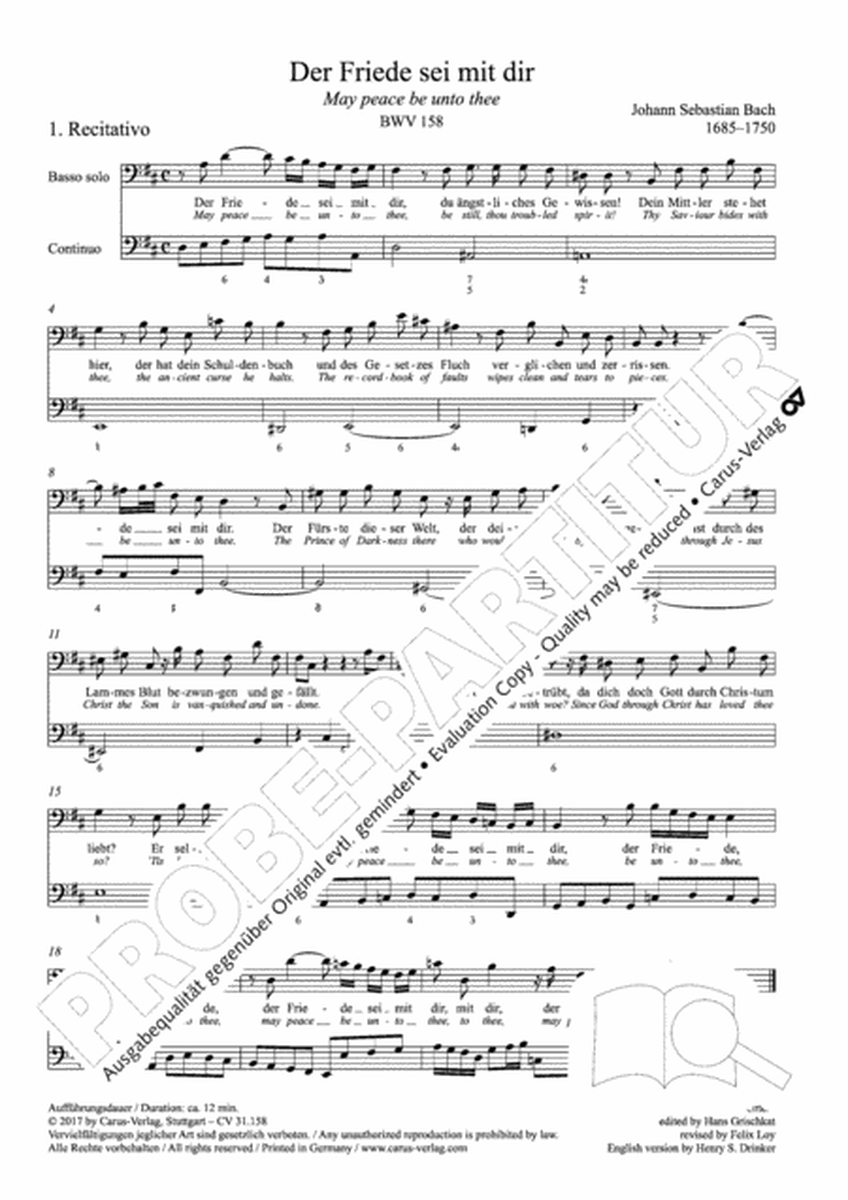
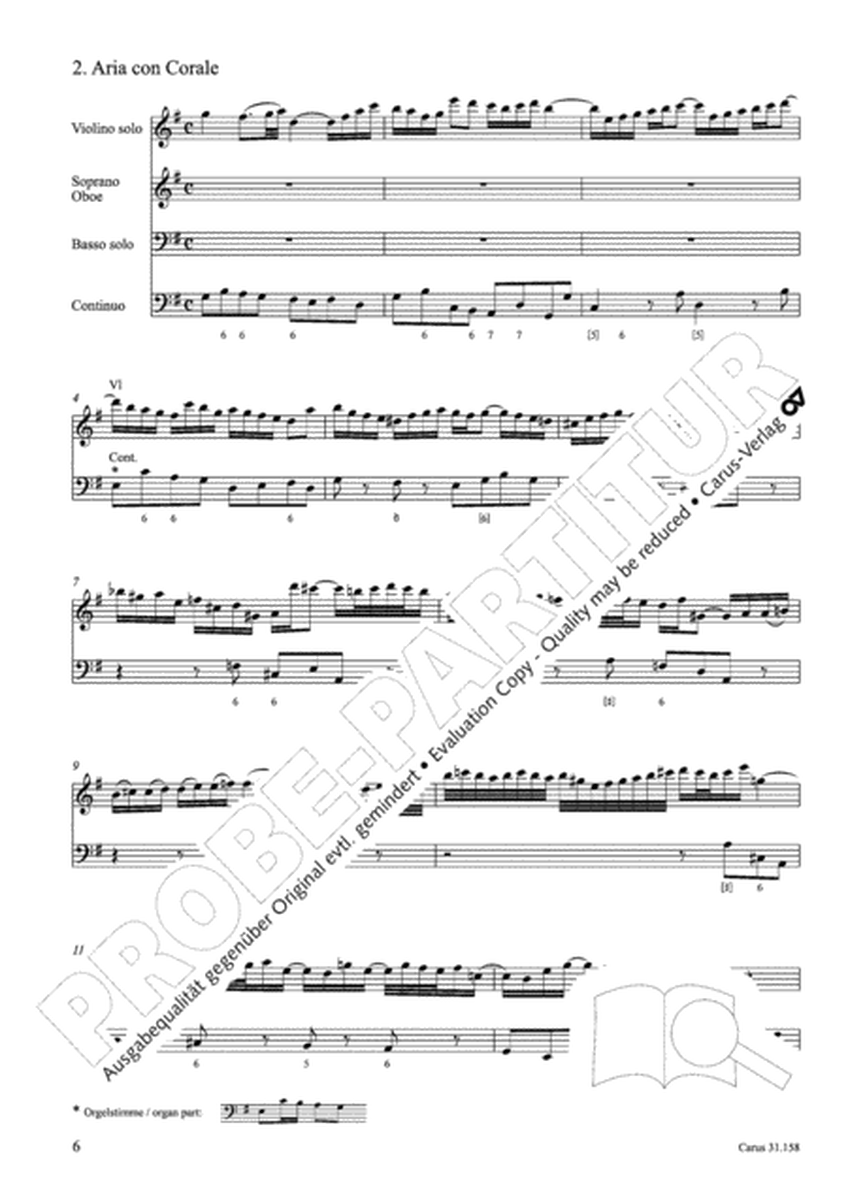
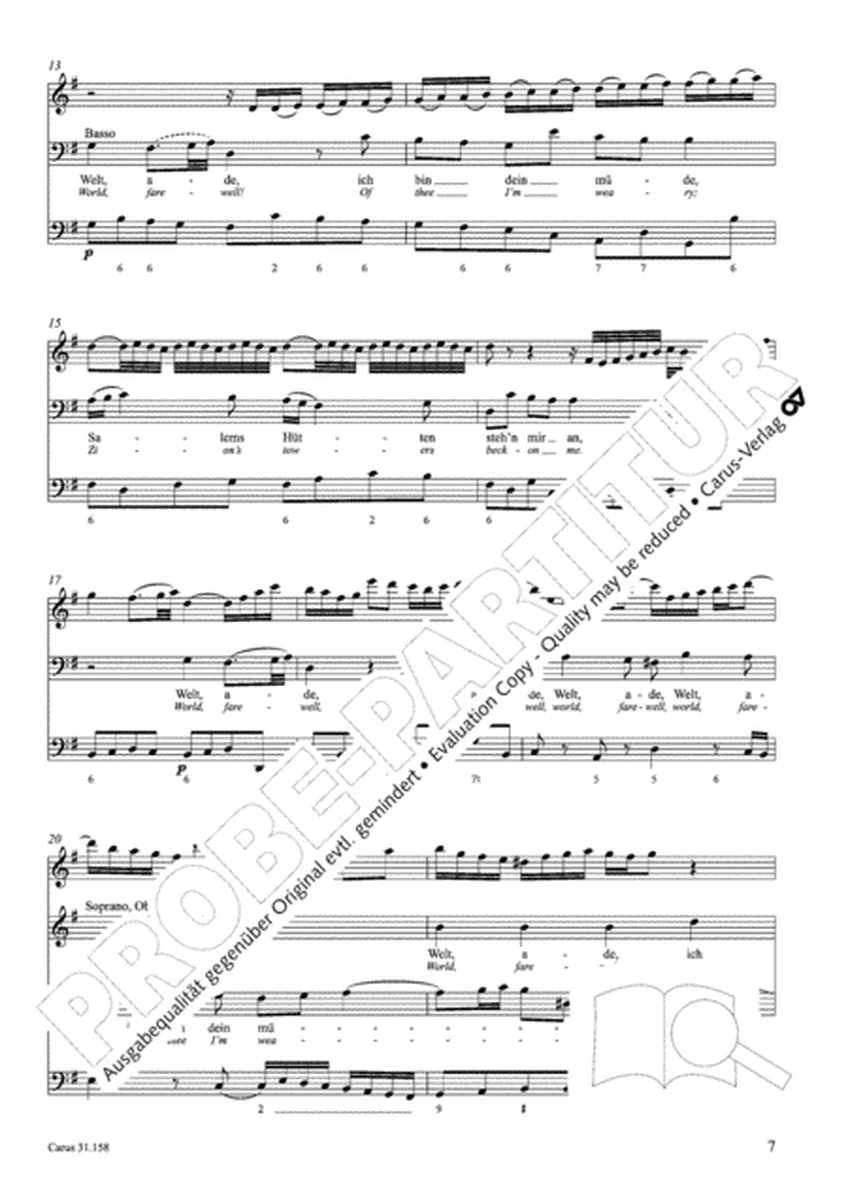
The original sources for BWV 158 are lost; it is assumed that the work's origin goes back to the Leipzig years. A parallel to the "Kreuzstabkantate" (BWV 56) could indicate sometime in the second half of the 1720s. As in that work, Bach repeats in the recitative a section of the previous aria: "Da bleib ich, da hab ich Vergnügen zu wohnen…" ("There I stay, there I have pleasure to dwell…").The centerpiece of the work is the bass aria with its virtuoso solo violin part, in which soprano and oboe perform together in the first stanza "Welt ade, ich bin dein müde" ("Farewell, world, I am tired of you").
New revised edition.
SB vocal soli, SATB choir, oboe, violin, basso continuo (Soli SB, Coro SATB, Ob, Vl solo, Bc) - Grade 2
SKU: CA.3115800
Cantata for the Purification of Mary or 3rd day of Easter. Composed by Johann Sebastian Bach. Edited by Felix Loy; Hans Grischkat. This edition: urtext. Stuttgart Urtext Edition: Bach vocal. Carus digital: Sheet music as PDF. Sacred vocal music, Cantatas, Special days, Easter and Eastertide. Full score. Composed 1723/1735. BWV 158. 16 pages. Duration 12 minutes. Carus Verlag #CV 31.158/00. Published by Carus Verlag (CA.3115800).
ISBN 9790007049607. 8.27 x 11.69 inches. Key: D major / e minor. Language: German/English.
The original sources for BWV 158 are lost; it is assumed that the work's origin goes back to the Leipzig years. A parallel to the "Kreuzstabkantate" (BWV 56) could indicate sometime in the second half of the 1720s. As in that work, Bach repeats in the recitative a section of the previous aria: "Da bleib ich, da hab ich Vergnügen zu wohnen…" ("There I stay, there I have pleasure to dwell…").The centerpiece of the work is the bass aria with its virtuoso solo violin part, in which soprano and oboe perform together in the first stanza "Welt ade, ich bin dein müde" ("Farewell, world, I am tired of you").
New revised edition.
Tell a friend (or remind yourself) about this product. We'll instantly send an email containing product info and a link to it. You may also enter a personal message.
We do not use or store email addresses from this form for any other purpose than sending your share email.
Read our Privacy Policy.
After purchase, you can download your MP3 from your Sheet Music Plus Digital Library - no software installation is necessary! You can also listen to your MP3 at any time in your Digital Library.
After purchase, you can download your Smart Music from your Sheet Music Plus Digital Library - no software installation is necessary! You can also download at any time in your Digital Library.
After purchase you can download your video from your Digital Library. Your video is in XX format and is playable on most pre-installed video players.