
Ships to you
Ships to you
SKU: KJ.L174
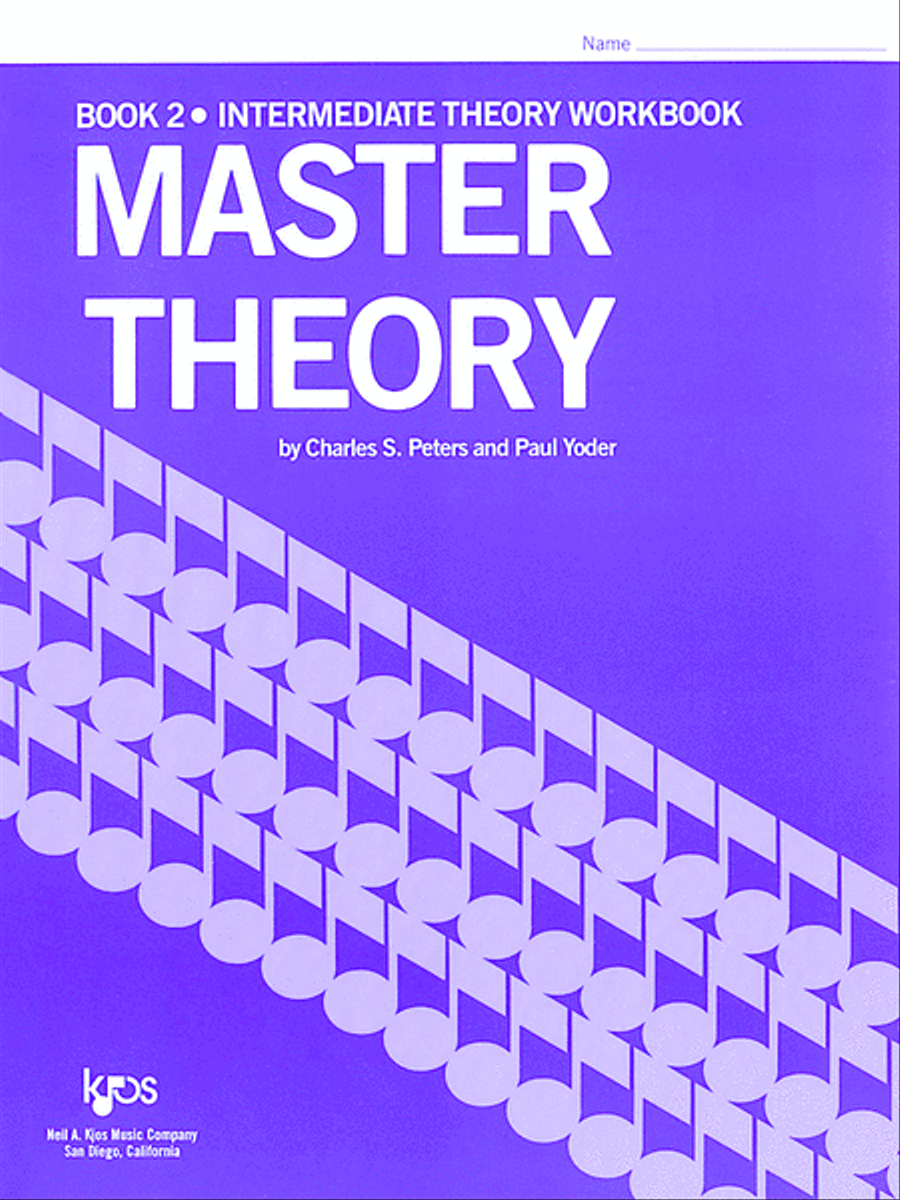
Intermediate Theory Workbook. Composed by Charles S. Peters and Paul Yoder. Theory. Master Theory. General Music. General Theory. Instructional book. With instructional text and musical examples. 32 pages. Neil A. Kjos Music Company #L174. Published by Neil A. Kjos Music Company (KJ.L174).ISBN 9780849701559. UPC: 9780849701559. 9x12 inches.
Master Theory is the most comprehensive theory workbook series available. Life-long music teachers Charles S. Peters and Paul Yoder offer a logical, effective way to teach the essential elements of music to any student.
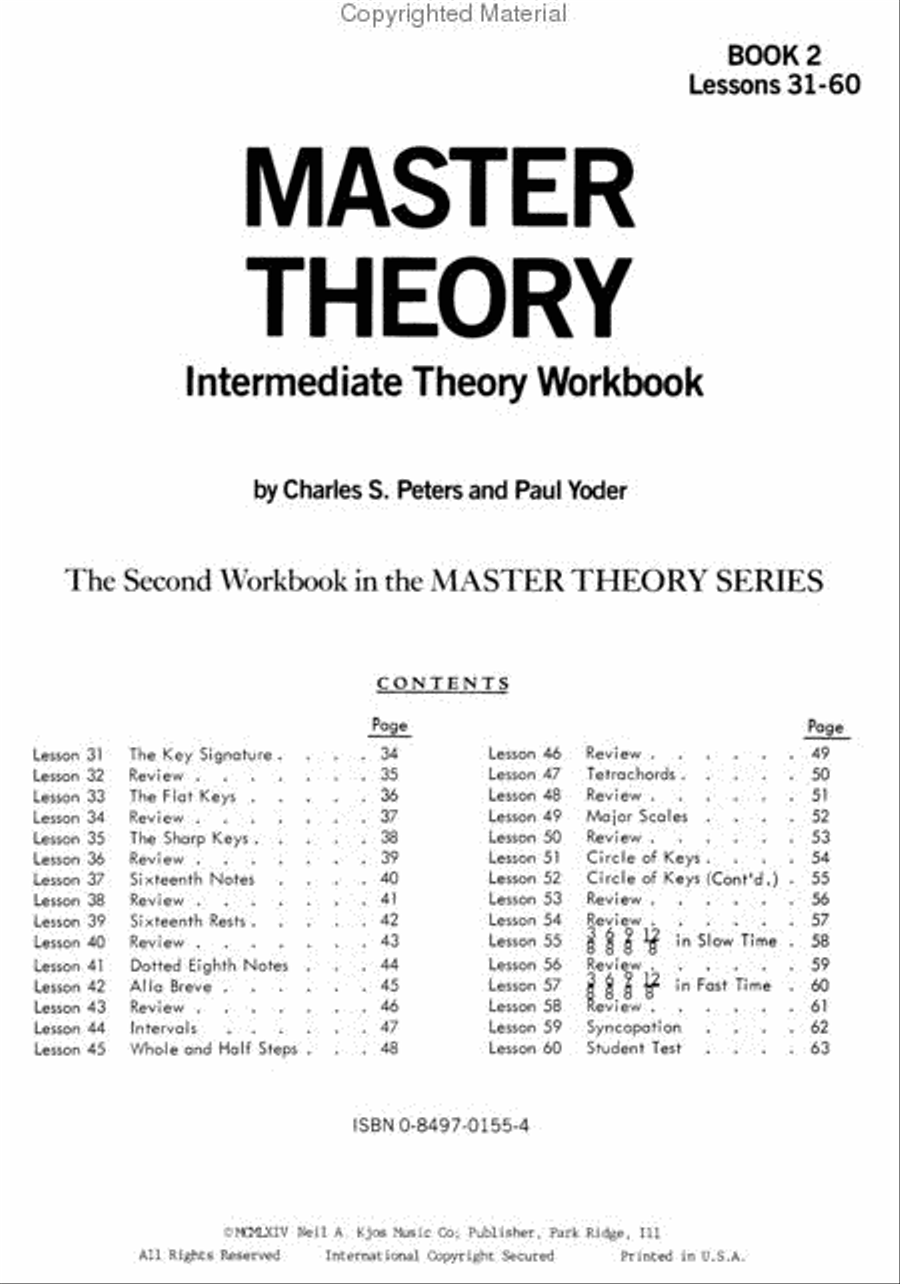
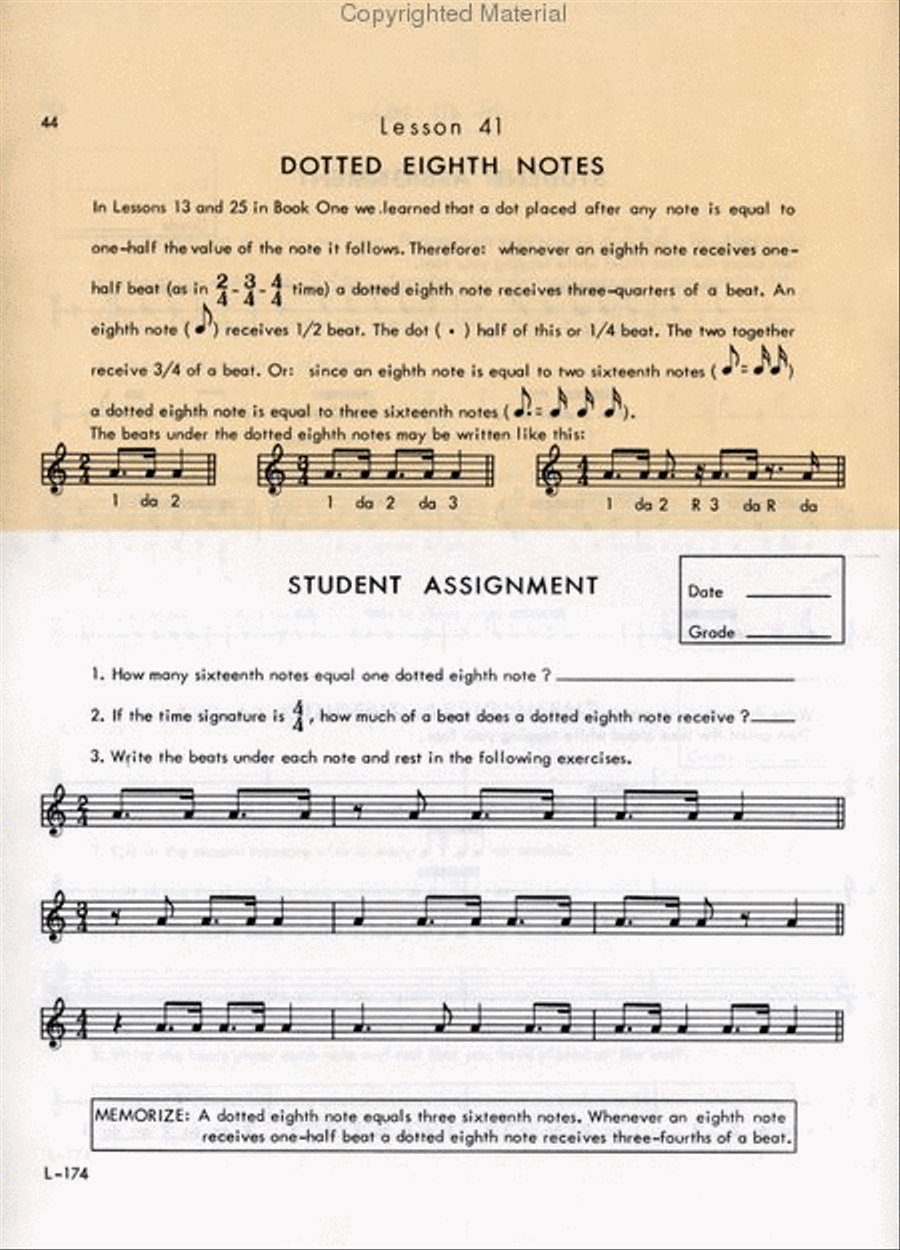
It's for everyone, and it truly works! General music students, voice students, instrumental students, piano students ... any young musician can build theory skills in this six-level course. Master Theory is so versatile, it doesn't even require a keyboard! The interactive workbook format makes it ideal for general music classes, performing group rehearsals, or independent study. There's no comparison. Beginning with staff lines and progressing through rhythms, key signatures, scales, and harmony to elementary counterpoint, it's a comprehensive, no-nonsense approach to theory ... with no distractions! Your students deserve to learn theory in the quickest, most efficient way possible. Included in Book 2: Lessons and Review pages on Key Signatures, Flat and Sharp Keys, Sixteenth Notes and Rests, Dotted Eighth Notes, Alla Breve, Intervals, Whole and Half Steps, Tetrachords, Major Scales, Circle of Keys, 3/8, 6/8, 9/8, and 12/8 in Slow and Fast Time, and Syncopation.
|
Anonymous
September 07, 2014
Learned so much but how well?
I am thrilled with this 2nd book in the series, but even a competent theory student needs a key to check later. I never check until I finish an exercise but I do deserve to be able to buy a teacher's copy to insure I'm internalizing good practices and not just reinforcing mistakes. Other theory books do include a teacher's book. Really not happy about that.However: this is an excellent book series for me so far. Sometimes there are missing pieces of information that would be necessary to completely understanding how to use tetrachords to build 2 ascending octaves, or those sorts of things, but I figured them out. Techniques for memorizing the order of sharps or flats (just rote memorization or how to make it into something memorable) can help. I learned them to a degree but was hoping to have a sample and perhaps even improved explanation without having to memorize the circle of 5ths. Circle of 5ths is wonderful but not too handy when writing out a quick key signature.
|
|
|
Anonymous
March 01, 2012
Tried and True Standard
This has been around for decades, but it's still a great resource for teaching music theory... Purchased for an upper elementary horn player, but appropriate for any instrument.
|
See Similar Sheet Music and Digital Downloads