Details
- Ensembles:
- String Quartet
- Genres:
- Medieval
- Composers:
- Guillaume de Machaut
- Publishers:
- jmsgu3
- Series:
- ArrangeMe
- Format:
- Score and Parts
- Item types:
- Digital
- Instructionals:
- Contest, Festival
- Level:
- Early Intermediate
- Musical forms:
- Mass
- Artist:
- Guillaume de Machaut
- Arrangers:
- James M. Guthrie
- Usages:
- Mass
- Number of Pages:
- 84
SKU: A0.1257127
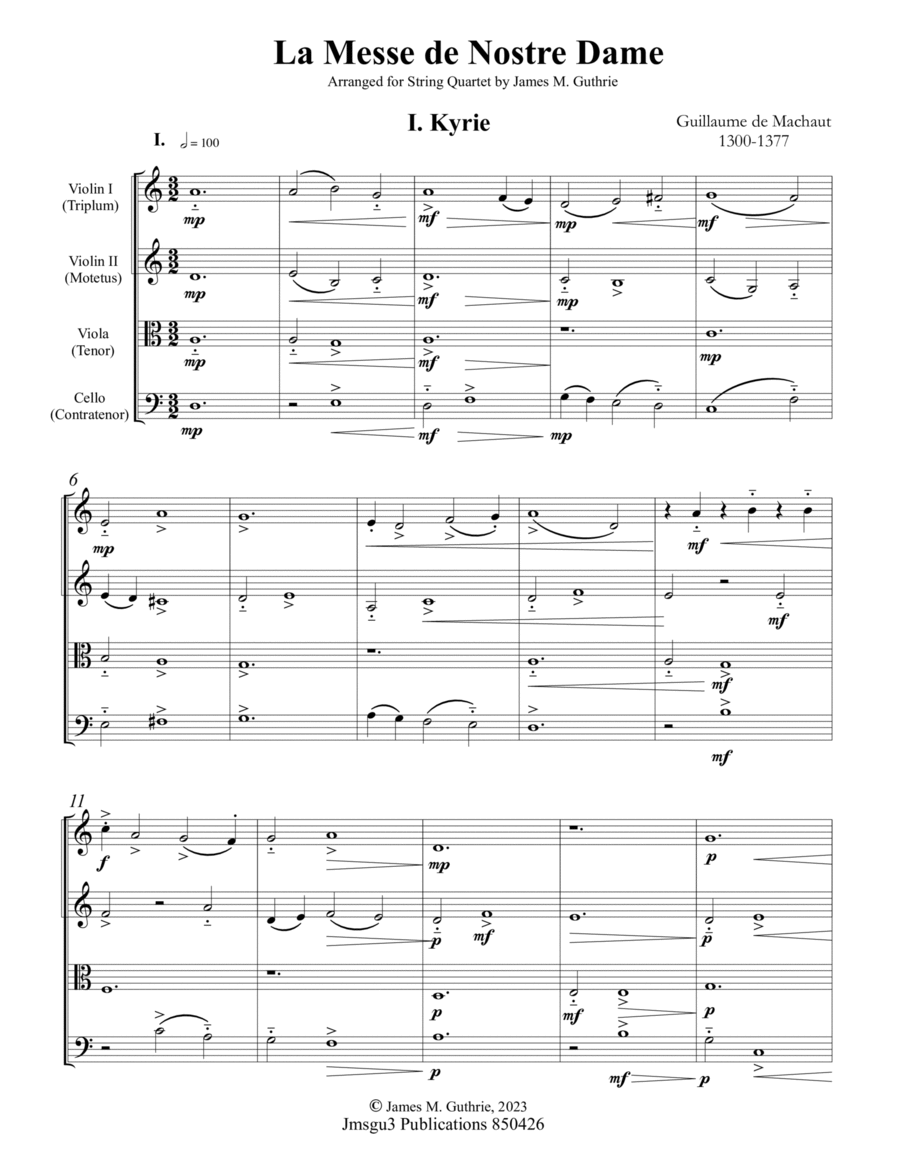
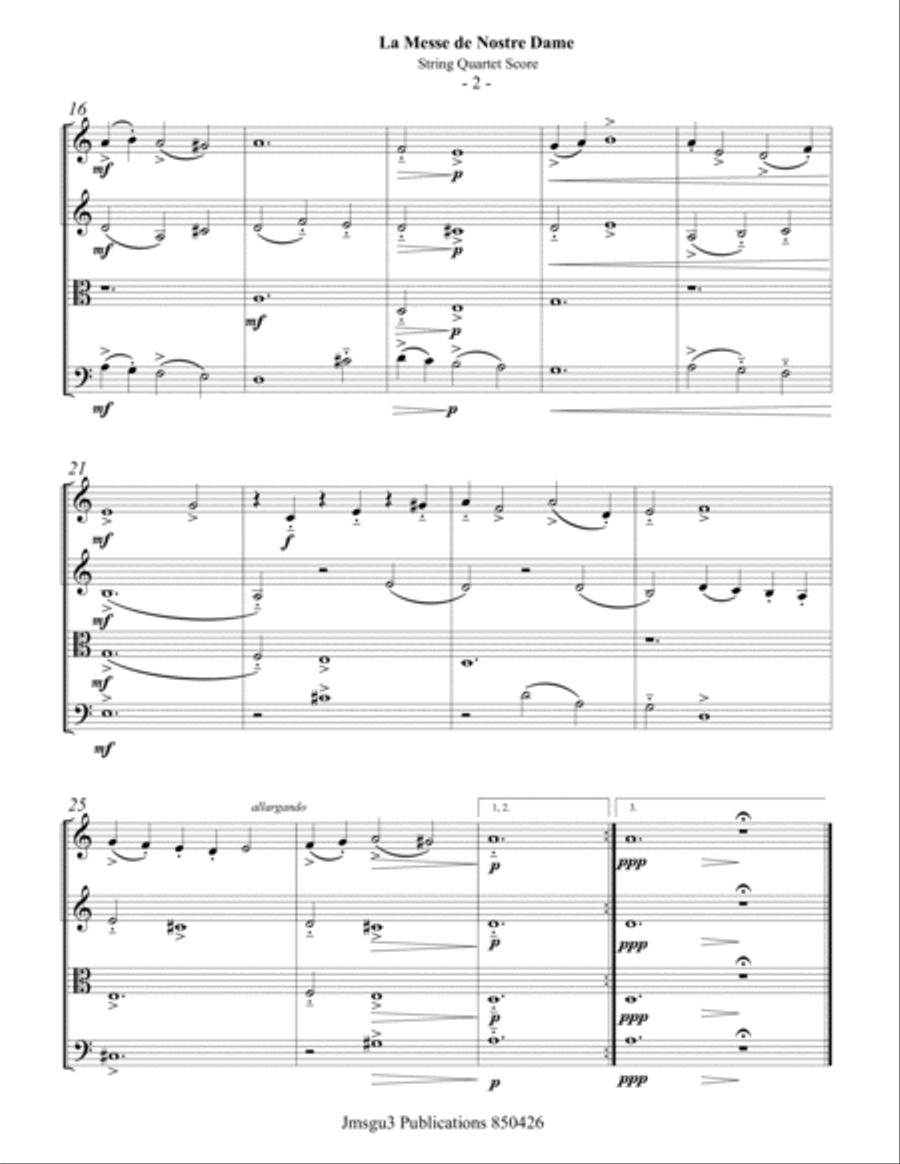
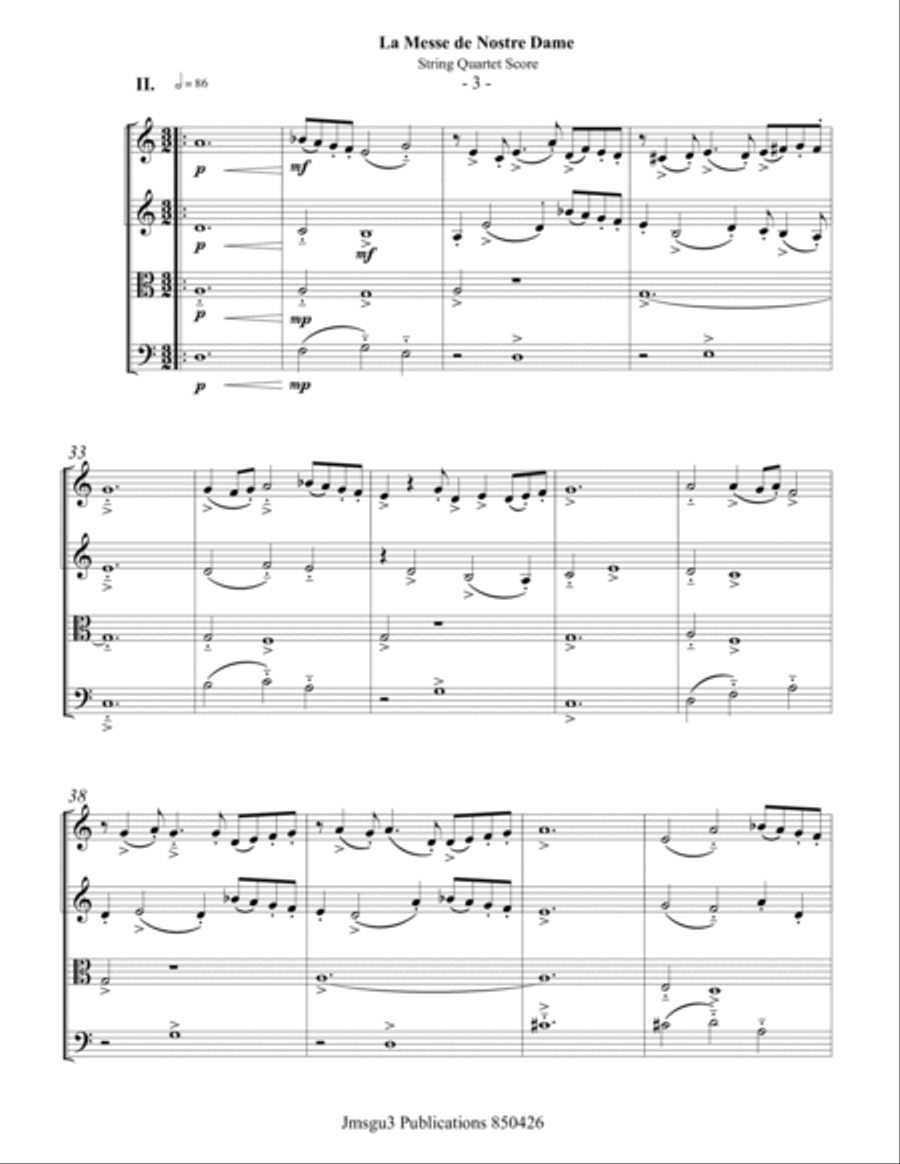
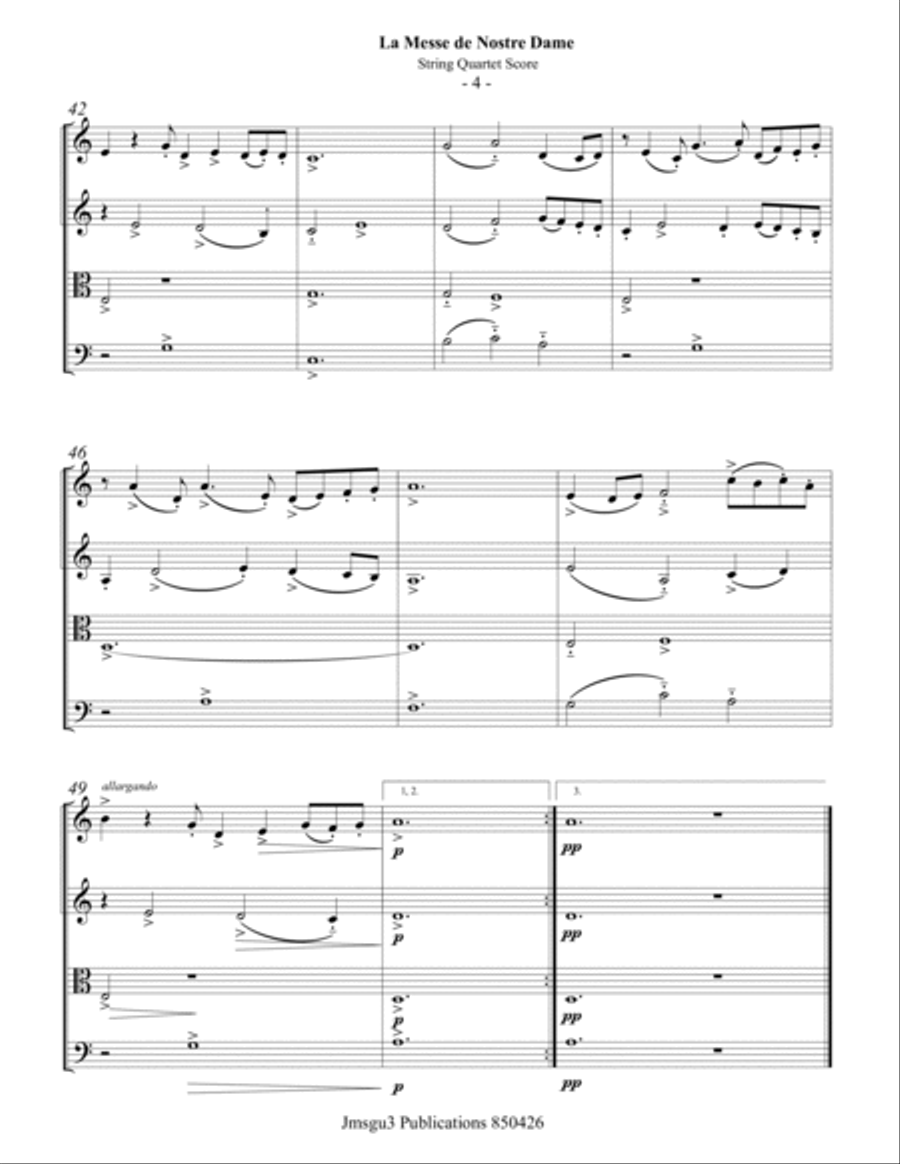
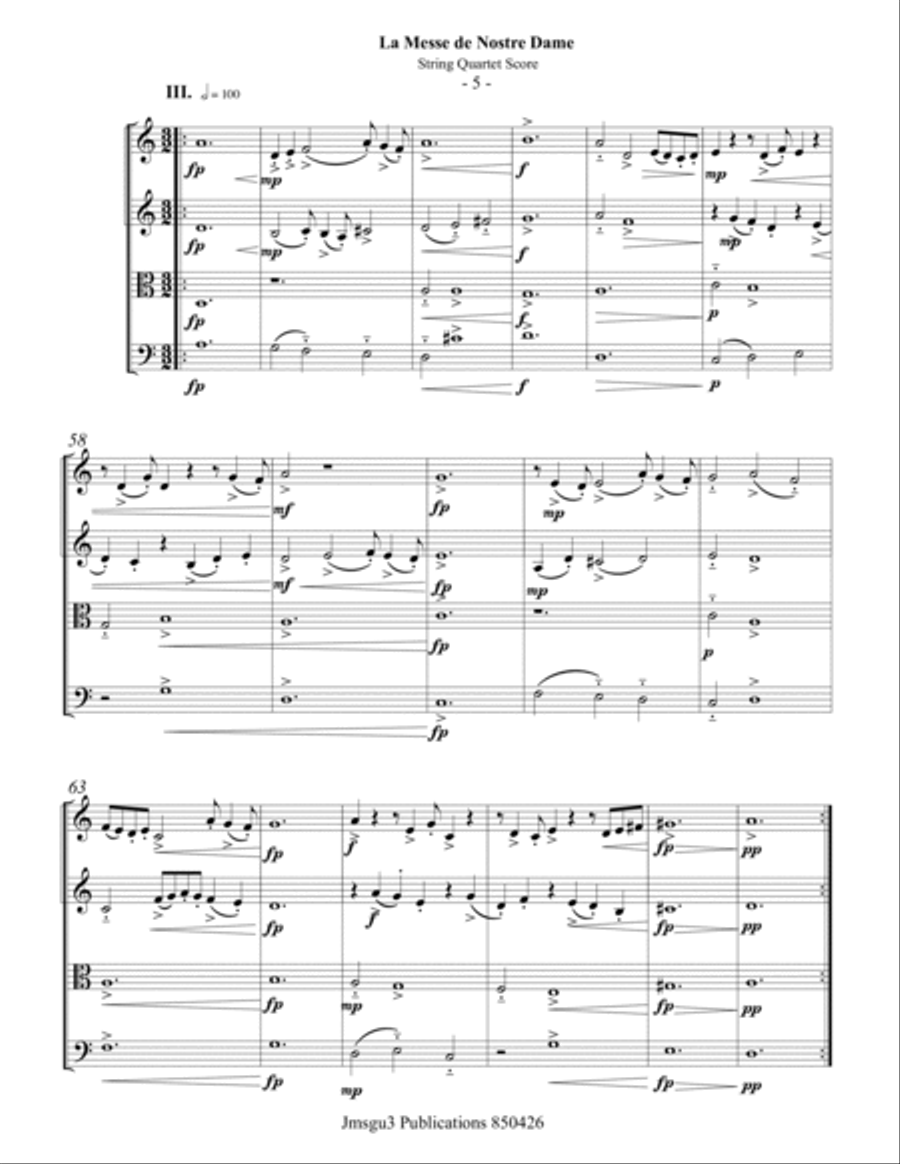
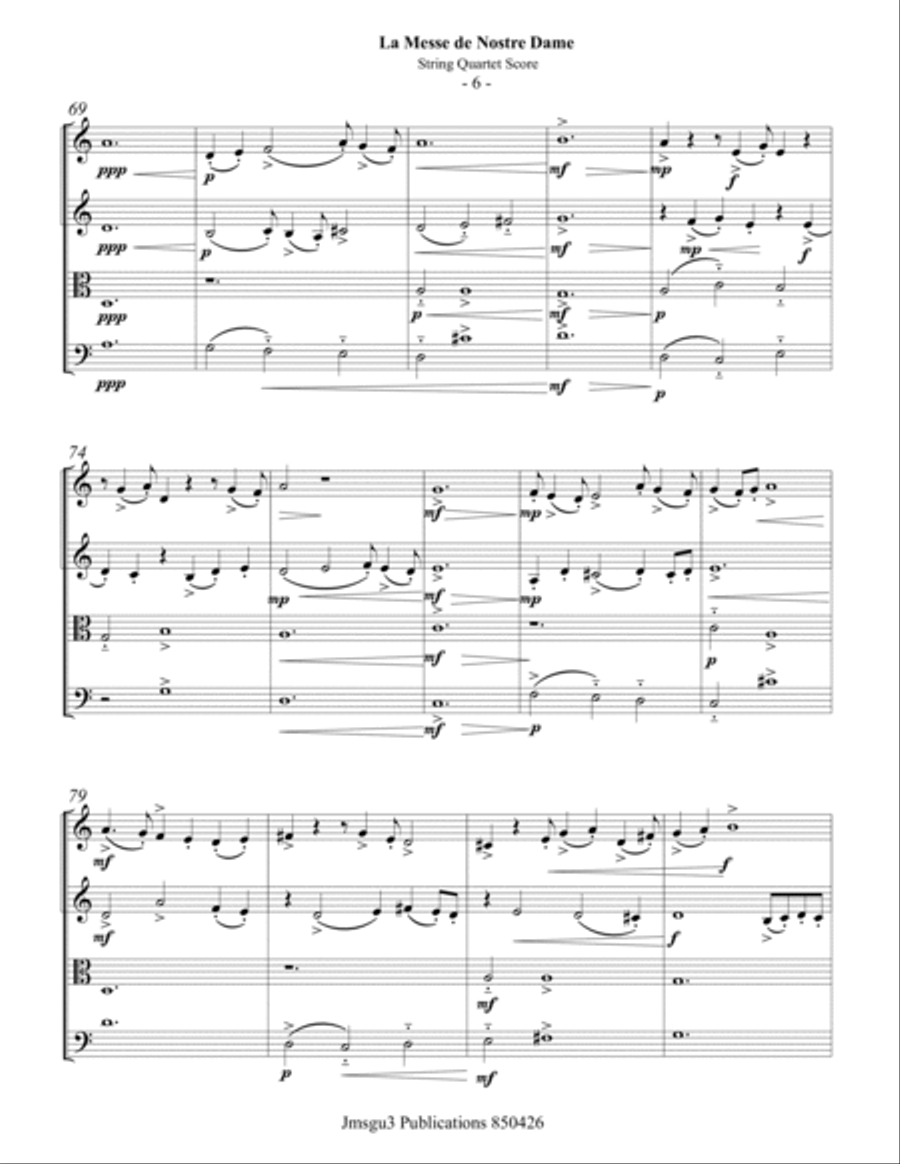
Composed by Guillaume de Machaut. Arranged by James M. Guthrie. This edition: pdf, streaming. Chamber, Contest, Early Music, Festival, Historic, Medieval. 84 pages. Jmsgu3 #850426. Published by jmsgu3 (A0.1257127).Guillaume de Machaut's Messe de Nostre Dame (Mass of Our Lady) is a landmark polyphonic mass composed before 1365, widely regarded as one of the masterpieces of medieval and religious music. It is historically significant as the earliest complete setting of the Ordinary of the Mass attributable to a single composer, unlike earlier masses, which were compilations by multiple composers.
Structure and Composition
The mass consists of six movements:
Kyrie
Gloria
Credo
Sanctus (including Benedictus)
Agnus Dei
Ite, missa est (dismissal)
The Kyrie’s tenor is based on Vatican Kyrie IV, and the Sanctus and Agnus Dei correspond to Vatican Mass XVII, while the Ite is based on Sanctus VIII. The Gloria and Credo do not have an apparent chant basis but are stylistically related.
Unlike the common three-voice masses of the time, Machaut composed this mass for four voices by adding a contratenor voice that moves in the same low range as the tenor, sometimes replacing it as the lowest voice. The four voices are typically identified as triplum, motetus, tenor, and contratenor.
Artistic and Historical Importance
Machaut’s Messe de Nostre Dame is notable for unifying the movements of the Ordinary of the Mass into a stylistically coherent whole conceived as a single artistic unit. This was a new abstract artistic concept at the time and influenced many later composers to create cyclic mass settings.
The mass was likely composed for the Cathedral of Reims, where Machaut served as a canon, and may have been performed for the Saturday Lady Mass. There is also a hypothesis that it was composed as a memorial service for Machaut and his brother after their deaths.
Machaut’s style in this mass reflects the cosmopolitan musical exchanges of his time, influenced by the movement of musicians across Europe and the papacy’s relocation to Avignon.
Recordings and Legacy
The Messe de Nostre Dame has been recorded many times, with notable interpretations by ensembles such as The Hilliard Ensemble, Ensemble Gilles Binchois, Oxford Camerata, and Ensemble Organum. These recordings vary in style, from vocally pristine to more historically informed medieval ornamentation.
In summary, Machaut’s Messe de Nostre Dame stands as a pioneering work in Western music history, marking the beginning of a new musical era with its four-voice polyphony and unified mass setting, and remains a central work in medieval sacred music repertoire.
About ArrangeMe
This product was created by a member of ArrangeMe, Hal Leonard's self-publishing community for independent composers, arrangers, and songwriters. Discover unique arrangements of popular titles and original compositions from diverse creators. The length, difficulty, and pricing are determined by the arranger or composer.
About Digital Downloads
Digital Downloads let you instantly access sheet music on your computer, tablet, or mobile device. Print your sheet music anywhere, anytime, or play it straight from your device—no internet connection is required after download.
Each Digital Download includes a watermark with your name, purchase date, and the number of copies purchased. You may only print or use the number of copies purchased. Redistribution or unauthorized printing is prohibited.
- More by this Composer:
- Guillaume de Machaut Guillaume de Machaut Bassoon Guillaume de Machaut Cello Guillaume de Machaut Voice
- ArrangeMe:
- jmsgu3
- Series:
- ArrangeMe
- Artists:
- Guillaume de Machaut James M. Guthrie
- Ensemble:
- String Quartet
- Publisher:
- jmsgu3