Details
- Instrument:
- Choir Voice Basso Continuo
- Ensembles:
- 4-Part SATB Mixed Choir
- Genres:
- Christian Baroque Period
- Composers:
- Johann Sebastian Bach
- Publishers:
- Carus Verlag
- ISBN:
- 9790007047641
- Format:
- Vocal Score
- Item types:
- Physical
- Level:
- Grade 3
- Musical forms:
- Cantata
- Artist:
- Johann Sebastian Bach
- Arrangers:
- Paul Horn
- Usages:
- Sacred
- Main Key:
- G minor
- Size:
- 7.5 x 10.67 inches
- Number of Pages:
- 40
- Shipping Weight:
- 0.36 pounds
SKU: CA.3110503
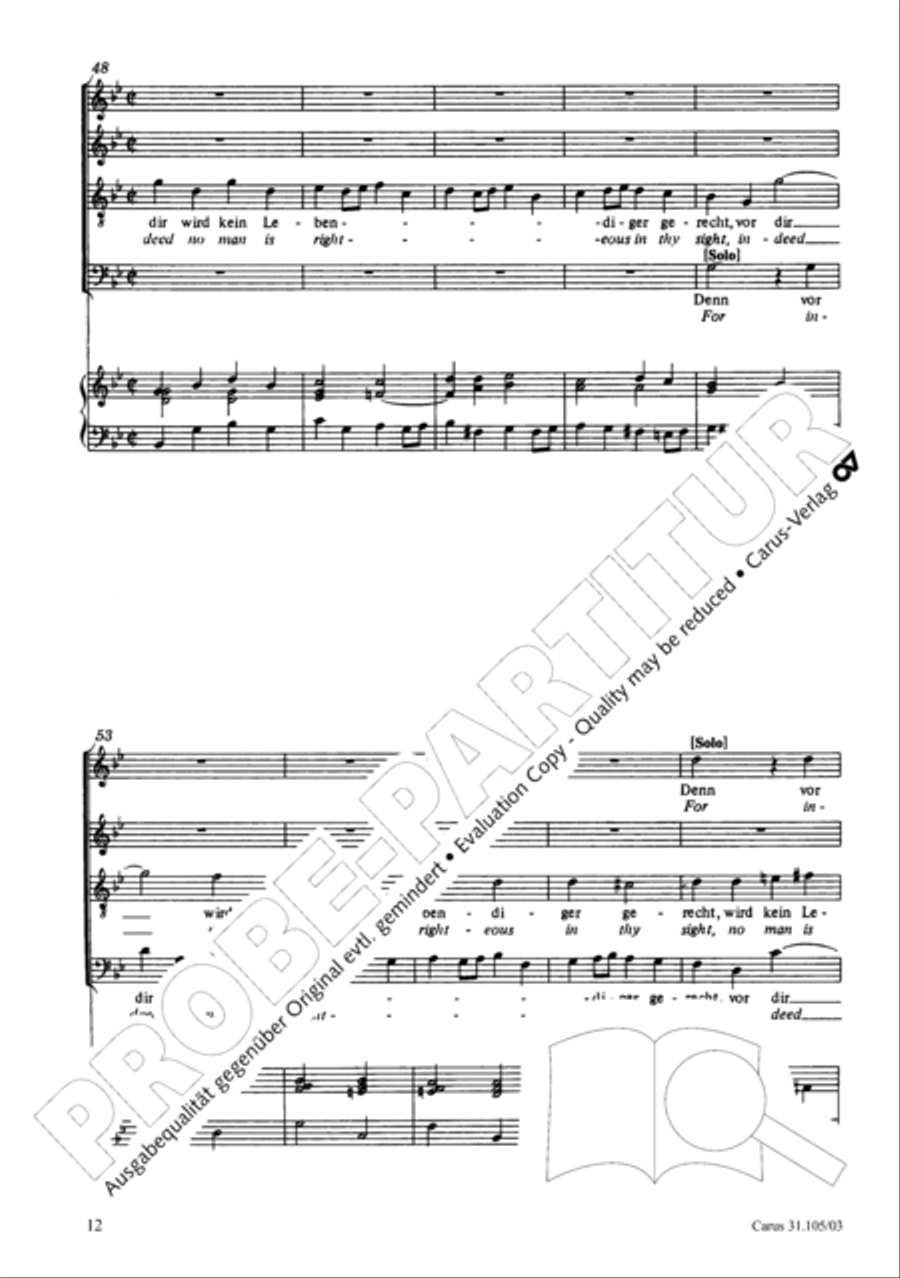
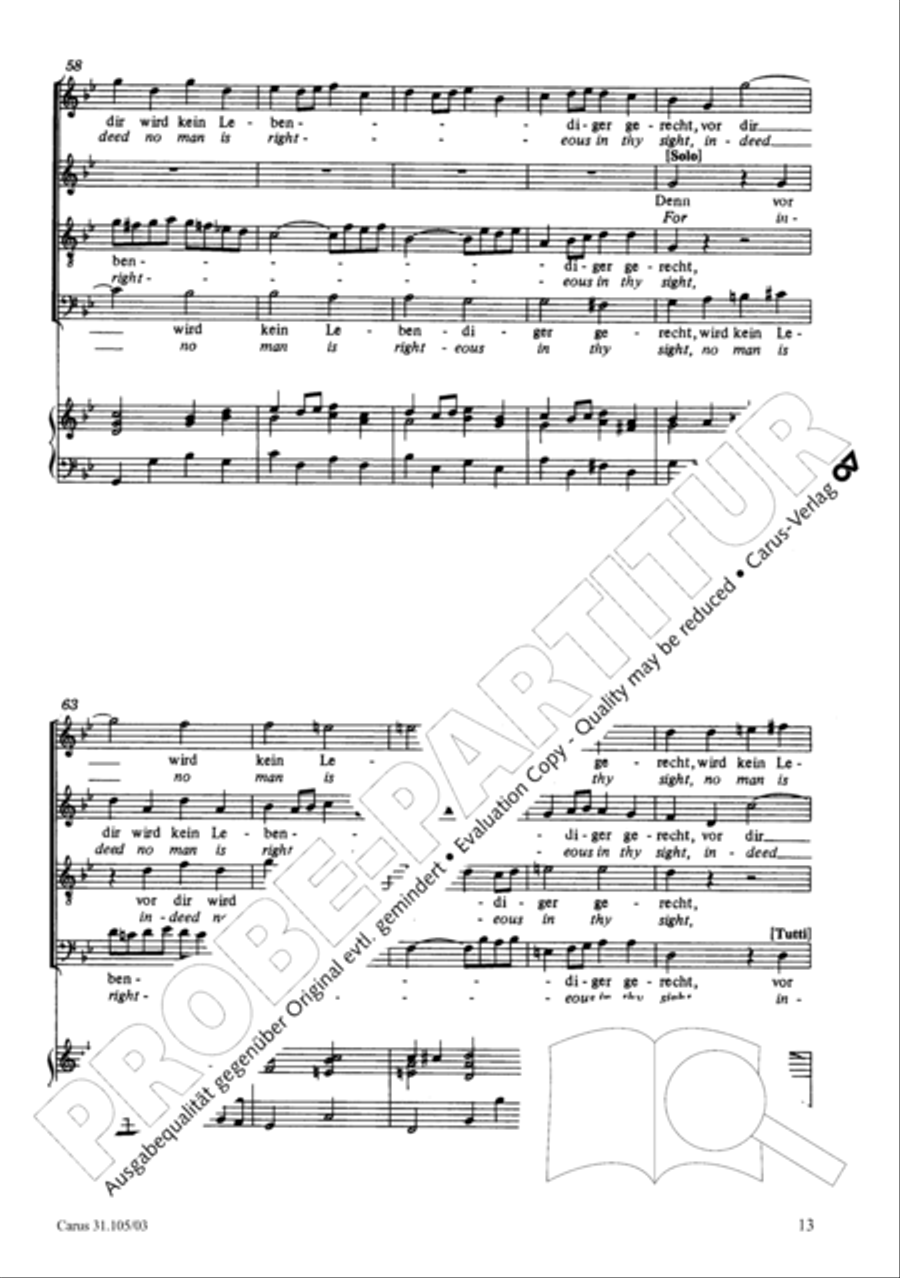
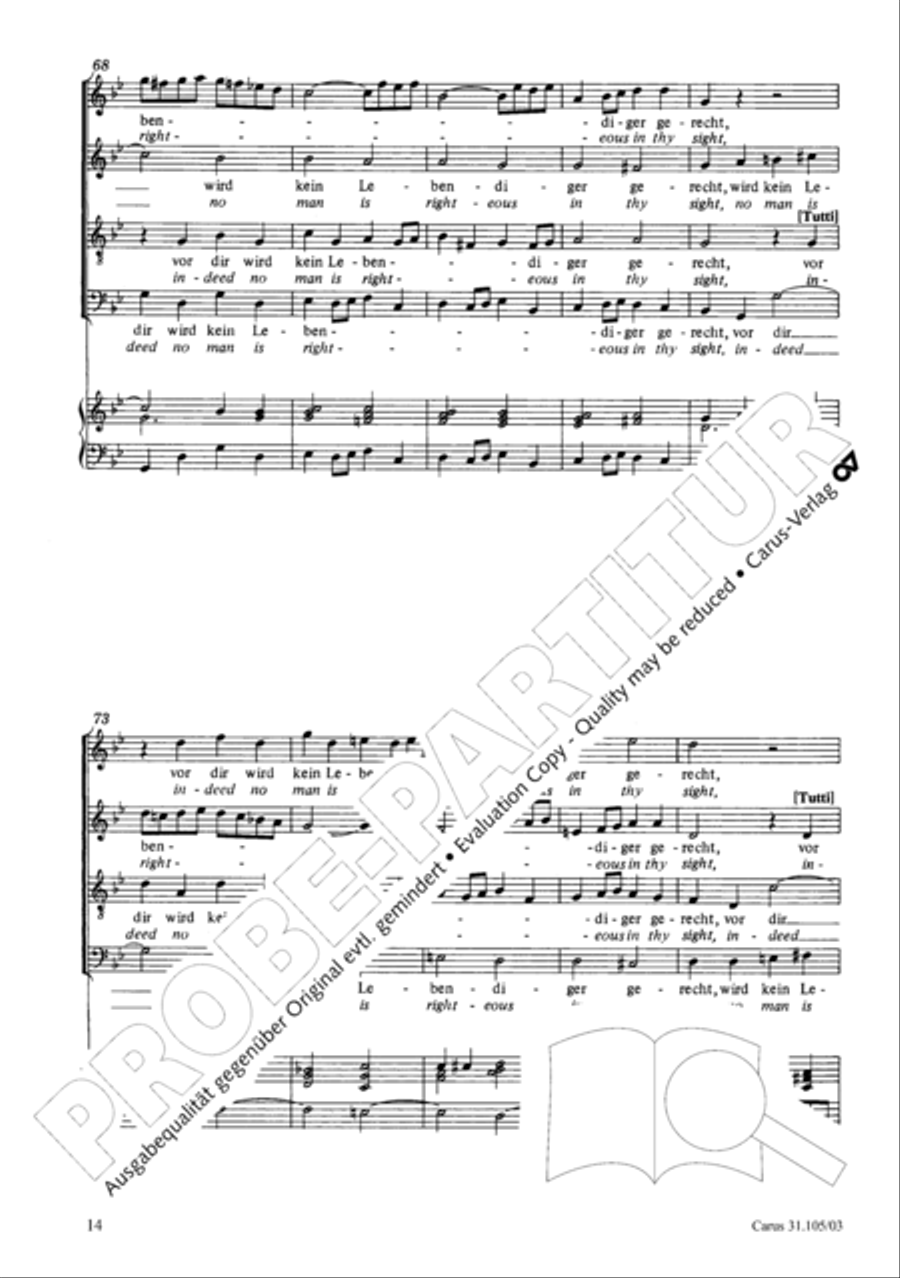
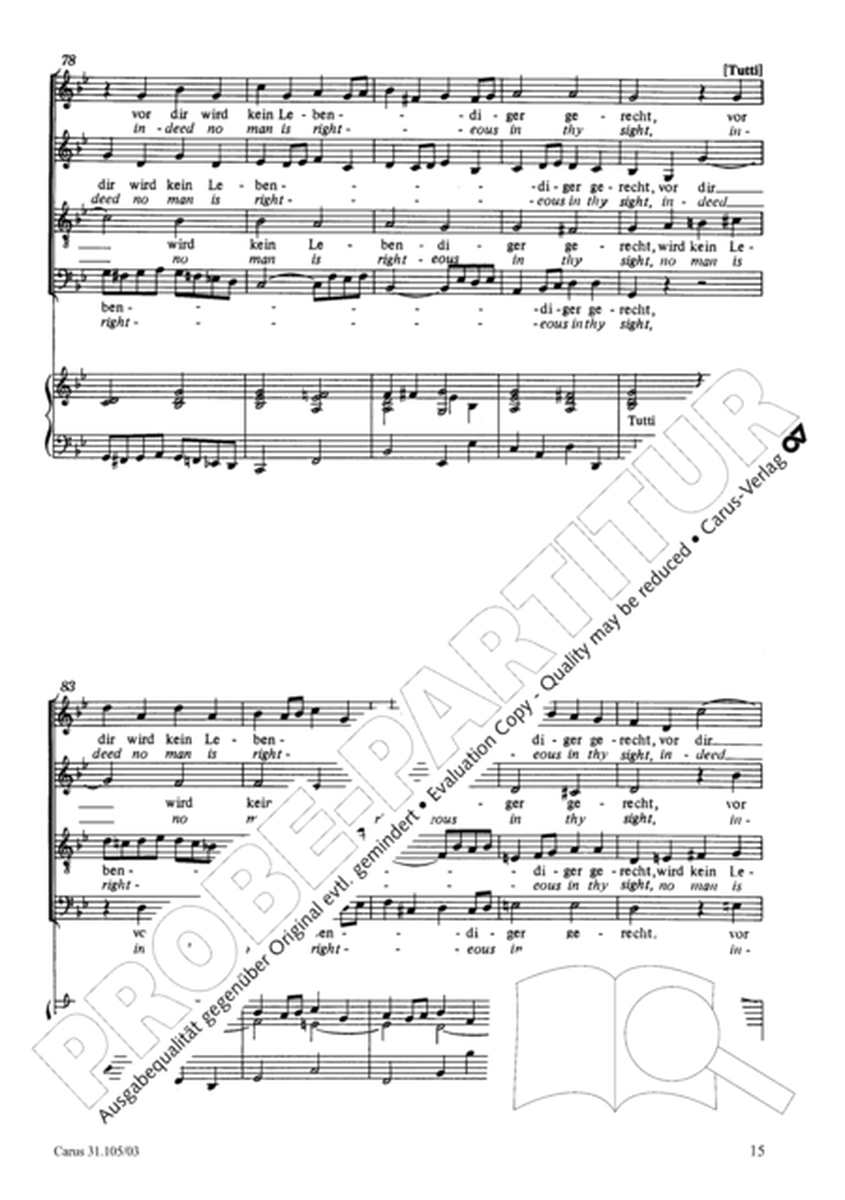
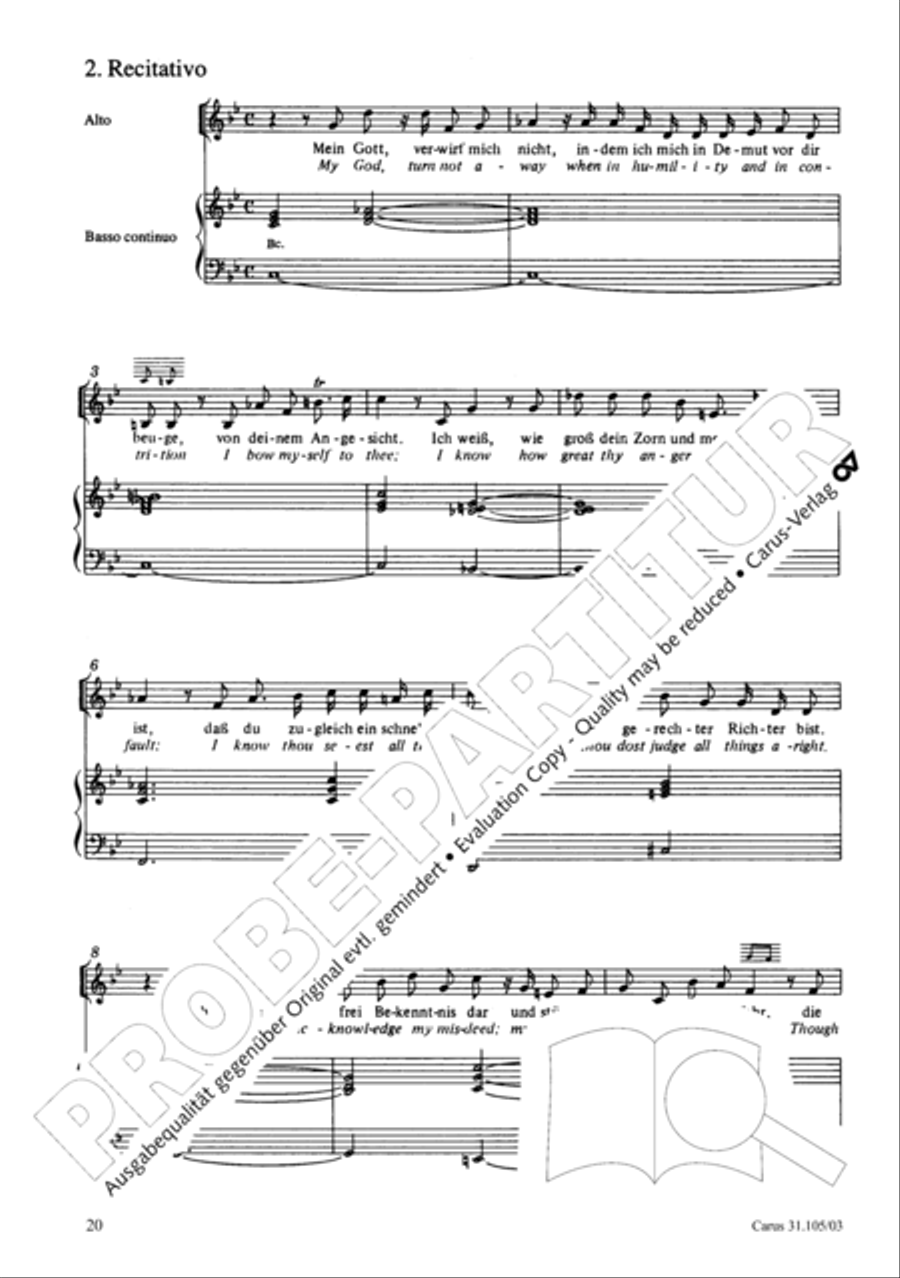
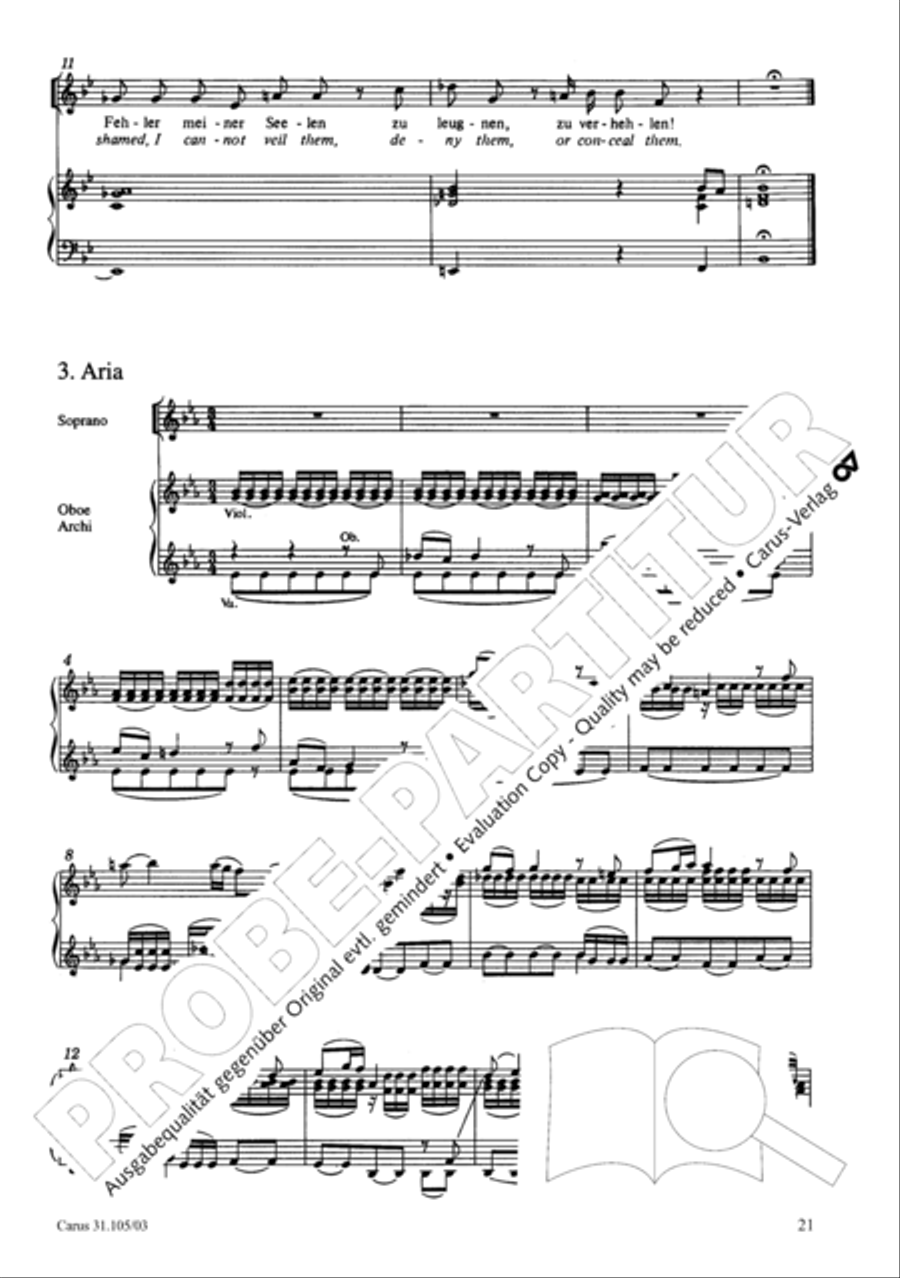
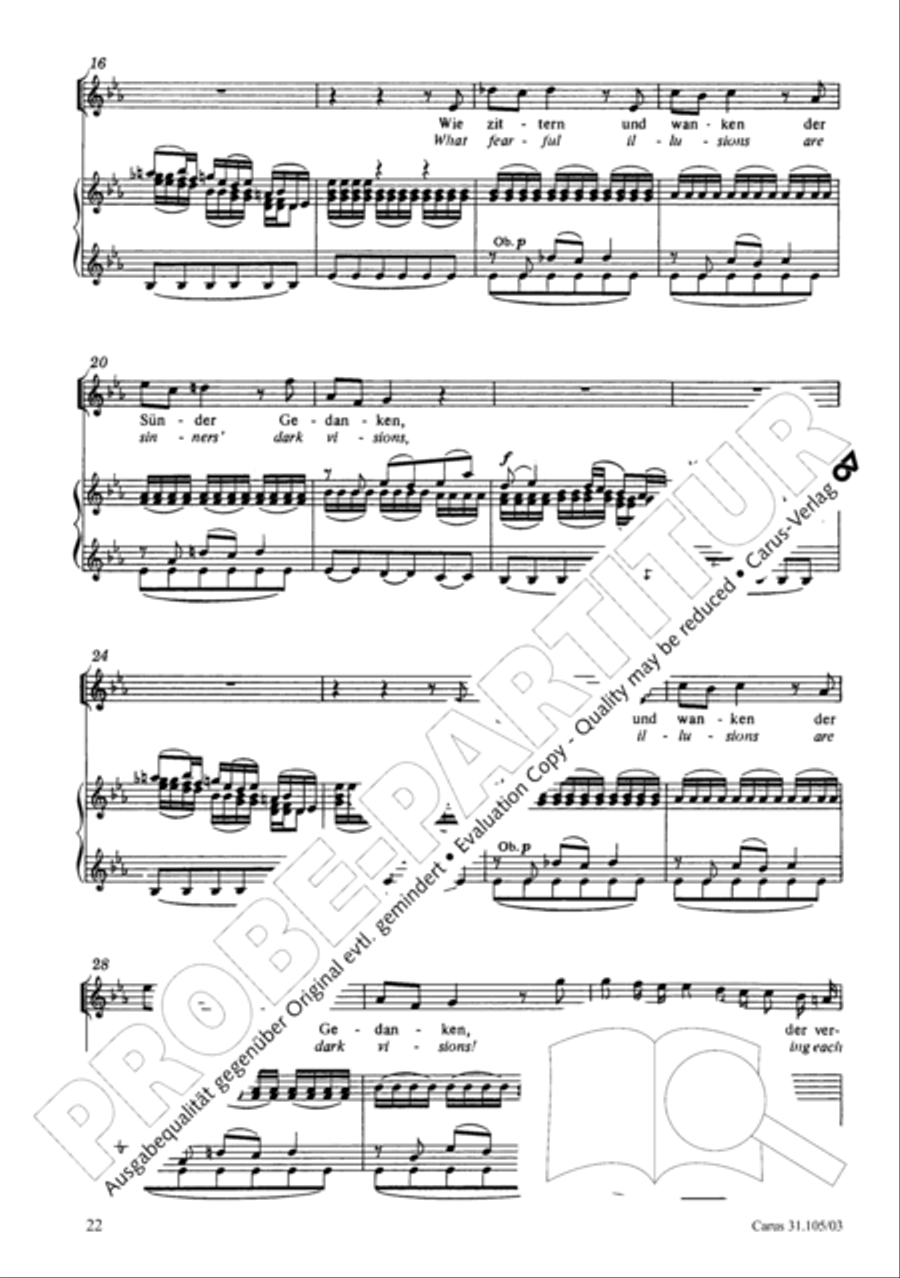
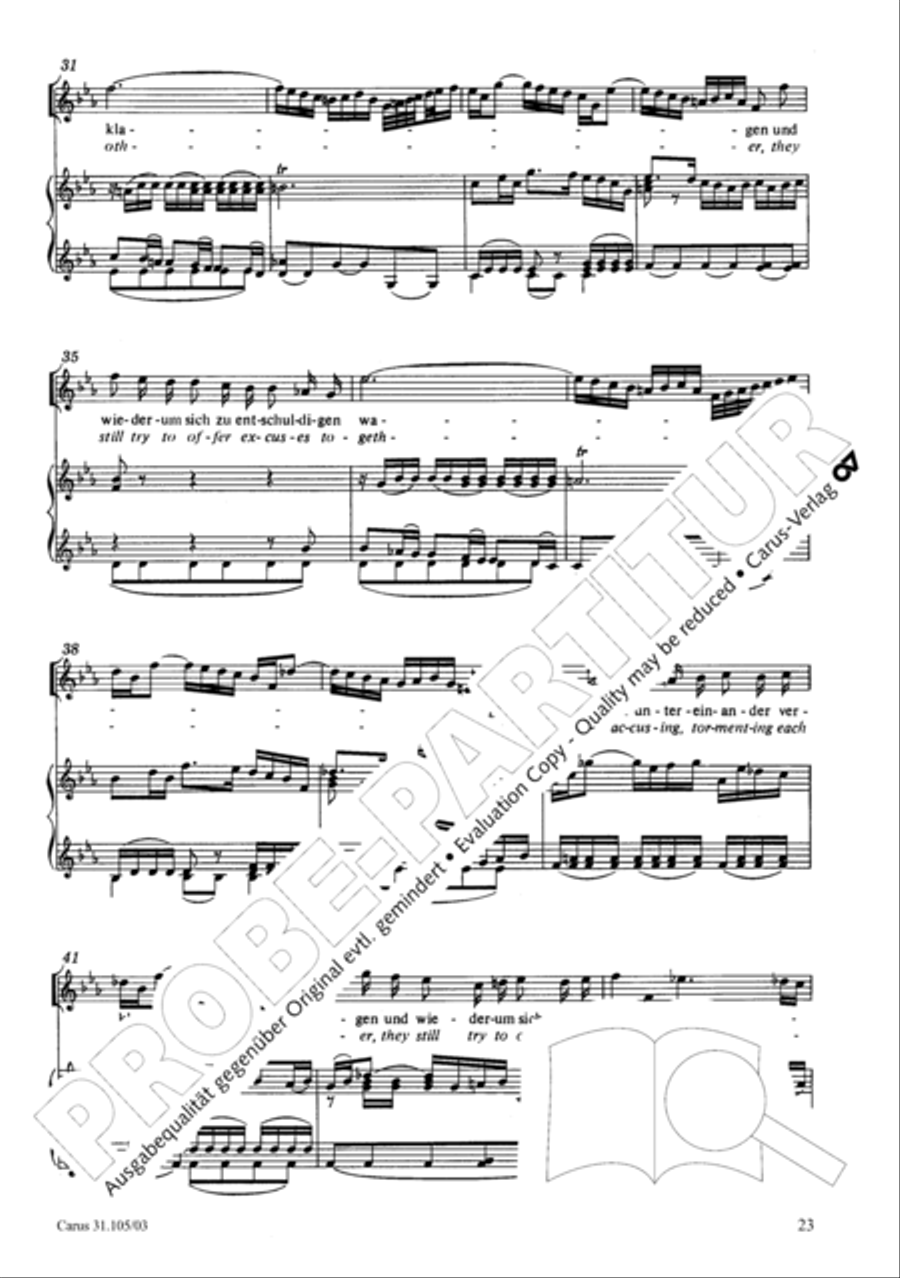
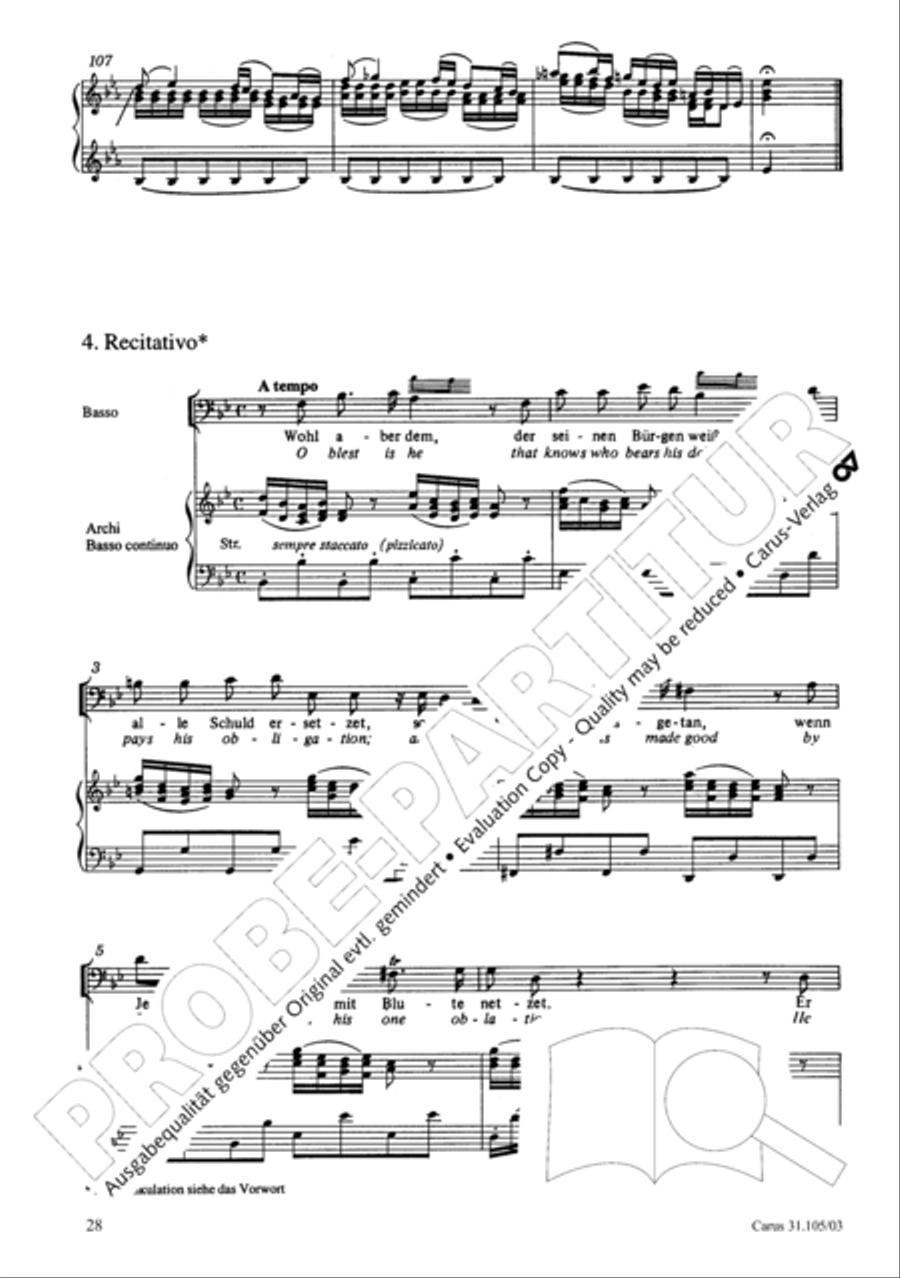
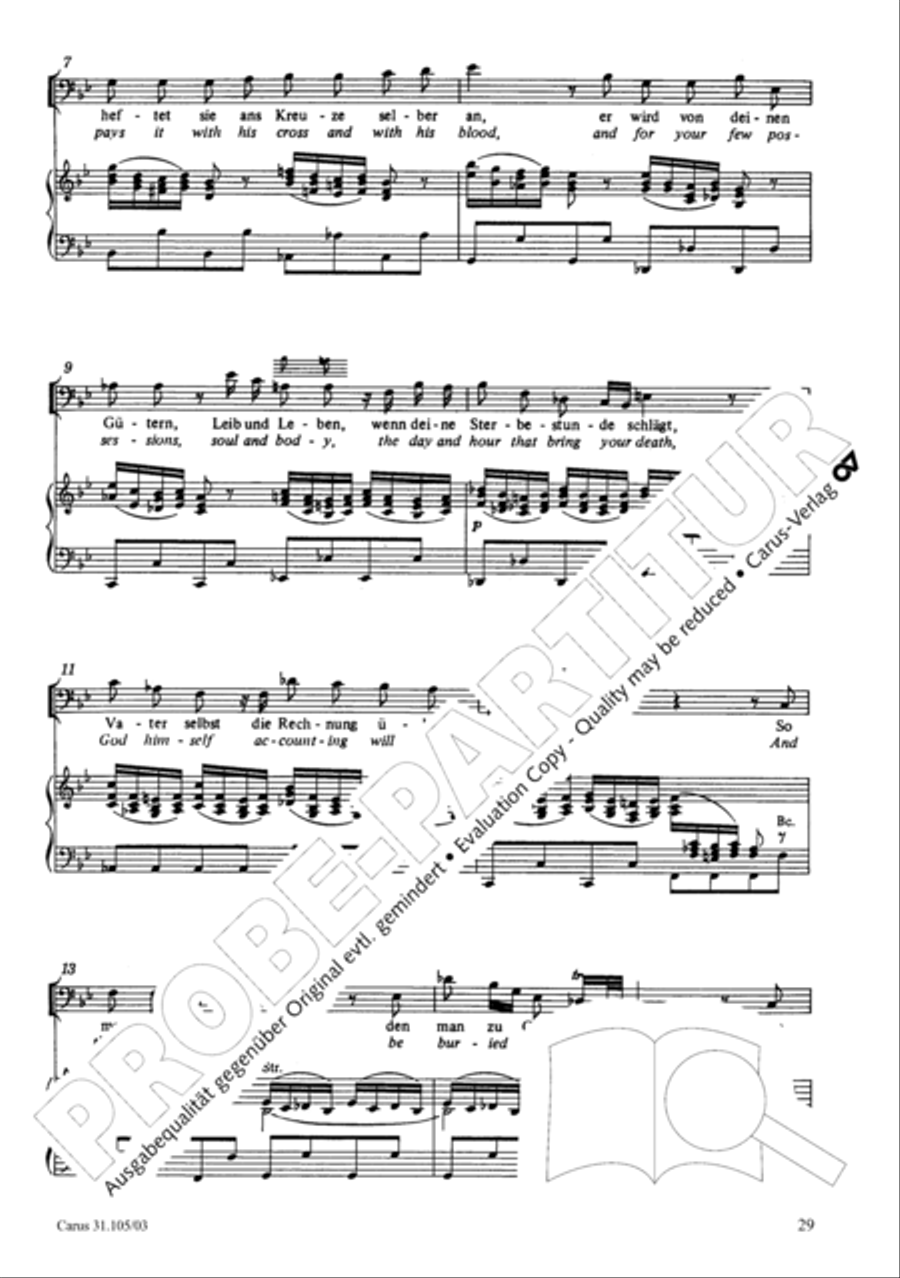
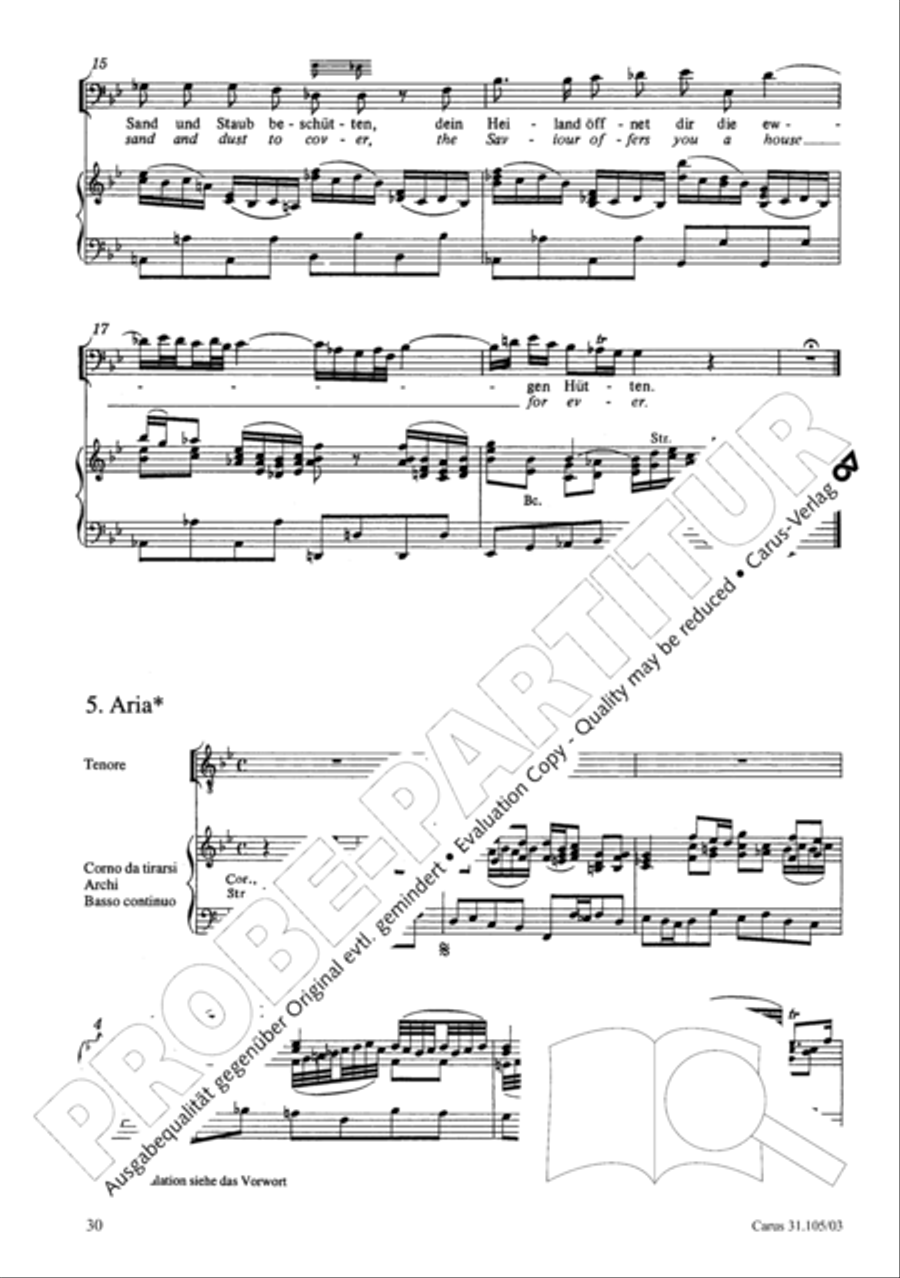
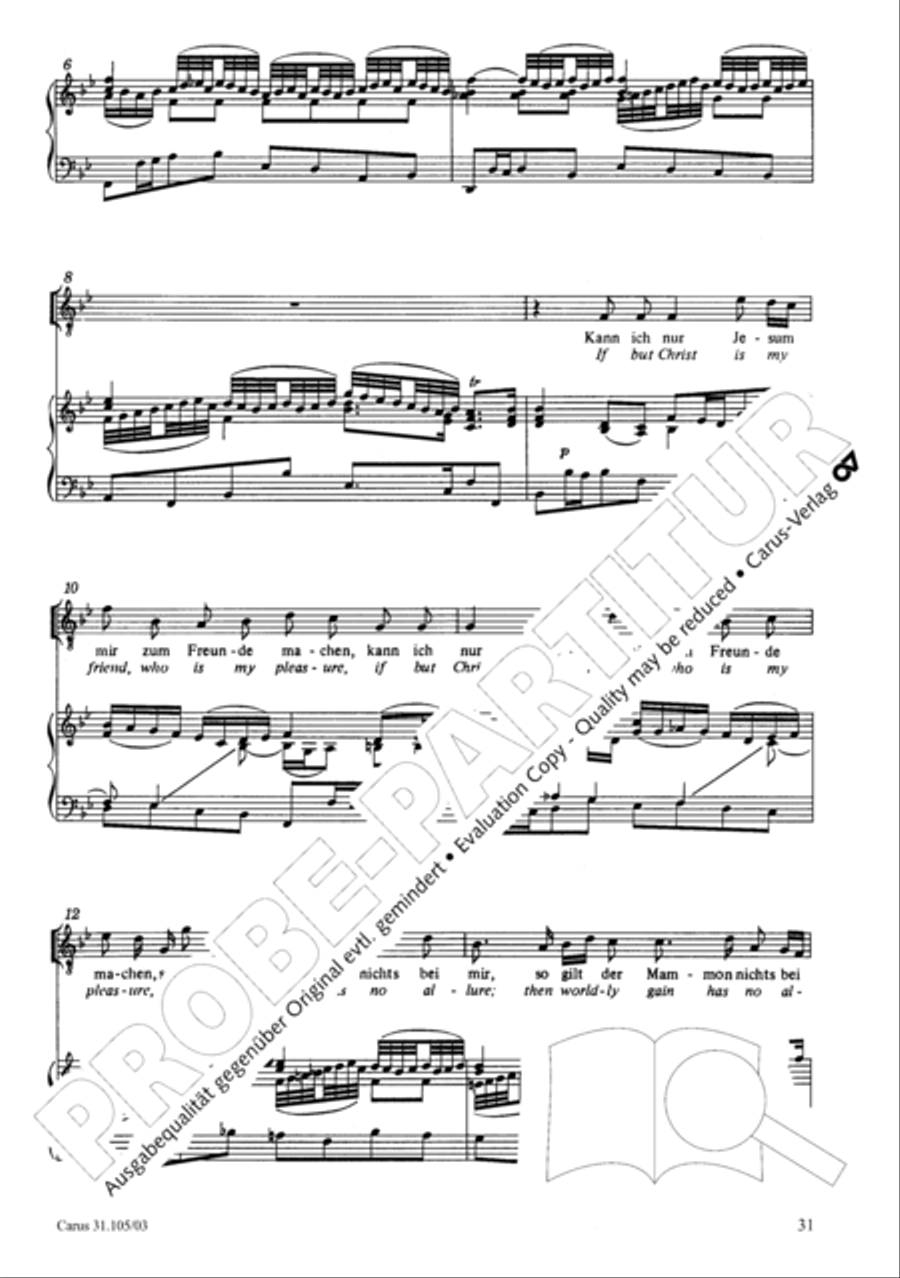
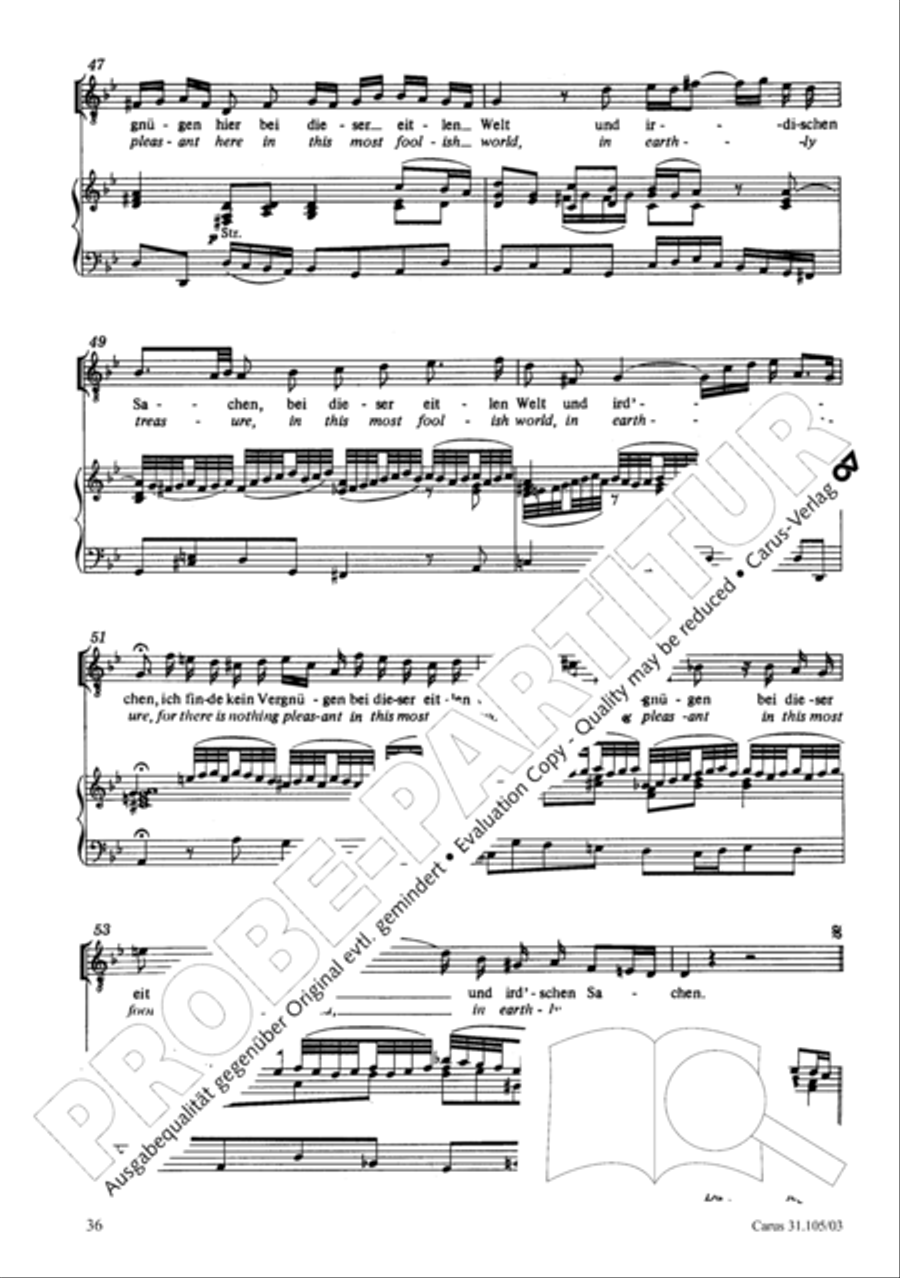
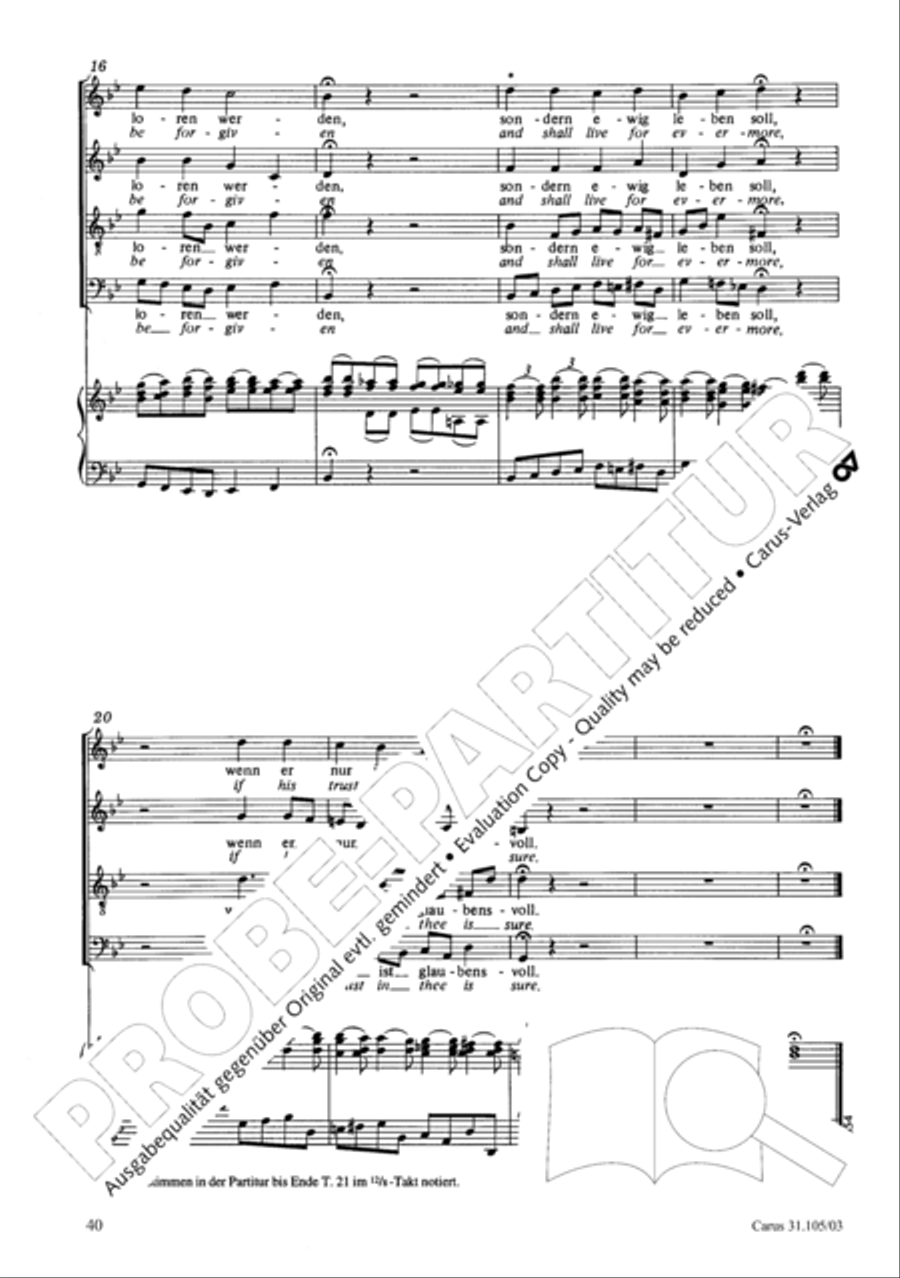
Cantata for the 9th Sunday after Trinity. Composed by Johann Sebastian Bach. Edited by Reinhold Kubik. Arranged by Paul Horn. This edition: Paperbound. German title: Herr, gehe nicht ins Gericht. Sacred vocal music, Cantatas. Vocal score. Composed 1723. BWV 105. 40 pages. Duration 25 minutes. Carus Verlag #CV 31.105/03. Published by Carus Verlag (CA.3110503).ISBN 9790007047641. 7.5 x 10.67 inches. Key: G minor. Language: German/English.
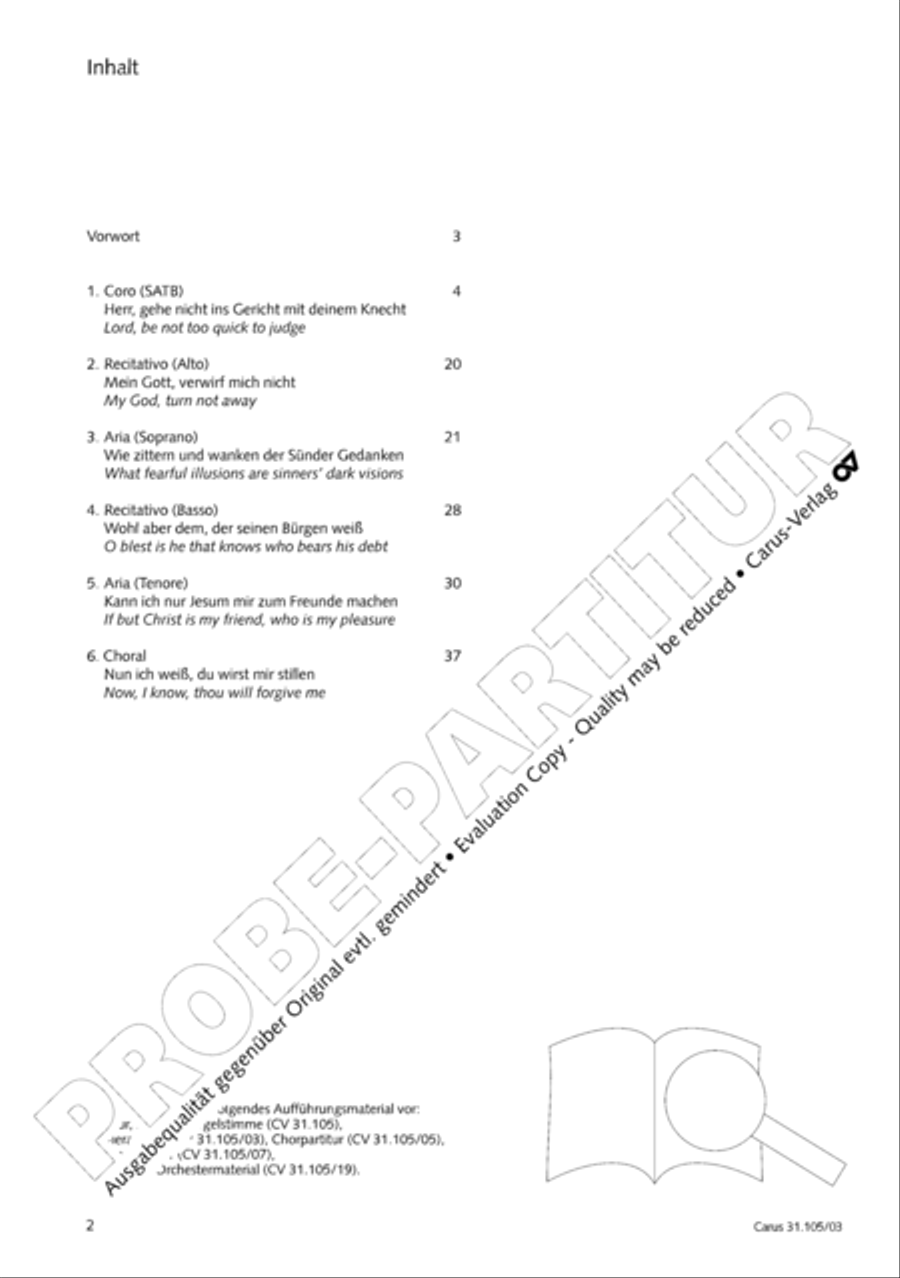
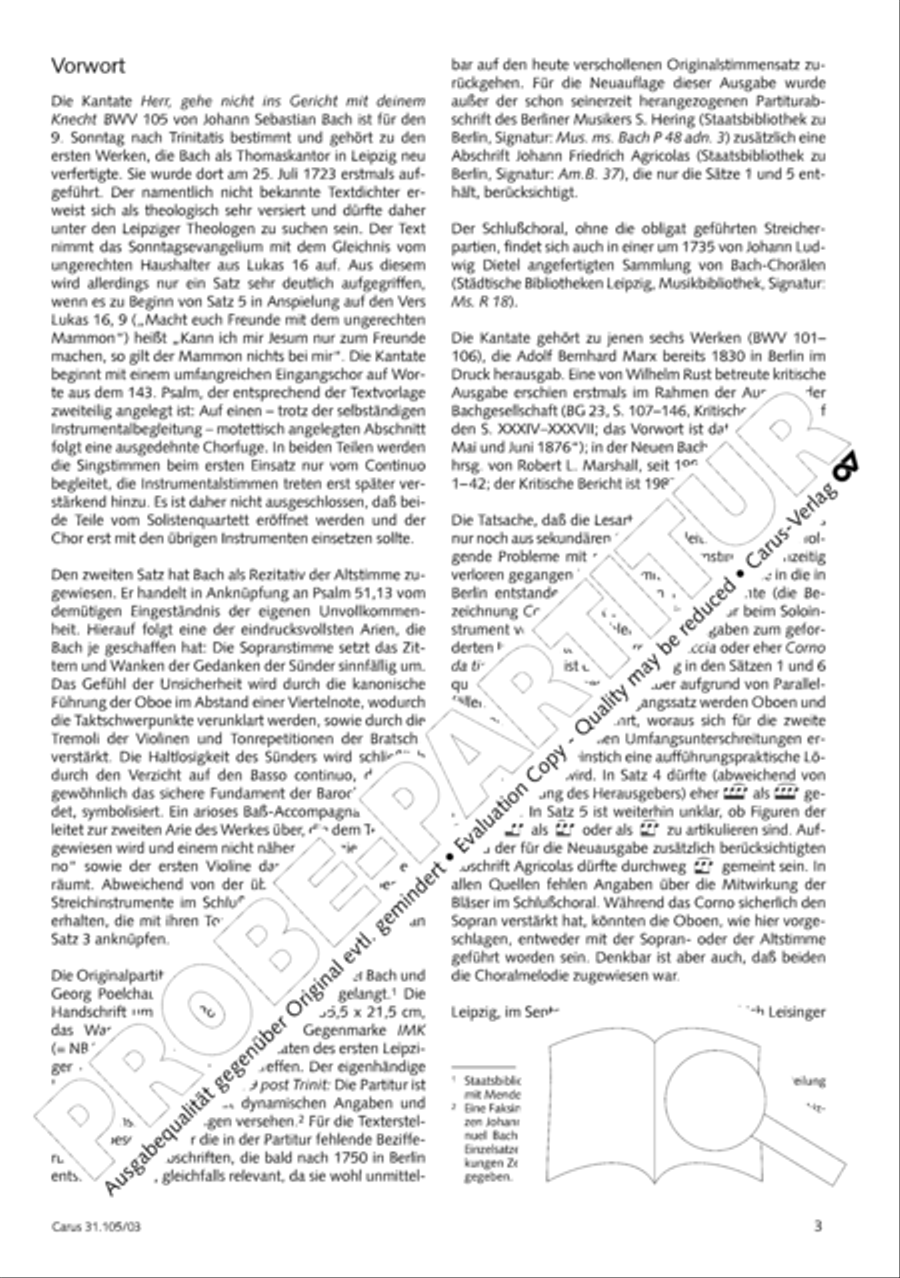
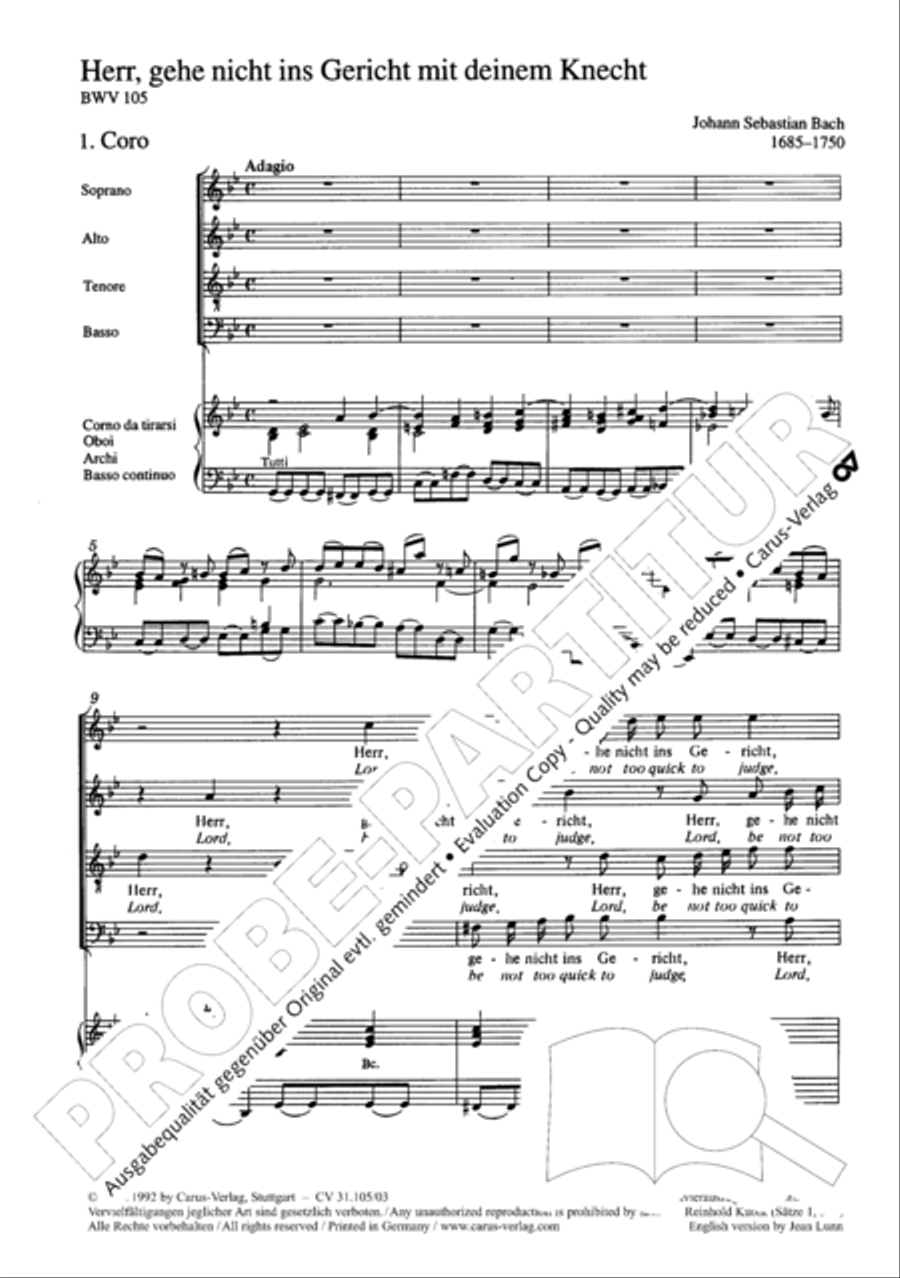
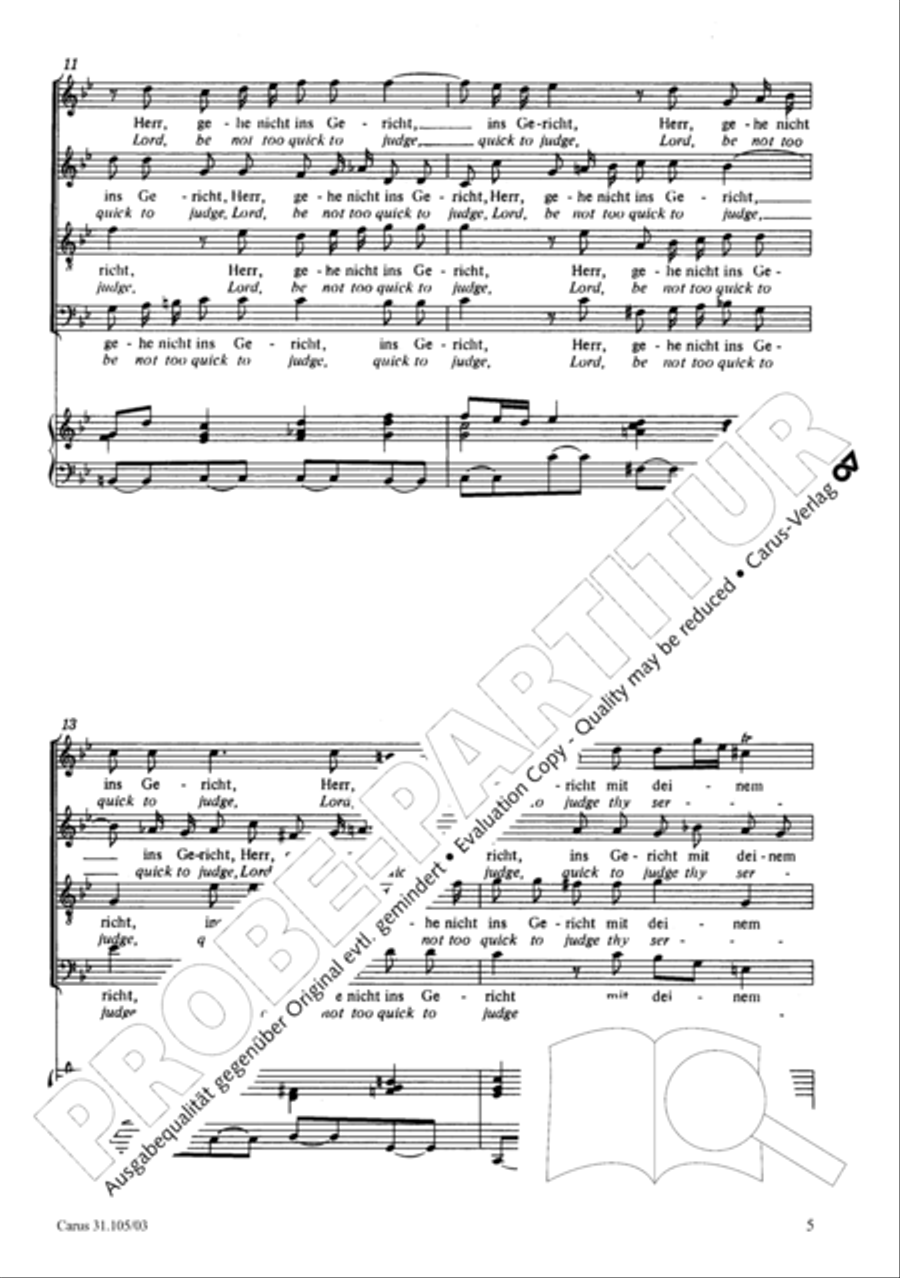
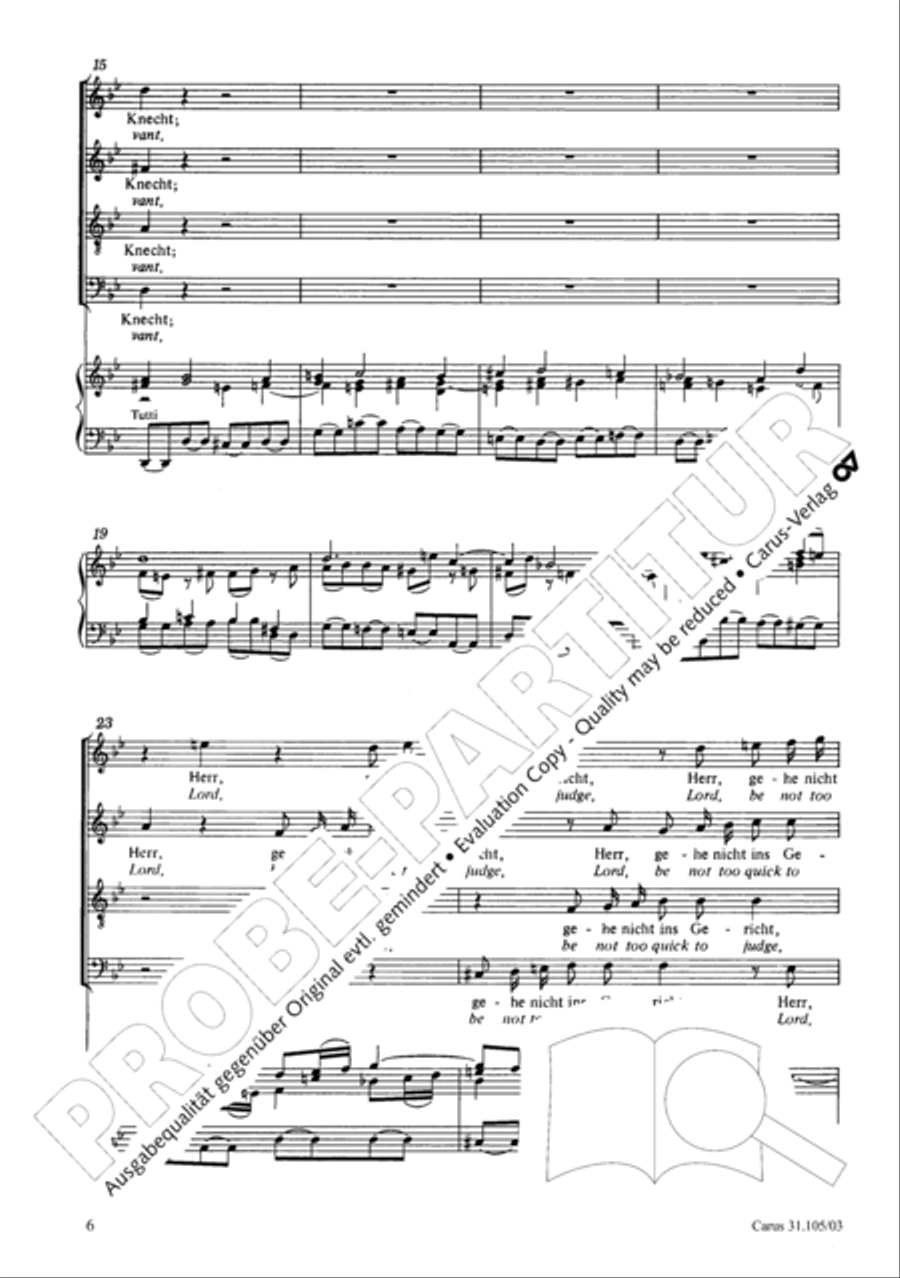
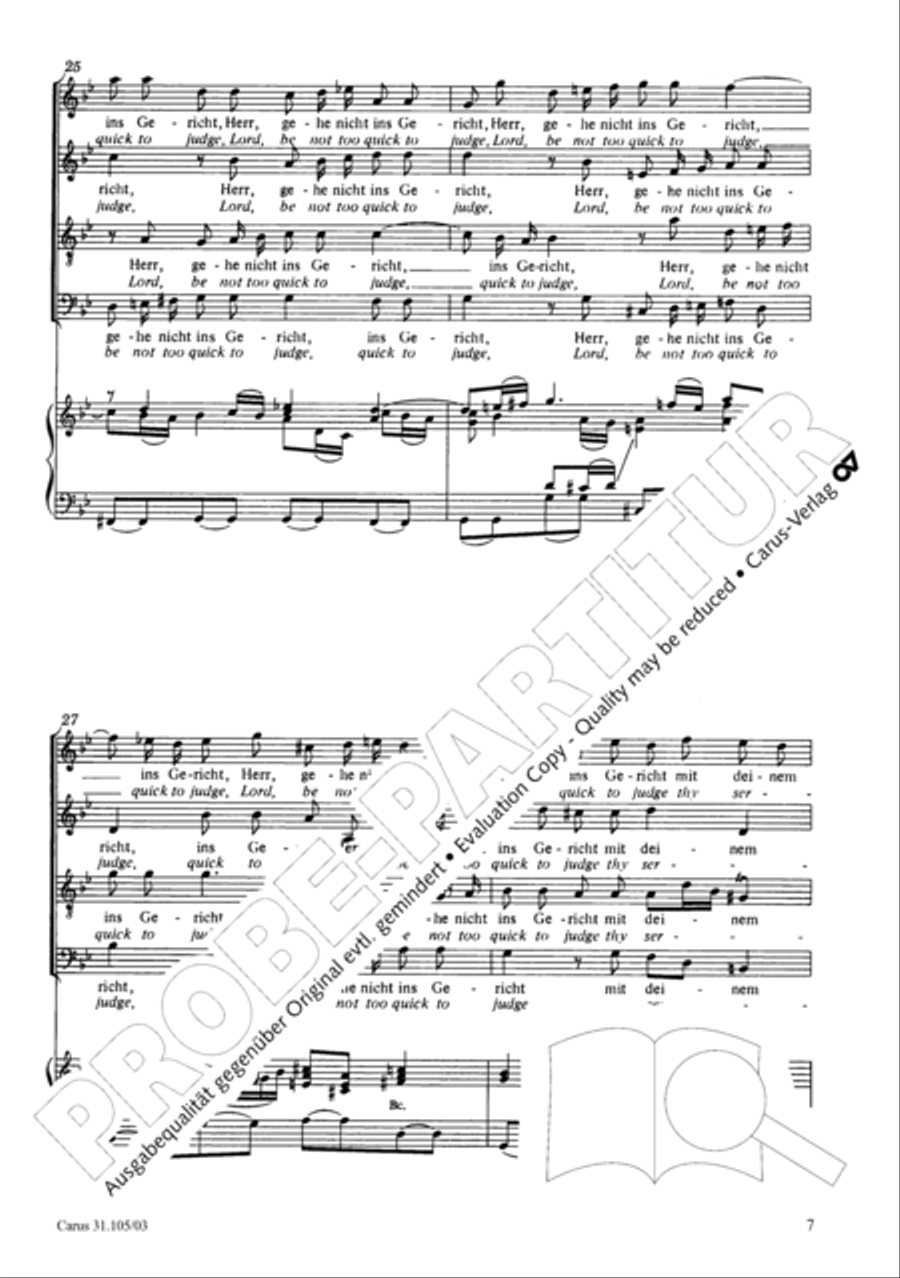
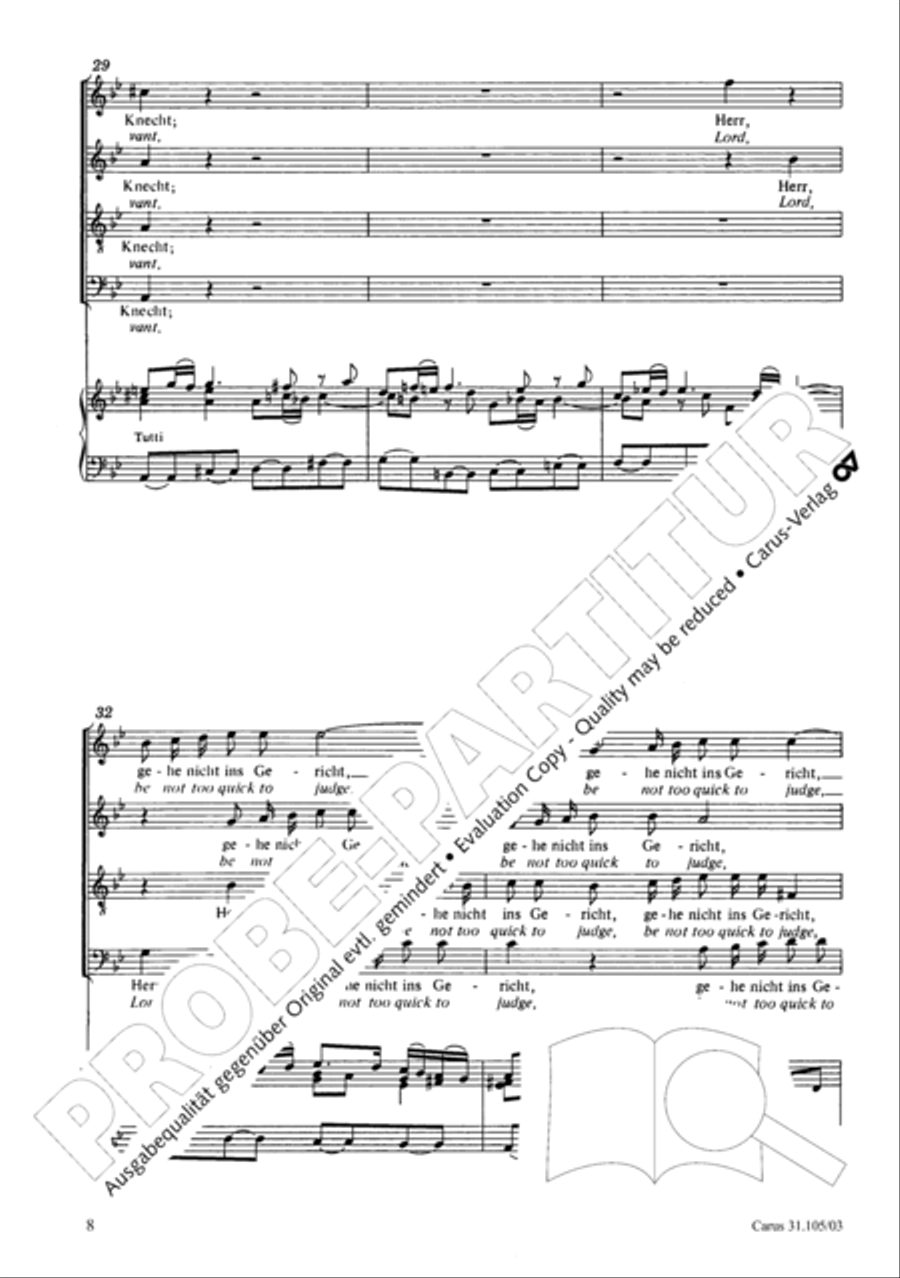
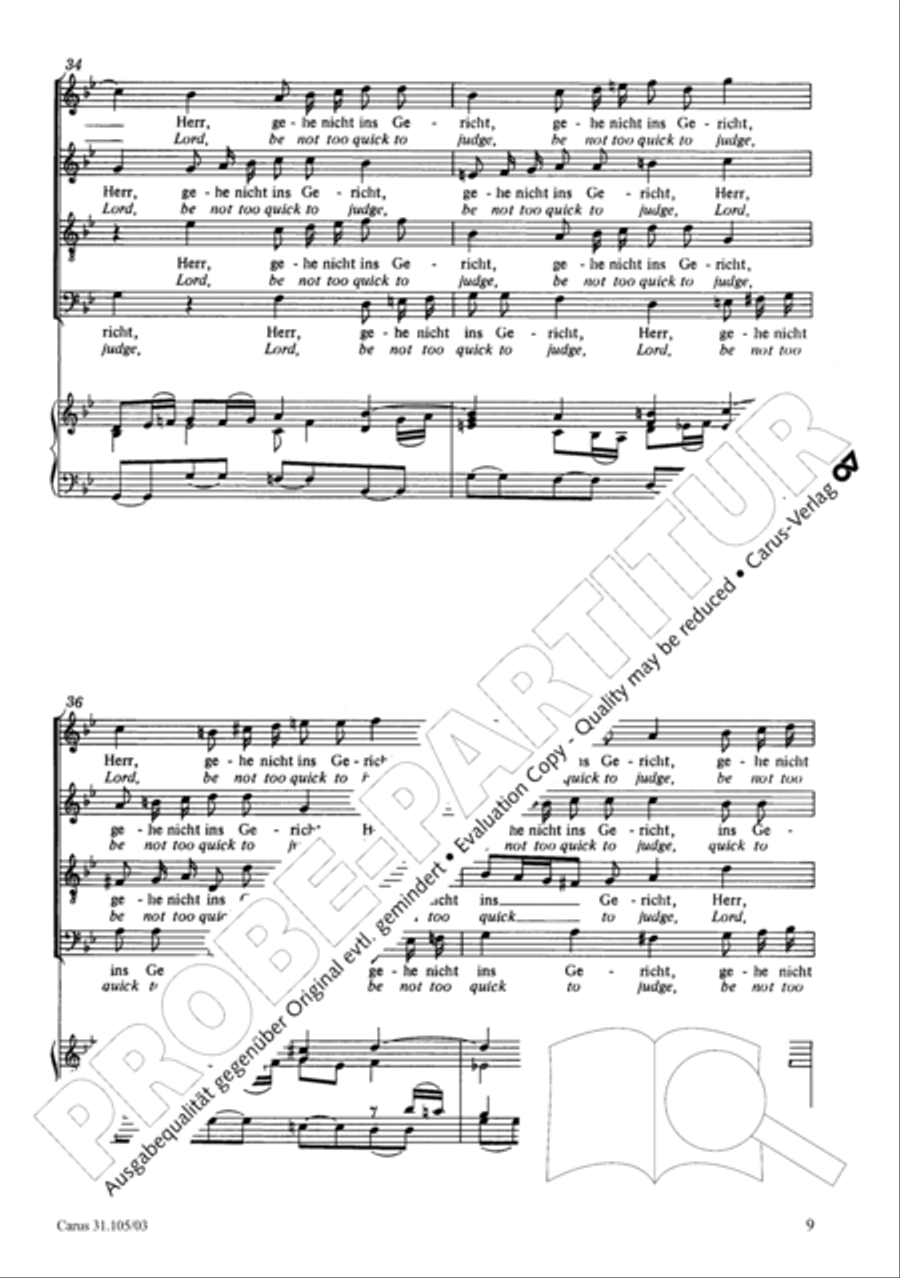
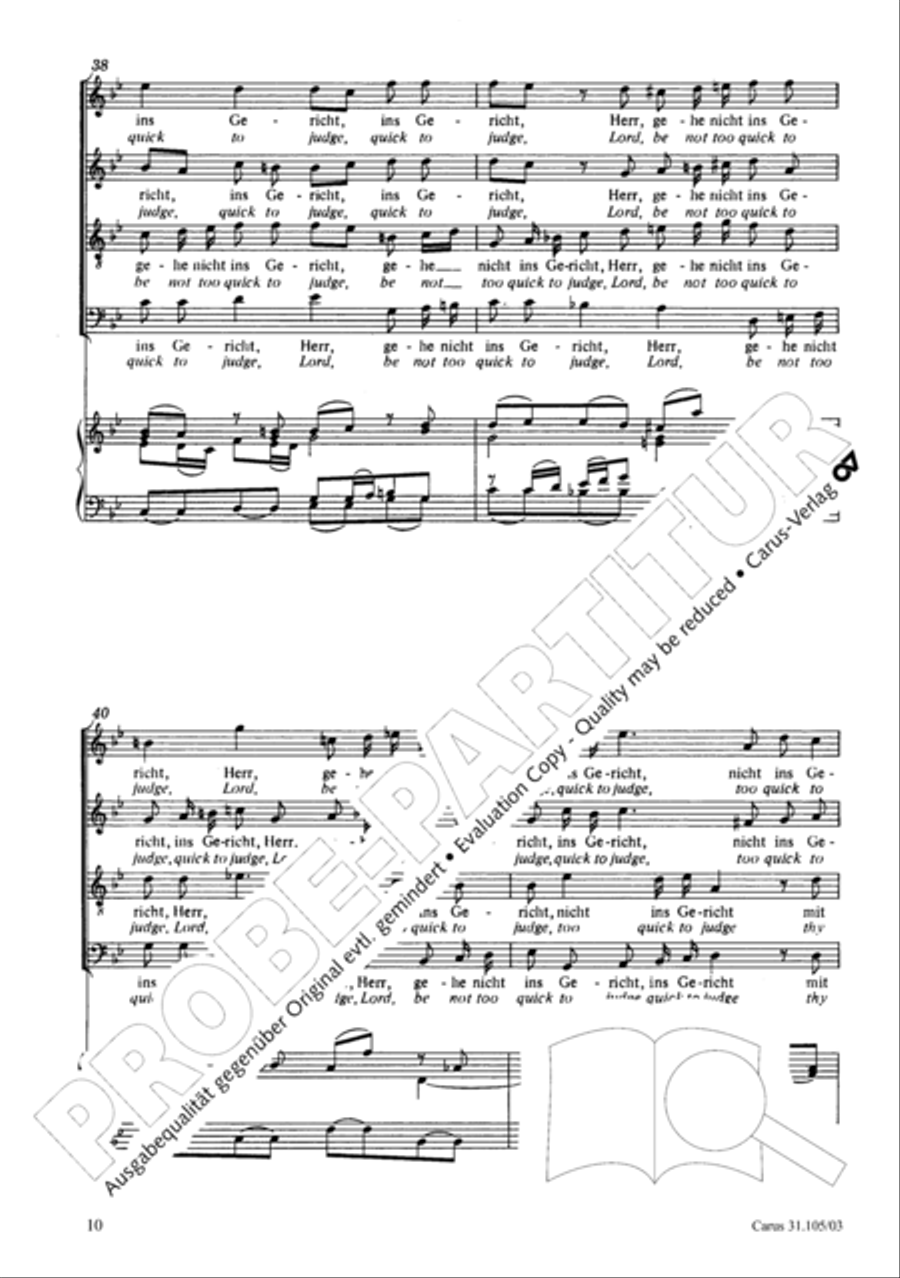
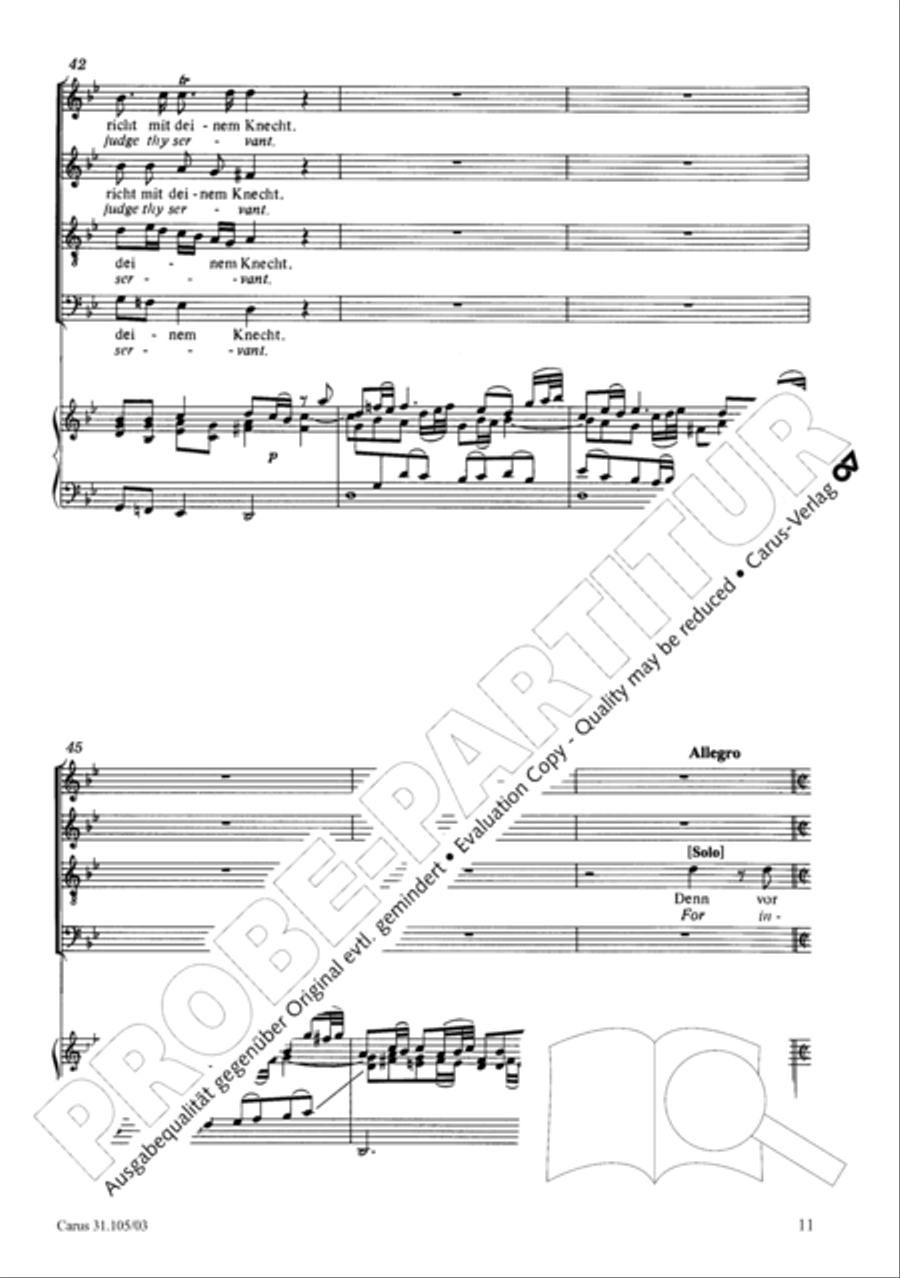
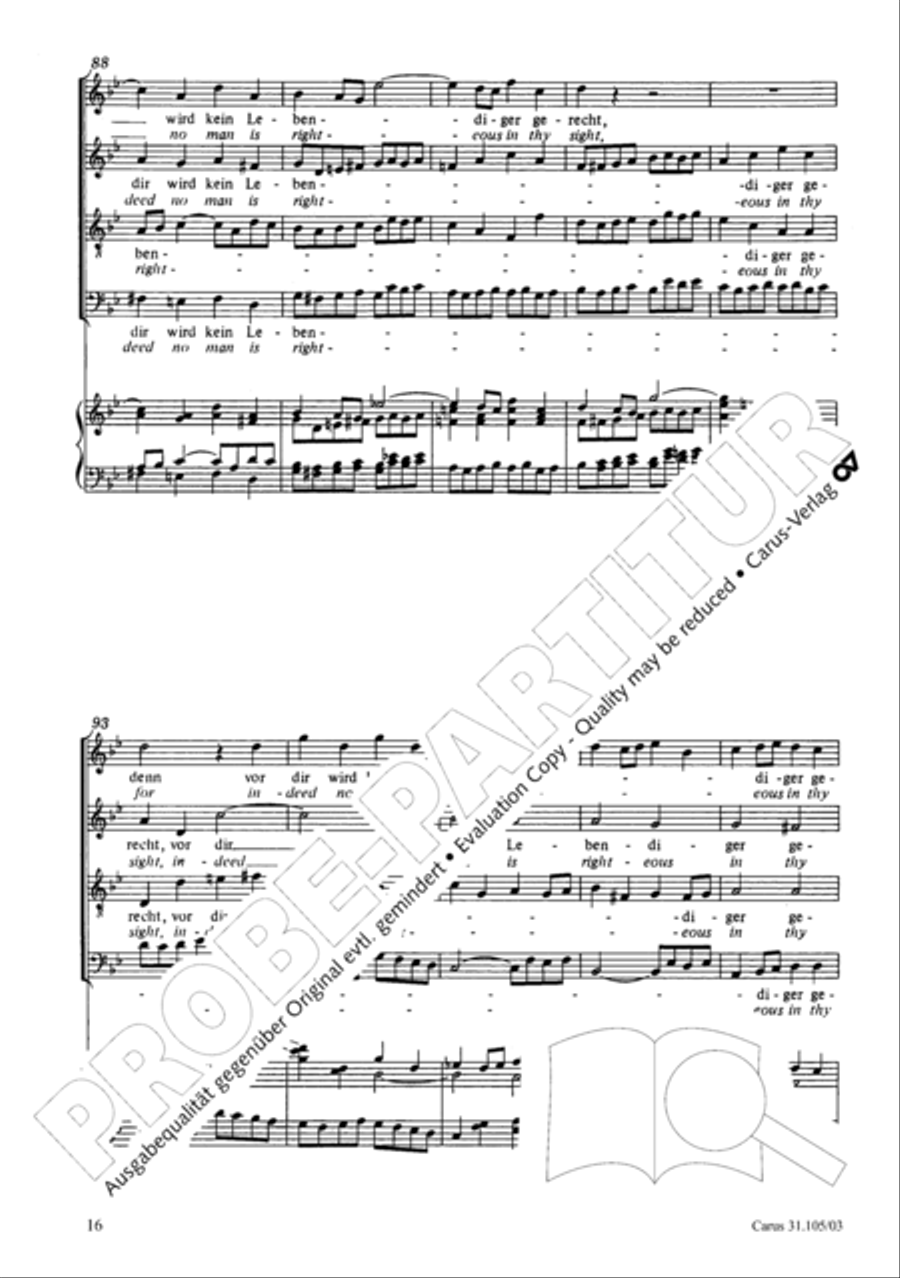
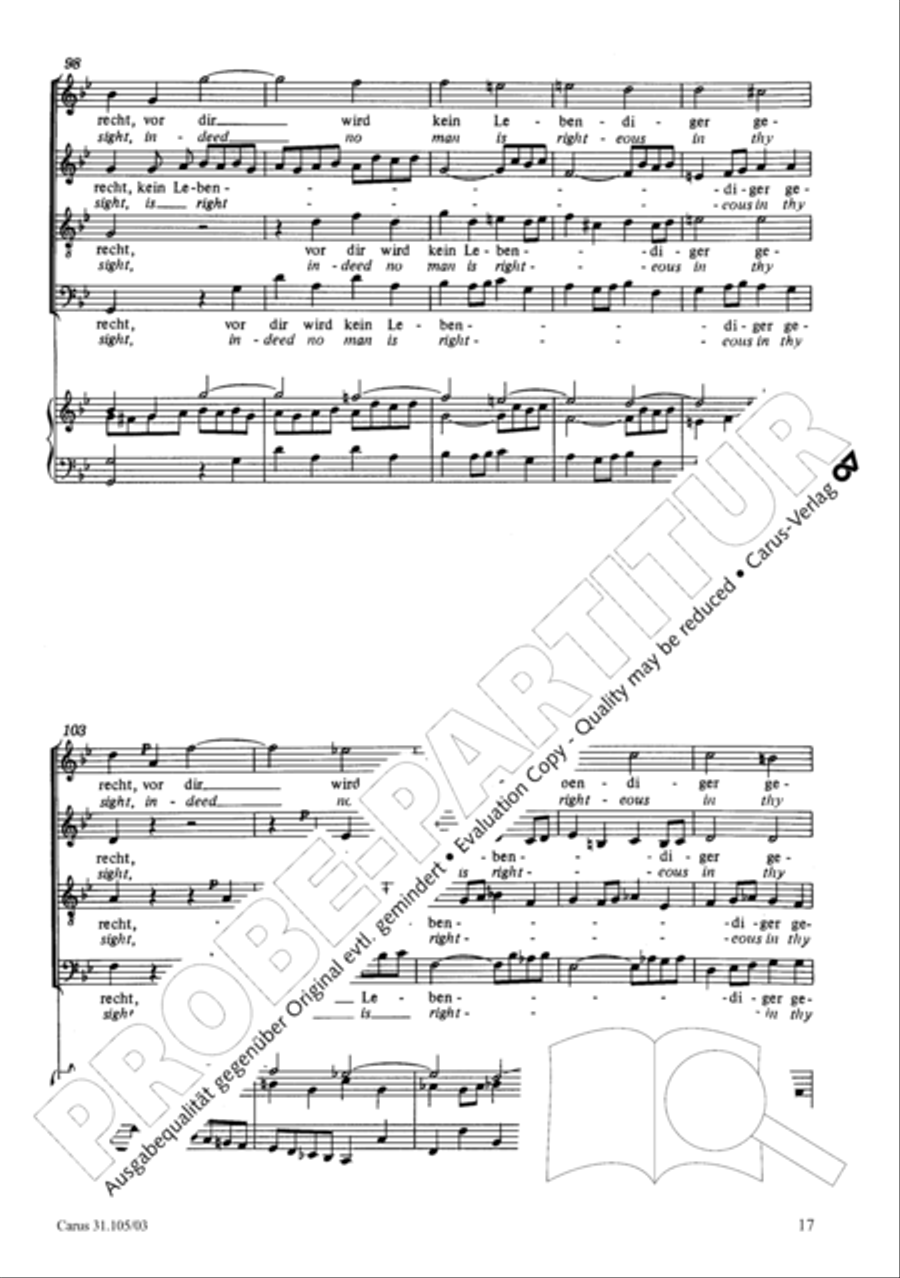
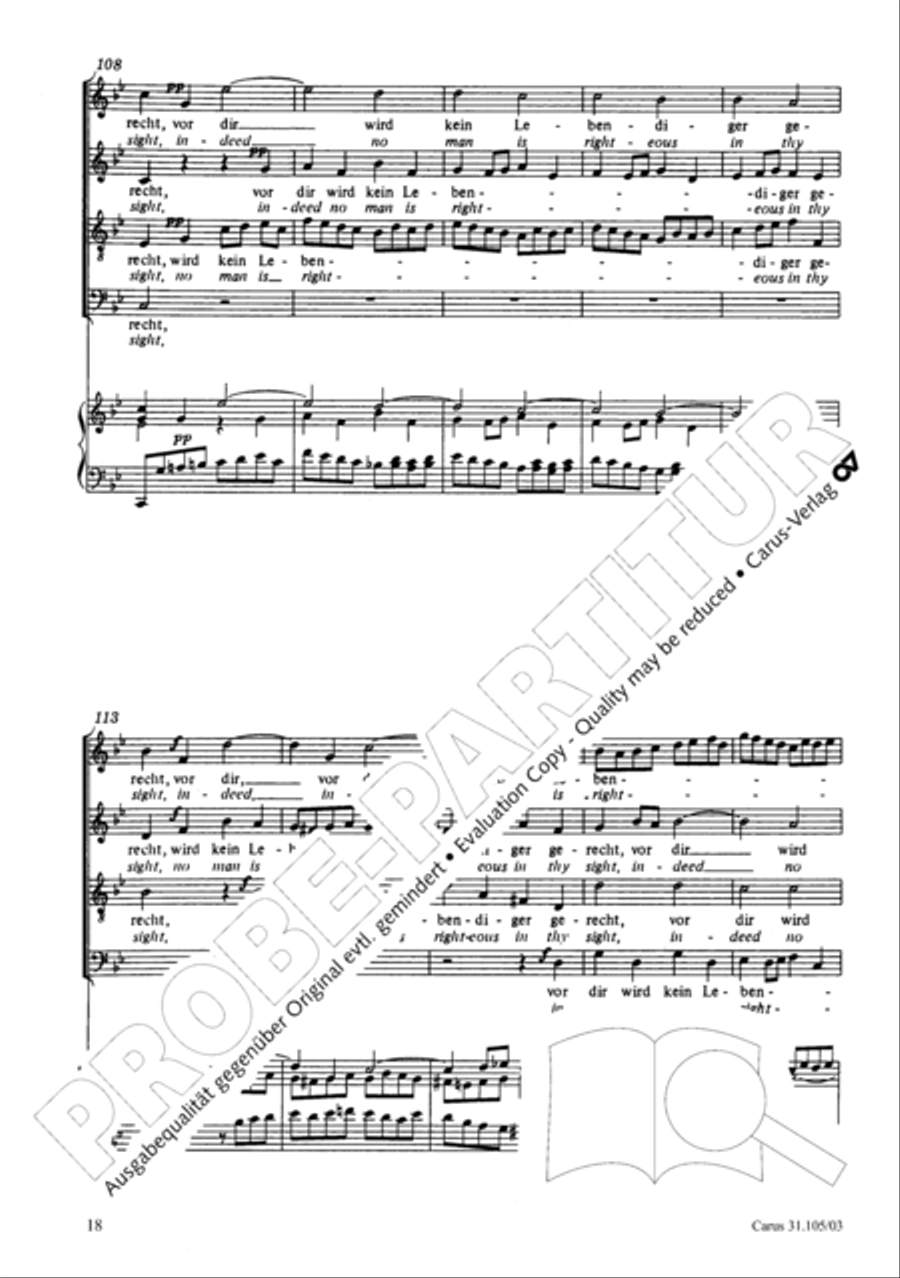
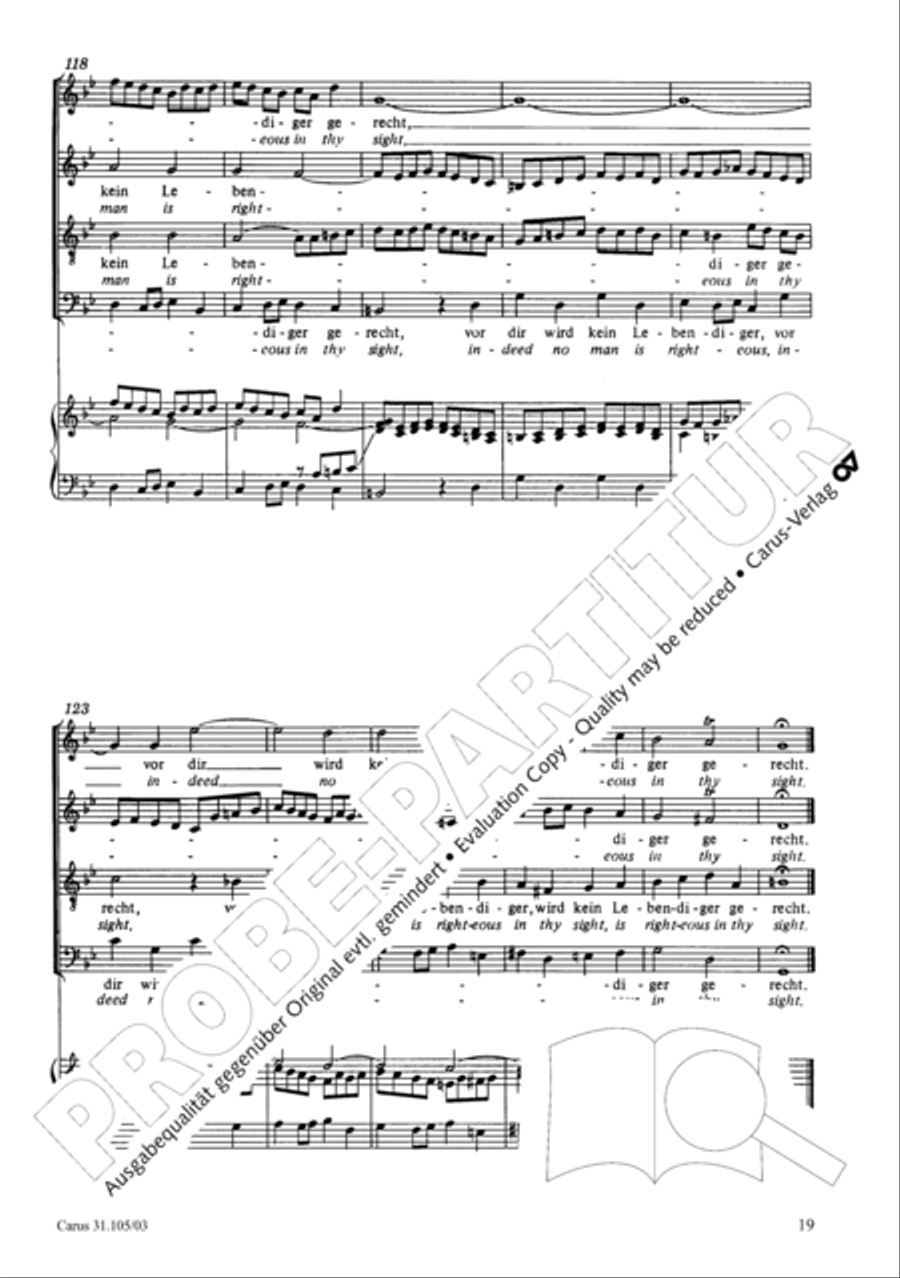
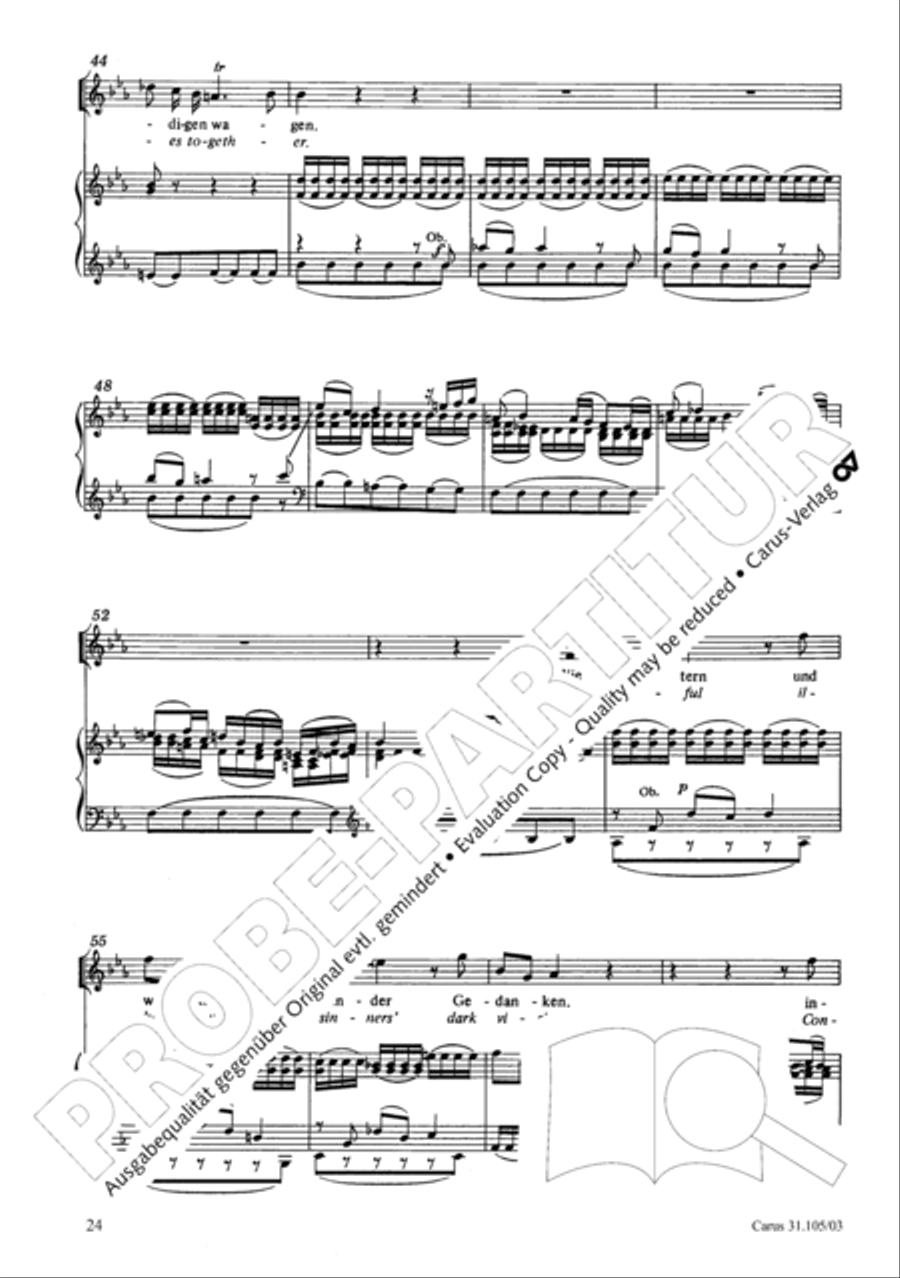
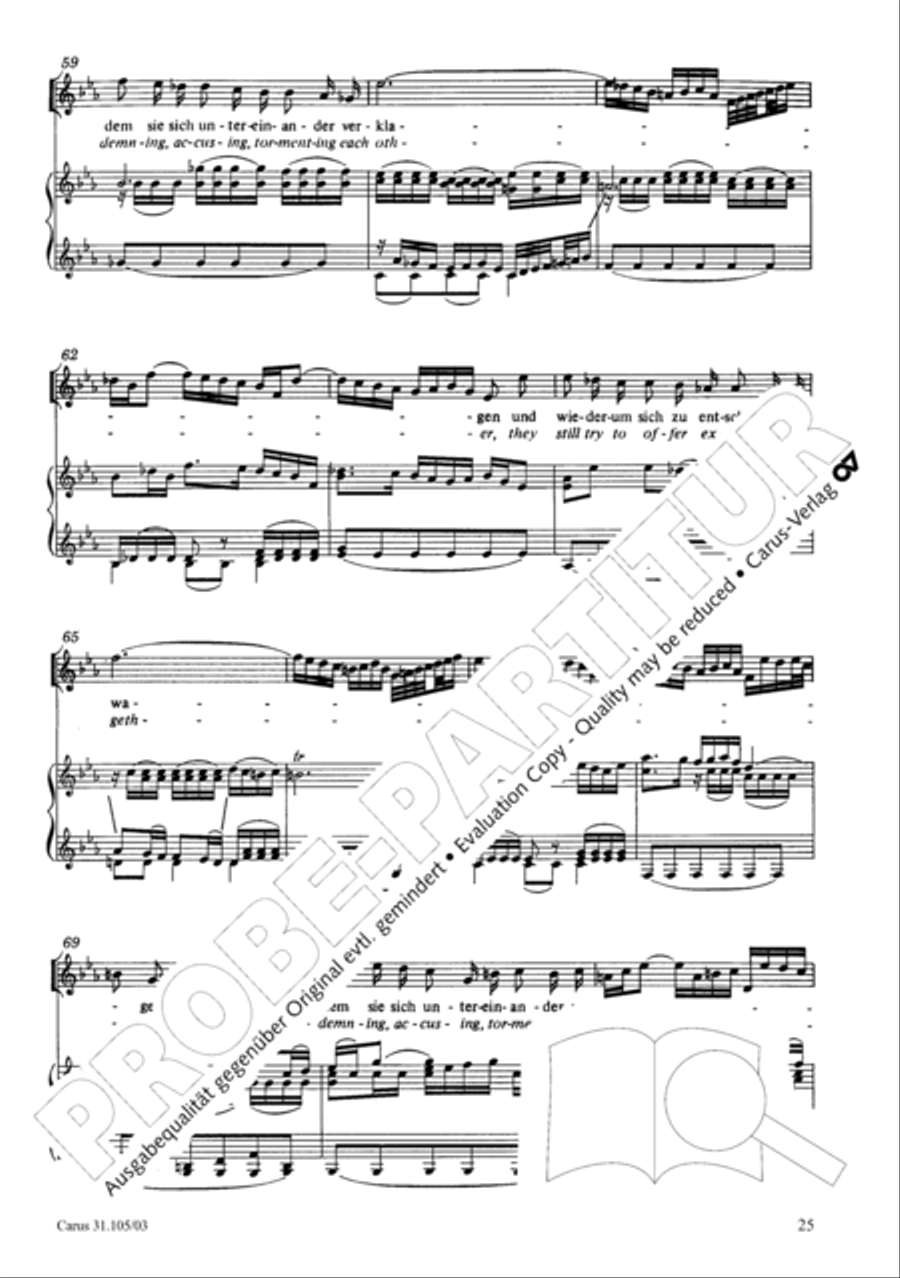
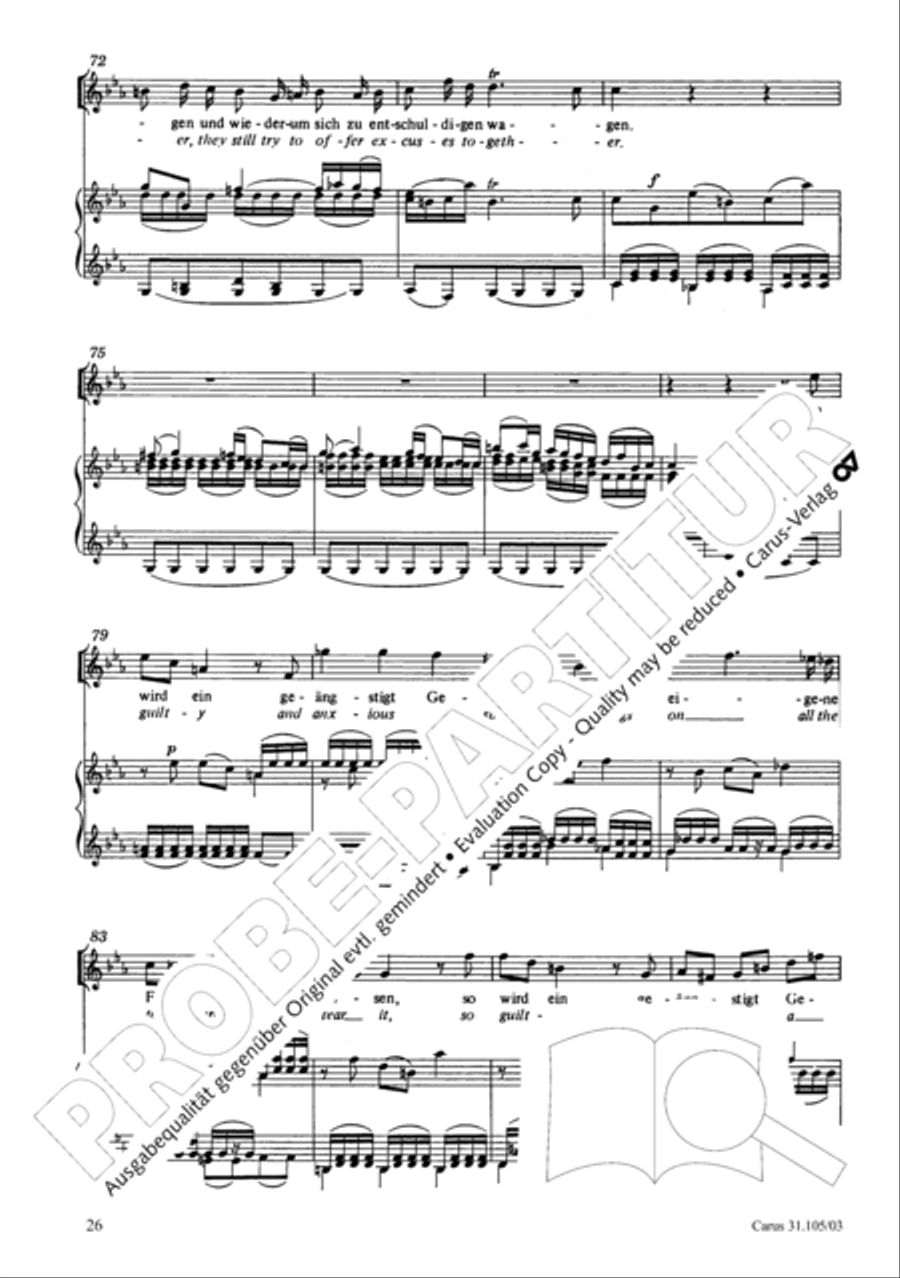
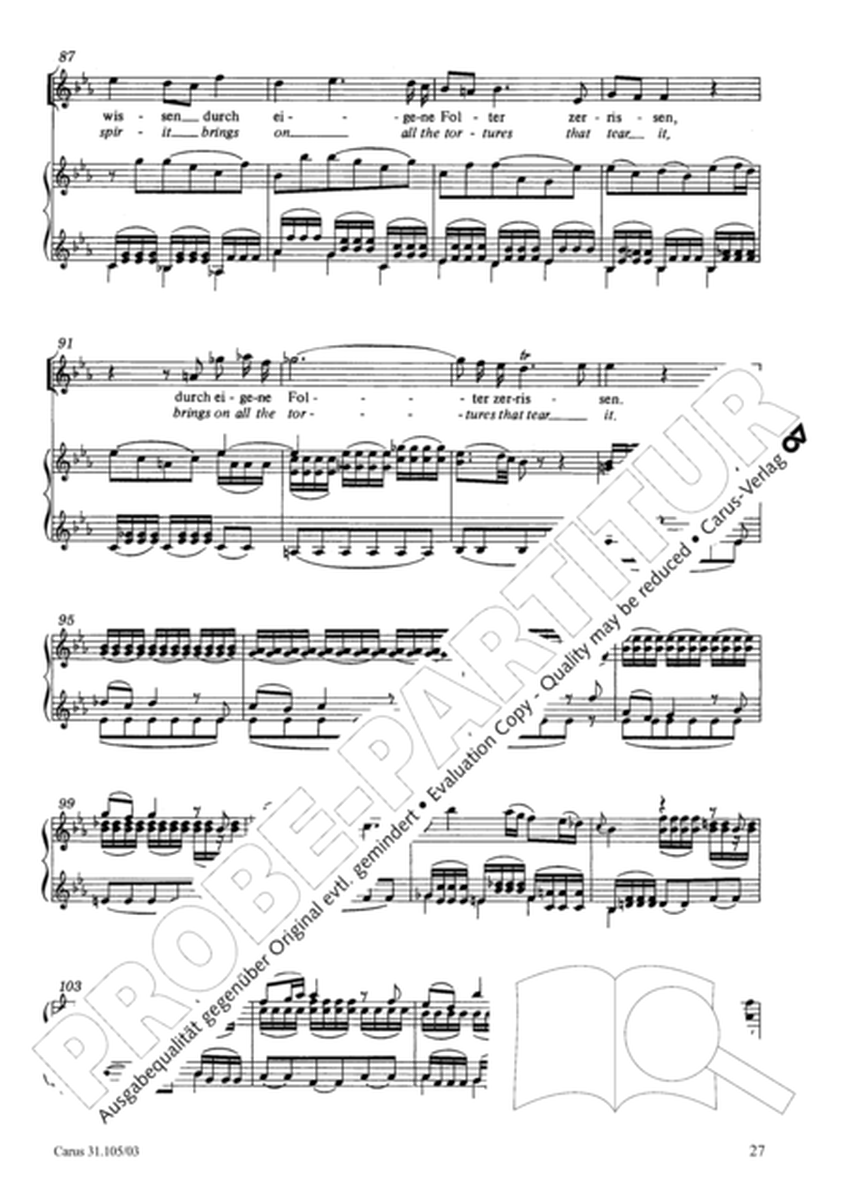
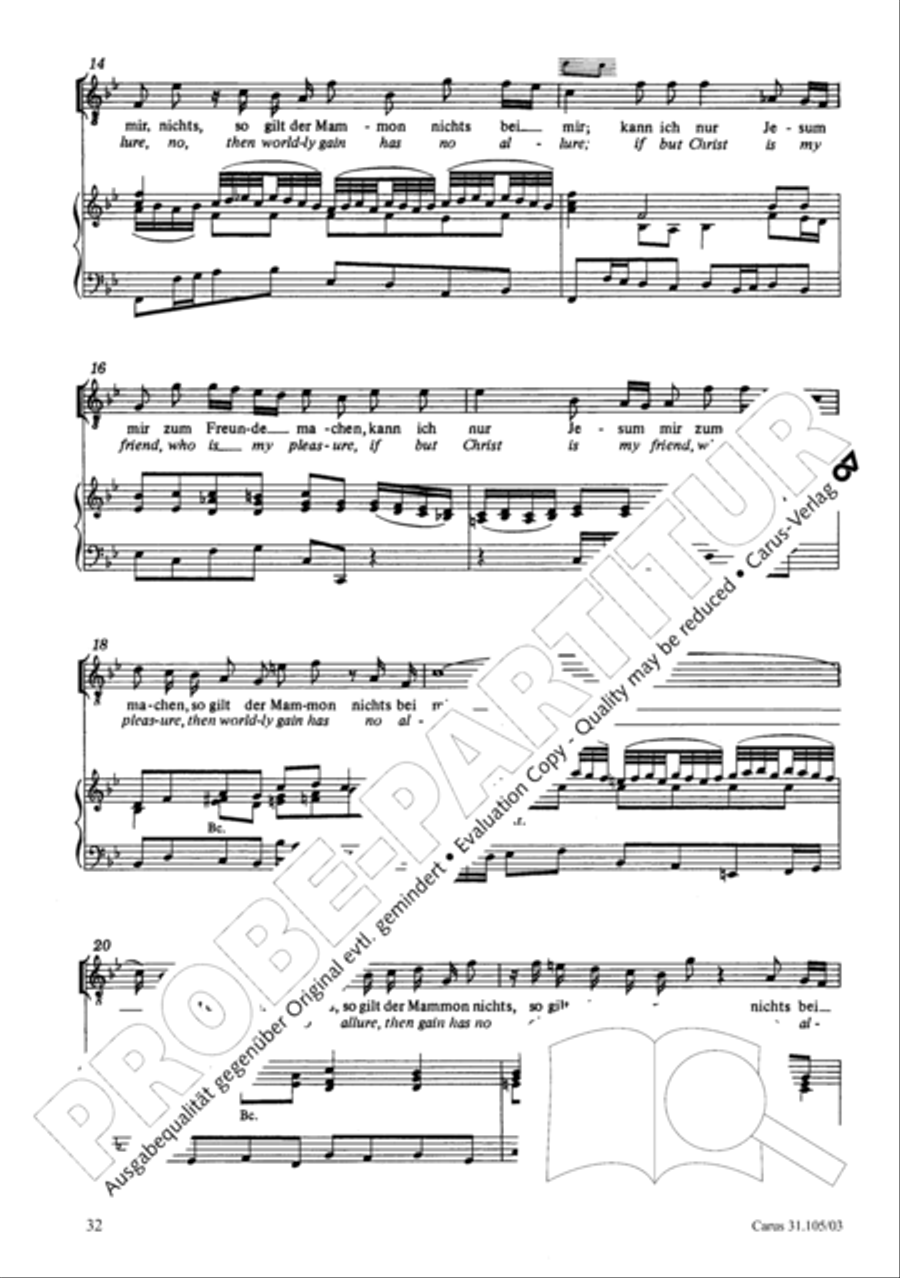
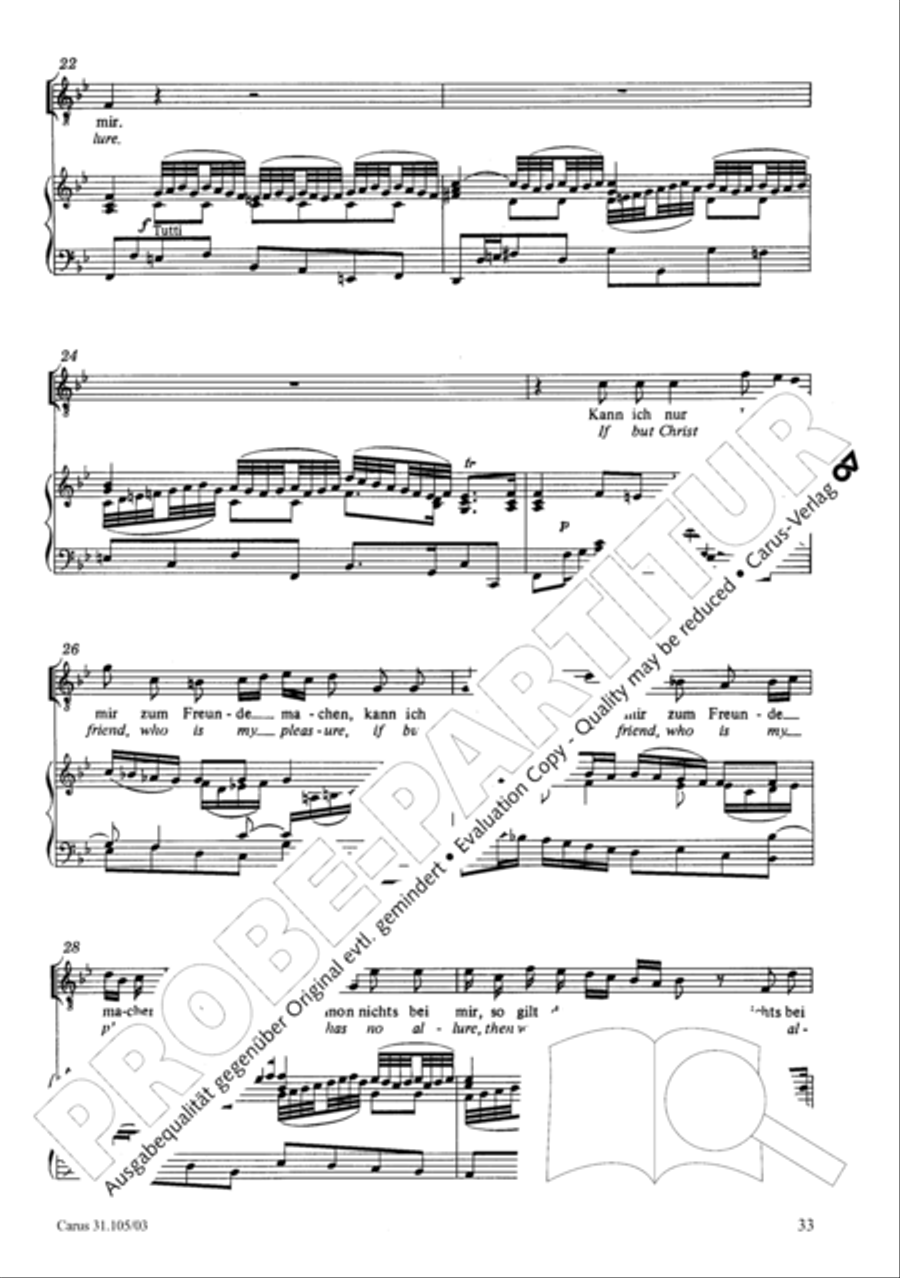
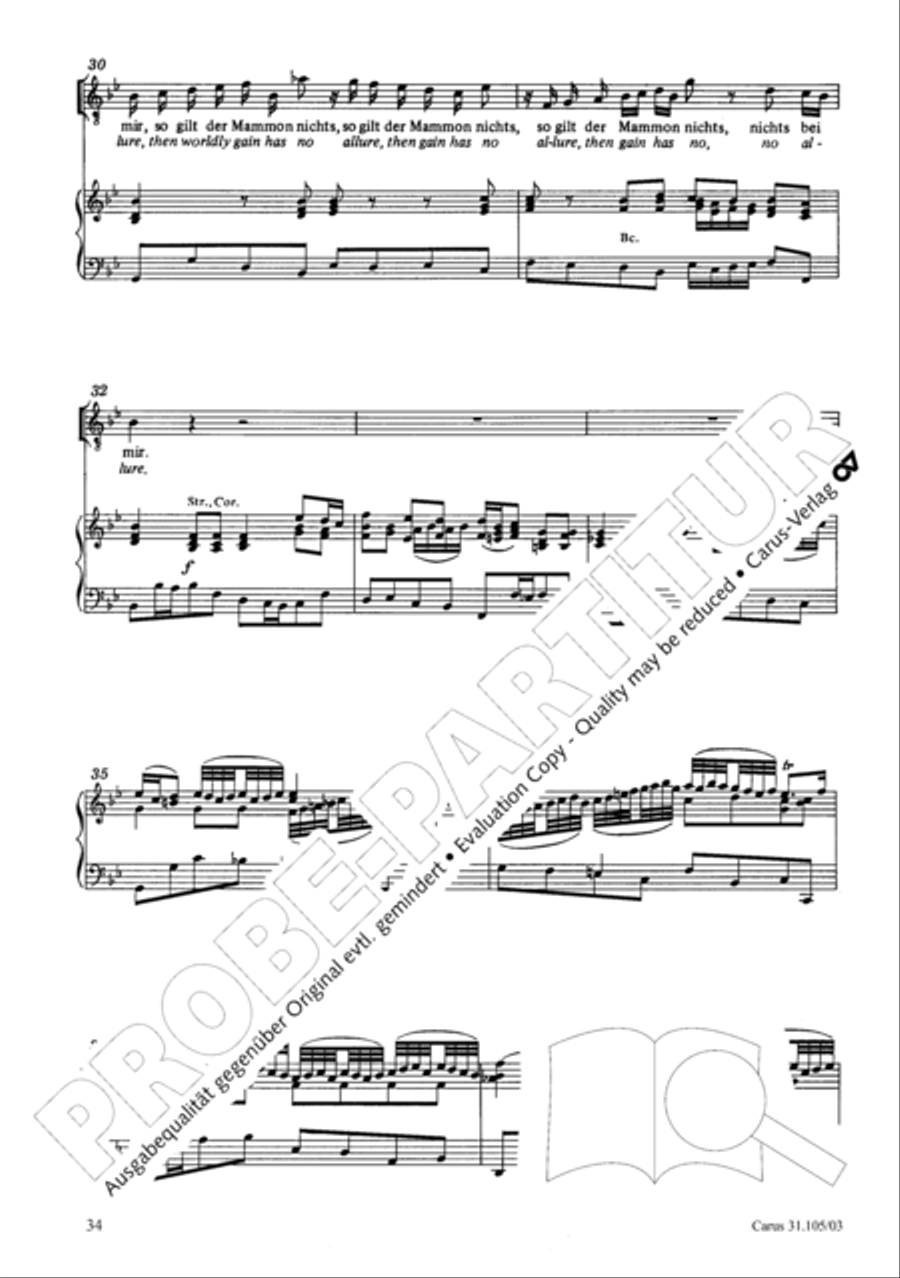
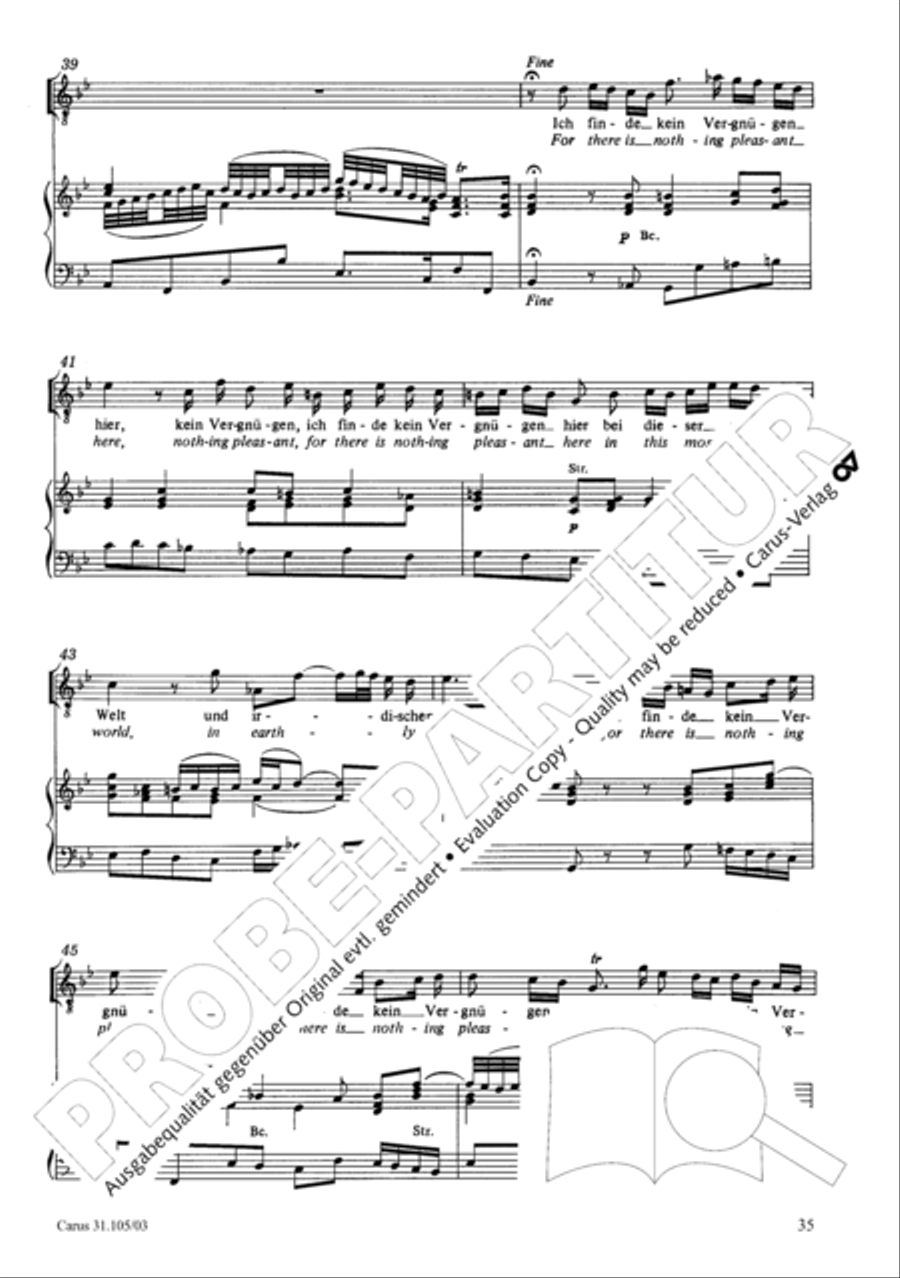
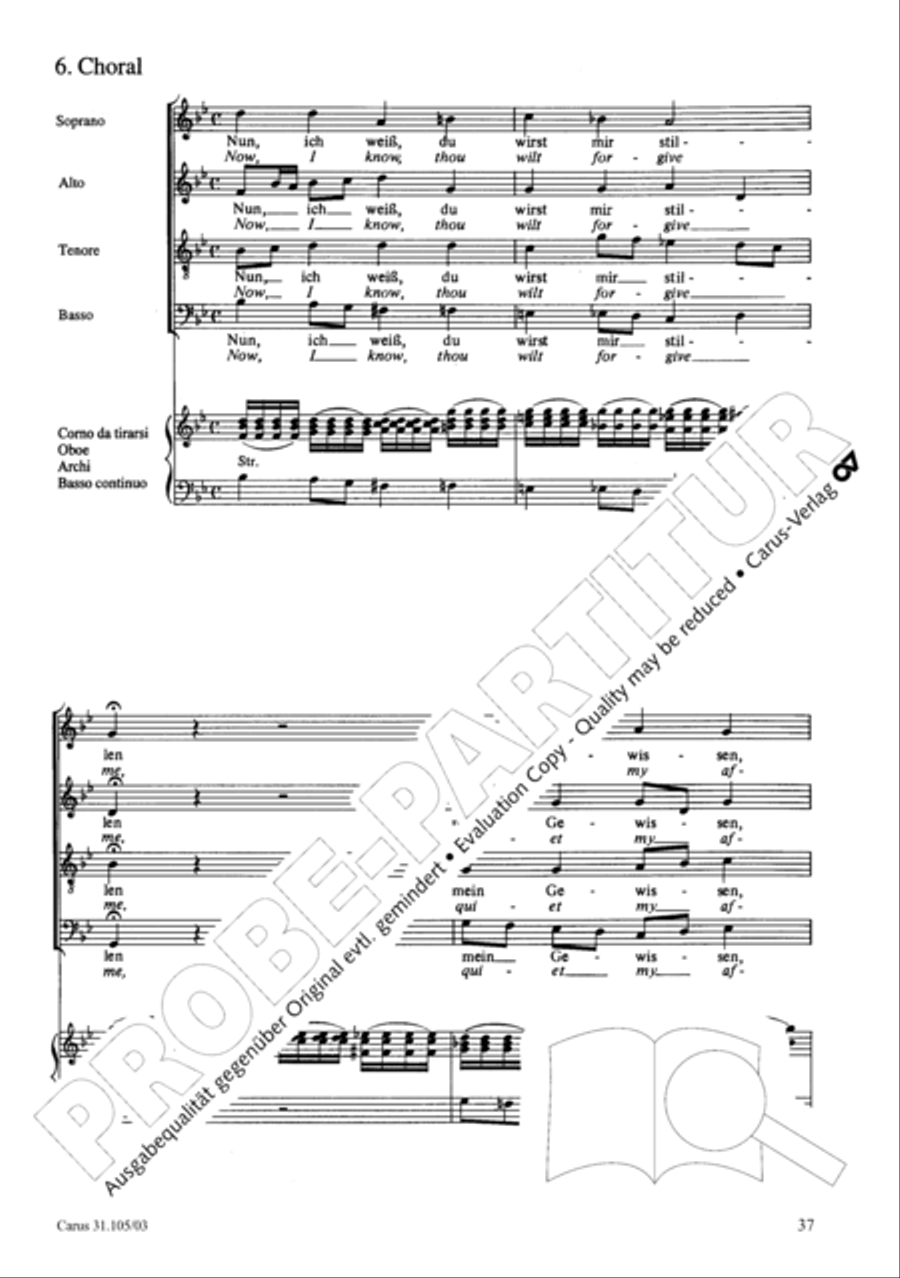
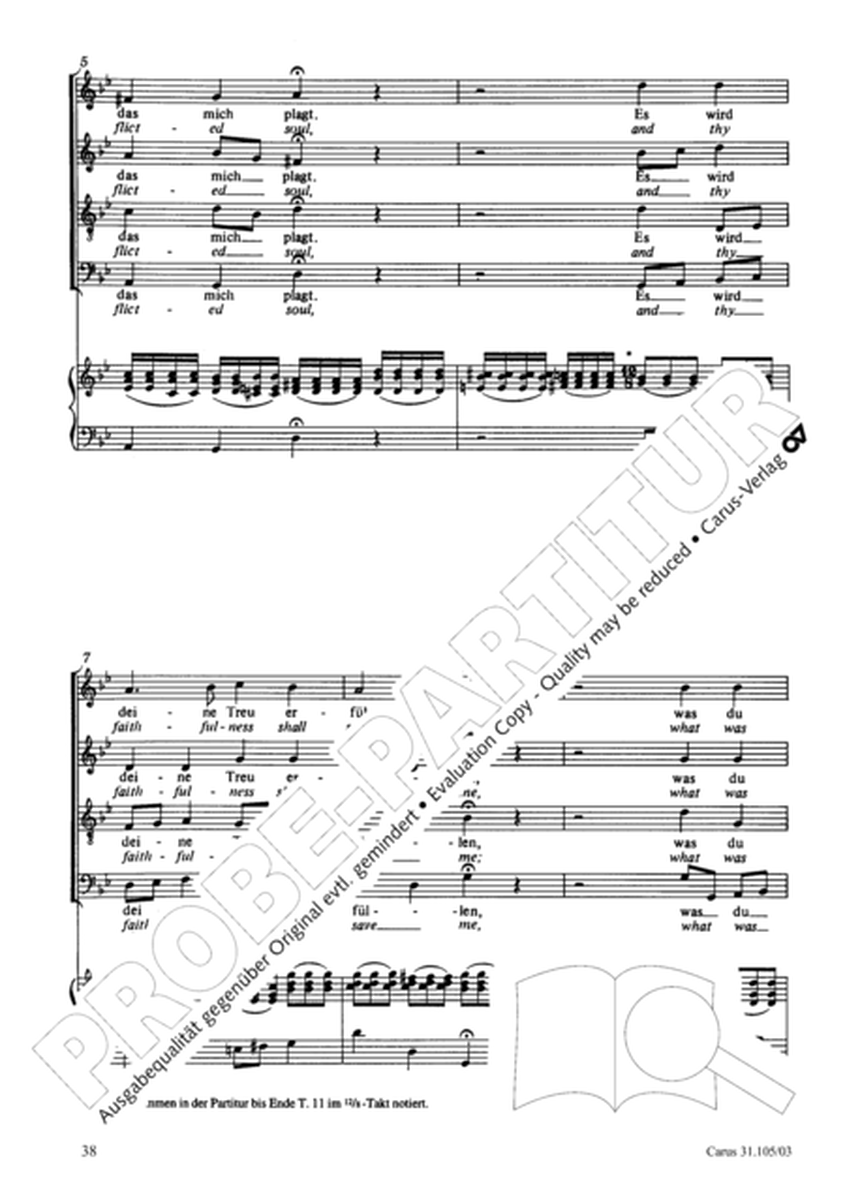
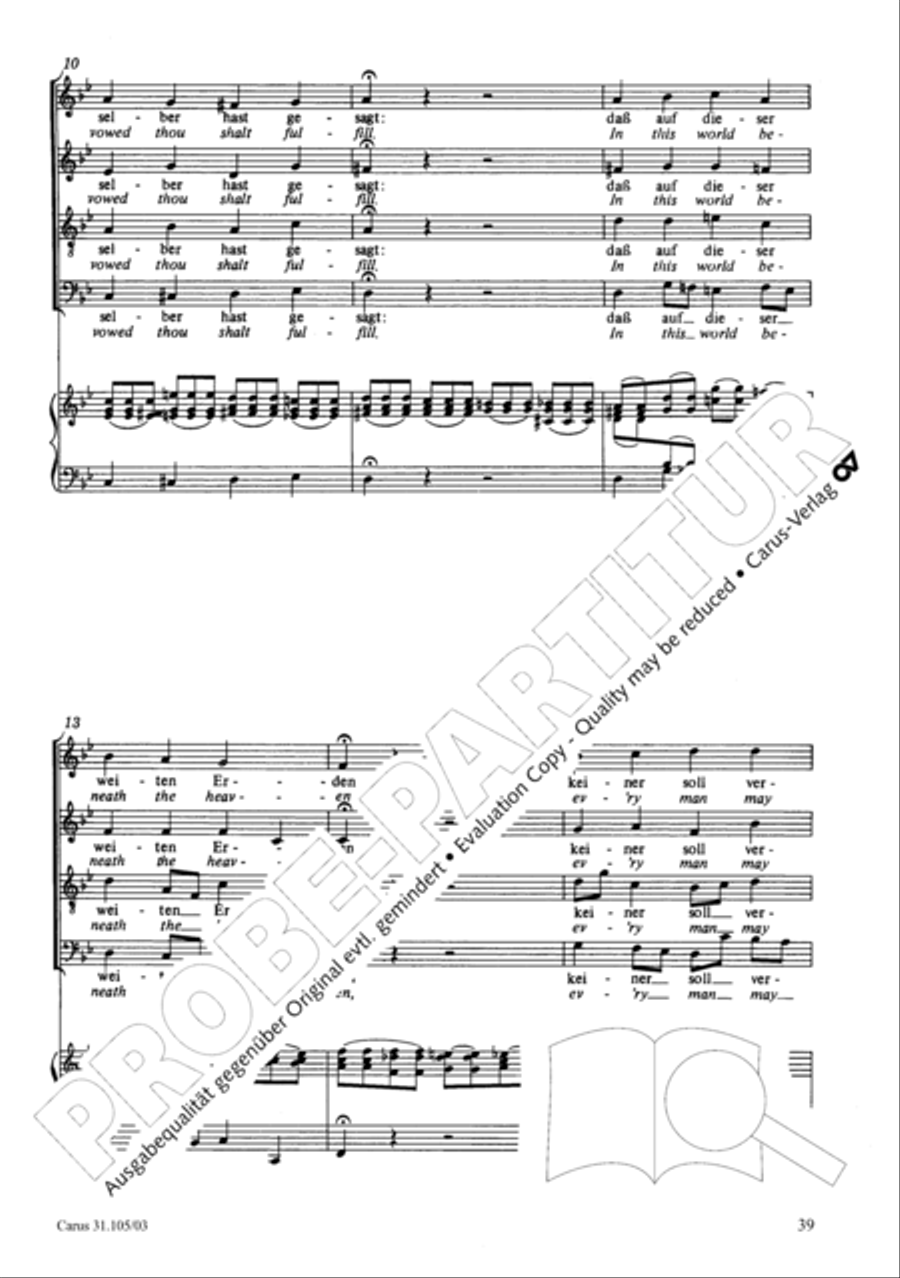
During Bach’s first months in Leipzig, he composed the cantata "Herr, gehe nicht ins Gericht mit deinem Knecht" (Lord, be not too quick to judge), BWV 105, for the 9th Sunday after Trinity (25 July 1723). The opening chorus, based on two lines from Psalm 143, resembles a linked prelude and fugue, namely a freely conceived motet-like section with orchestral introduction and interludes leading to a chorale fugue based on the second line of the Psalm quotation. A simple secco leads into an original aria, "Wie zittern und wanken der Sünder Gedanken" (What fearful illusions are sinners’ dark visions). Both the silence of the continuo, which normally provides a solid foundation, and the close interweaving of the soprano and oboe around large intervals symbolize the "wavering" ("wanken") of the sinner against an almost uninterrupted "trembling" ("zittern") carpet of sixteenth notes on the high strings. Fantastic music! In the orchestral accompaniment to the final chorale, Bach brings back this trembling motive from the aria, although the mood now becomes calmer: From the third chorale line, the tremolo is noticeably slower, before disappearing completely at the end. The second aria presents a problem. Here, as in the opening movement, Bach adds a "corno" part to the 1st violin, which can only be realized on a slide instrument. But this "corno" can be safely omitted, as it is merely a simplified version of the violin part.
- More by this Composer:
- Johann Sebastian Bach Johann Sebastian Bach Choir Johann Sebastian Bach Piano Johann Sebastian Bach Piano Accompaniment
- Instrument:
- Vocal Choir Vocal Voice Piano and Keyboard Basso Continuo
- Artists:
- Johann Sebastian Bach Paul Horn Reinhold Kubik
- Ensemble:
- 4-Part SATB Mixed Choir
- Publisher:
- Carus Verlag