
Details
- Instrument:
- Choir Piano Accompaniment
- Ensembles:
- TB 2-Part Men's Choir
- Genres:
- Classical Period Romantic Period
- Composers:
- Franz Schubert
- Publishers:
- Carl Fischer Music
- UPC:
- 680160912636
- ISBN:
- 9781491154137
- Format:
- Performance Score Octavo
- Item types:
- Physical
- Artist:
- Franz Schubert
- Arrangers:
- Susan Thrift
- Usages:
- School and Community
- Main Key:
- Bb major
- Number of Pages:
- 8
- Size:
- 6.875 x 10.5 inches
- Shipping Weight:
- 0.63 pounds
SKU: CF.CM9591
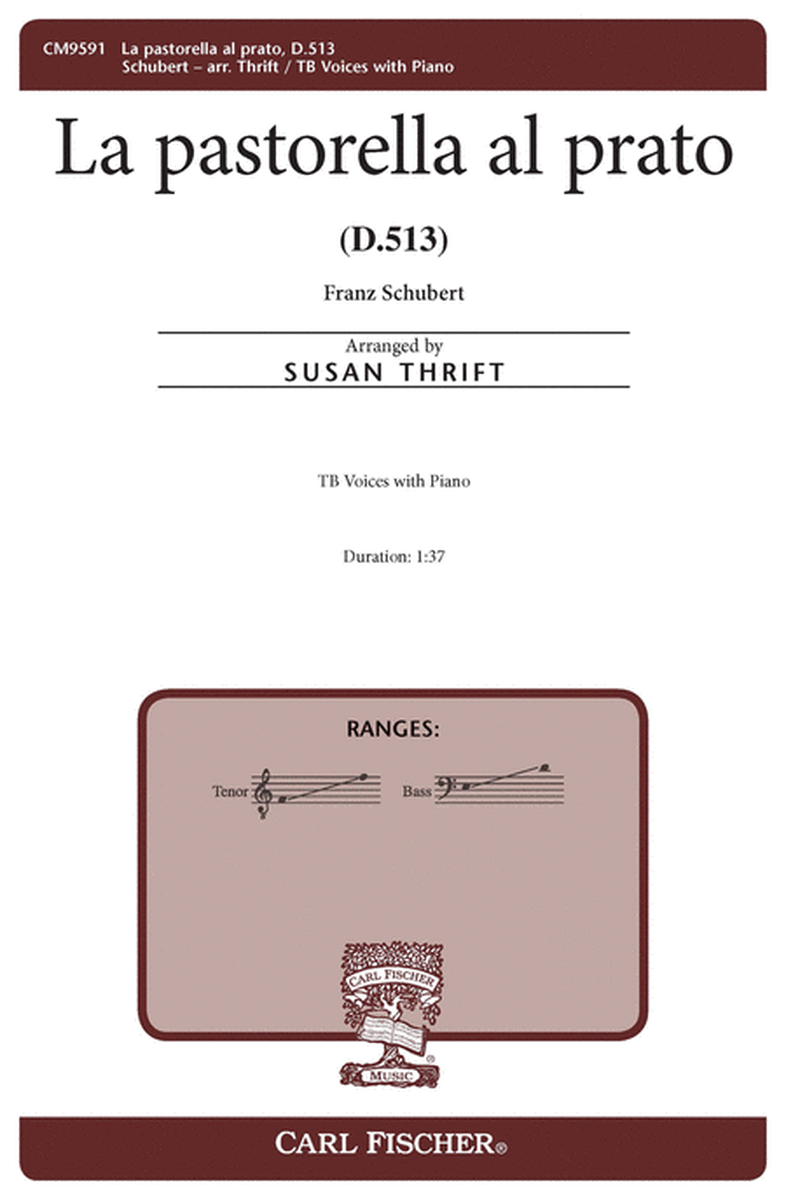
Composed by Franz Schubert. Arranged by Susan Thrift. Octavo. Performance Score. 8 pages. Duration 0:01:37. Carl Fischer Music #CM9591. Published by Carl Fischer Music (CF.CM9591).ISBN 9781491154137. UPC: 680160912636. 6.875 x 10.5 inches. Key: Bb major. Italian. Gedicht Goldoni. Original.
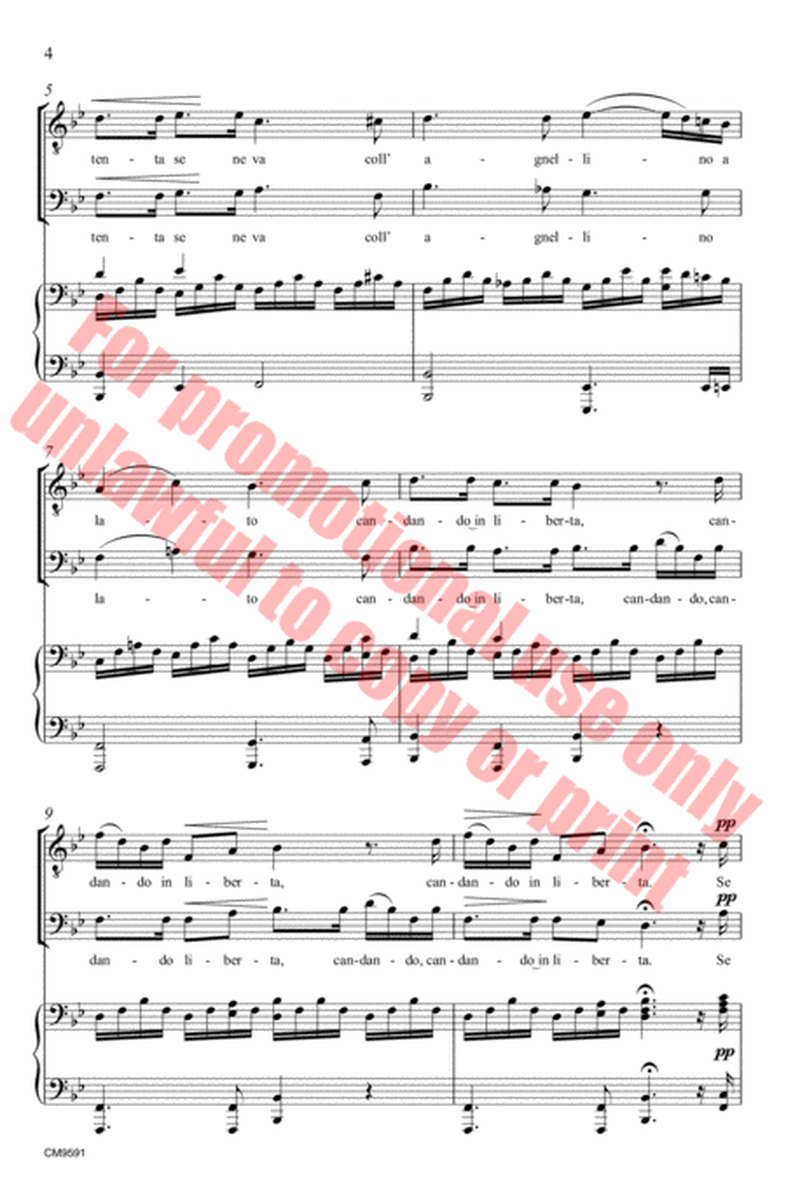
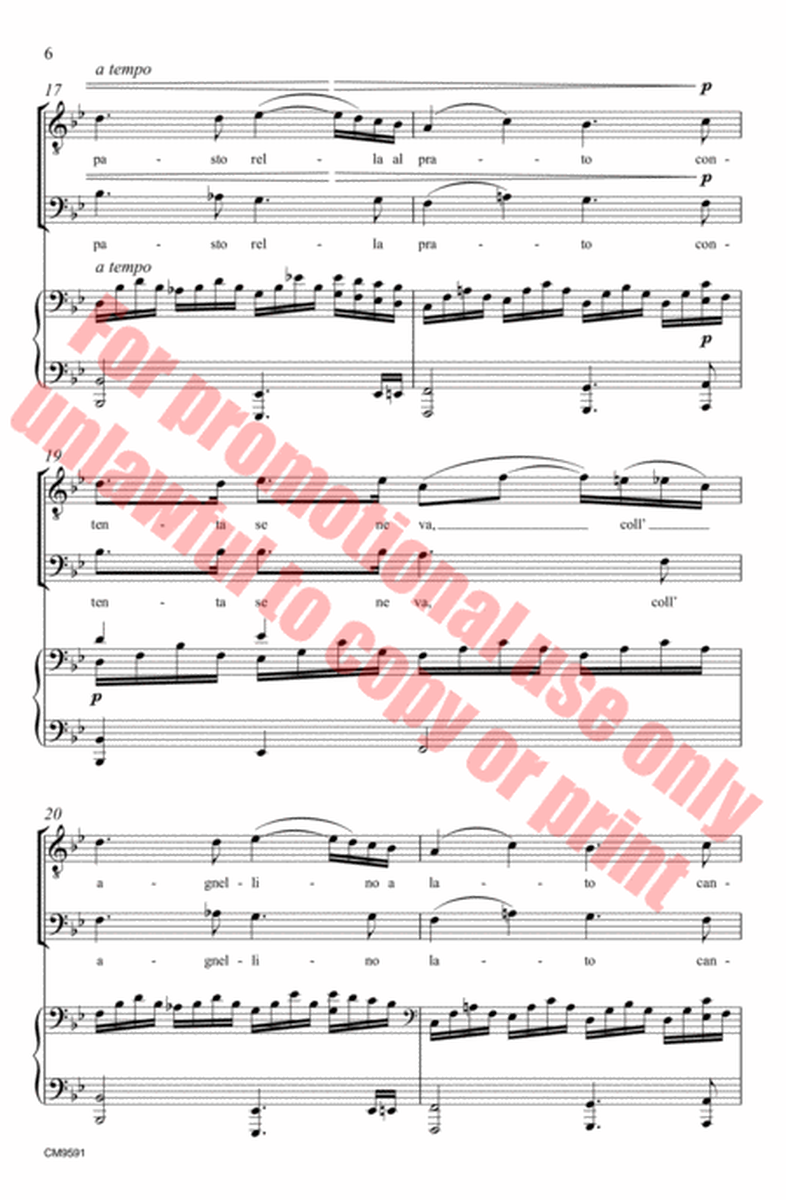
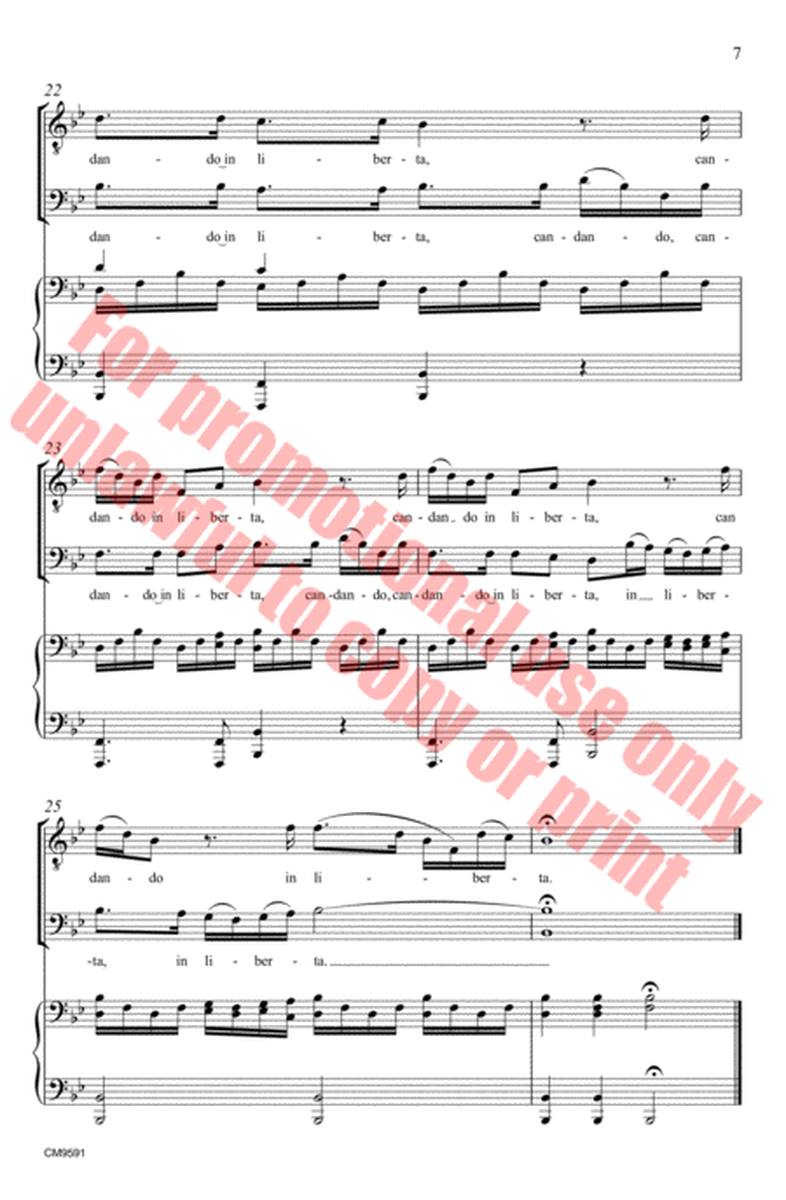
There is not a lot written about the history of La Pastorella by Austrias classical composer, Franz Schubert (17971828). An extremely prolific writer, Schubert died before his thirty-second birthday. With lyrics from the libretto Il filosofo di campagna by Carlo Goldoni (17071793), this simple, charming part song about a little shepherd girl, was originally written for four-part male chorus and piano and is believed to have been written sometime between 1813 and 1817. Be careful not to sing with too much weight in the voice so that you dont get bogged down in the sixteenth note runs. I would suggest speaking the Italian words in rhythm many times before singing them in rhythm. Once youve learned it, youll find it very rewarding to sing. PHONETIC PRONUNCIATION La pastorella al prato contenta se ne va lah pah-stoh-REHL-lah ahl PRAH-toh kohn-TEHN-tah seh neh vah Collagnellino a lato Cantando in liberta kohl-ah-neh-LEE-noh ah LAH-toh kahn-TAHN-doh een lee-behr-TAH Se linnocente amore Gradisce il se lee-noh-CHEN-teh ah-MOH-re grah-DEE-sheh il suo pastore eel SOO-oh pah-STOH-reh La bella pastorella contenta ognor sara lah BEHL-lah pah-stoh-REHL-lah kohn-TEHN-tah oh-nor sah-RAH NOTE: All R's should be flipped, not rolled.
There is not a lot written about the history of La Pastorella by Austriaas classical composer, Franz Schubert (1797a1828). An extremely prolific writer, Schubert died before his thirty-second birthday. With lyrics from the libretto Il filosofo di campagna by Carlo Goldoni (1707a1793), this simple, charming part song about a little shepherd girl, was originally written for four-part male chorus and piano and is believed to have been written sometime between 1813 and 1817. Be careful not to sing with too much weight in the voice so that you donat get bogged down in the sixteenth note runs. I would suggest speaking the Italian words in rhythm many times before singing them in rhythm. Once youave learned it, youall find it very rewarding to sing. PHONETIC PRONUNCIATION LaA A pastorellaA A A A A A A A A A A A A alA A A A pratoA A A A A contentaA A A A A A A A seA A neA A va lah pah-stoh-REHL-lah ahlA PRAH-toh kohn-TEHN-tah seh neh vah CollaagnellinoA A A A A A A A A A A aA A A A latoA A A A A A CantandoA A A A A A A A inA A A A libertA kohl-ah-A+-eh-LEE-nohA ah LAH-tohA A kahn-TAHN-doh een lee-behr-TAH Se lainnocente amore Gradisce il se lee-noh-CHEN-teh ah-MOH-re grah-DEE-sheh ilA A A A suoA A A A A A pastore eel SOO-ohA pah-STOH-reh LaA bellaA A A A A A A A pastorellaA A A A A A A A A A A A A contentaA A A A A A A A A ognorA A A sarA lah BEHL-lahA pah-stoh-REHL-lahA kohn-TEHN-tahA A oh-A+-or sah-RAH NOTE: All R's should be flipped, not rolled.
There is not a lot written about the history of La Pastorella by Austria's classical composer, Franz Schubert (1797-1828). An extremely prolific writer, Schubert died before his thirty-second birthday. With lyrics from the libretto Il filosofo di campagna by Carlo Goldoni (1707-1793), this simple, charming part song about a little shepherd girl, was originally written for four-part male chorus and piano and is believed to have been written sometime between 1813 and 1817. Be careful not to sing with too much weight in the voice so that you don't get bogged down in the sixteenth note runs. I would suggest speaking the Italian words in rhythm many times before singing them in rhythm. Once you've learned it, you'll find it very rewarding to sing. PHONETIC PRONUNCIATION La pastorella al prato contenta se ne va lah pah-stoh-REHL-lah ahl PRAH-toh kohn-TEHN-tah seh neh vah Coll'agnellino a lato Cantando in liberta kohl-ah-neh-LEE-noh ah LAH-toh kahn-TAHN-doh een lee-behr-TAH Se l'innocente amore Gradisce il se lee-noh-CHEN-teh ah-MOH-re grah-DEE-sheh il suo pastore eel SOO-oh pah-STOH-reh La bella pastorella contenta ognor sara lah BEHL-lah pah-stoh-REHL-lah kohn-TEHN-tah oh-nor sah-RAH NOTE: All R's should be flipped, not rolled.
There is not a lot written about the history of La Pastorella by Austria's classical composer, Franz Schubert (1797-1828). An extremely prolific writer, Schubert died before his thirty-second birthday. With lyrics from the libretto Il filosofo di campagna by Carlo Goldoni (1707-1793), this simple, charming part song about a little shepherd girl, was originally written for four-part male chorus and piano and is believed to have been written sometime between 1813 and 1817. Be careful not to sing with too much weight in the voice so that you don't get bogged down in the sixteenth note runs. I would suggest speaking the Italian words in rhythm many times before singing them in rhythm. Once you've learned it, you'll find it very rewarding to sing. PHONETIC PRONUNCIATION La pastorella al prato contenta se ne va lah pah-stoh-REHL-lah ahl PRAH-toh kohn-TEHN-tah seh neh vah Coll'agnellino a lato Cantando in liberta kohl-ah-neh-LEE-noh ah LAH-toh kahn-TAHN-doh een lee-behr-TAH Se l'innocente amore Gradisce il se lee-noh-CHEN-teh ah-MOH-re grah-DEE-sheh il suo pastore eel SOO-oh pah-STOH-reh La bella pastorella contenta ognor sara lah BEHL-lah pah-stoh-REHL-lah kohn-TEHN-tah oh-nor sah-RAH NOTE: All R's should be flipped, not rolled.
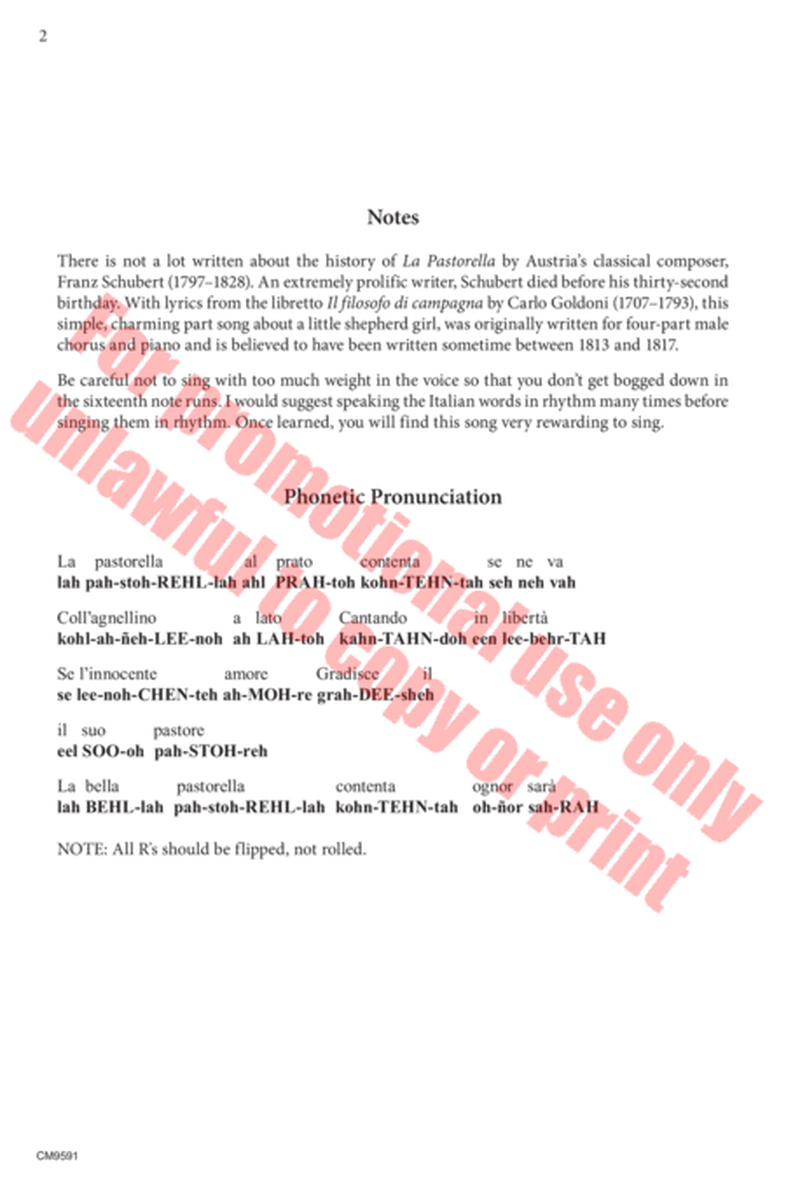
There is not a lot written about the history of La Pastorella by Austria’s classical composer, Franz Schubert (1797–1828). An extremely prolific writer, Schubert died before his thirty-second birthday. With lyrics from the libretto Il filosofo di campagna by Carlo Goldoni (1707–1793), this simple, charming part song about a little shepherd girl, was originally written for four-part male chorus and piano and is believed to have been written sometime between 1813 and 1817.Be careful not to sing with too much weight in the voice so that you don’t get bogged down in the sixteenth note runs. I would suggest speaking the Italian words in rhythm many times before singing them in rhythm. Once you’ve learned it, you’ll find it very rewarding to sing.PHONETIC PRONUNCIATIONLa pastorella al prato contenta se ne valah pah-stoh-REHL-lah ahl PRAH-toh kohn-TEHN-tah seh neh vahColl’agnellino a lato Cantando in libertàkohl-ah-ñeh-LEE-noh ah LAH-toh kahn-TAHN-doh een lee-behr-TAHSe l’innocente amore Gradisce ilse lee-noh-CHEN-teh ah-MOH-re grah-DEE-shehil suo pastoreeel SOO-oh pah-STOH-rehLa bella pastorella contenta ognor saràlah BEHL-lah pah-stoh-REHL-lah kohn-TEHN-tah oh-ñor sah-RAHNOTE: All R's should be flipped, not rolled.
There is not a lot written about the history of La Pastorella by Austria’s classical composer, Franz Schubert (1797–1828). An extremely prolific writer, Schubert died before his thirty-second birthday. With lyrics from the libretto Il filosofo di campagna by Carlo Goldoni (1707–1793), this simple, charming part song about a little shepherd girl, was originally written for four-part male chorus and piano and is believed to have been written sometime between 1813 and 1817.Be careful not to sing with too much weight in the voice so that you don’t get bogged down in the sixteenth note runs. I would suggest speaking the Italian words in rhythm many times before singing them in rhythm. Once you’ve learned it, you’ll find it very rewarding to sing.PHONETIC PRONUNCIATIONLaxa0 xa0 pastorellaxa0 xa0 xa0 xa0 xa0 xa0 xa0 xa0 xa0 xa0 xa0 xa0 xa0alxa0 xa0 xa0 xa0pratoxa0 xa0 xa0 xa0 xa0contentaxa0 xa0 xa0 xa0 xa0 xa0 xa0 xa0 sexa0 xa0 nexa0 xa0 valah pah-stoh-REHL-lah ahlxa0 PRAH-toh kohn-TEHN-tah seh neh vahColl’agnellinoxa0 xa0 xa0 xa0 xa0 xa0 xa0 xa0 xa0 xa0 xa0axa0 xa0 xa0 xa0latoxa0 xa0 xa0 xa0 xa0 xa0 Cantandoxa0 xa0 xa0 xa0 xa0 xa0 xa0 xa0 inxa0 xa0 xa0 xa0libertàkohl-ah-ñeh-LEE-nohxa0 ah LAH-tohxa0 xa0kahn-TAHN-doh een lee-behr-TAHSe l’innocente amore Gradisce ilse lee-noh-CHEN-teh ah-MOH-re grah-DEE-shehilxa0 xa0 xa0 xa0 suoxa0 xa0 xa0 xa0 xa0 xa0pastoreeel SOO-ohxa0 pah-STOH-rehLaxa0 bellaxa0 xa0 xa0 xa0 xa0 xa0 xa0 xa0pastorellaxa0 xa0 xa0 xa0 xa0 xa0 xa0 xa0 xa0 xa0 xa0 xa0 xa0 contentaxa0 xa0 xa0 xa0 xa0 xa0 xa0 xa0 xa0 ognorxa0 xa0 xa0saràlah BEHL-lahxa0 pah-stoh-REHL-lahxa0 kohn-TEHN-tahxa0 xa0oh-ñor sah-RAHNOTE: All R's should be flipped, not rolled.
- More by this Composer:
- Franz Schubert Franz Schubert Piano Accompaniment Franz Schubert Voice Franz Schubert Piano, Vocal
- Instrument:
- Vocal Choir Piano and Keyboard Piano Accompaniment
- Artists:
- Franz Schubert Susan Thrift
- Ensemble:
- TB 2-Part Men's Choir
- Publisher:
- Carl Fischer Music