Details
- Genres:
- Christian Baroque Period
- Composers:
- Johann Sebastian Bach
- Publishers:
- Carus Verlag
- ISBN:
- 9790007045104
- Format:
- Vocal Score
- Item types:
- Physical
- Level:
- Grade 4
- Musical forms:
- Cantata
- Artist:
- Johann Sebastian Bach
- Arrangers:
- Paul Horn
- Usages:
- Sacred
- Main Key:
- G minor
- Size:
- 7.5 x 10.67 inches
- Number of Pages:
- 44
- Shipping Weight:
- 0.38 pounds
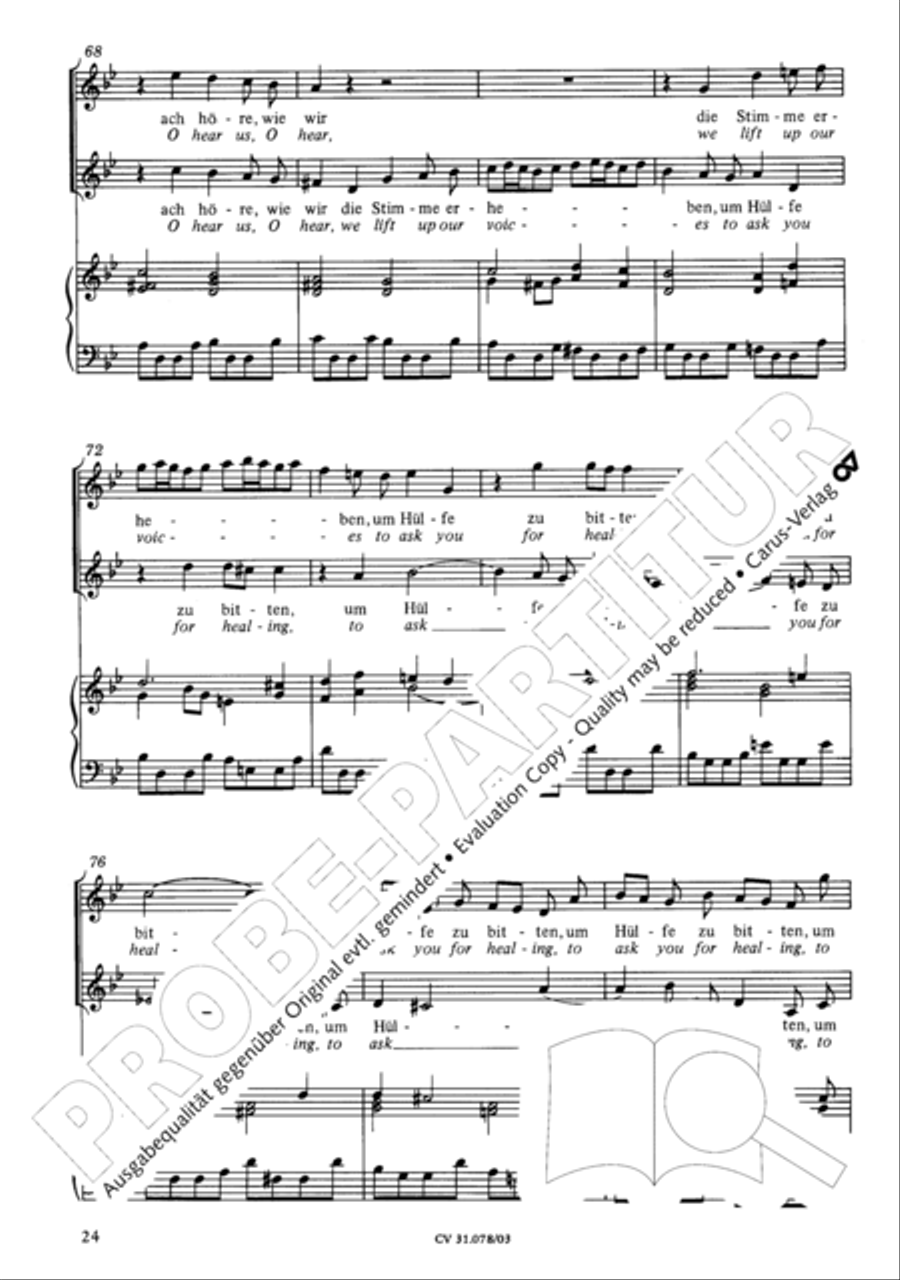
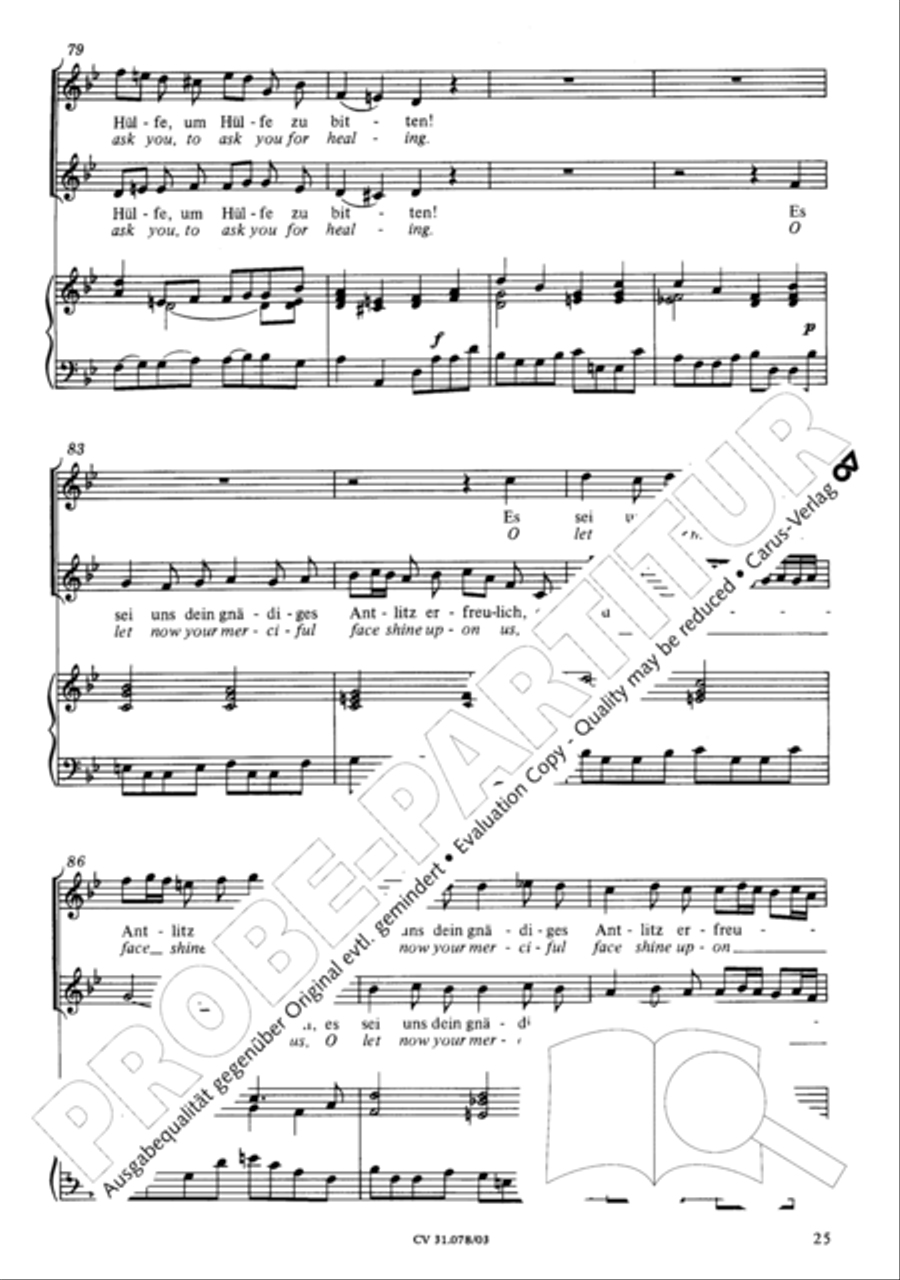
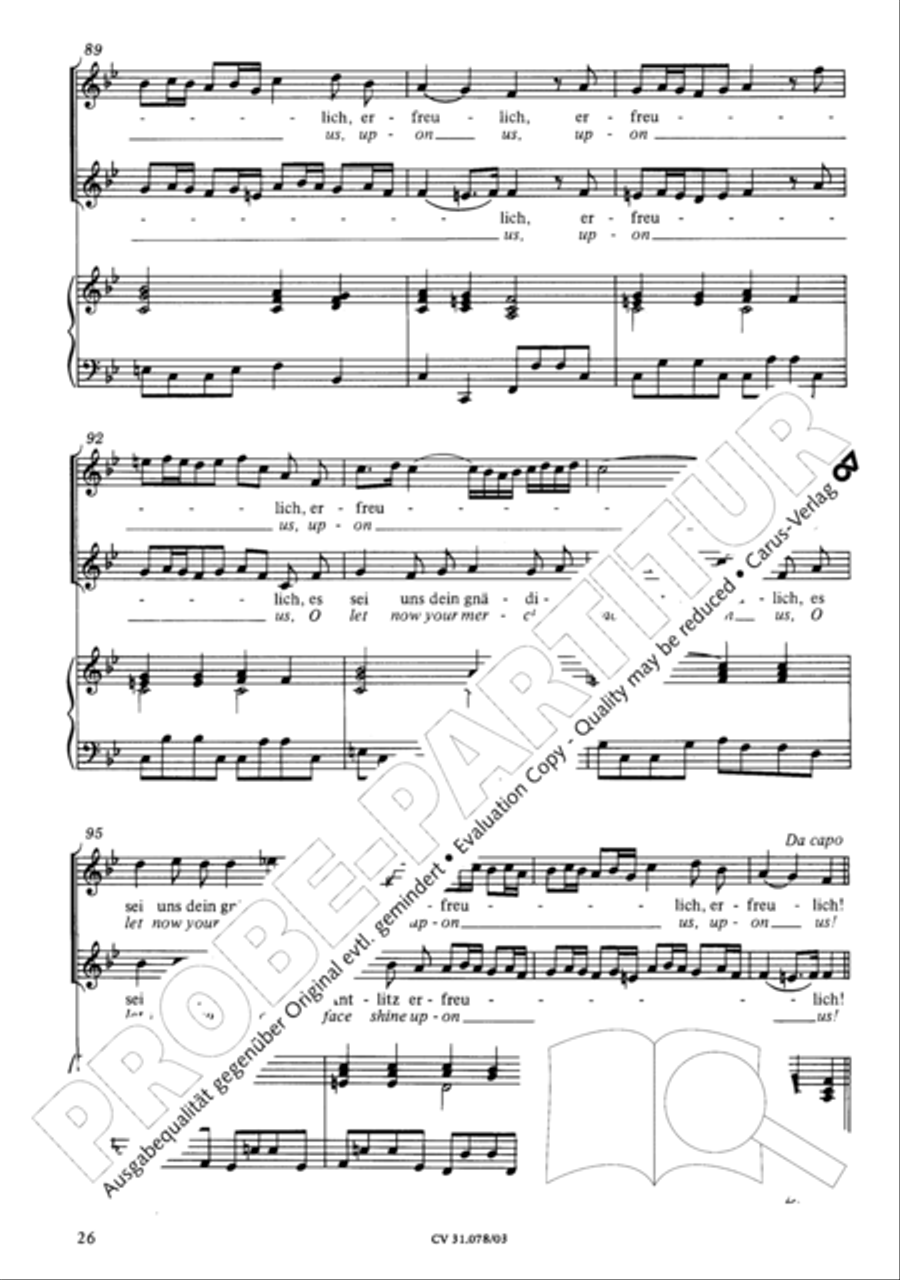
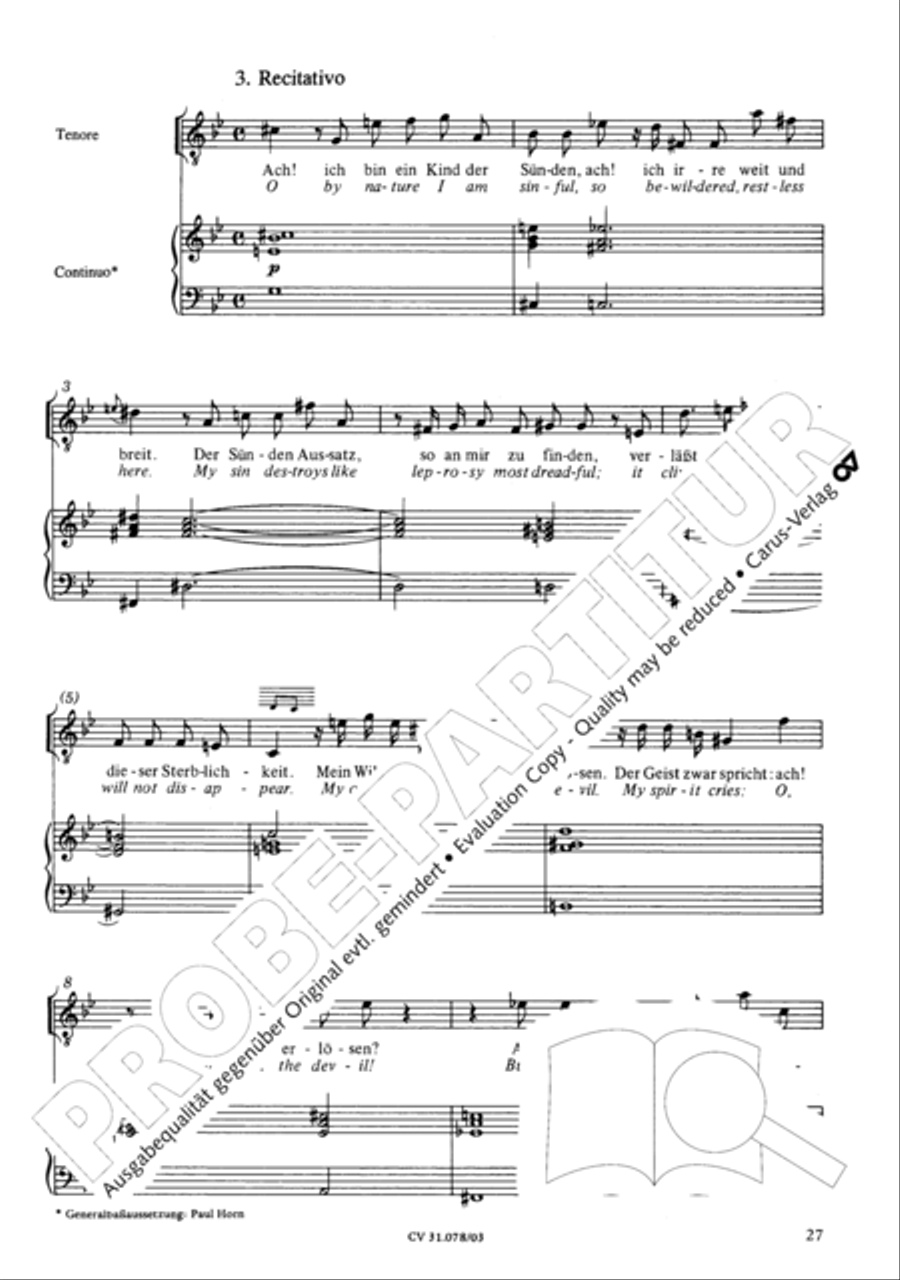
Orchestra Soli SATB, Coro SATB, Fl, 2 Ob, Cor, 2 Vl, Va, Bc - Grade 4
SKU: CA.3107803
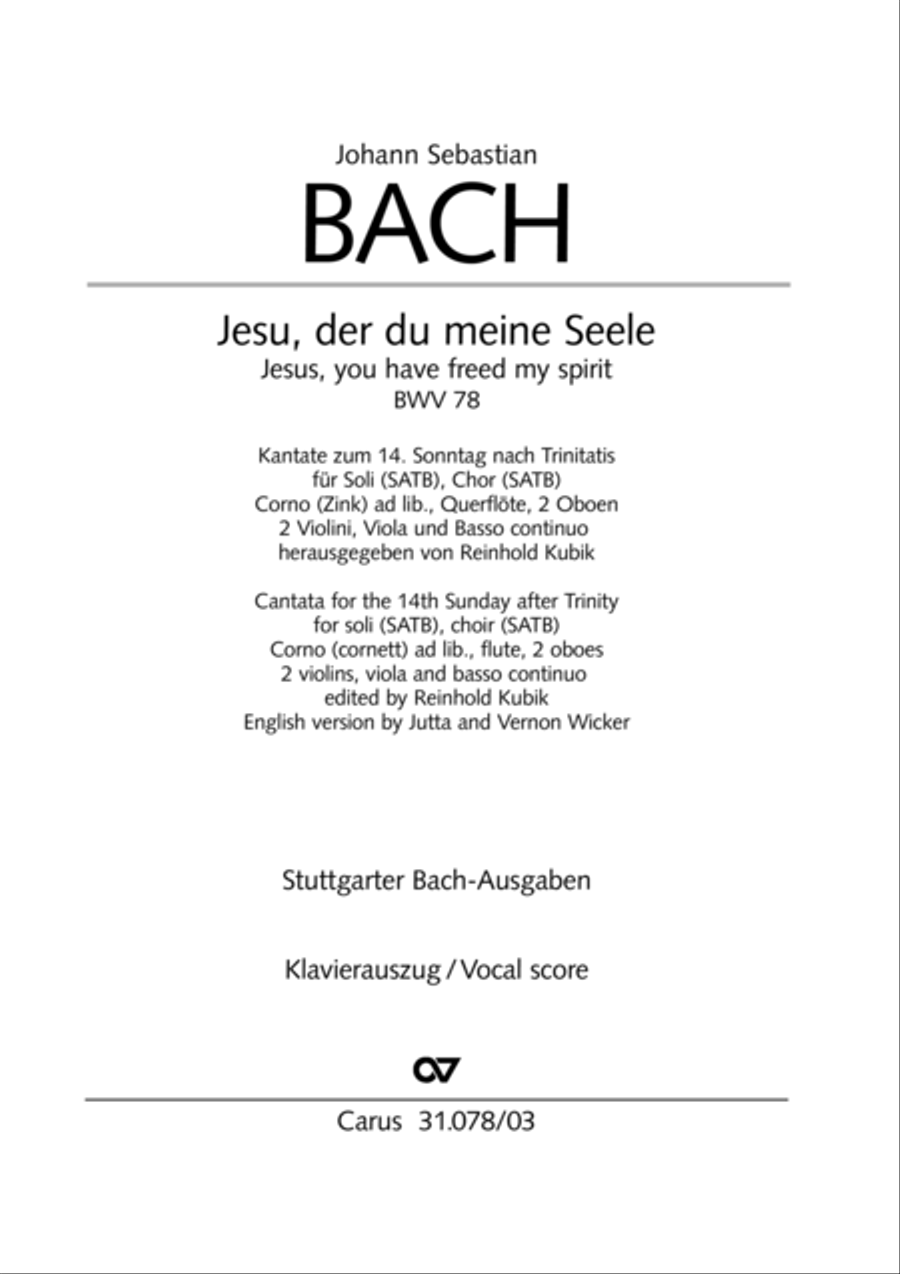
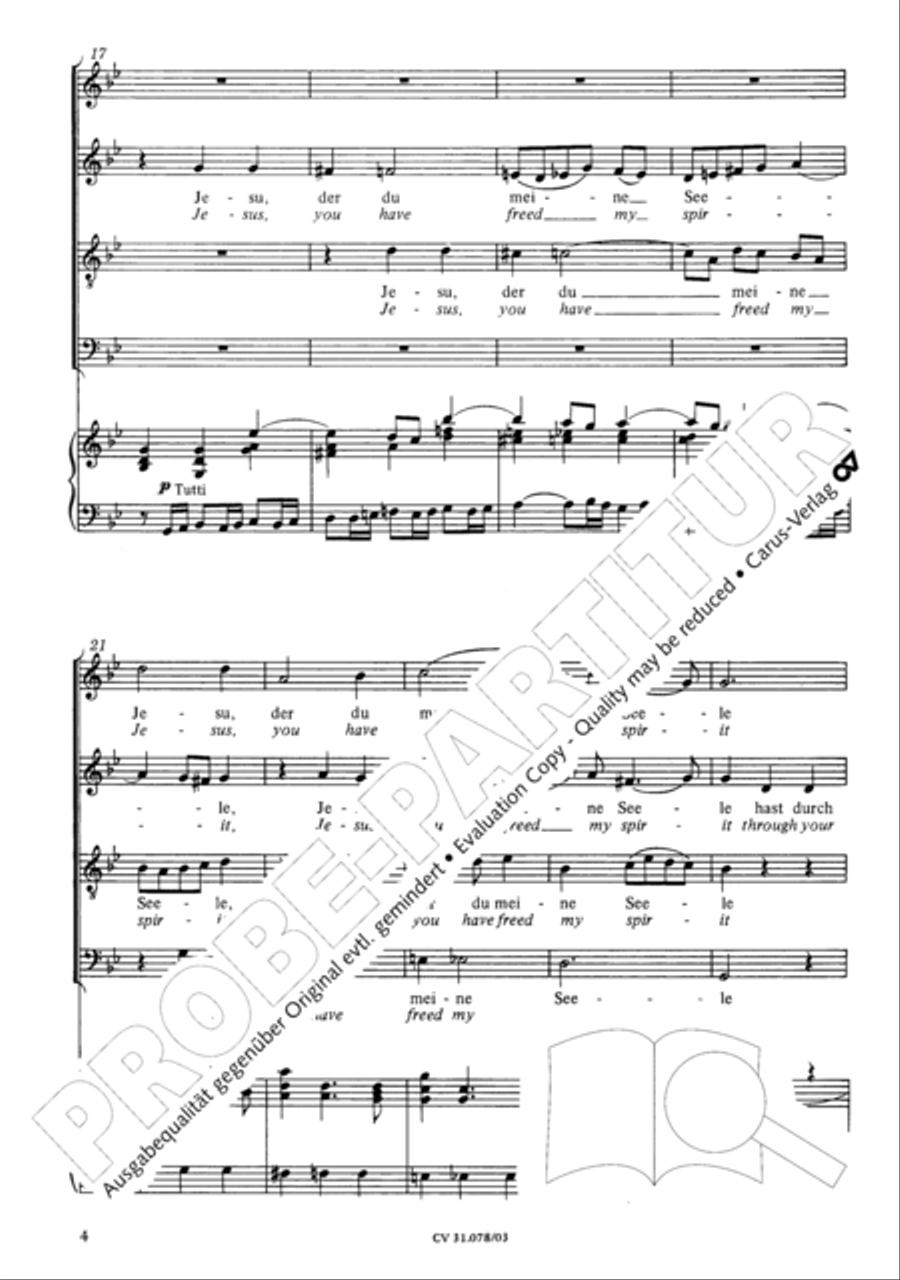
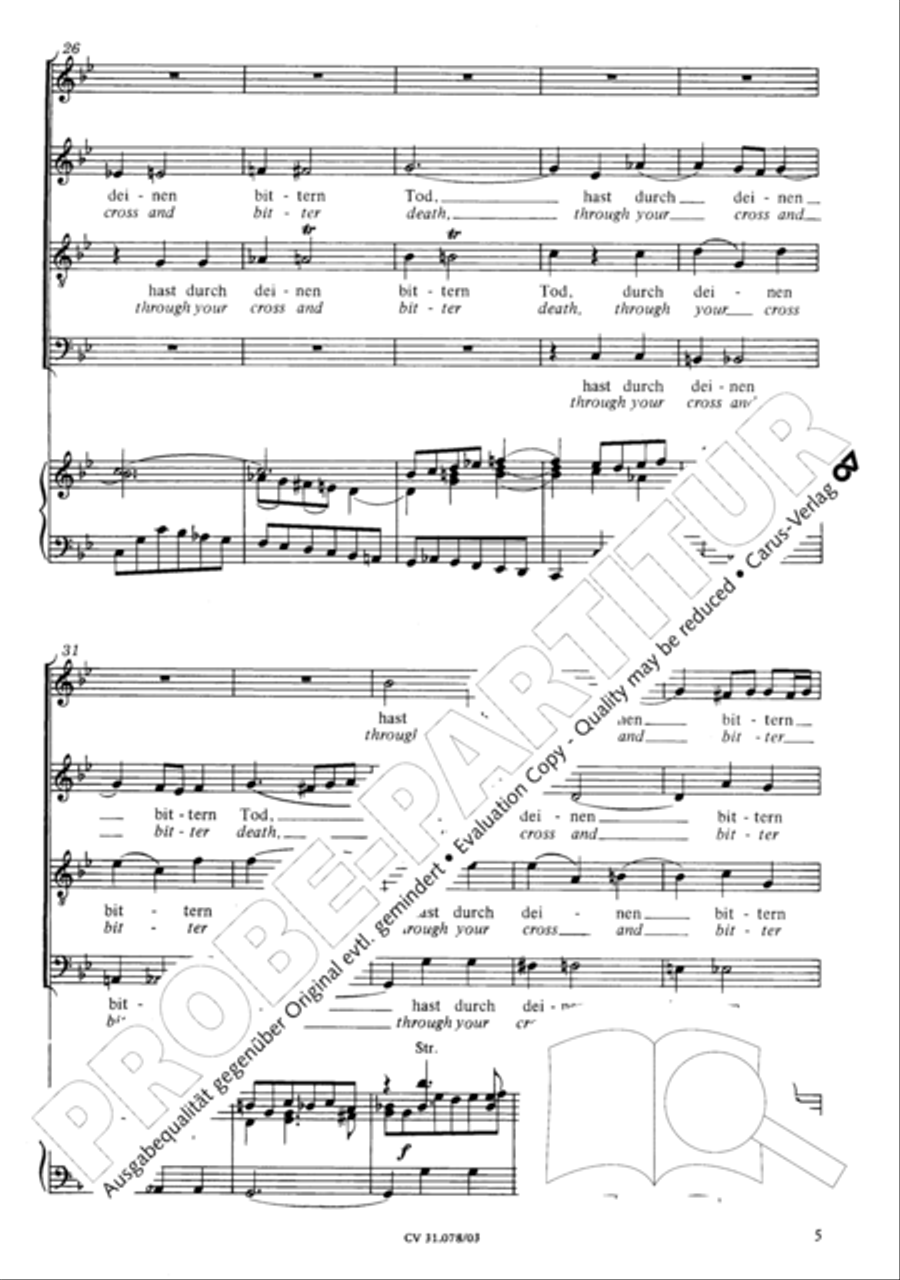
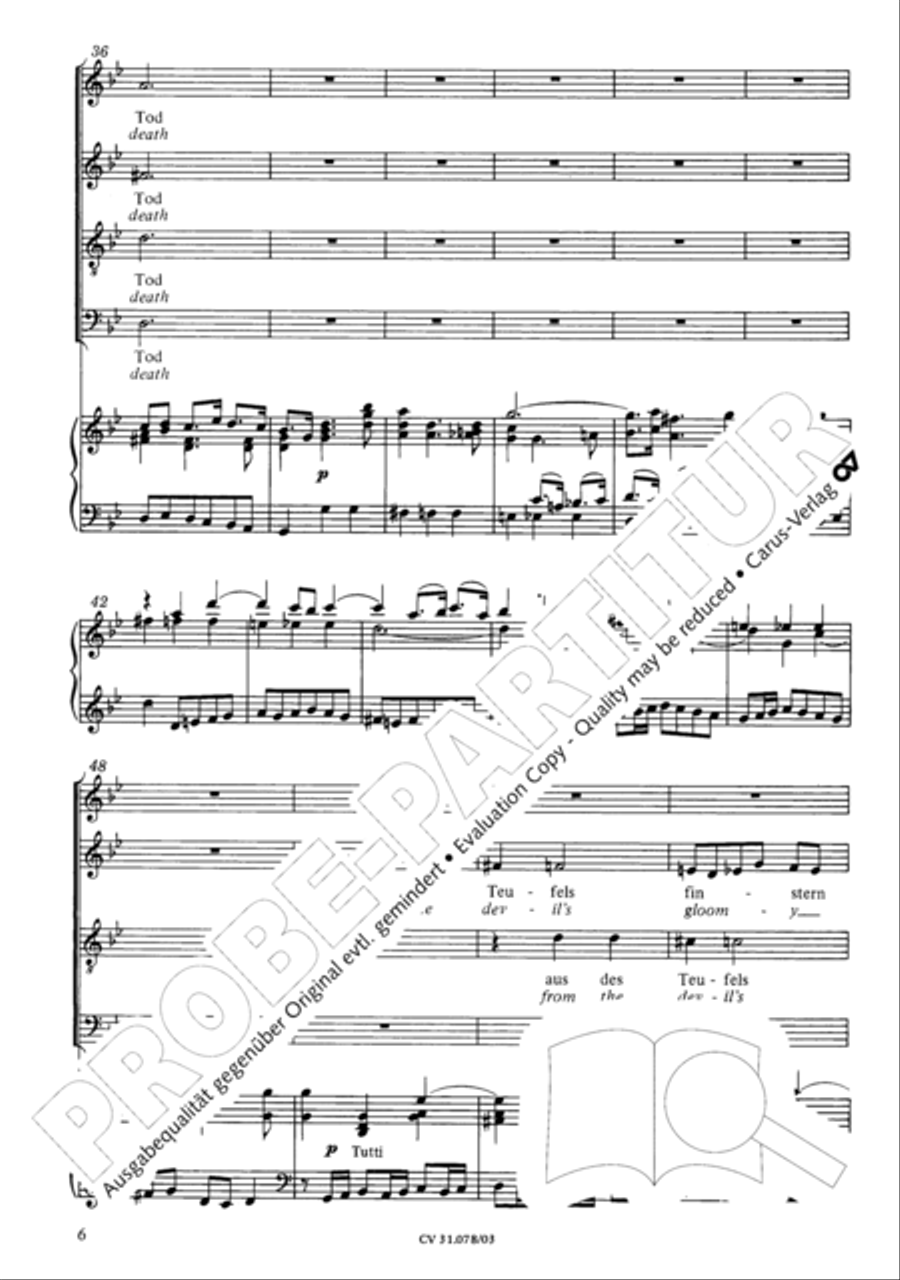
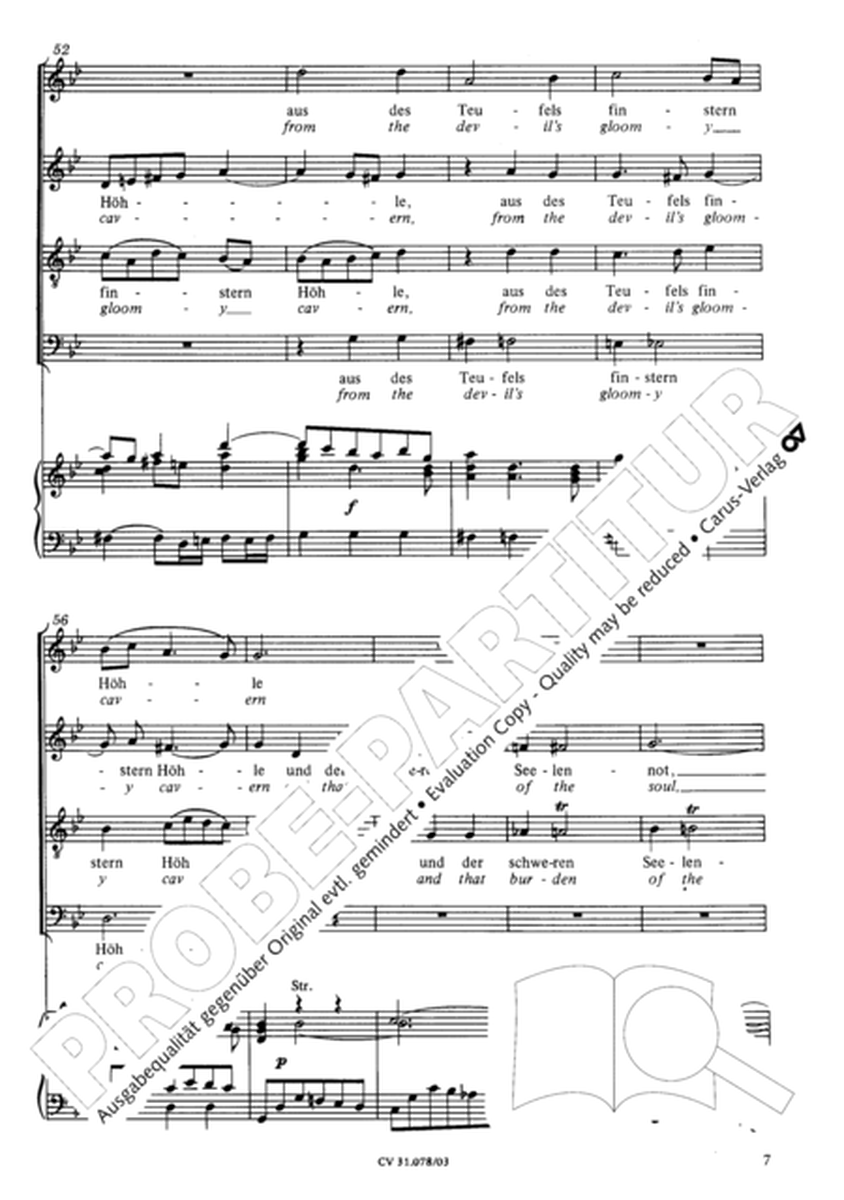
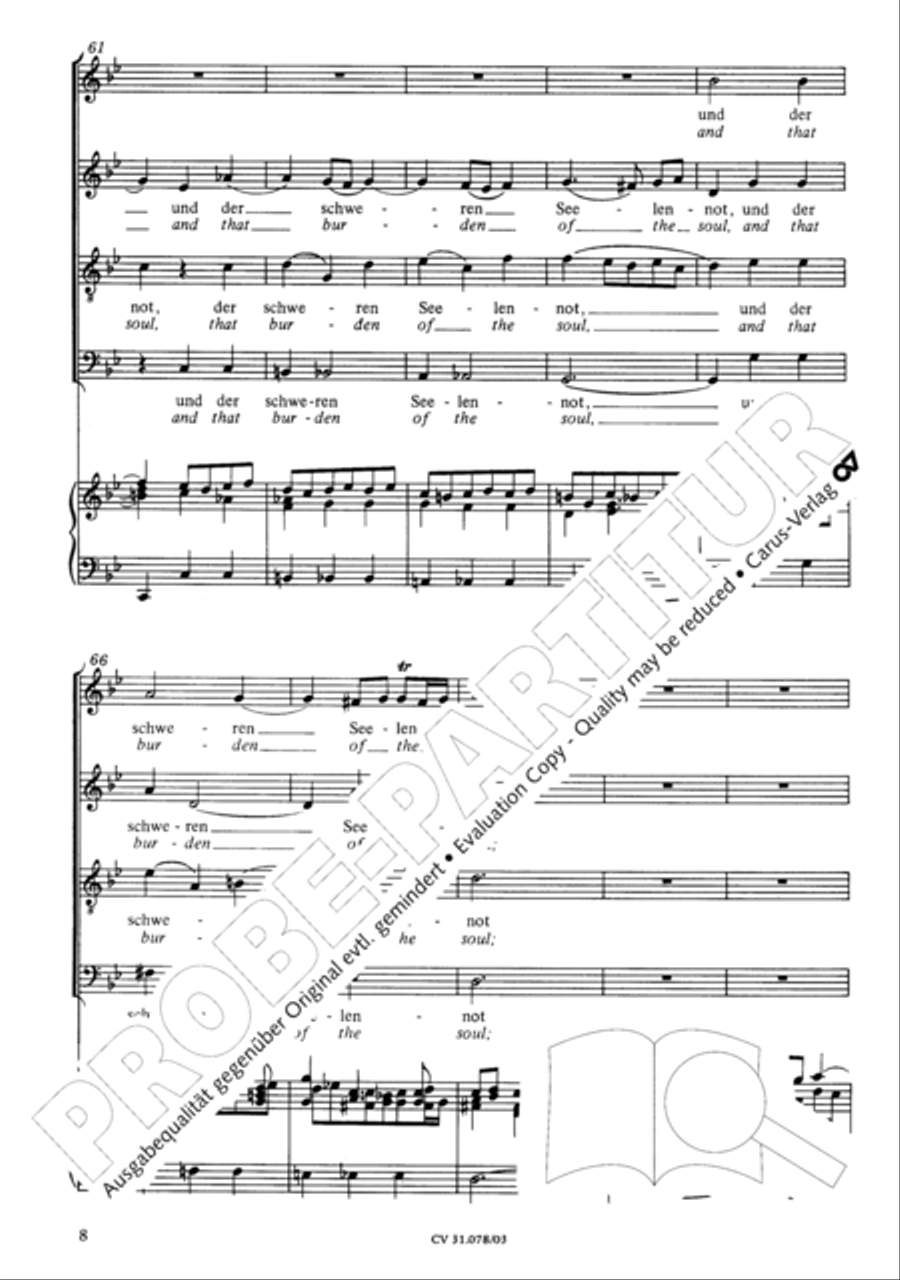
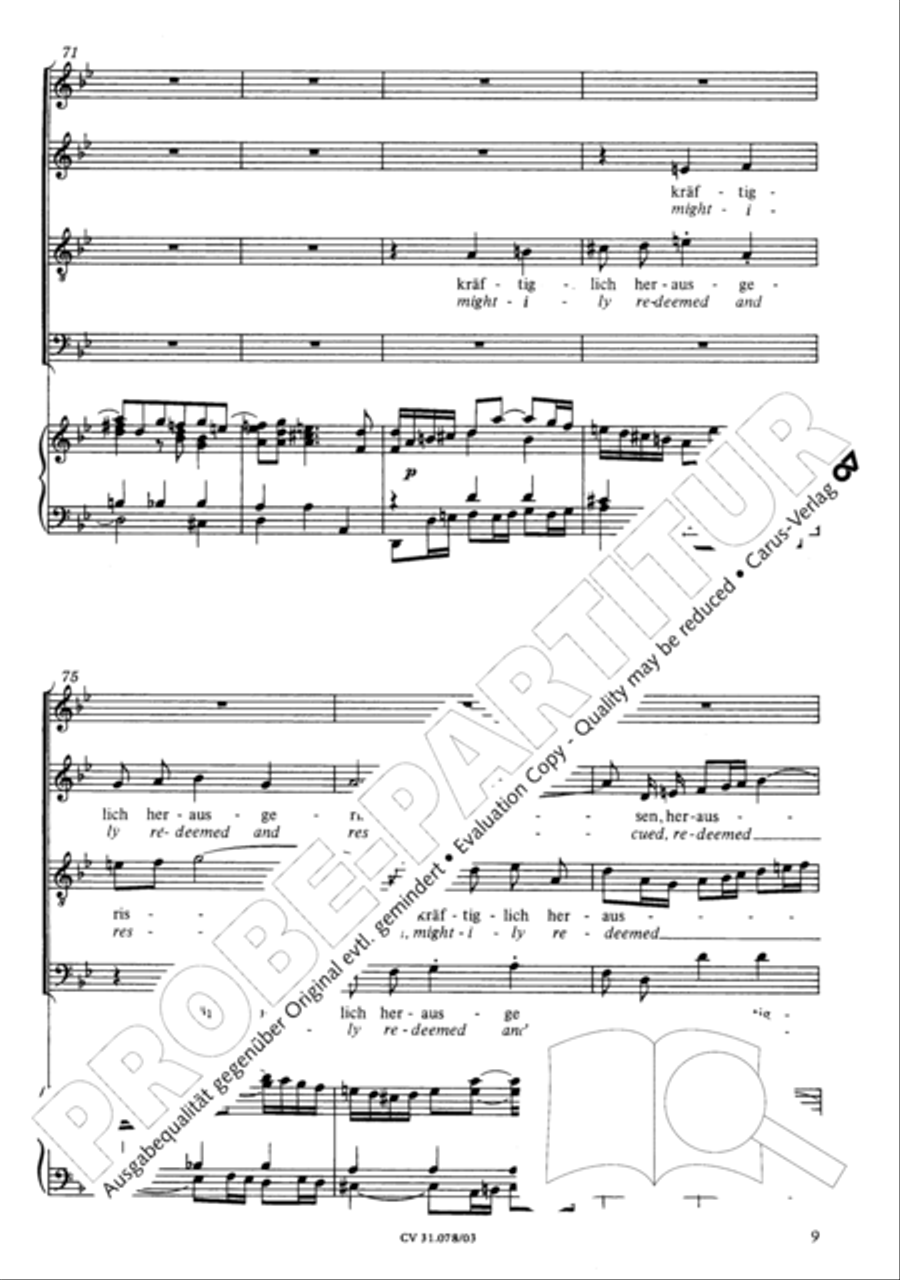
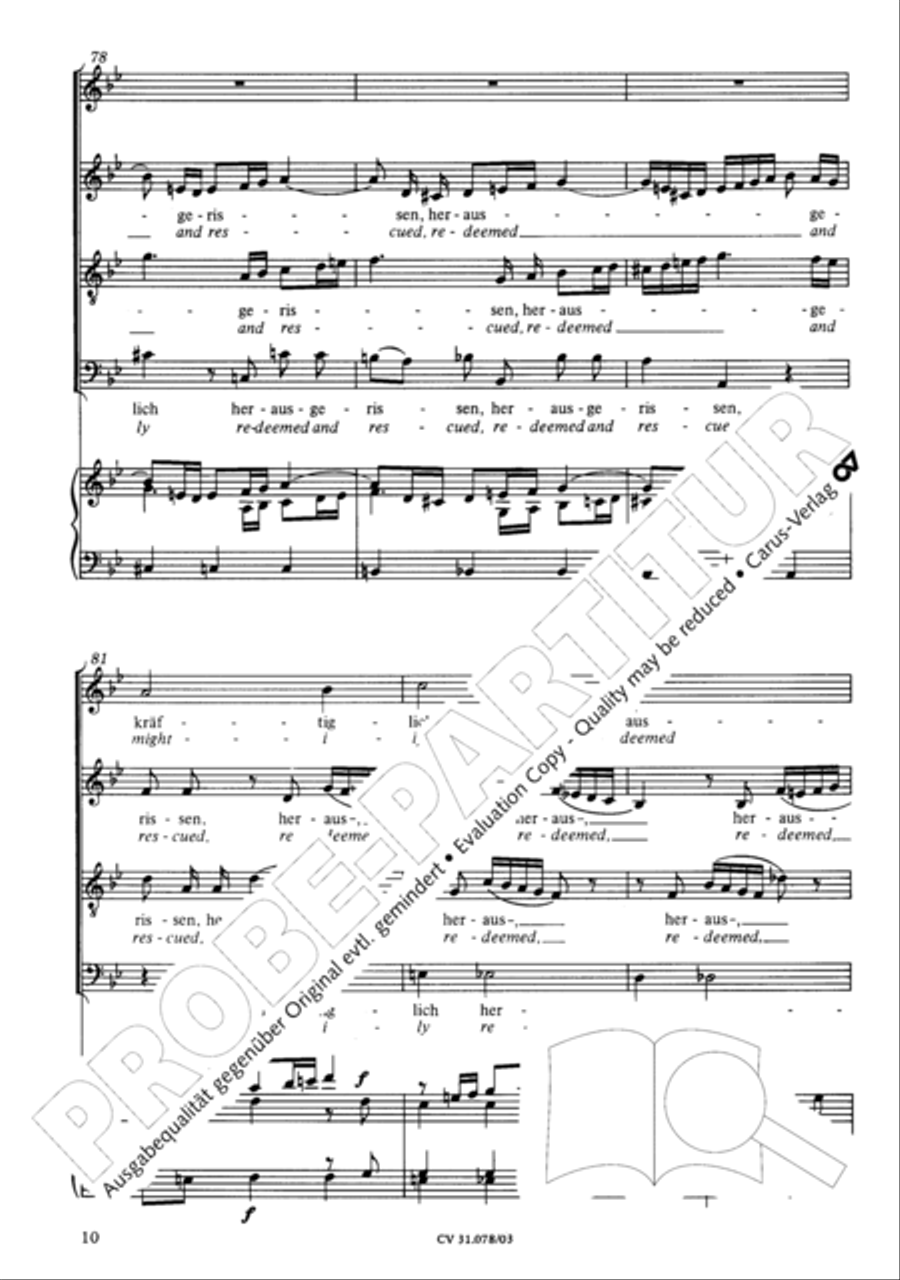
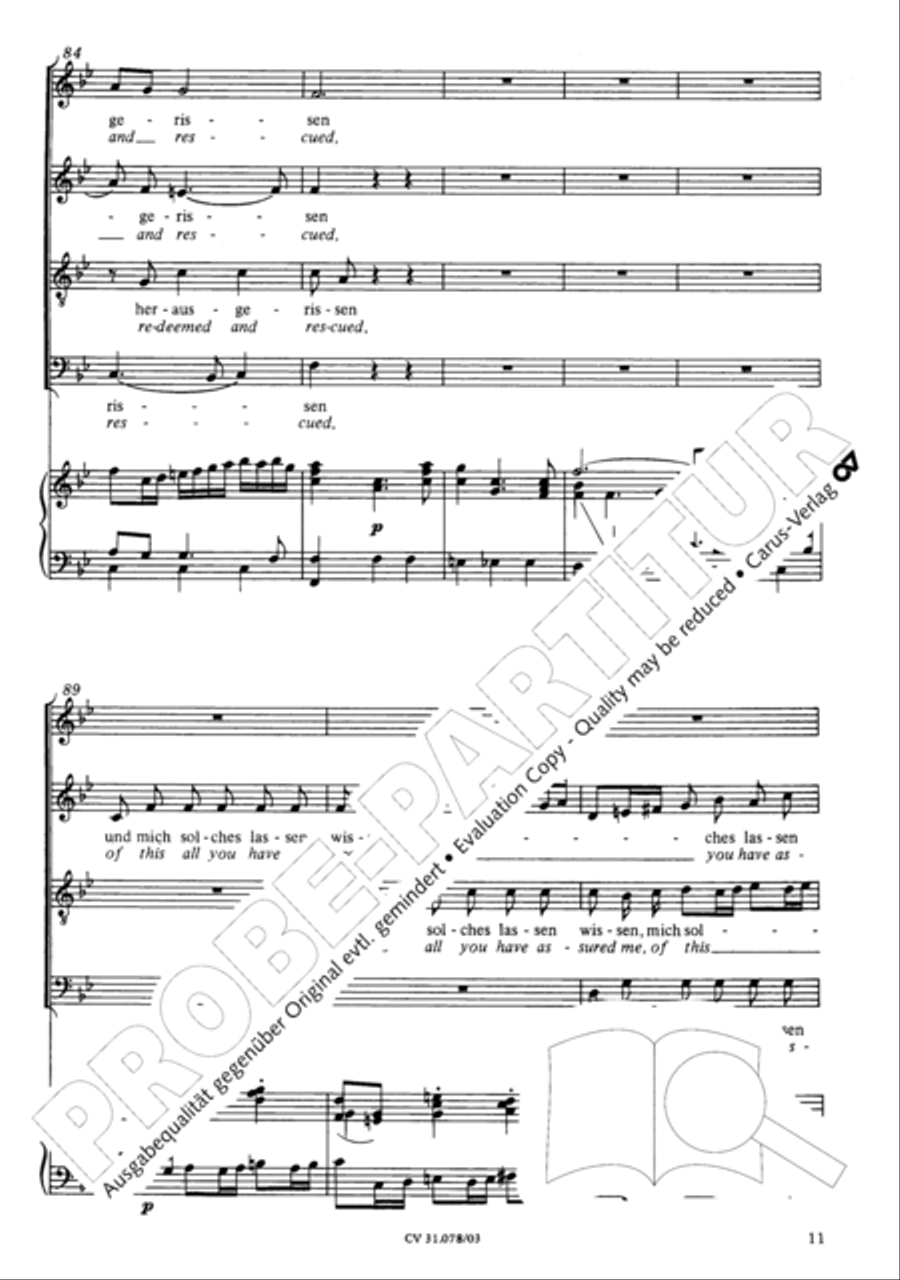
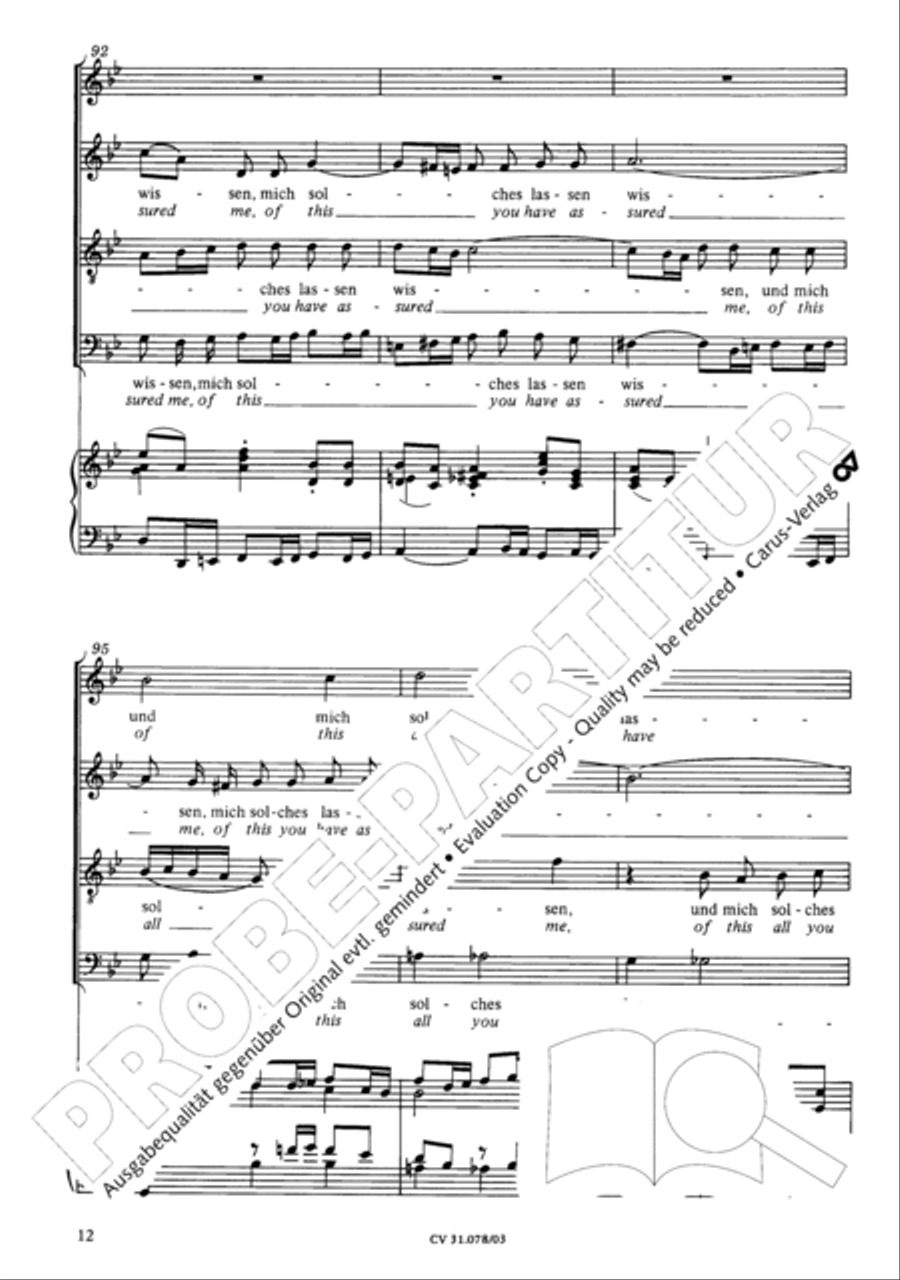
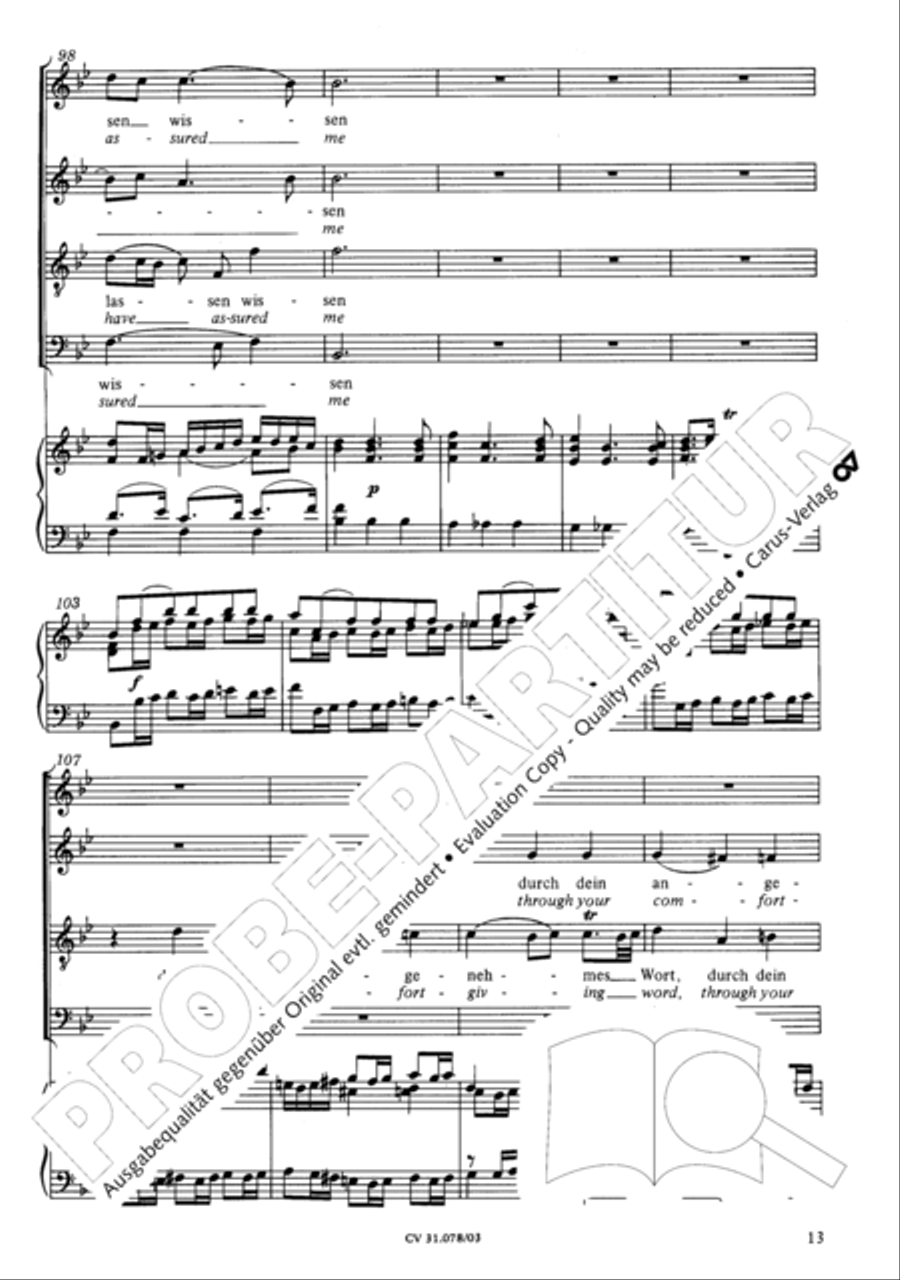
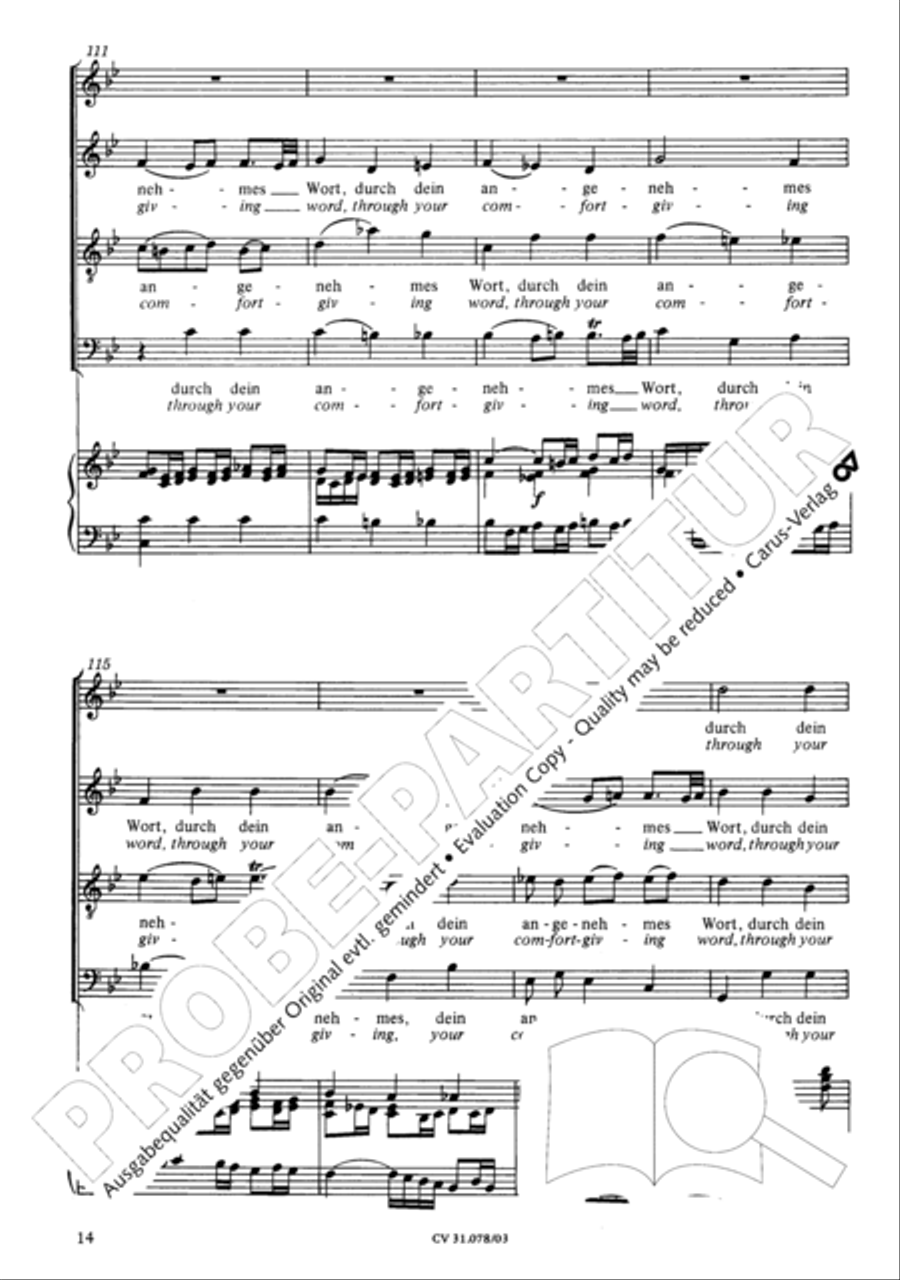
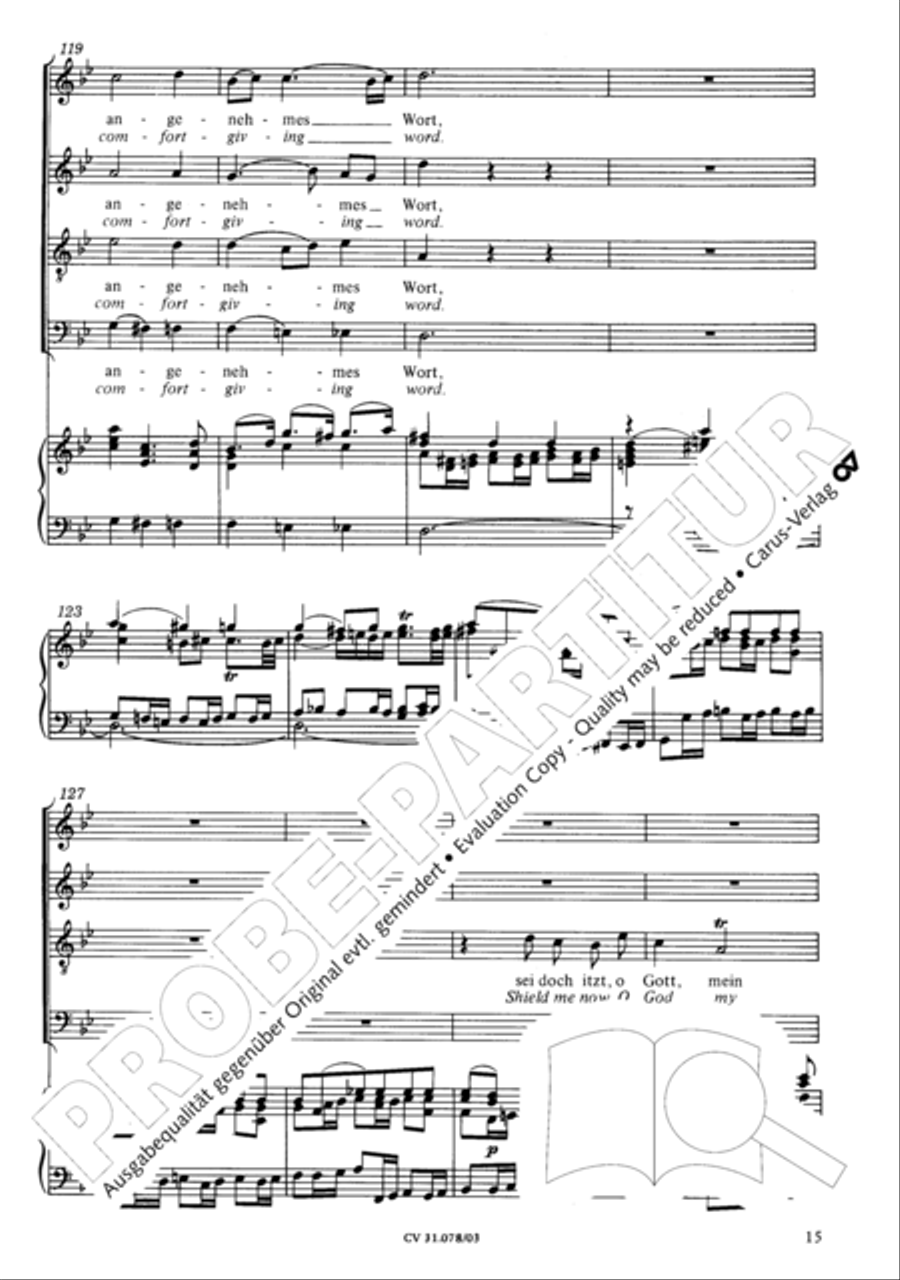
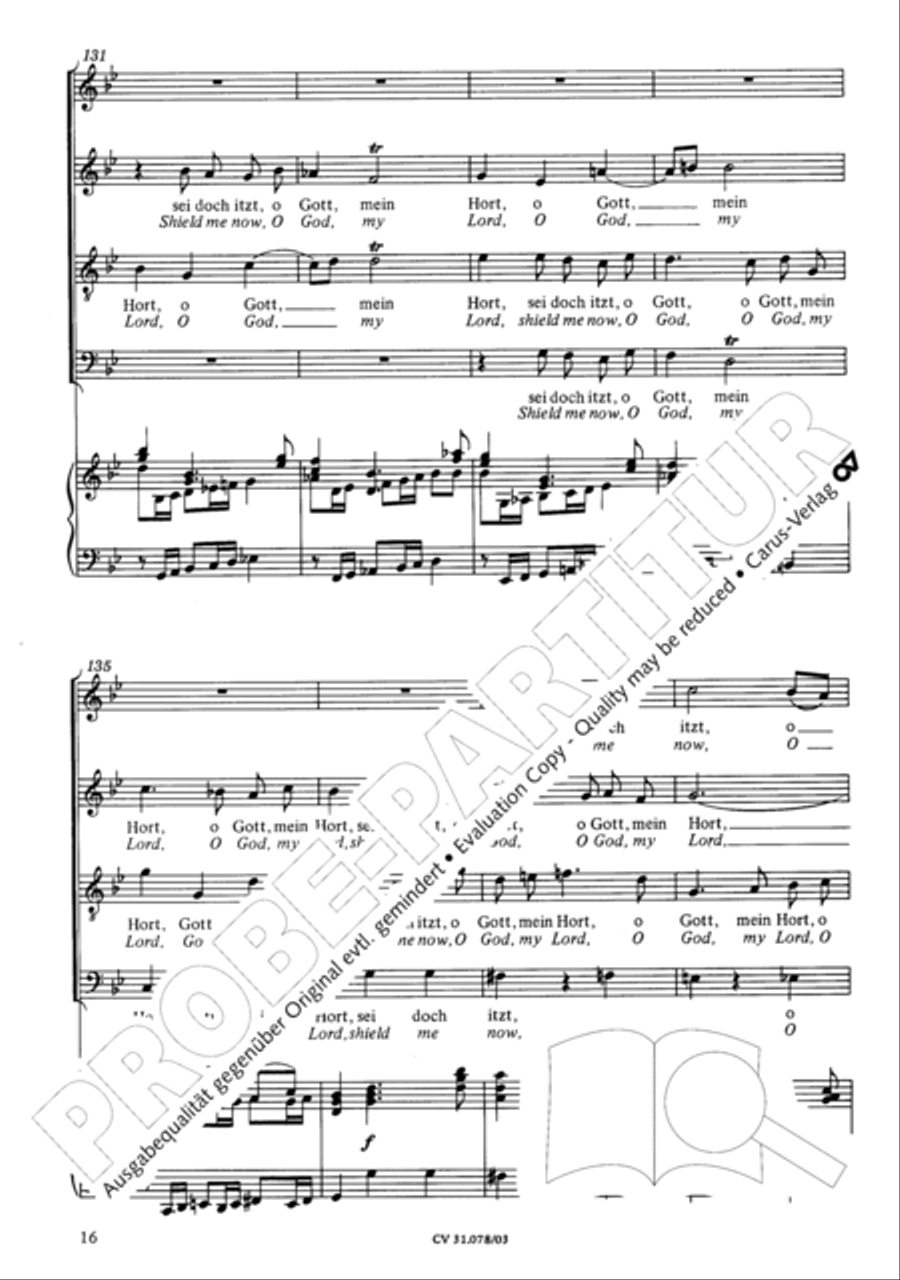
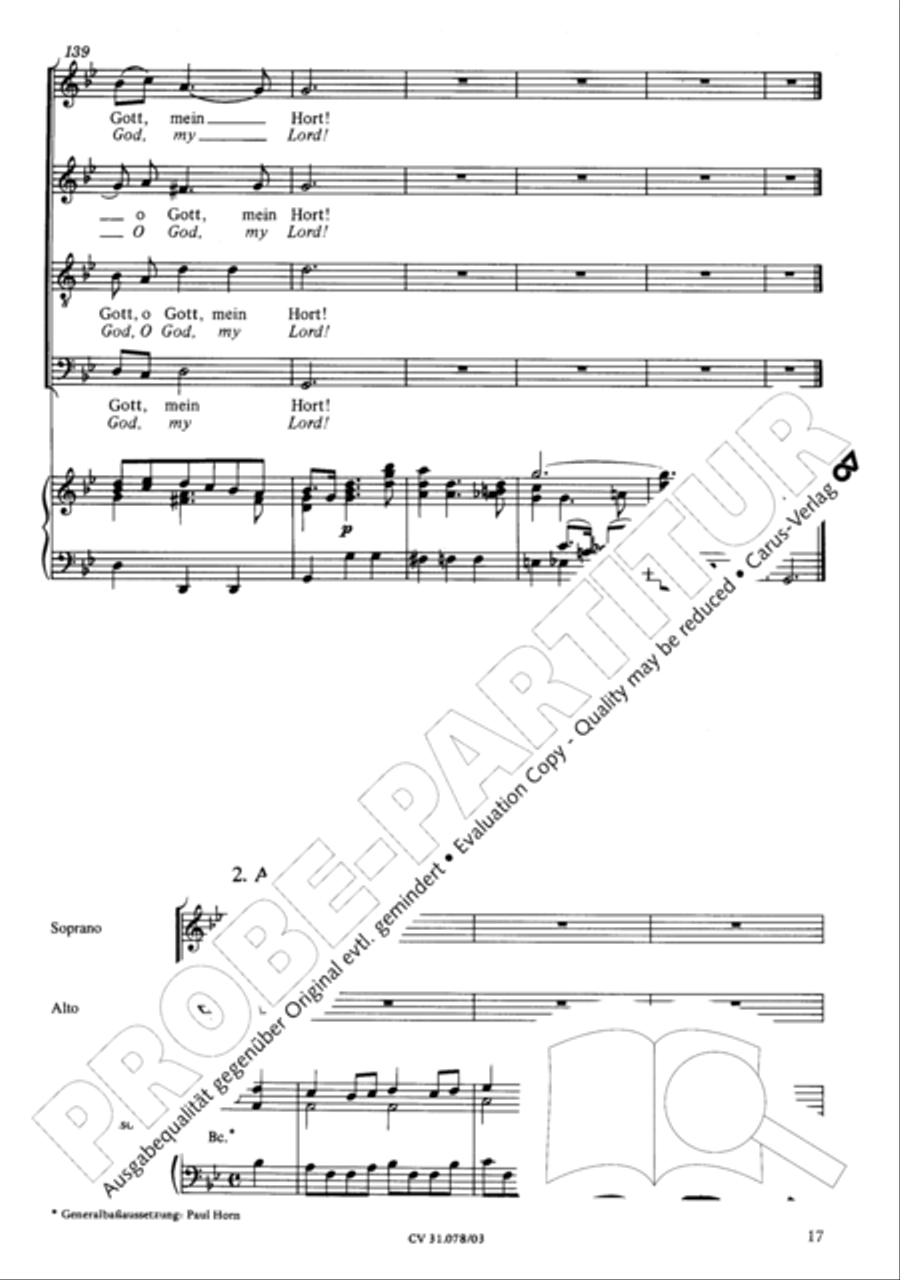
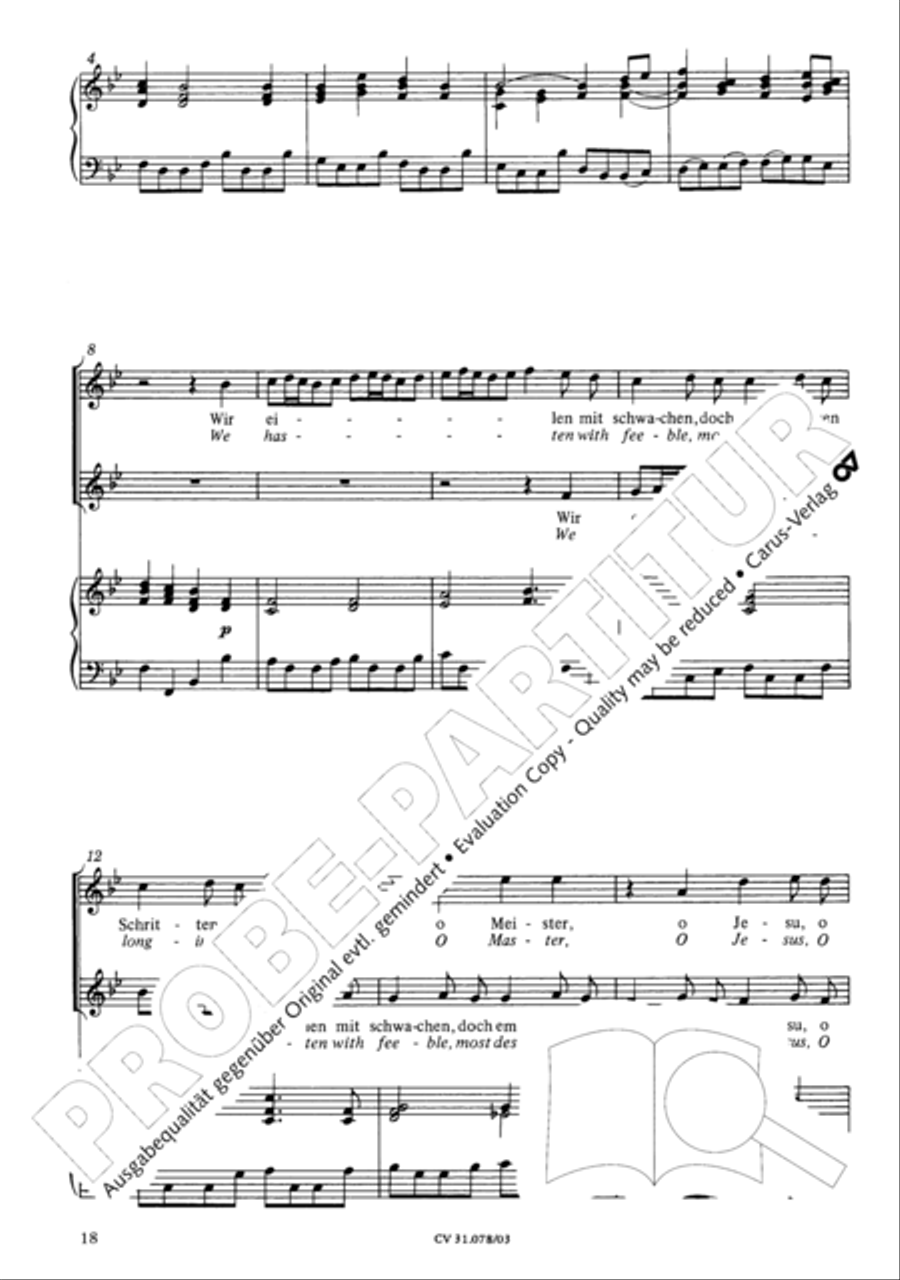
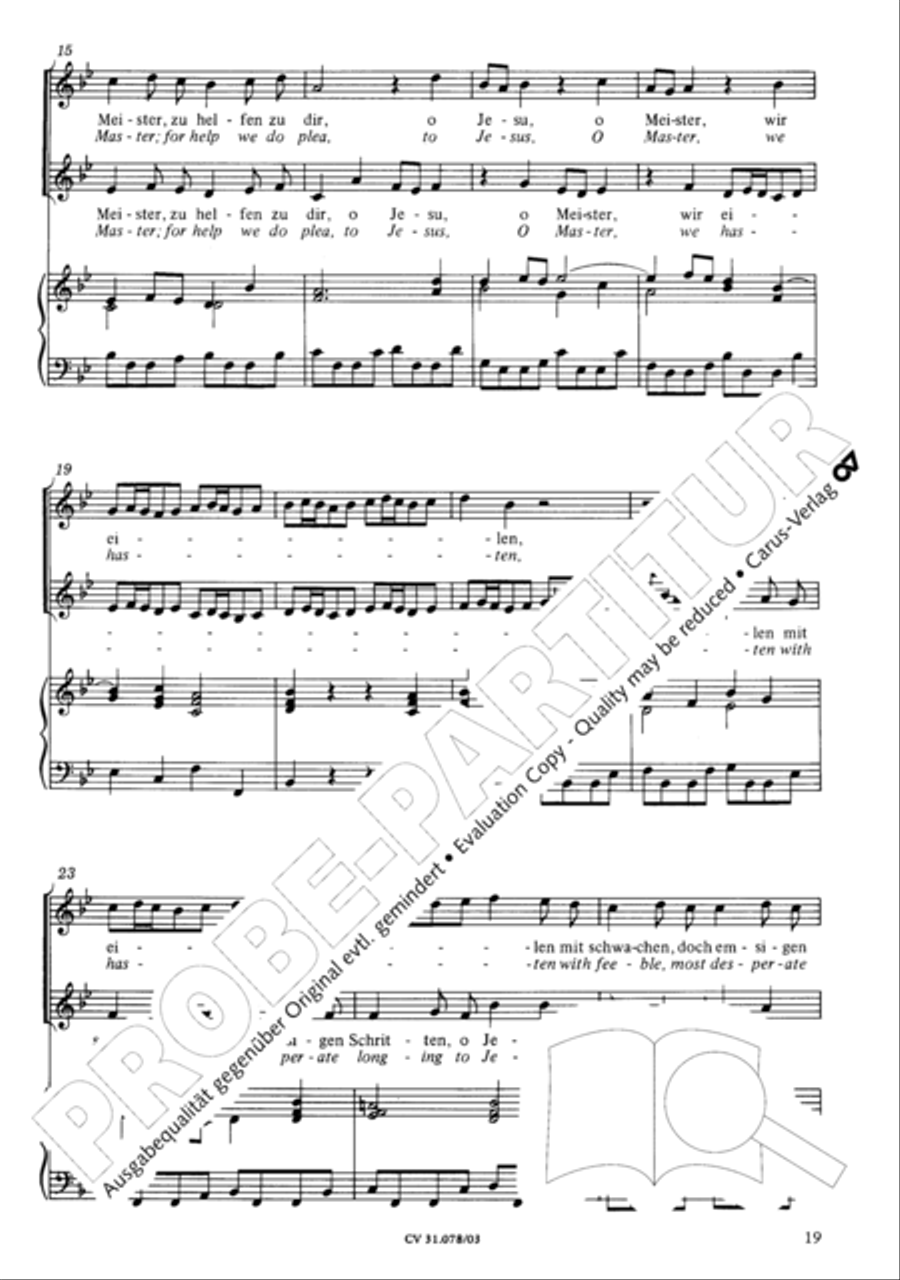
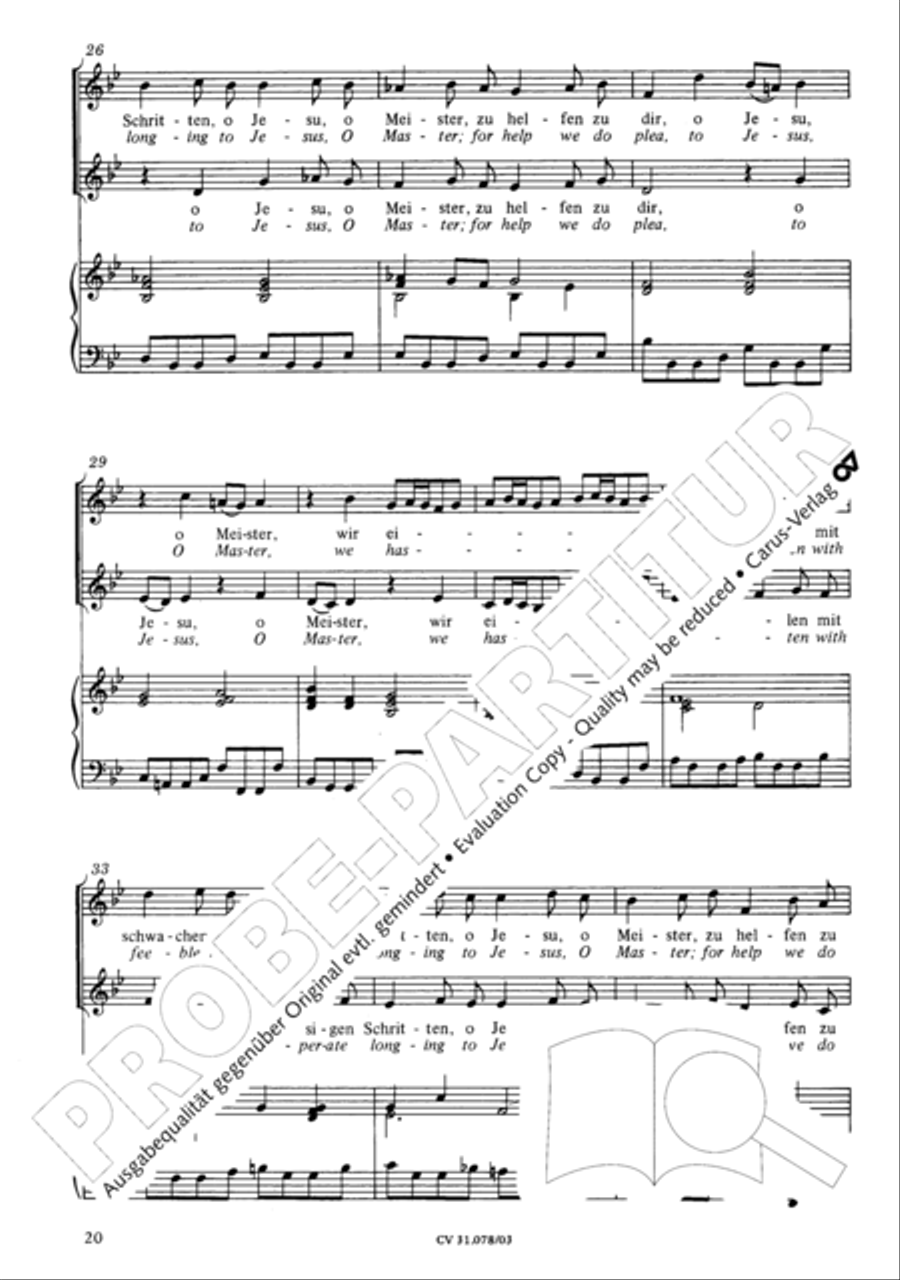
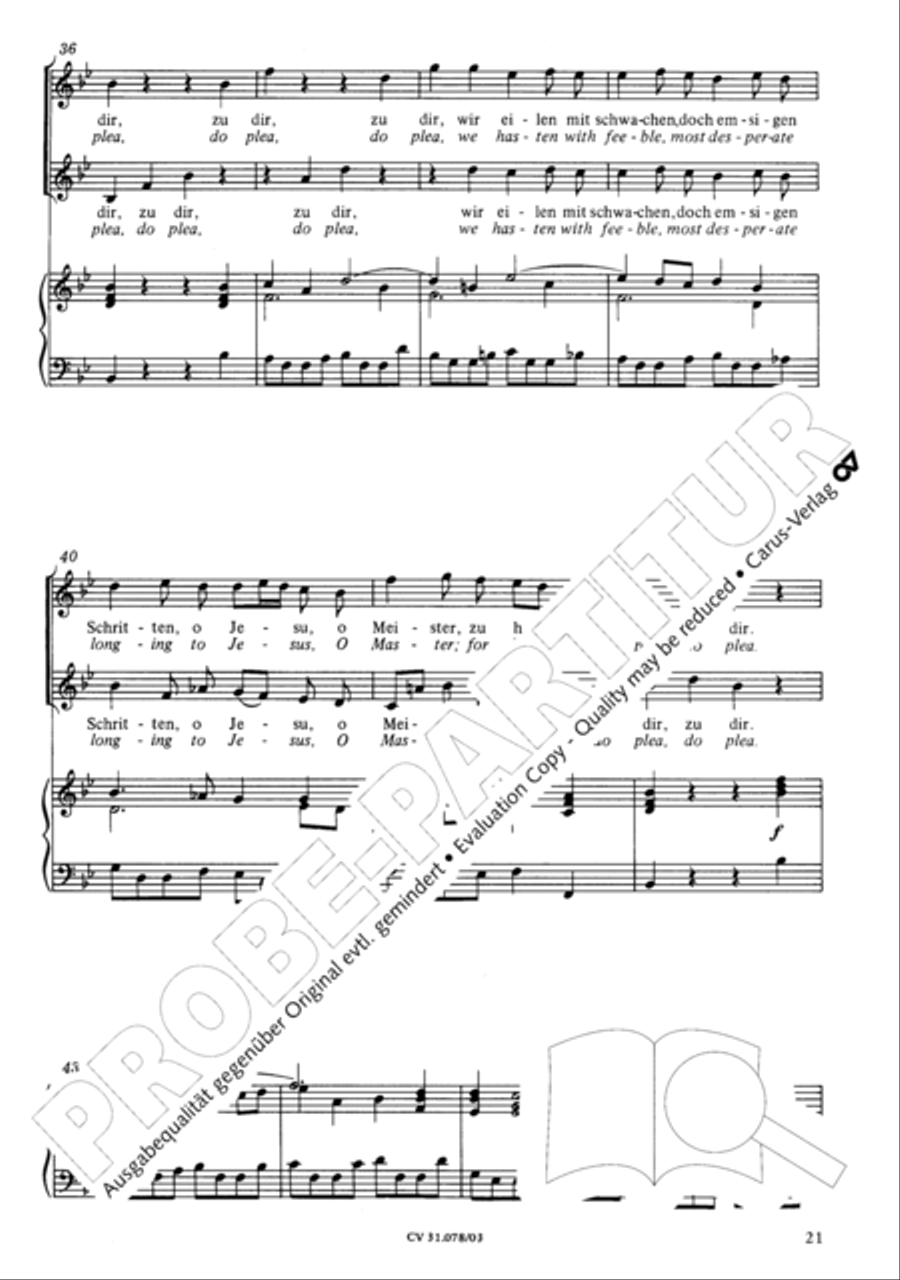
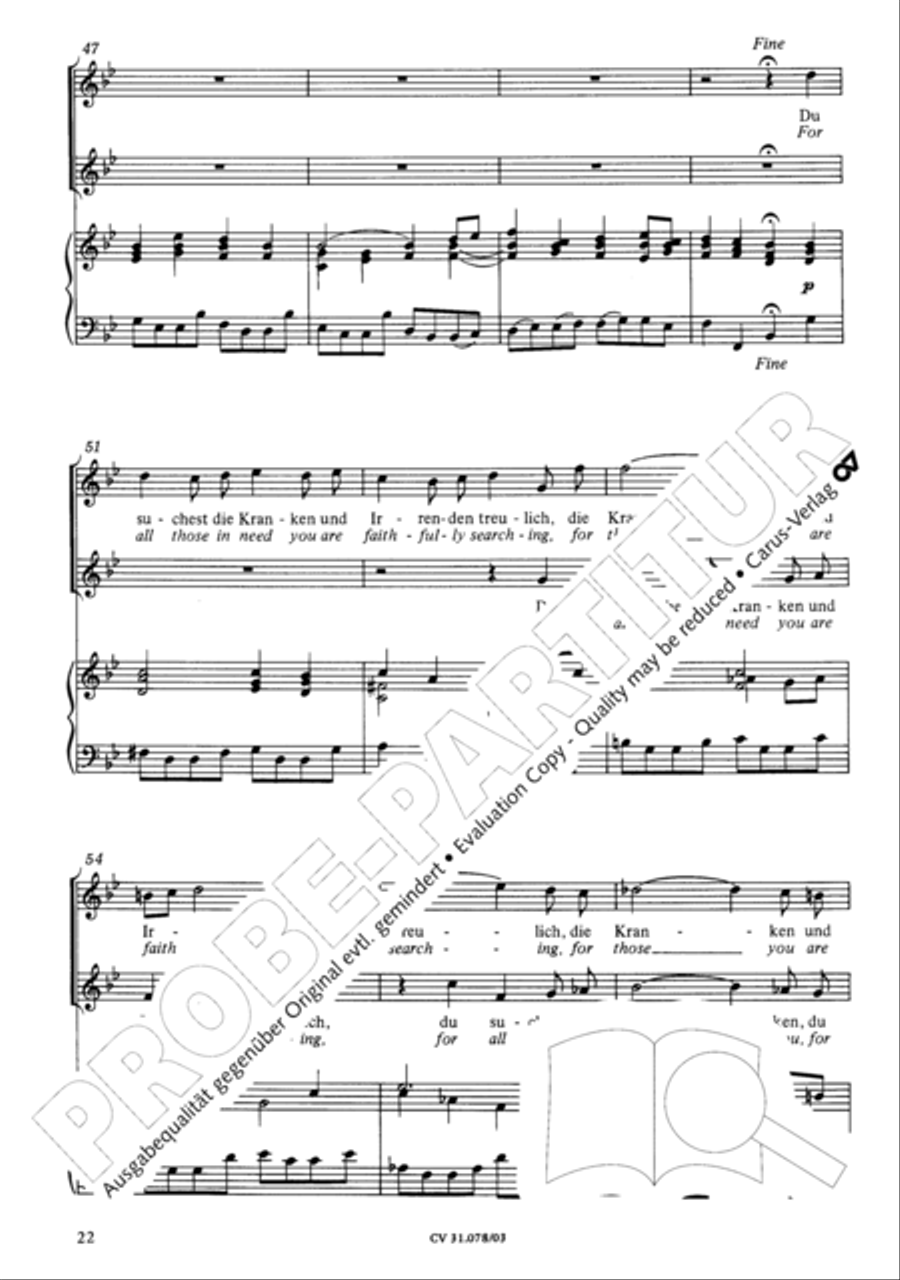
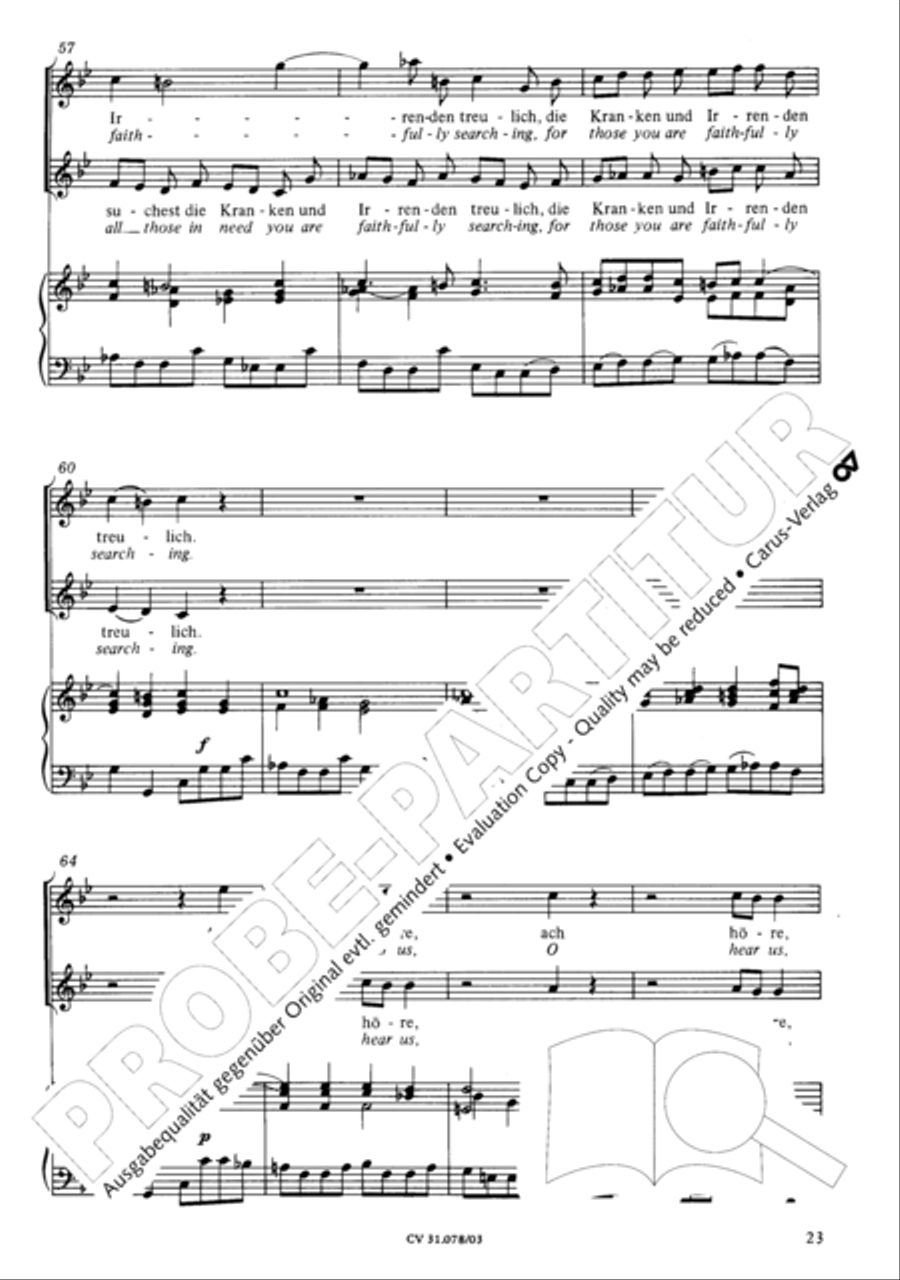
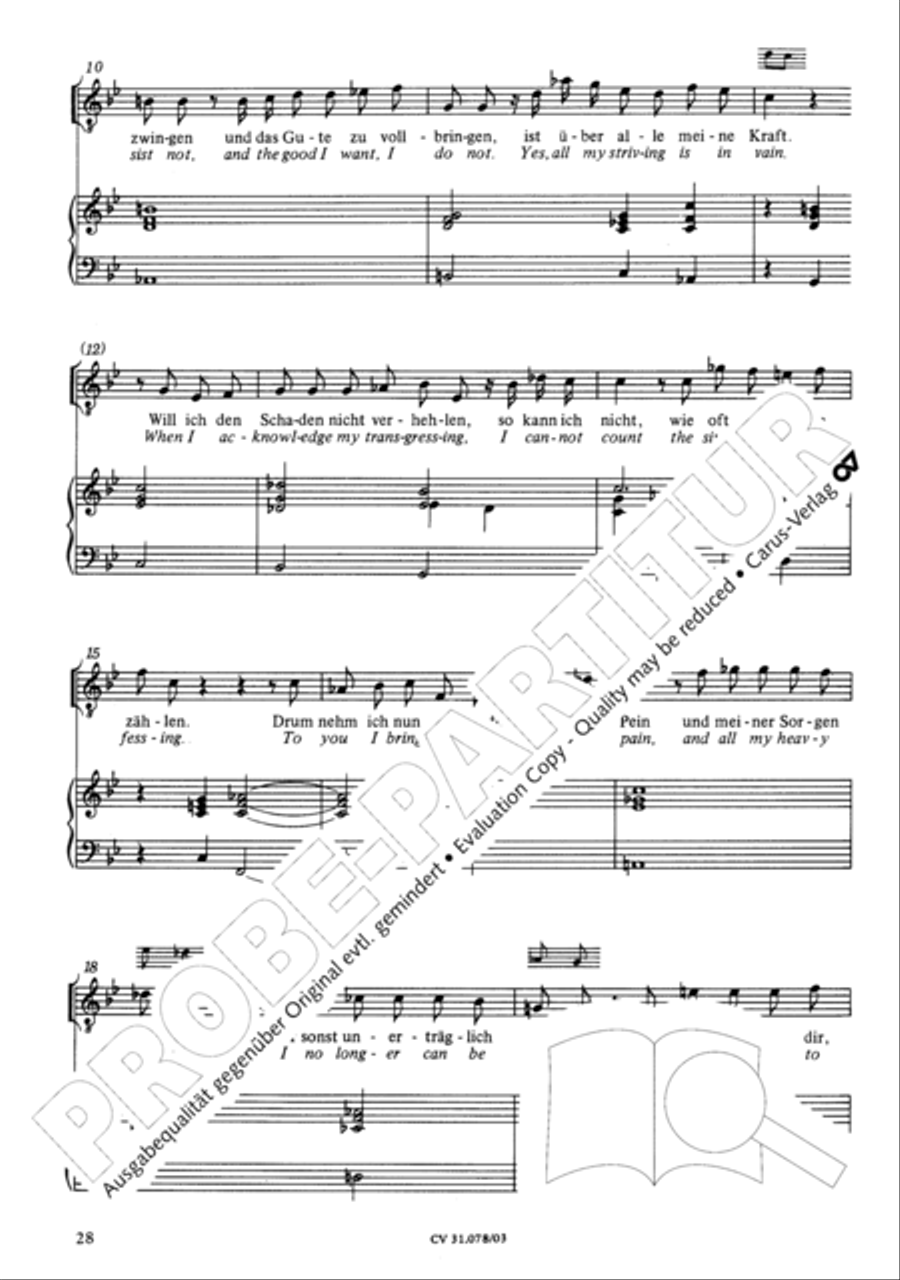
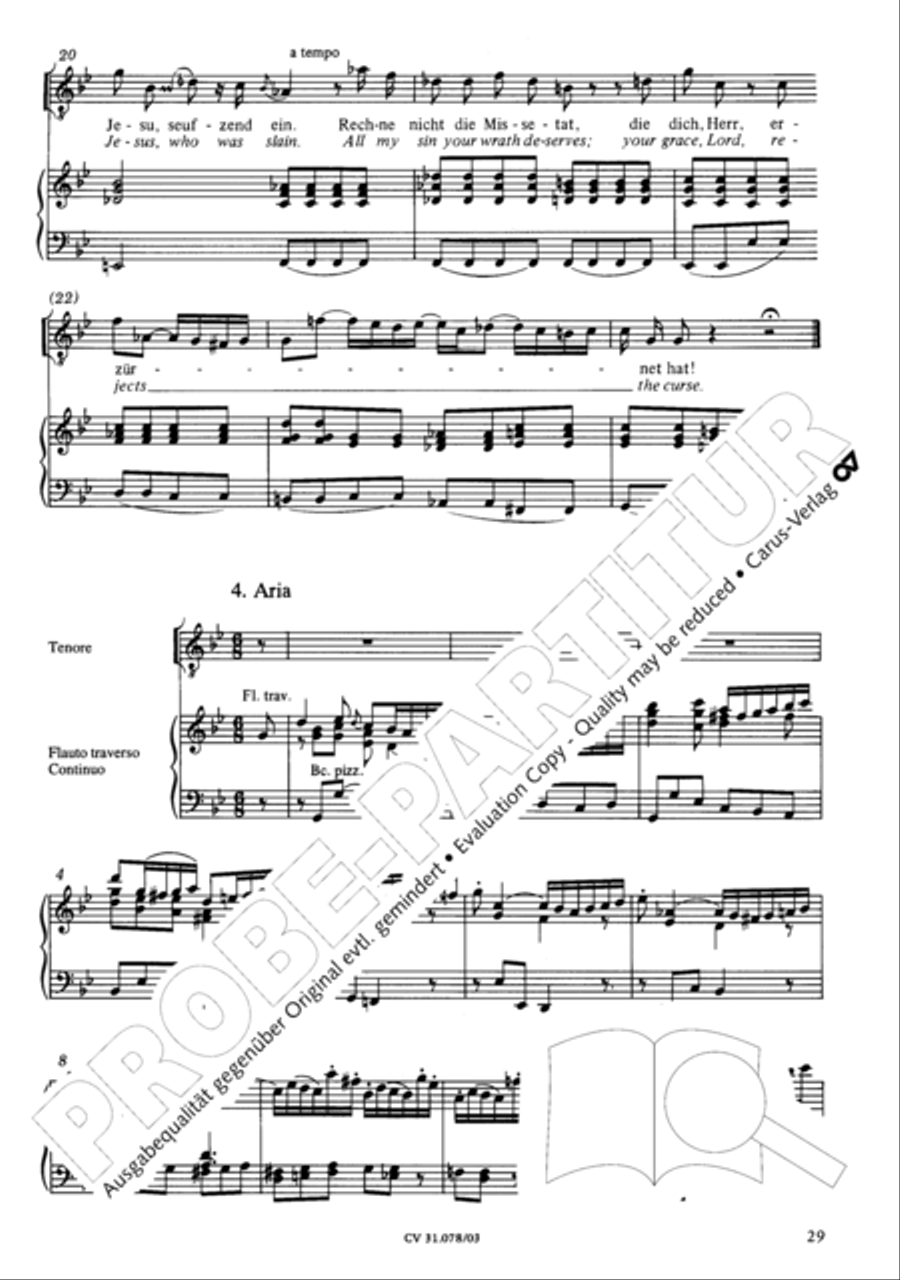
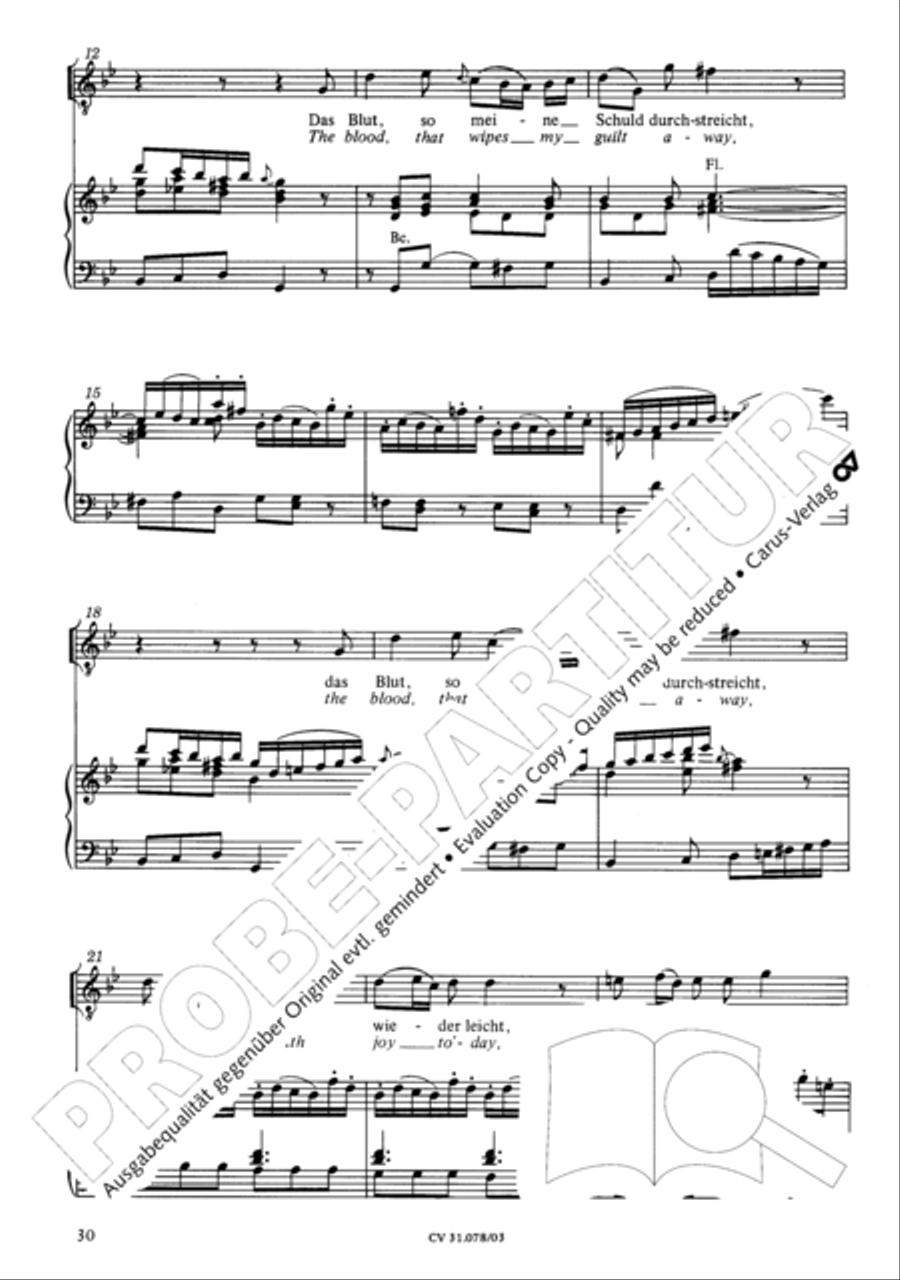
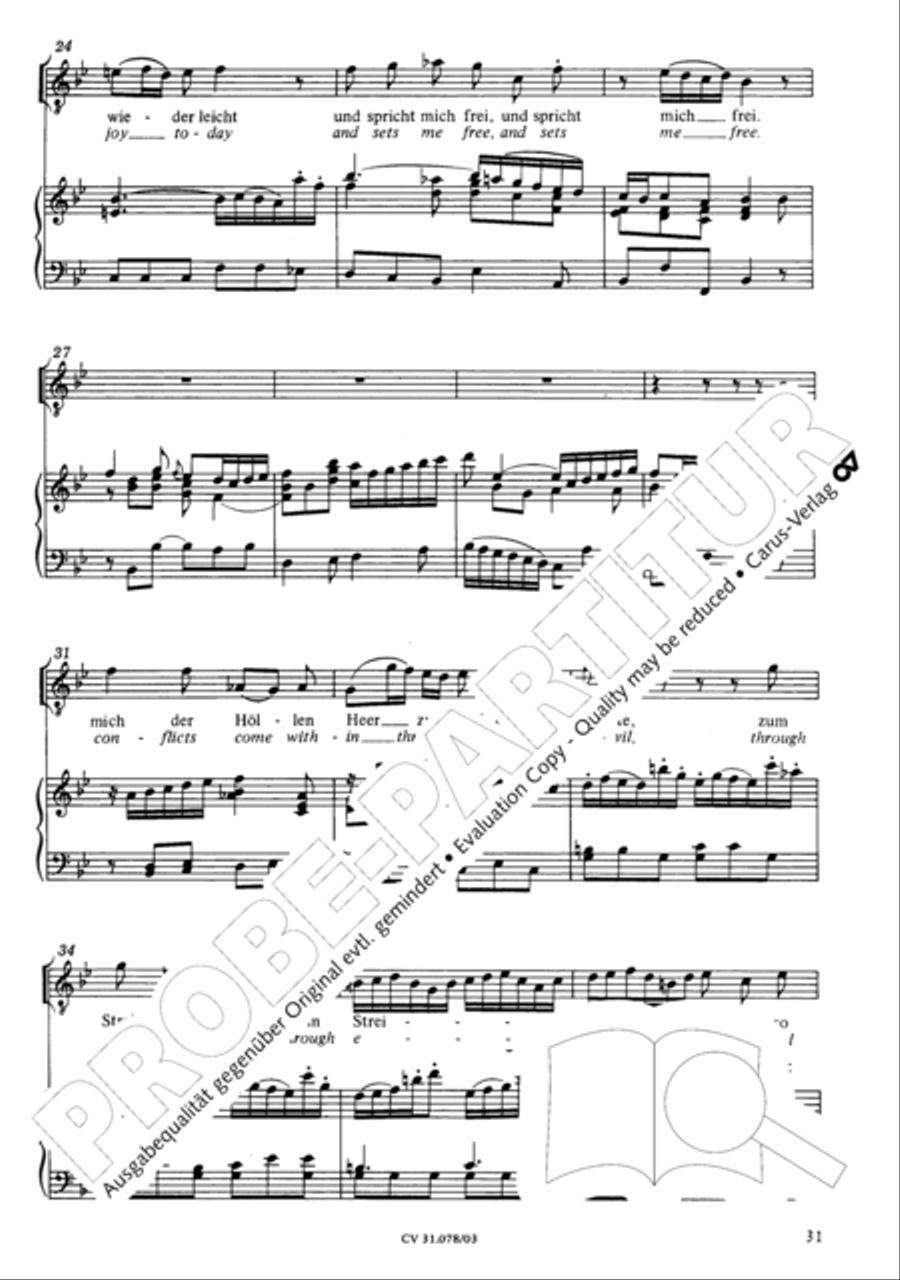
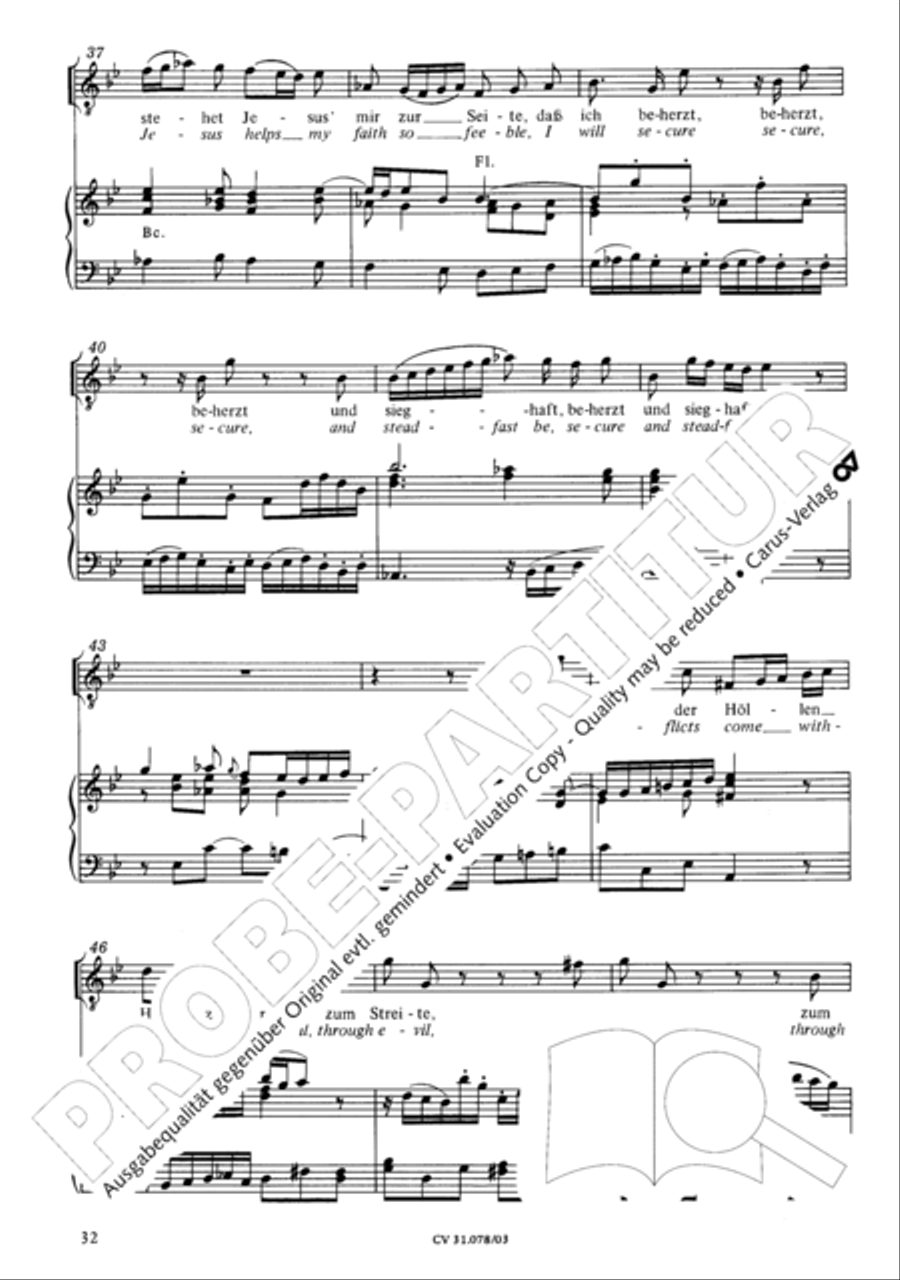
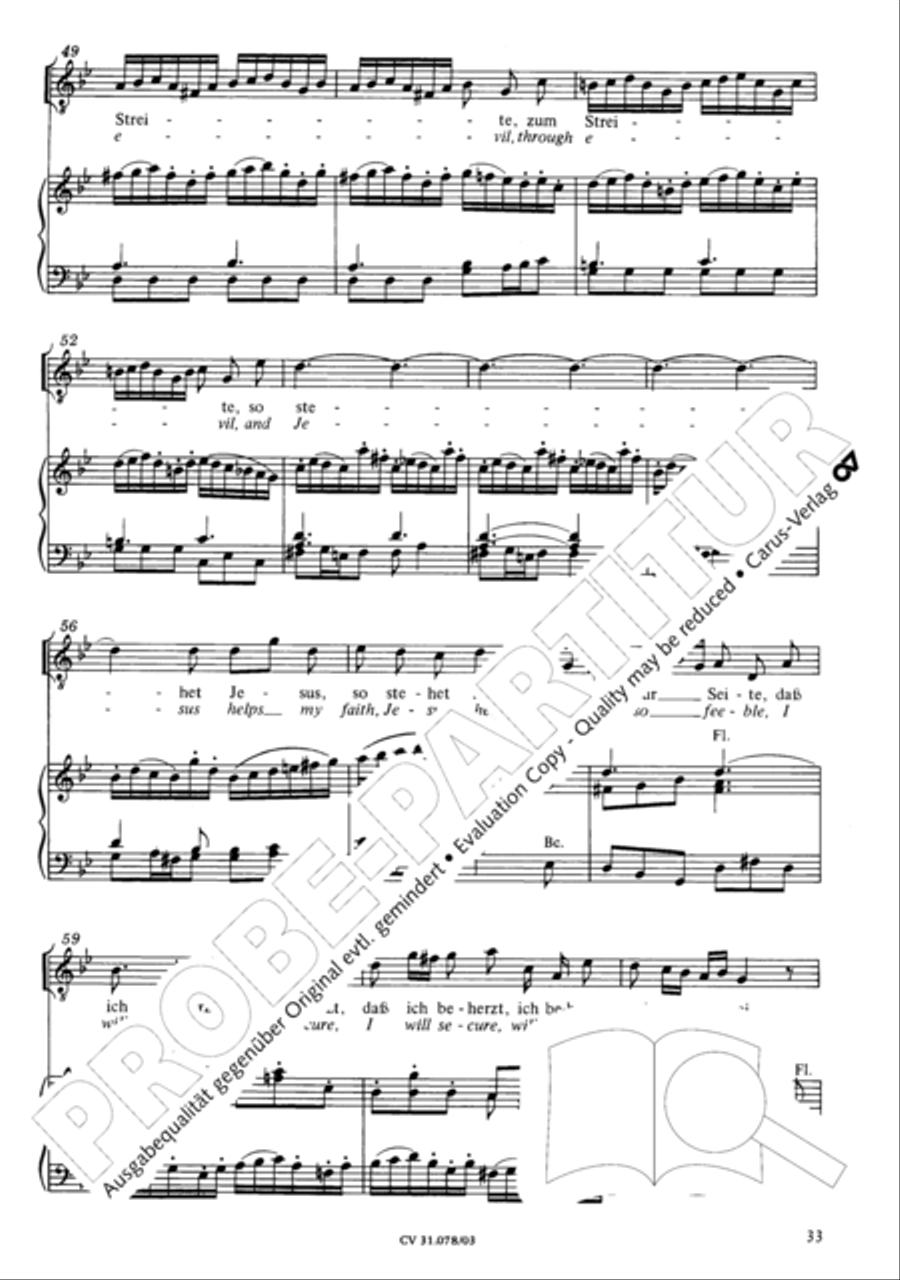
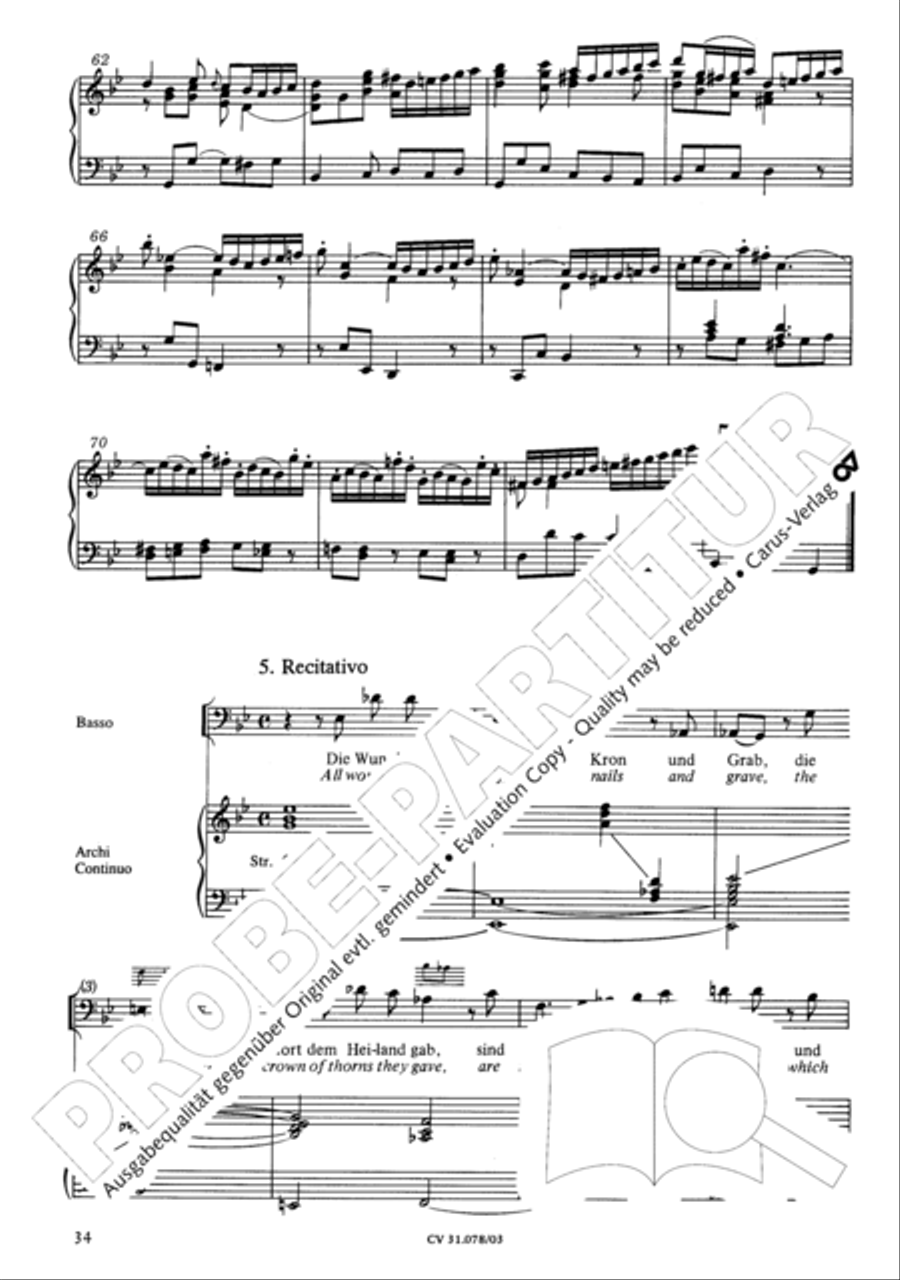
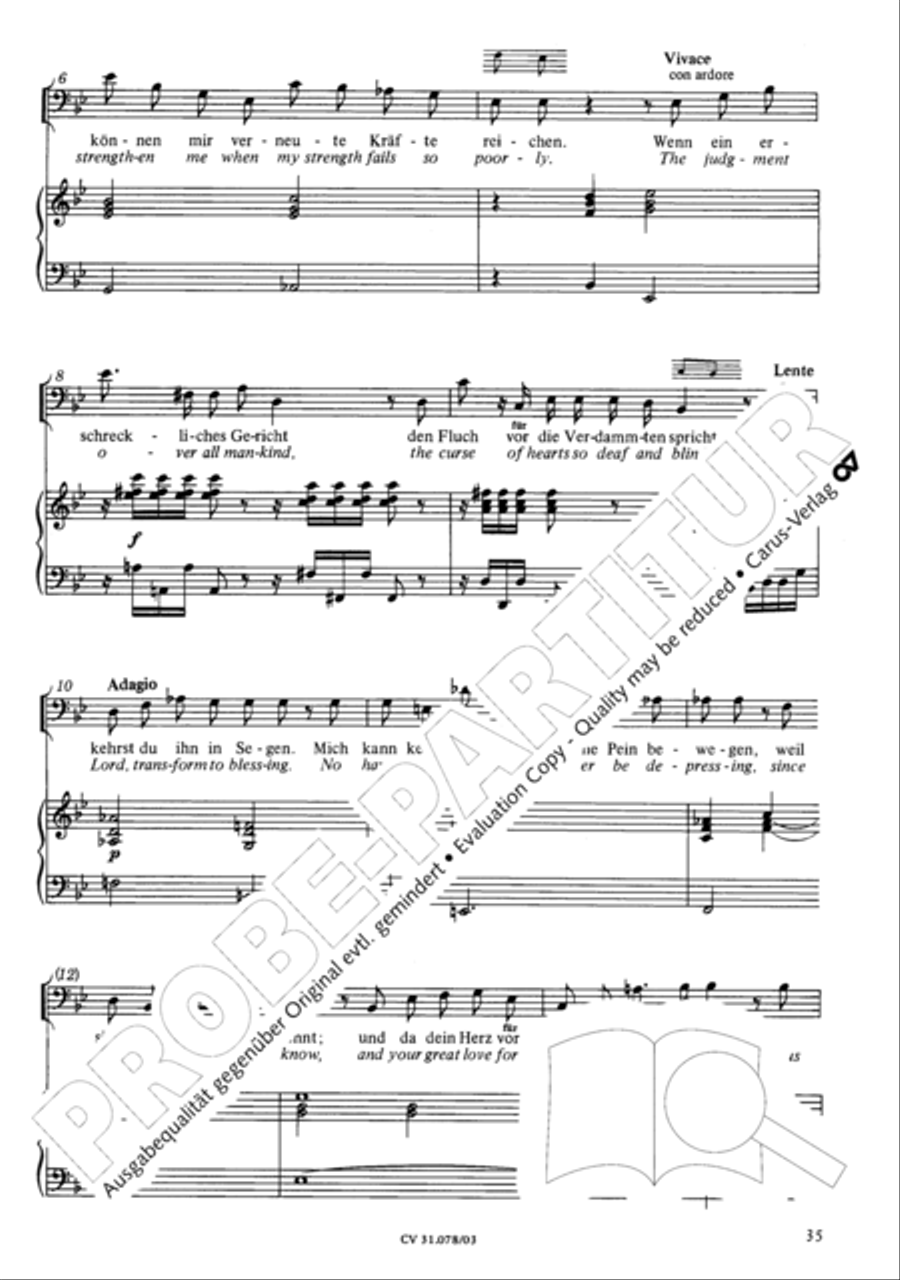
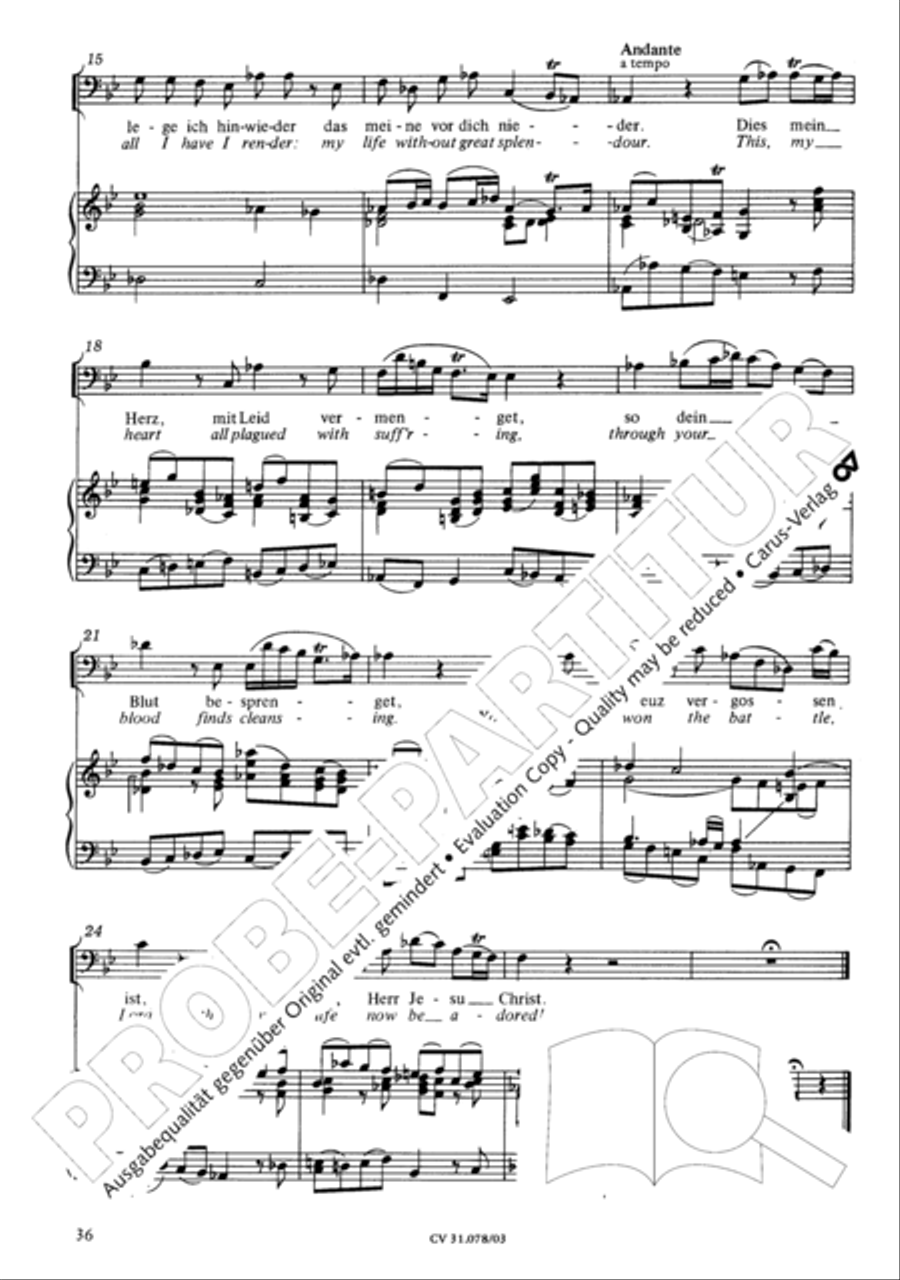
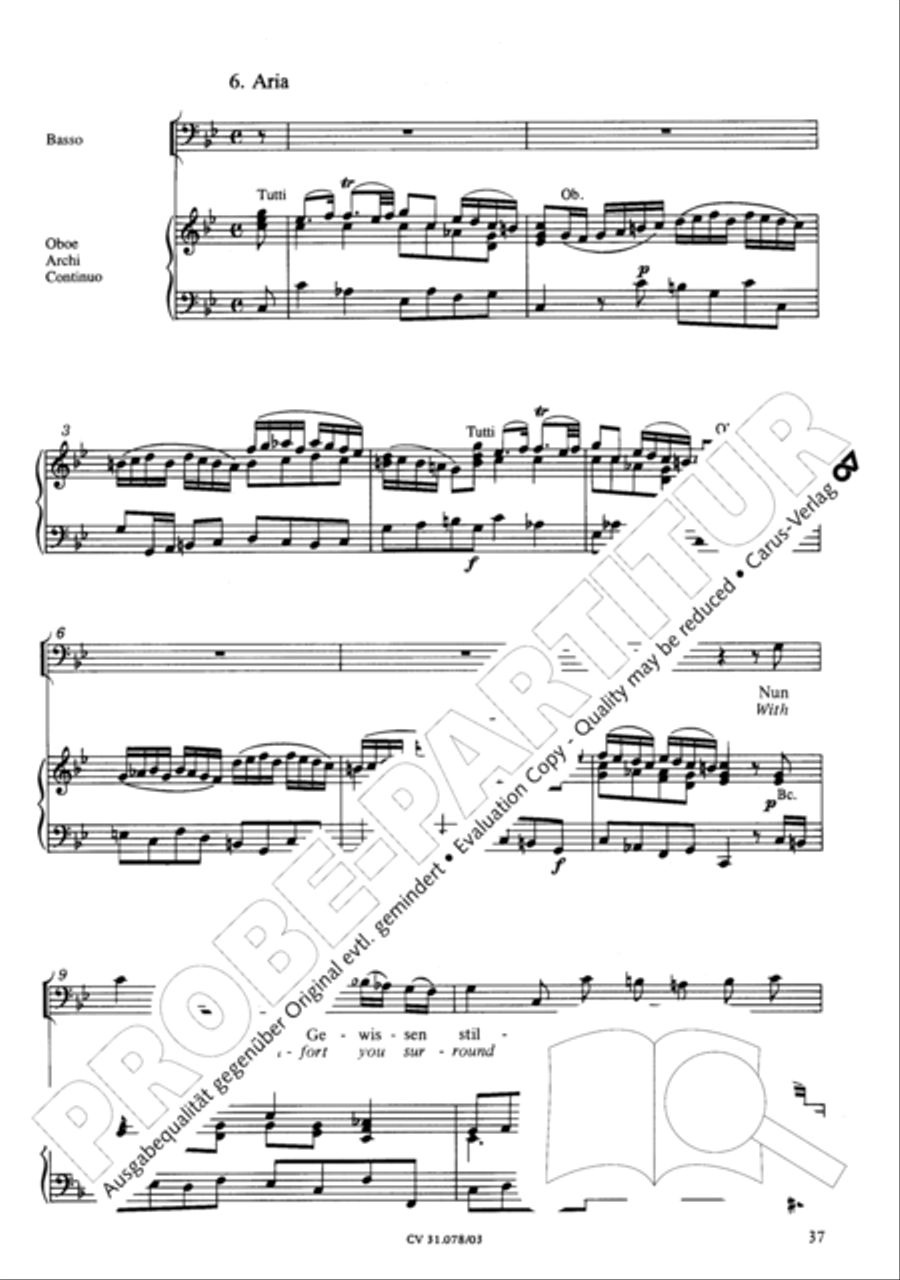
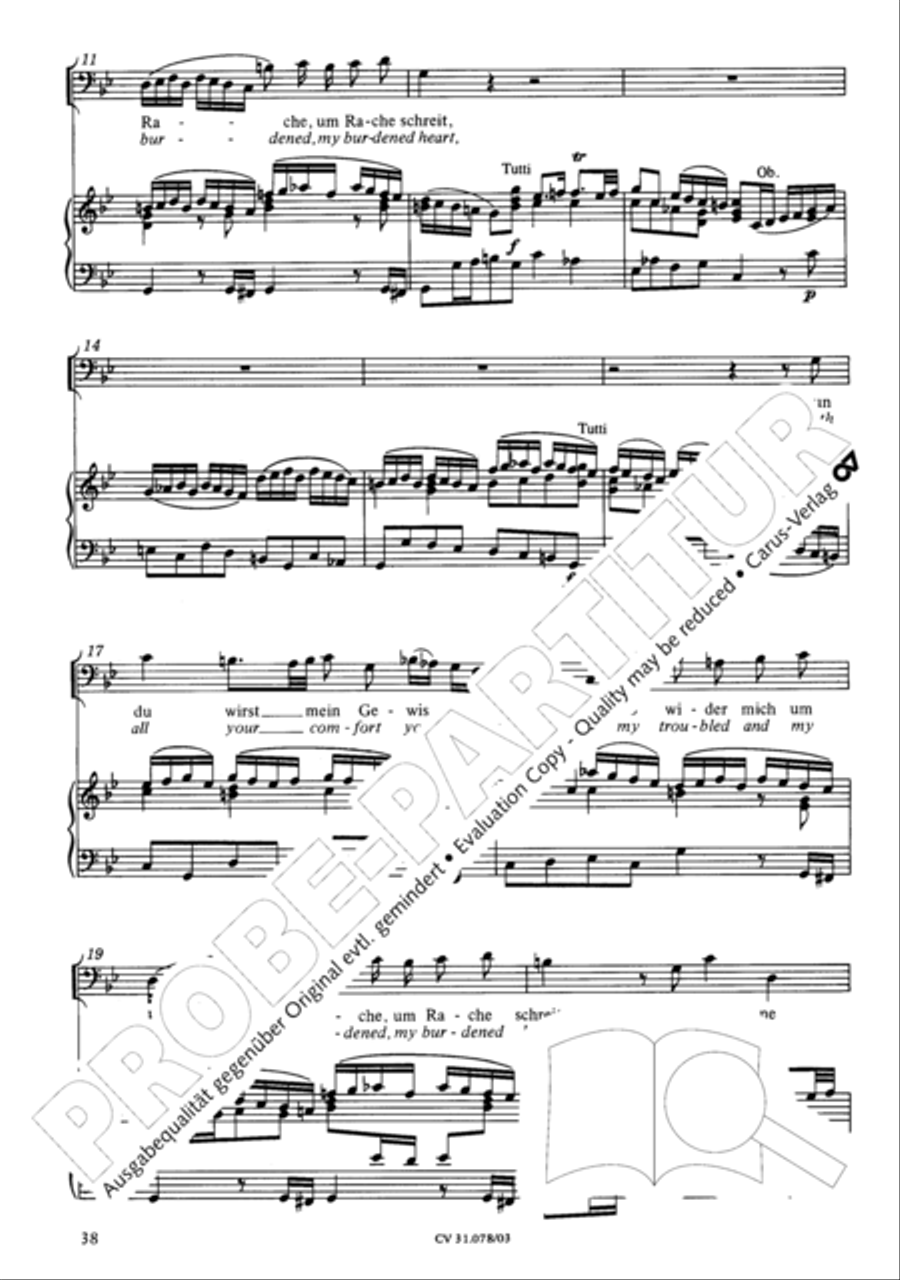
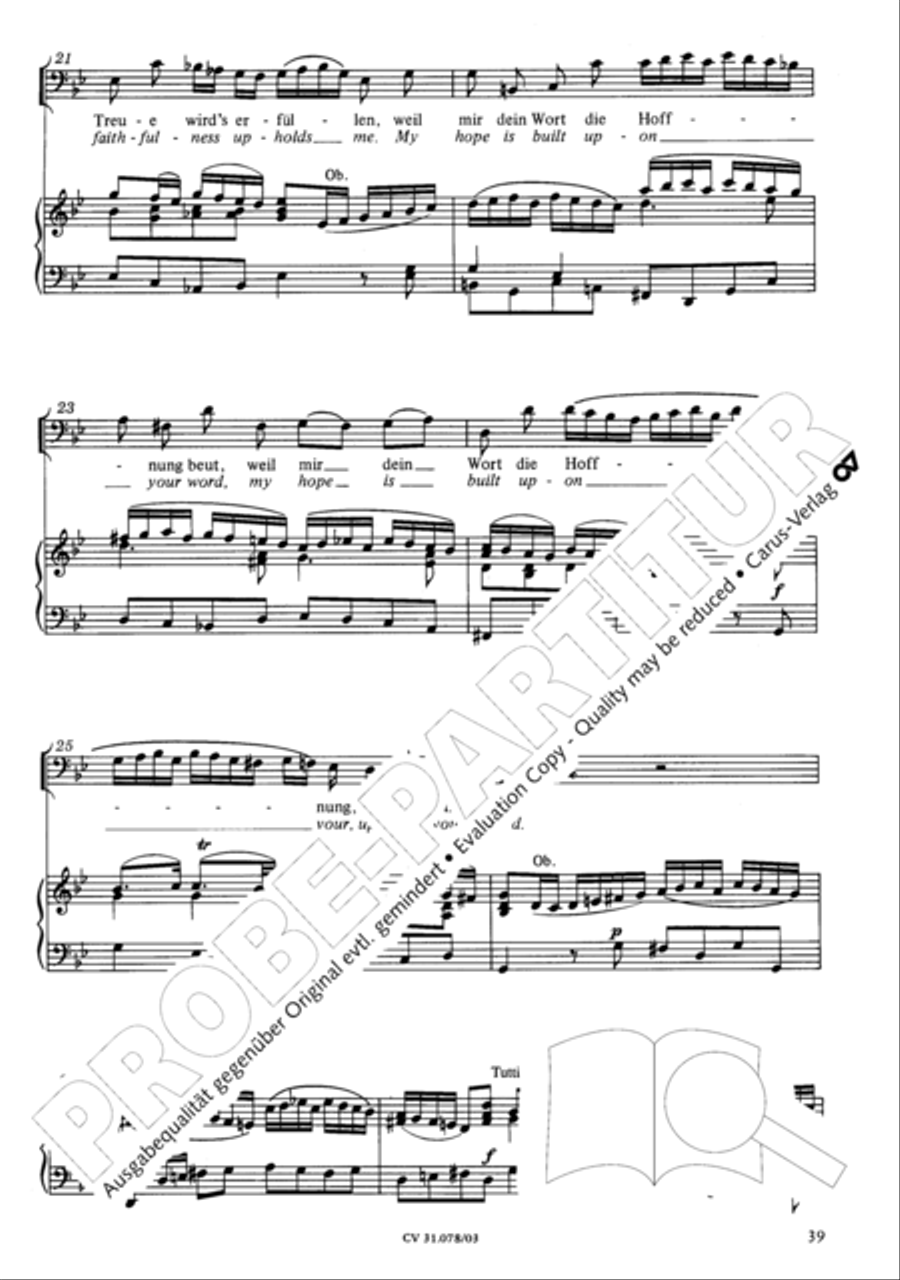
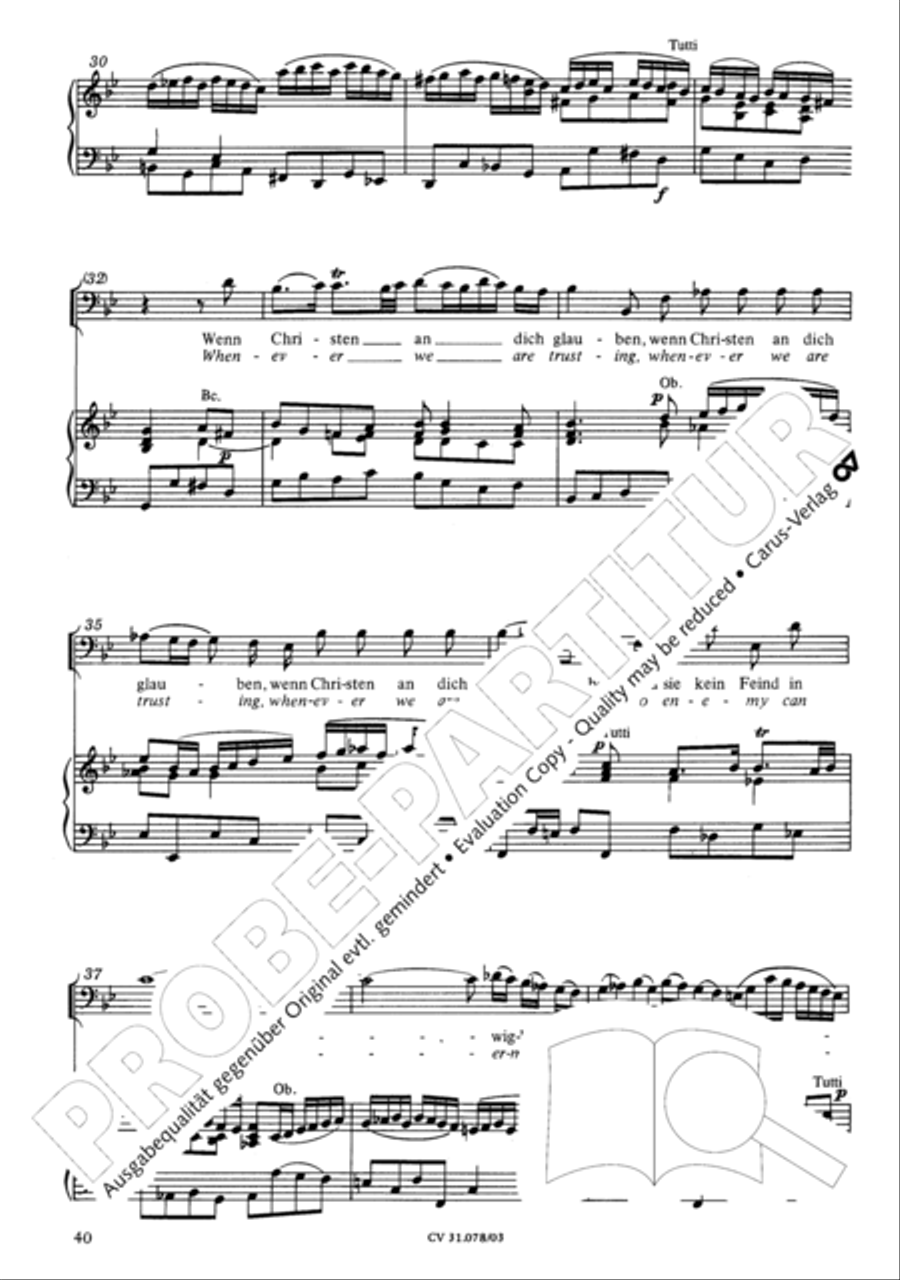
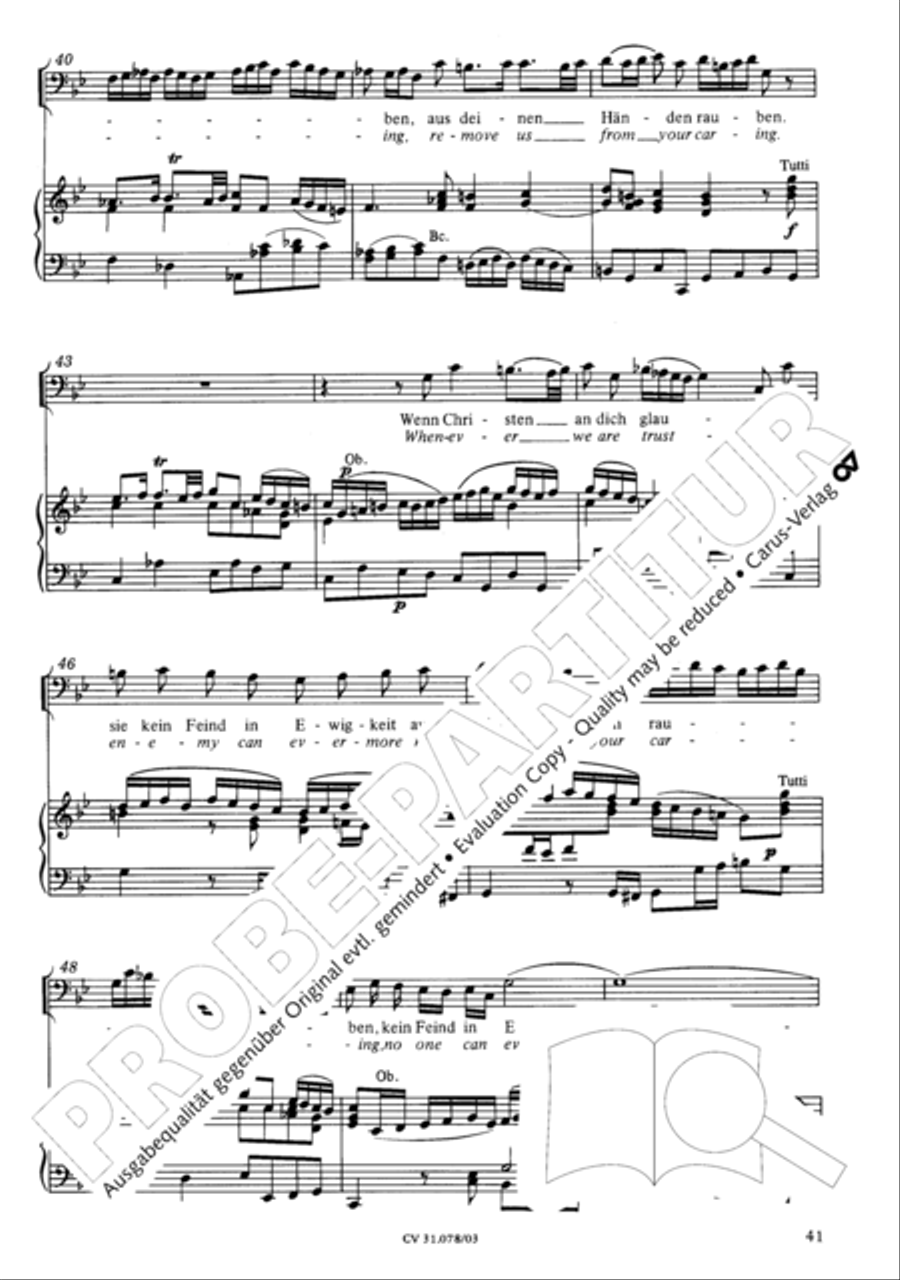
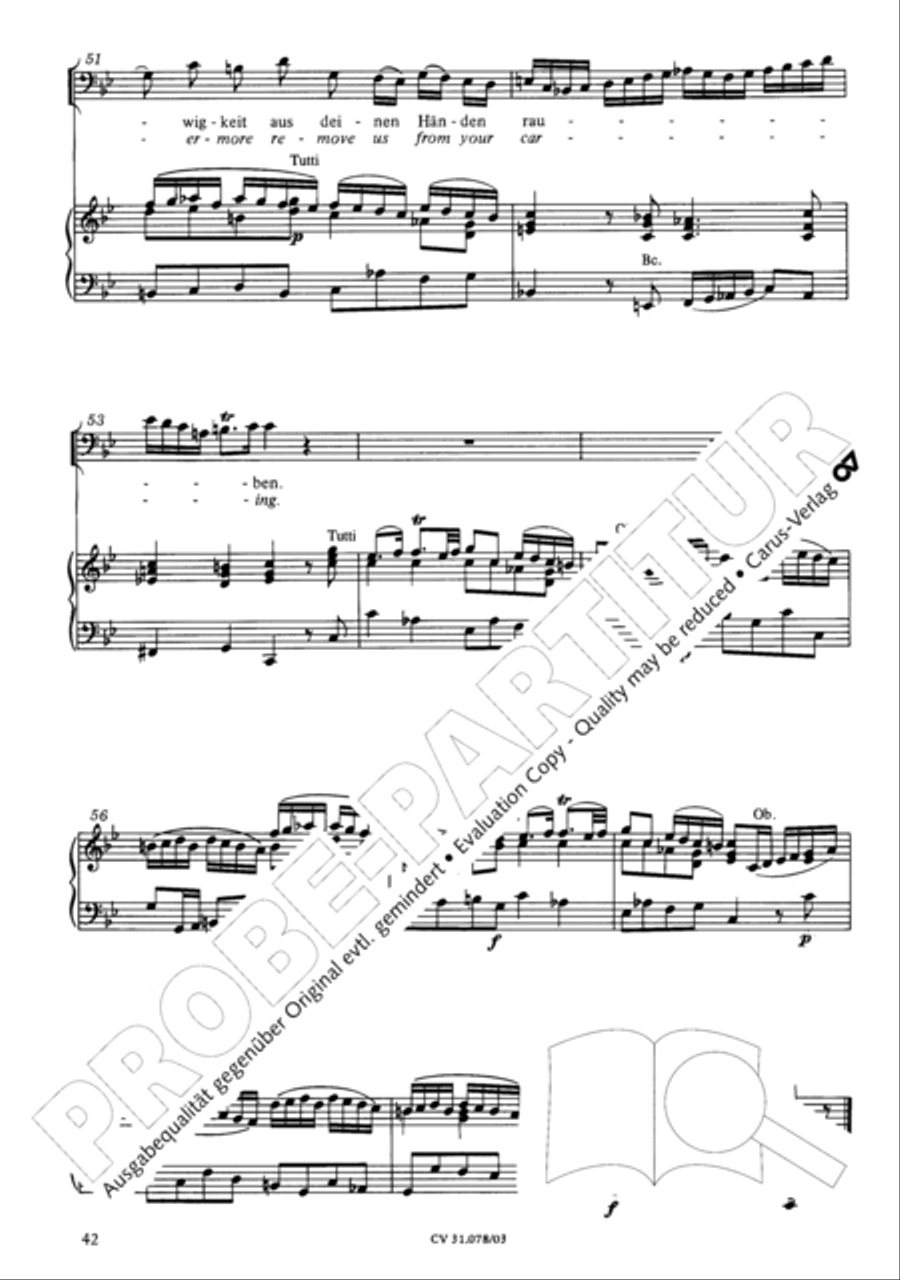
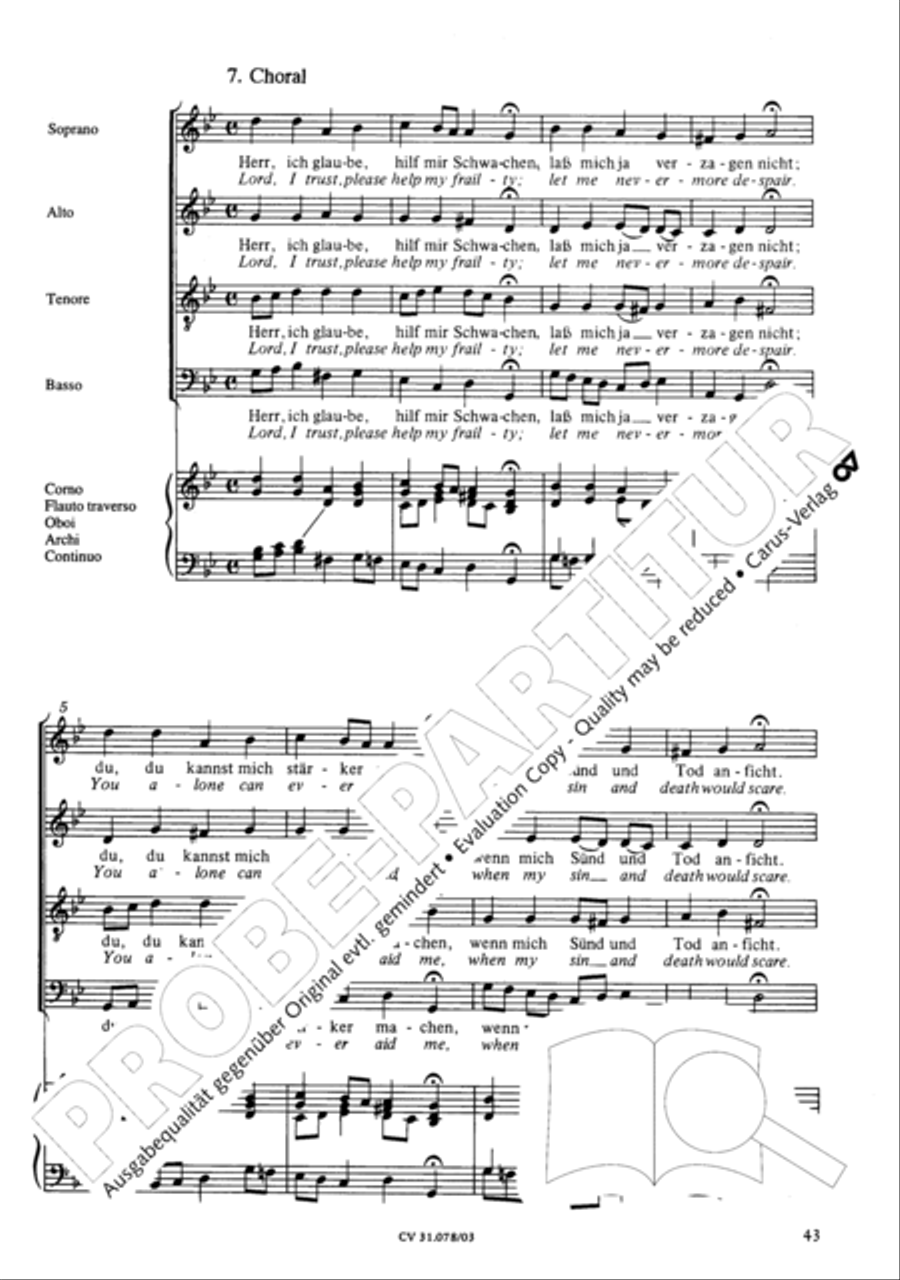
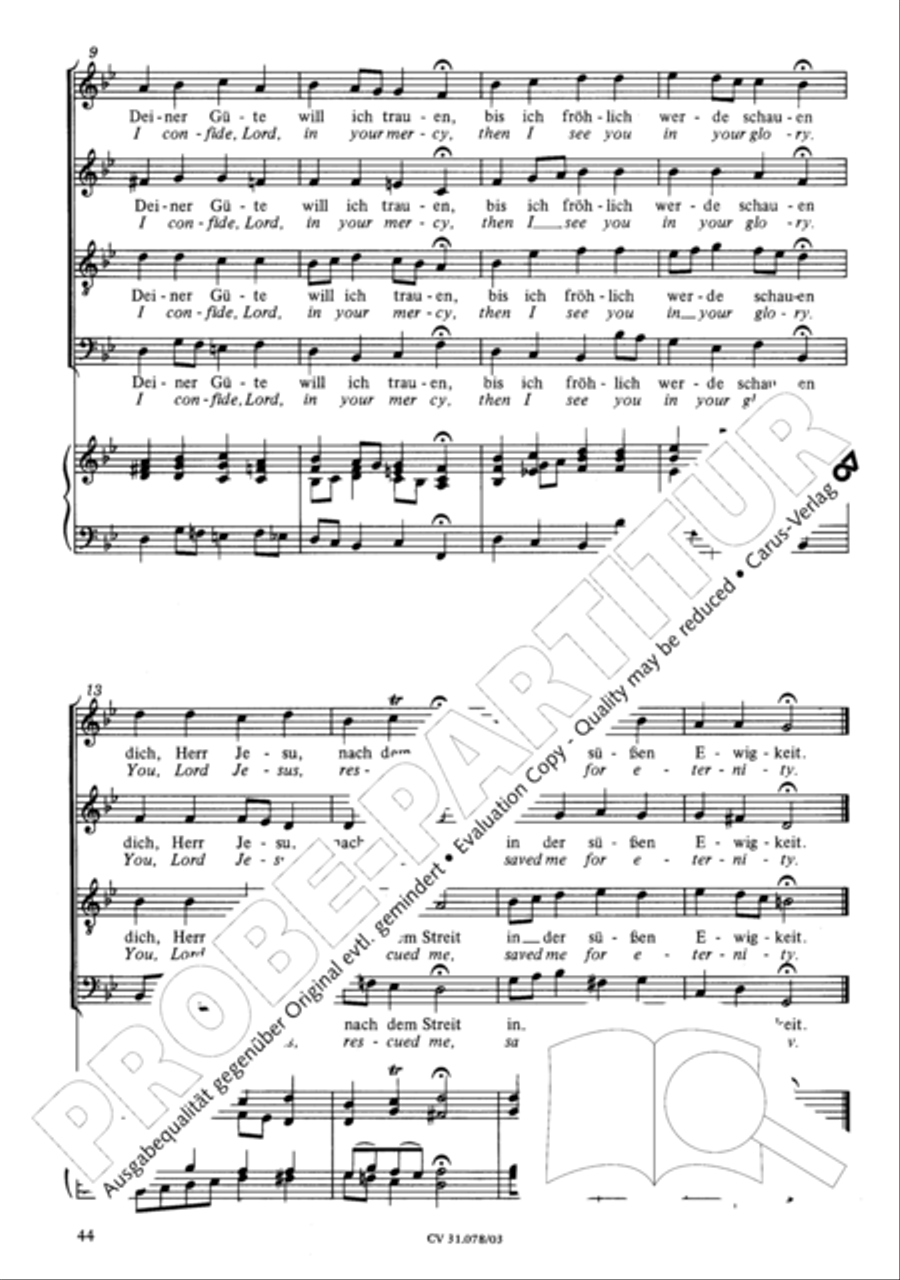
Cantata for the 14th Sunday after Trinity. Composed by Johann Sebastian Bach. Edited by Reinhold Kubik. Arranged by Paul Horn. This edition: Paperbound. German title: Jesu, der du meine Seele. Sacred vocal music, Cantatas. Vocal score. Composed 1724. BWV 78. 44 pages. Duration 25 minutes. Carus Verlag #CV 31.078/03. Published by Carus Verlag (CA.3107803).ISBN 9790007045104. 7.5 x 10.67 inches. Key: G minor. Language: German/English. Text: Johann Rist.
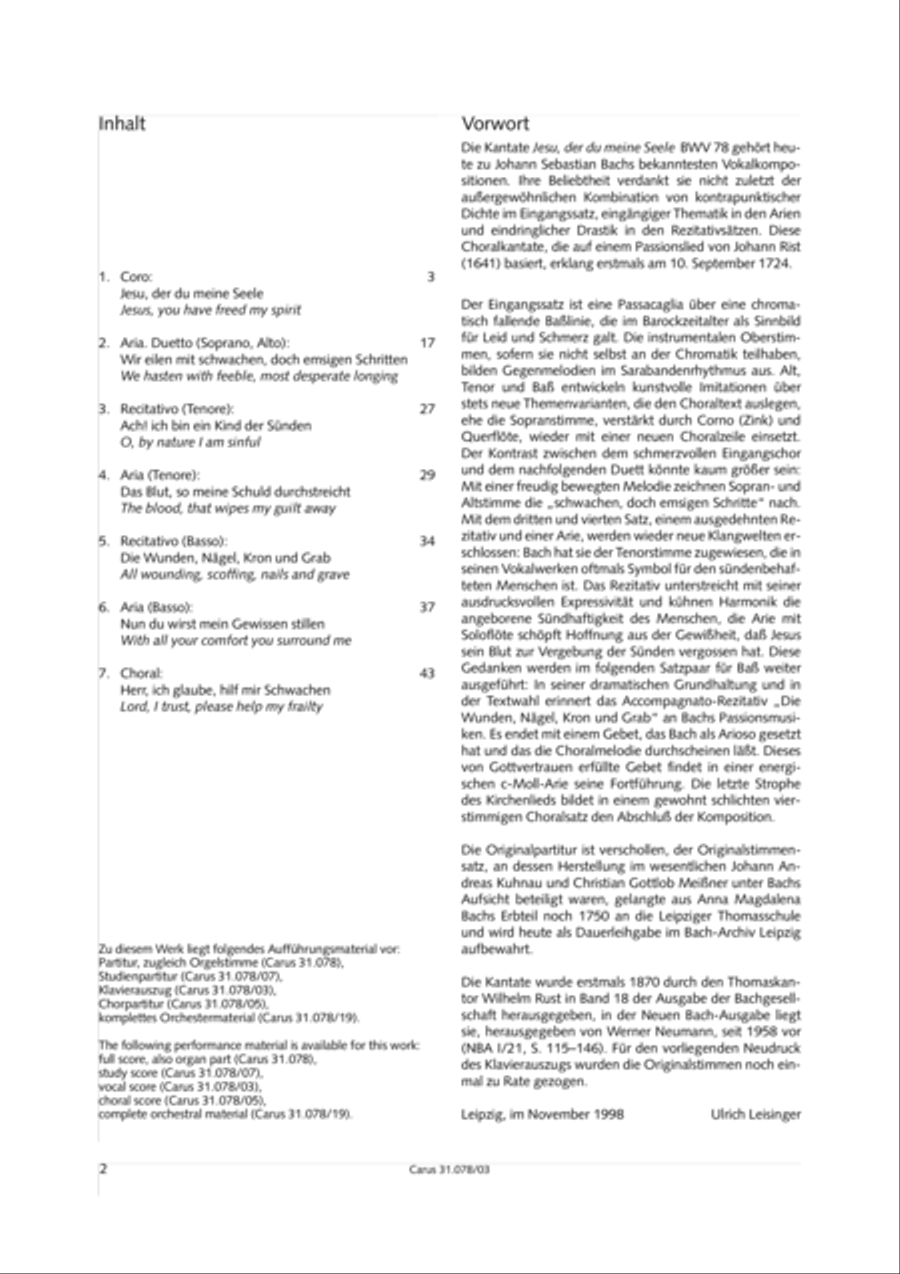
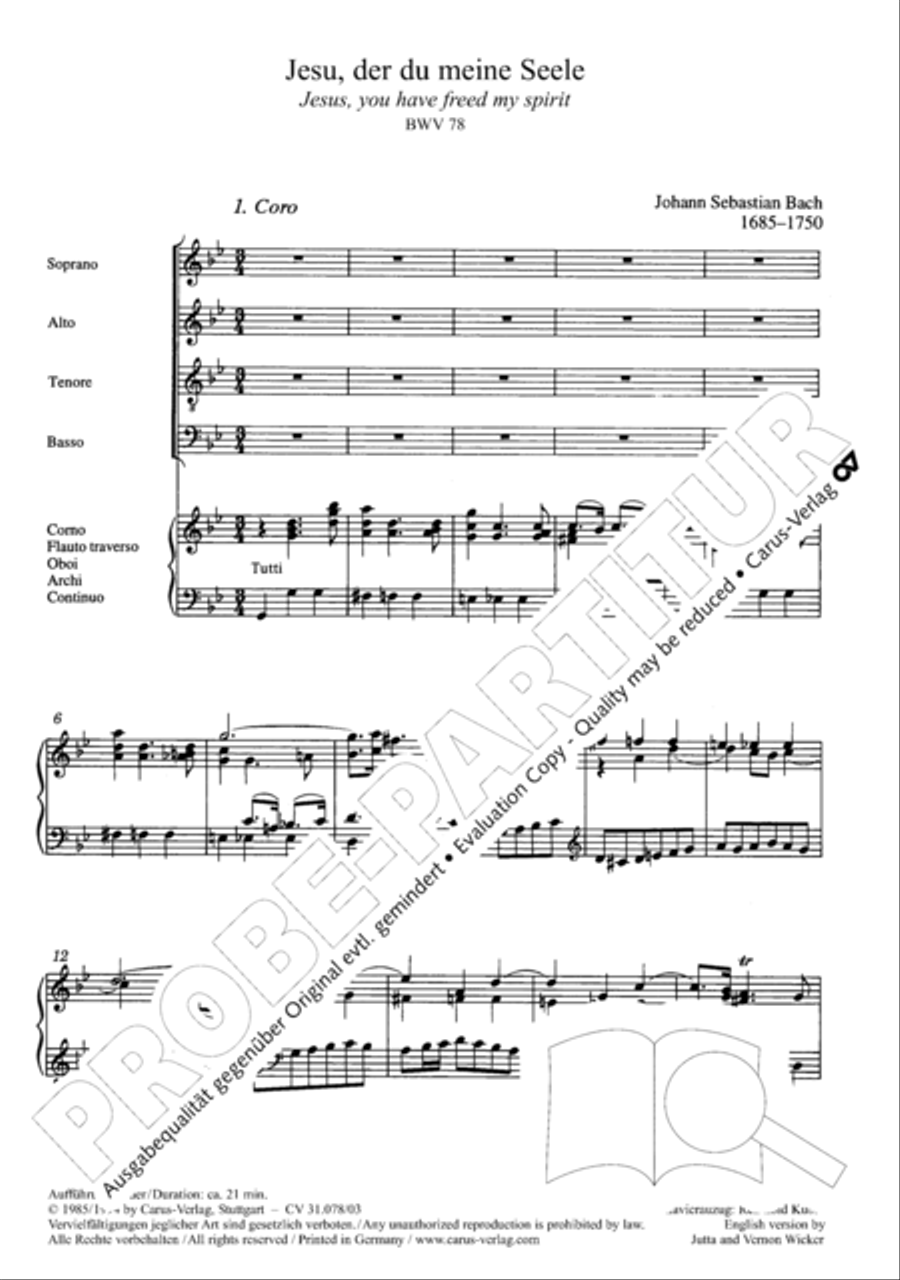
The cantata Jesu, der du meine Seele (Jesus, you have freed my spirit) BWV 78 is today one of Johann Sebastian Bach’s best known vocal compositions. Its popularity is not least due to the extraordinary combination of contrapuntal density in the opening movement, accessible themes in the arias, and drastic intensity in the recitative movements. This chorale cantata is based on a Passion chorale by Johann Rist (1641) and was first performed on 10 September 1724.
- More by this Composer:
- Johann Sebastian Bach Johann Sebastian Bach Choir Johann Sebastian Bach Piano Johann Sebastian Bach Piano Accompaniment
- Artists:
- Johann Sebastian Bach Paul Horn Reinhold Kubik
- Publisher:
- Carus Verlag