Details
- Genres:
- Christian Romantic Period
- Composers:
- Felix Bartholdy Mendelssohn
- Publishers:
- Carus Verlag
- Series:
- Carus Choir Coach
- EAN:
- 4009350737181
- Format:
- CD
- Item types:
- Physical
- Instructionals:
- Methods and More
- Level:
- Grade 3
- Artist:
- Felix Bartholdy Mendelssohn
- Usages:
- Praise Hymn Anthems
- Shipping Weight:
- 0.2 pounds
Orchestra Soli SST, Coro SSAATB, 2 Fl, 2 Ob, 2 Clt, 2 Fg, 4 Cor, 2 Tr, 3 Trb, Timp, 2 Vl, Va, Vc, Cb, Org - Grade 3
SKU: CA.4007692
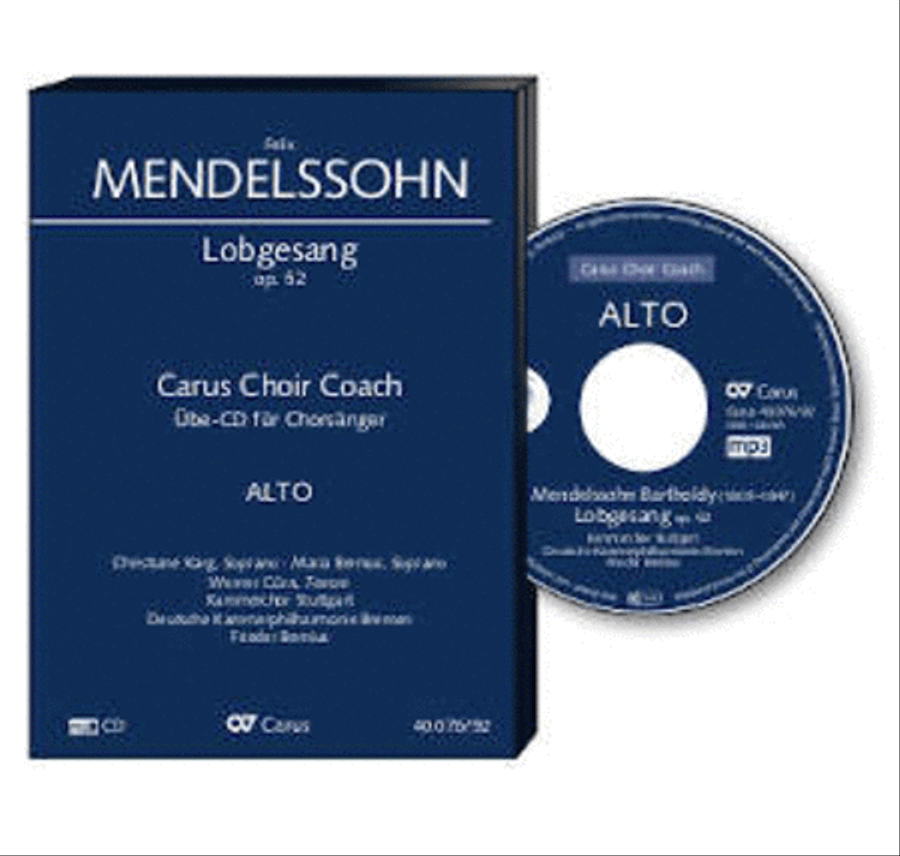
Symphony cantata. Composed by Felix Bartholdy Mendelssohn. Carus Choir Coach. Mp3, Practice-CD, alto. Sacred vocal music. Carus Choir Coach (audio only). Composed 1840. MWV A 18, Op. 52. Duration 62 minutes. Carus Verlag #CV 40.076/92. Published by Carus Verlag (CA.4007692).German/English.
Mendelssohn describes to his friend Klingemann the 1840 work as "a ‘symphony for chorus and orchestra’… First three symphonic movements, to which 12 choral- and solo- movements are appendaged; the words from the Psalms, and indeed all pieces, vocal and instrumental, are composed in the words ‘Everything which has breath, Praise the Lord’; one understands by this that first the instruments give praise in their own way, and then the chorus and the individual voices."
Thanks to an arrangement by J. Linckelmann (Carus 40.076/50), it is possible to perform the work in smaller settings.
- More by this Composer:
- Felix Bartholdy Mendelssohn Felix Bartholdy Mendelssohn Choir Felix Bartholdy Mendelssohn Piano Felix Bartholdy Mendelssohn Piano Accompaniment
- Series:
- Carus Choir Coach
- Artists:
- Felix Bartholdy Mendelssohn
- Publisher:
- Carus Verlag