Details
- Instrument:
- Choir Alto Voice Soprano Voice Baritone Voice
- Ensembles:
- Choir
- Genres:
- Romantic Period
- Composers:
- Johannes Brahms
- Publishers:
- Carl Fischer Music
- UPC:
- 680160919703
- ISBN:
- 9781491161111
- Format:
- Octavo
- Item types:
- Physical
- Artist:
- Johannes Brahms
- Arrangers:
- Russell L. Robinson
- Usages:
- Mass
- Main Key:
- C major
- Number of Pages:
- 20
- Size:
- 6.875 x 10.5 inches
- Shipping Weight:
- 1.61 pounds
SKU: CF.CM9731
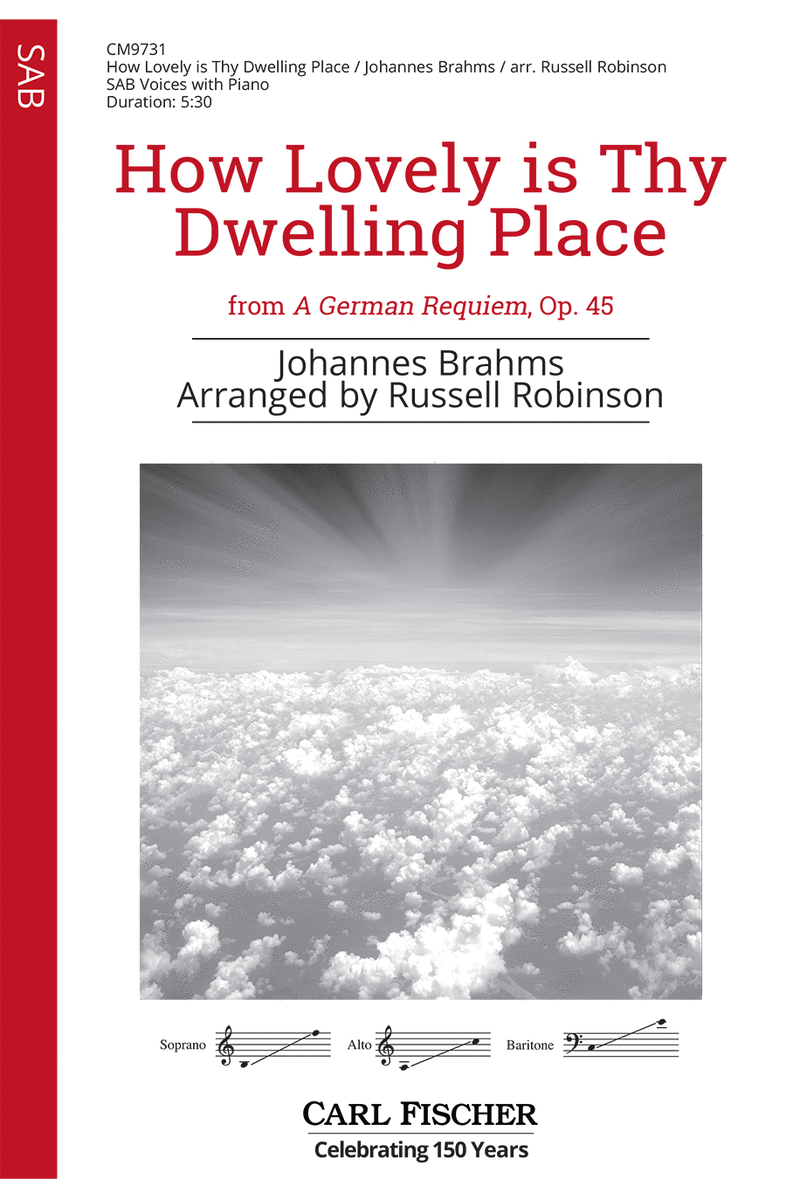
From Requiem, Op 45. Composed by Johannes Brahms. Arranged by Russell L. Robinson. Octavo. 20 pages. Duration 0:05:30. Carl Fischer Music #CM9731. Published by Carl Fischer Music (CF.CM9731).ISBN 9781491161111. UPC: 680160919703. 6.875 x 10.5 inches. Key: C major. English.
Johannes Brahms, born May 7, 1833 in Hamburg, Germany and died April 3, 1897 in Vienna where he lived most of his life. Brahms is one of the most famous composers of the Romantic period (1830-1920) although his music has many elements of the Classical period (1750 to 1830) as he followed many of the practices of Classical composers Haydn, Mozart and Beethoven. In addition to being a composer, he was also well-known as a pianist and conductor. Brahms began writing the Requiem (also known as the German Requiem, Opus 45) soon after his mother died in February 1865 which caused him great grief. In April of that year, he completed the first, second and fourth movements and completed the rest of the seven movements in May of 1868. How Lovely is Thy Dwelling Place (Wie Lieblich sind Deine Wohnungen) was the fourth movement of his seven movement work. Originally written for SATB voices in E-flat major, this seamlessly similar arrangement for SAB voices, now in C major, affords all voices comfortable ranges. Although, it is approximately 5 minutes and 30 seconds in length, it is perceived to be much shorter because of the contrasting stylistic sections within the work. How Lovely is Thy Dwelling Place is one of the most beautiful choral pieces by Brahms, perhaps in the entire Romantic period. Although Brahms wrote the original piano reduction, in this edition, it has been made more accessible for pianists with a wide range of skills. Pay close attention to the dynamic markings throughout the piece, making them apparent to the voices, conductor, and audience. I hope you enjoy singing this beautiful and timeless piece by Johannes Brahms! Russell Robinson, Arranger .
Johannes Brahms, born May 7, 1833 in Hamburg, Germany and died April 3, 1897 in Vienna where he lived most of his life. Brahms is one of the most famous composers of the Romantic period (1830-1920) although his music has many elements of the Classical period (1750 to 1830) as he followed many of the practices of Classical composers Haydn, Mozart and Beethoven. In addition to being a composer, he was also well-known as a pianist and conductor. Brahms began writing the Requiem (also known as the German Requiem, Opus 45) soon after his mother died in February 1865 which caused him great grief. In April of that year, he completed the first, second and fourth movements and completed the rest of the seven movements in May of 1868. How Lovely is Thy Dwelling Place (Wie Lieblich sind Deine Wohnungen) was the fourth movement of his seven movement work. Originally written for SATB voices in E-flat major, this seamlessly similar arrangement for SAB voices, now in C major, affords all voices comfortable ranges. Although, it is approximately 5 minutes and 30 seconds in length, it is perceived to be much shorter because of the contrasting stylistic sections within the work. How Lovely is Thy Dwelling Place is one of the most beautiful choral pieces by Brahms, perhaps in the entire Romantic period. Although Brahms wrote the original piano reduction, in this edition, it has been made more accessible for pianists with a wide range of skills. Pay close attention to the dynamic markings throughout the piece, making them apparent to the voices, conductor, and audience.I hope you enjoy singing this beautiful and timeless piece by Johannes Brahms!Russell Robinson, Arranger .
Johannes Brahms, born May 7, 1833 in Hamburg, Germany and died April 3, 1897 in Vienna where he lived most of his life. Brahms is one of the most famous composers of the Romantic period (1830-1920) although his music has many elements of the Classical period (1750 to 1830) as he followed many of the practices of Classical composers Haydn, Mozart and Beethoven.xa0 In addition to being a composer, he was also well-known as a pianist and conductor.xa0 Brahms began writing the Requiem (also known as the German Requiem, Opus 45) soon after his mother died in February 1865 which caused him great grief.xa0 In April of that year, he completed the first, second and fourth movements and completed the rest of the seven movements in May of 1868.xa0 How Lovely is Thy Dwelling Place (Wie Lieblich sind Deine Wohnungen) was the fourth movement of his seven movement work. Originally written for SATB voices in E-flat major, this seamlessly similar arrangement for SAB voices, now in C major, affords all voices comfortable ranges. Although, it is approximately 5 minutes and 30 seconds in length, it is perceived to be much shorter because of the contrasting stylistic sections within the work. How Lovely is Thy Dwelling Place is one of the most beautiful choral pieces by Brahms, perhaps in the entire Romantic period. Although Brahms wrote the original piano reduction, in this edition, it has been made more accessible for pianists with a wide range of skills.xa0 Pay close attention to the dynamic markings throughout the piece, making them apparent to the voices, conductor, and audience.I hope you enjoy singing this beautiful and timeless piece by Johannes Brahms!Russell Robinson, Arranger.
- More by this Composer:
- Johannes Brahms Johannes Brahms Piano Accompaniment Johannes Brahms Voice Johannes Brahms Piano, Vocal
- Instrument:
- Vocal Choir Vocal Voice Alto Voice Vocal Voice Soprano Voice Vocal Voice Baritone Voice
- Artists:
- Johannes Brahms Russell L. Robinson
- Ensemble:
- Choir
- Publisher:
- Carl Fischer Music