

Details
- Instrument:
- Choir Piano Accompaniment
- Ensembles:
- SA 2-Part Women's Choir
- Publishers:
- Carl Fischer Music
- UPC:
- 680160918720
- ISBN:
- 9781491160121
- Format:
- Octavo
- Item types:
- Physical
- Usages:
- School and Community
- Main Key:
- Db major,Eb major
- Number of Pages:
- 8
- Size:
- 6.875 x 10.5 inches
- Shipping Weight:
- 1.2 pounds
SKU: CF.CM9707
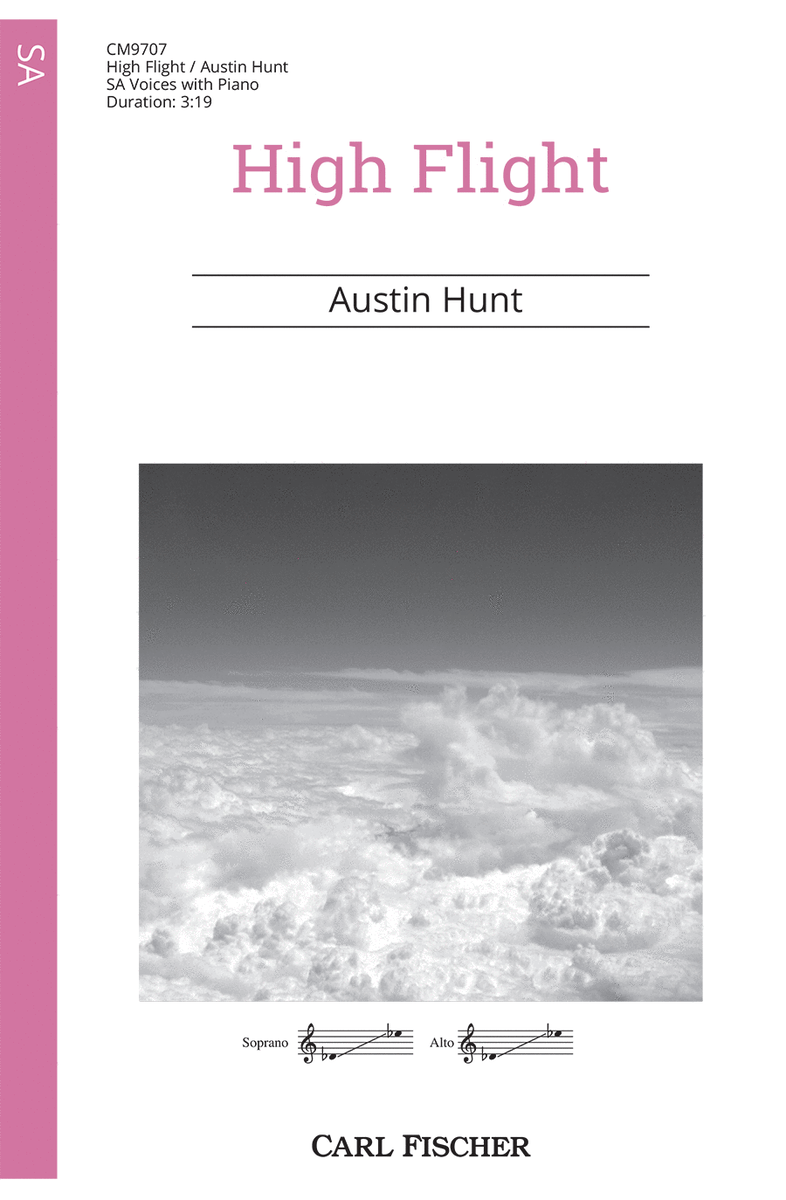
Composed by Austin Hunt. Octavo. 8 pages. Duration 0:03:19. Carl Fischer Music #CM9707. Published by Carl Fischer Music (CF.CM9707).ISBN 9781491160121. UPC: 680160918720. 6.875 x 10.5 inches. Key: Db major,eb major. English. John Gillespie Magee, Jr. Poem by John Gillespie Magee, Jr.
Just weeks after his nineteenth birthday, John Gillespie Magee, Jr. wrote the poem High Flight while serving in the Royal Canadian Air Force. The year was 1941, and World War II was culminating toward its darkest chapters. Magee had just completed his seventh flight in the iconic Spitfire Mk I fighter plane, soaring to heights well above 30,000 feet. These high altitude exercises supplied his inspiration for the poem, which describes "the long, delirious, burning blue" and having "touched the face of God." Tragically, Magee died in a training exercise just months after writing High Flight. His words, however, live on to lift our hearts and stir the imagination. After you have learned High Flight, ask yourself the following questions: Are you singing the text clearly and articulately? Are you properly stressing the important syllables and backing off of non-stressed syllables? Is there a sense of energy throughout the piece, in both the lyrical, flowing sections and the up-tempo, faster sections? Are you also singing with a sense of energy no matter what the dynamic marking? Are you singing phrases with proper breath support and a sense of "rise and fall" to the phrase?.
Just weeks after his nineteenth birthday, John Gillespie Magee, Jr. wrote the poem High Flight while serving in the Royal Canadian Air Force. The year was 1941, and World War II was culminating toward its darkest chapters. Magee had just completed his seventh flight in the iconic Spitfire Mk I fighter plane, soaring to heights well above 30,000 feet. These high altitude exercises supplied his inspiration for the poem, which describes “the long, delirious, burning blue” and having “touched the face of God.”Tragically, Magee died in a training exercise just months after writing High Flight. His words, however, live on to lift our hearts and stir the imagination. After you have learned High Flight, ask yourself the following questions: Are you singing the text clearly and articulately? Are you properly stressing the important syllables and backing off of non-stressed syllables? Is there a sense of energy throughout the piece, in both the lyrical, flowing sections and the up-tempo, faster sections? Are you also singing with a sense of energy no matter what the dynamic marking? Are you singing phrases with proper breath support and a sense of "rise and fall" to the phrase?.
Just weeks after his nineteenth birthday, John Gillespie Magee, Jr. wrote the poem High Flightxa0while serving in the Royal Canadian Air Force. The year was 1941, and World War II was culminating toward its darkest chapters.xa0Magee had just completed his seventh flight in the iconicxa0Spitfire Mk Ixa0fighter plane, soaring to heights well above 30,000 feet. These high altitude exercises supplied hisxa0inspiration for the poem, which describes “the long, delirious, burning blue” and having “touched the face of God.”Tragically, Magee died in a training exercise just months after writing High Flight. His words, however, live on to lift our hearts and stir the imagination.xa0After you have learned High Flight, ask yourself the following questions:Are you singing the text clearly and articulately? Are you properly stressing the important syllables and backing off of non-stressed syllables?Is there a sense of energy throughout the piece, in both the lyrical, flowing sections and the up-tempo, faster sections? Are you also singing with a sense of energy no matter what the dynamic marking?Are you singing phrases with proper breath support and a sense of "rise and fall" to the phrase?
- Instrument:
- Vocal Choir Piano and Keyboard Piano Accompaniment
- Ensemble:
- SA 2-Part Women's Choir
- Publisher:
- Carl Fischer Music