Order two or more copies of the same title and we'll automatically give you 5% off list price on that title.
To get 2+ Pricing , just add two or more copies of a title to your shopping cart. Your discount will be immediately applied to your order.
Sale titles, hymnals, and ShowKits (MTI's Broadway Junior Collection, Getting to Know... Collection (G2K) and MTI's Kids Collection) do not qualify for 2+ Pricing
If you have any questions or comments regarding 2+ Pricing , please visit our Help Center to find more information or chat with our support team
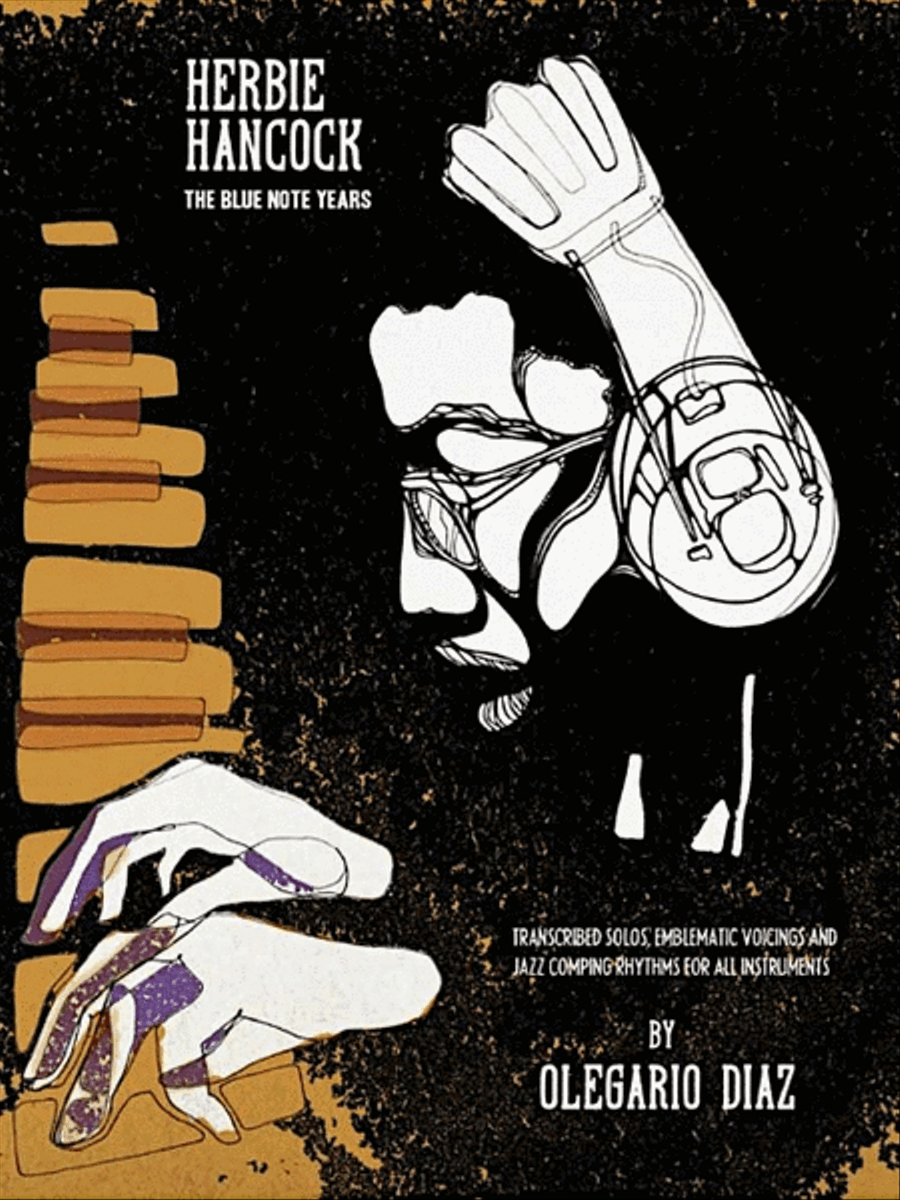
Composed by Herbie Hancock. Arranged by Oligario Diaz. Sheet music. Performance book. Charles Colin Corp. #AHW 3028. Published by Charles Colin Corp. (M7.AHW-3028).
English.
This theoretical book is meant to improve contemporary jazz styles and techniques for all players of modern jazz. This study investigates jazz pianist and composer Herbie Hancock's seven albums recorded as a bandleader for Blue Note Records between 1962 and 1969. Recorded during Hancock's tenures with Donal Byrd and Miles Davis, his early works are highly mature musical conceptions, with all the major elements of Hancock's personal musical style already present. A mixed-methods approach combining sever forms of qualitative data analysis is used to identify the formal construction, the musical meanings, and the cultural significance of this body of music. The study surveys the thirty-six compositions that comprise these seven albums, and selects for in-depth analysis seven pieces that are proportionally representative of the formal characteristics of this larger repertoire: "The Maze," "The Pleasure Is Mine," "Jack Rabbit," "One Finger Snap," "Little One," "Toys," and "I Have A Dream." Hancock's improvisations on these repretative compositions are transcribed, and each improvisation and composition is analyzed for its historical context and significance of each recording is examined through interviews with persons involved in the original recording process, as well as other jazz musicians and scholars with deep knowledge of Hancock's life, music and oeuvre. Aesthetic analyses, informed by the theories of of Kivy and Elliot, investigate the expressive or representational qualities of each composition, and examine how formal musical elements contribute to these expressive or representational qualities. Formal analyses examine elements of Hancock's compositional and improvisational style. The study concludes the Hancock's compositions and improvisations of the period exhibit a number of consistent style elements, such as sophisticated harmonic and rhythmic superimposition, that were very important influences on jazz pianists of the following generation.
Composed by Herbie Hancock. Arranged by Oligario Diaz. Sheet music. Performance book. Charles Colin Corp. #AHW 3028. Published by Charles Colin Corp. (M7.AHW-3028).
English.
This theoretical book is meant to improve contemporary jazz styles and techniques for all players of modern jazz. This study investigates jazz pianist and composer Herbie Hancock's seven albums recorded as a bandleader for Blue Note Records between 1962 and 1969. Recorded during Hancock's tenures with Donal Byrd and Miles Davis, his early works are highly mature musical conceptions, with all the major elements of Hancock's personal musical style already present. A mixed-methods approach combining sever forms of qualitative data analysis is used to identify the formal construction, the musical meanings, and the cultural significance of this body of music. The study surveys the thirty-six compositions that comprise these seven albums, and selects for in-depth analysis seven pieces that are proportionally representative of the formal characteristics of this larger repertoire: "The Maze," "The Pleasure Is Mine," "Jack Rabbit," "One Finger Snap," "Little One," "Toys," and "I Have A Dream." Hancock's improvisations on these repretative compositions are transcribed, and each improvisation and composition is analyzed for its historical context and significance of each recording is examined through interviews with persons involved in the original recording process, as well as other jazz musicians and scholars with deep knowledge of Hancock's life, music and oeuvre. Aesthetic analyses, informed by the theories of of Kivy and Elliot, investigate the expressive or representational qualities of each composition, and examine how formal musical elements contribute to these expressive or representational qualities. Formal analyses examine elements of Hancock's compositional and improvisational style. The study concludes the Hancock's compositions and improvisations of the period exhibit a number of consistent style elements, such as sophisticated harmonic and rhythmic superimposition, that were very important influences on jazz pianists of the following generation.
Preview: Herbie Hancock Transcribed Solos
Tell A Friend
Tell a friend (or remind yourself) about this product. We'll instantly send an email containing product info and a link to it. You may also enter a personal message.
We do not use or store email addresses from this form for any other purpose than sending your share email.
After purchase, you can download your MP3 from your Sheet Music Plus Digital Library - no software installation is necessary! You can also listen to your MP3 at any time in your Digital Library.
Learn about Smart Music
After purchase, you can download your Smart Music from your Sheet Music Plus Digital Library - no software installation is necessary! You can also download at any time in your Digital Library.
Learn about Digital Video
After purchase you can download your video from your Digital Library. Your video is in XX format and is playable on most pre-installed video players.