Details
- Instrument:
- B-Flat Clarinet Bass Clarinet
- Ensembles:
- Concert Band
- Publishers:
- Carl Fischer Music
- UPC:
- 680160914869
- ISBN:
- 9781491156322
- Format:
- Score Set of Parts Score and Parts
- Item types:
- Physical
- Level:
- Grade 3
- Usages:
- School and Community
- Number of Pages:
- 147
- Size:
- 9 x 12 inches
- Shipping Weight:
- 1.75 pounds
SKU: CF.CPS233
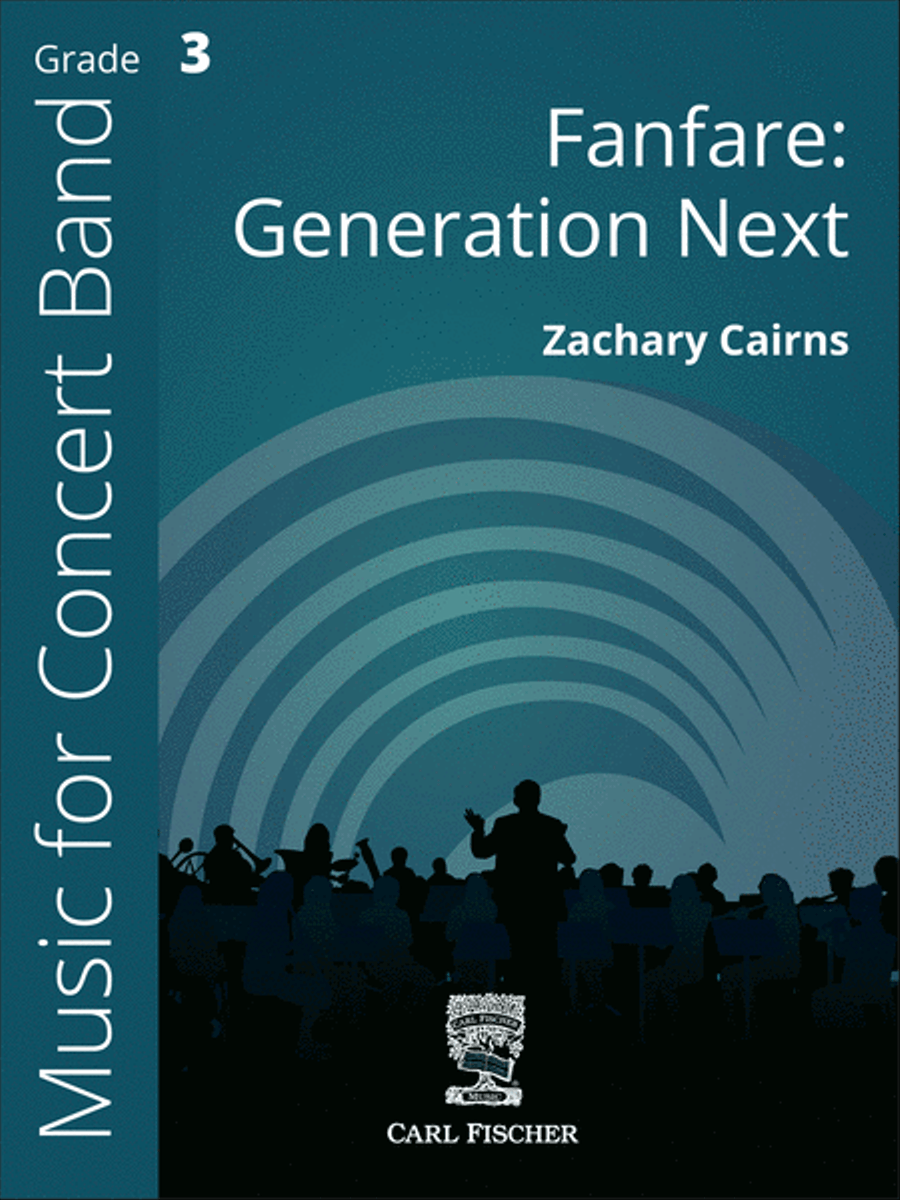
Composed by Zachary Cairns. Folio. Cps. Score and parts. 147 pages. Duration 0:02:36. Carl Fischer Music #CPS233. Published by Carl Fischer Music (CF.CPS233).ISBN 9781491156322. UPC: 680160914869. 9 x 12 inches.
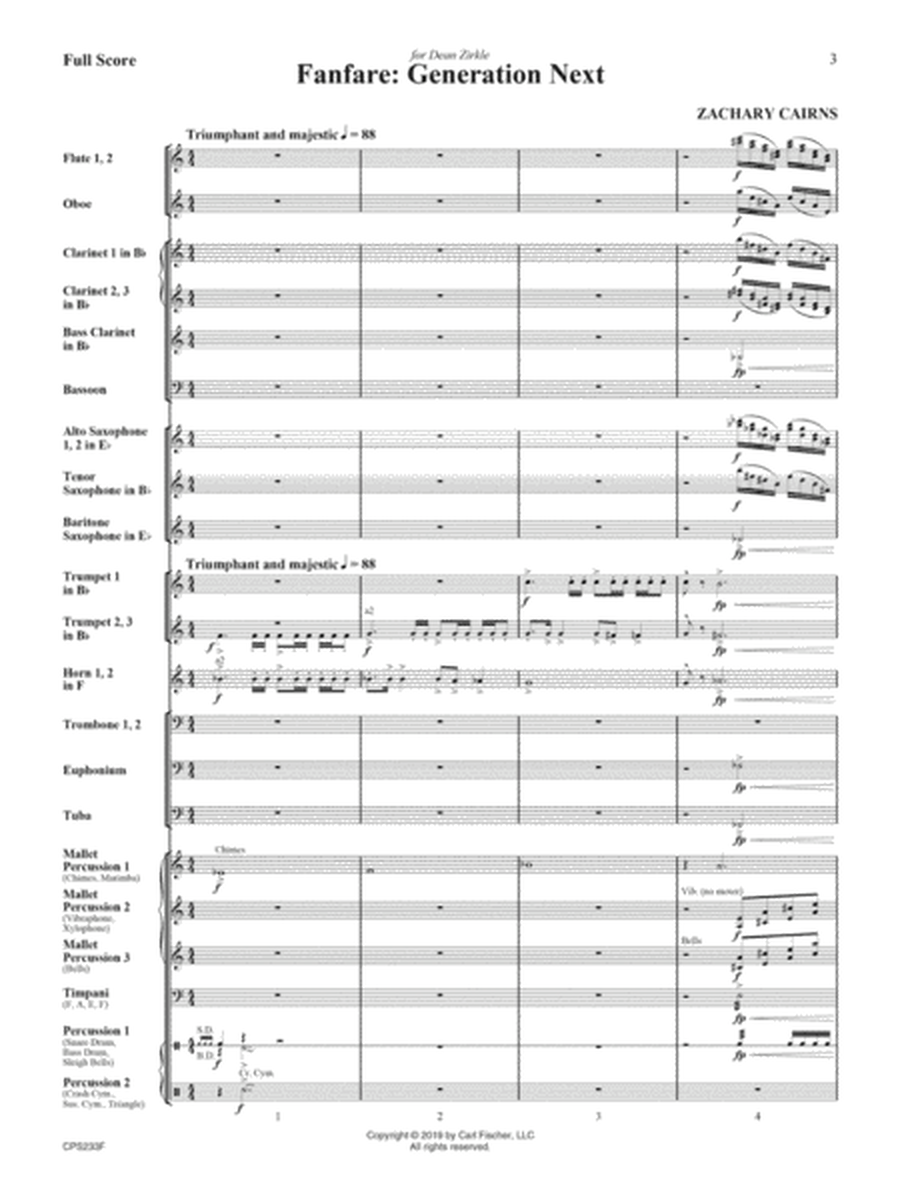
Fanfare: Generation Next Fanfare: Generation Next is a piece I wrote in honor of Mr. Dean Zirkle, long-time director of bands at Camp Hill Senior High School (near Harrisburg, PA). I had been working as Dean's marching band arranger/composer for eleven years when he announced his upcoming retirement, and I felt compelled to write a piece to pay tribute to his remarkable contributions to music education and to the lives of his students and colleagues. The piece is built on two primary ideas. The first idea is a musical rendering of the name "Dean." D, E, and A are all musical notes, but N is not. I have chosen to use a "neighbor tone" (a note a half-step above or below a given note) to finish off the name. (MUSIC EXAMPLE) This melodic idea occurs throughout the composition in a variety of transformations. Sometimes it is presented with the exact notes shown above; sometimes the interval structure is maintained, but the pitch series is transposed (G-A-D-C#, for example); sometimes the four notes are played in order, sometimes out of order; sometimes the first three notes (D-E-A) sound together as a chord; etc. (MUSIC EXAMPLE) The second idea is a rhythmic motive, established in the opening brass fanfare. (MUSIC EXAMPLE) This rhythm is later transformed to the accent pattern shown below, which is used as an ostinato throughout much of the allegro section of the piece. .
Fanfare: Generation Next Fanfare: Generation Next is a piece I wrote in honor of Mr. Dean Zirkle, long-time director of bands at Camp Hill Senior High School (near Harrisburg, PA). I had been working as Dean’s marching band arranger/composer for eleven years when he announced his upcoming retirement, and I felt compelled to write a piece to pay tribute to his remarkable contributions to music education and to the lives of his students and colleagues.The piece is built on two primary ideas. The first idea is a musical rendering of the name “Dean.” D, E, and A are all musical notes, but N is not. I have chosen to use a “neighbor tone” (a note a half-step above or below a given note) to finish off the name.(MUSIC EXAMPLE)This melodic idea occurs throughout the composition in a variety of transformations. Sometimes it is presented with the exact notes shown above; sometimes the interval structure is maintained, but the pitch series is transposed (G-A-D-C#, for example); sometimes the four notes are played in order, sometimes out of order; sometimes the first three notes (D-E-A) sound together as a chord; etc.(MUSIC EXAMPLE)The second idea is a rhythmic motive, established in the opening brass fanfare.(MUSIC EXAMPLE)This rhythm is later transformed to the accent pattern shown below, which is used as an ostinato throughout much of the allegro section of the piece. .
Fanfare: Generation Nextxa0Fanfare: Generation Next is a piece I wrote in honor of Mr. Dean Zirkle, long-time director of bands at Camp Hill Senior High School (near Harrisburg, PA). I had been working as Dean’s marching band arranger/composer for eleven years when he announced his upcoming retirement, and I felt compelled to write a piece to pay tribute to his remarkable contributions to music education and to the lives of his students and colleagues.The piece is built on two primary ideas. The first idea is a musical rendering of the name “Dean.” D, E, and A are all musical notes, but N is not. I have chosen to use a “neighbor tone” (a note a half-step above or below a given note) to finish off the name.(MUSIC EXAMPLE)This melodic idea occurs throughout the composition in a variety of transformations. Sometimes it is presented with the exact notes shown above; sometimes the interval structure is maintained, but the pitch series is transposed (G-A-D-C#, for example); sometimes the four notes are played in order, sometimes out of order; sometimes the first three notes (D-E-A) sound together as a chord; etc.(MUSIC EXAMPLE)The second idea is a rhythmic motive, established in the opening brass fanfare.(MUSIC EXAMPLE)This rhythm is later transformed to the accent pattern shown below, which is used as an ostinato throughout much of the allegro section of the piece.
- Instrument:
- Woodwinds Clarinet B-Flat Clarinet Woodwinds Clarinet Bass Clarinet
- Ensemble:
- Concert Band
- Publisher:
- Carl Fischer Music