















Details
- Instrument:
- Choir Voice Basso Continuo
- Ensembles:
- 4-Part SATB Mixed Choir
- Genres:
- Christian Baroque Period
- Composers:
- Johann Sebastian Bach
- Publishers:
- Carus Verlag
- Series:
- Stuttgart Urtext Edition
- ISBN:
- 9790007143213
- Format:
- Score
- Item types:
- Physical
- Musical forms:
- Cantata
- Artist:
- Johann Sebastian Bach
- Usages:
- Pentecost
- Size:
- 8.27 x 11.69 inches
- Number of Pages:
- 40
- Shipping Weight:
- 0.44 pounds
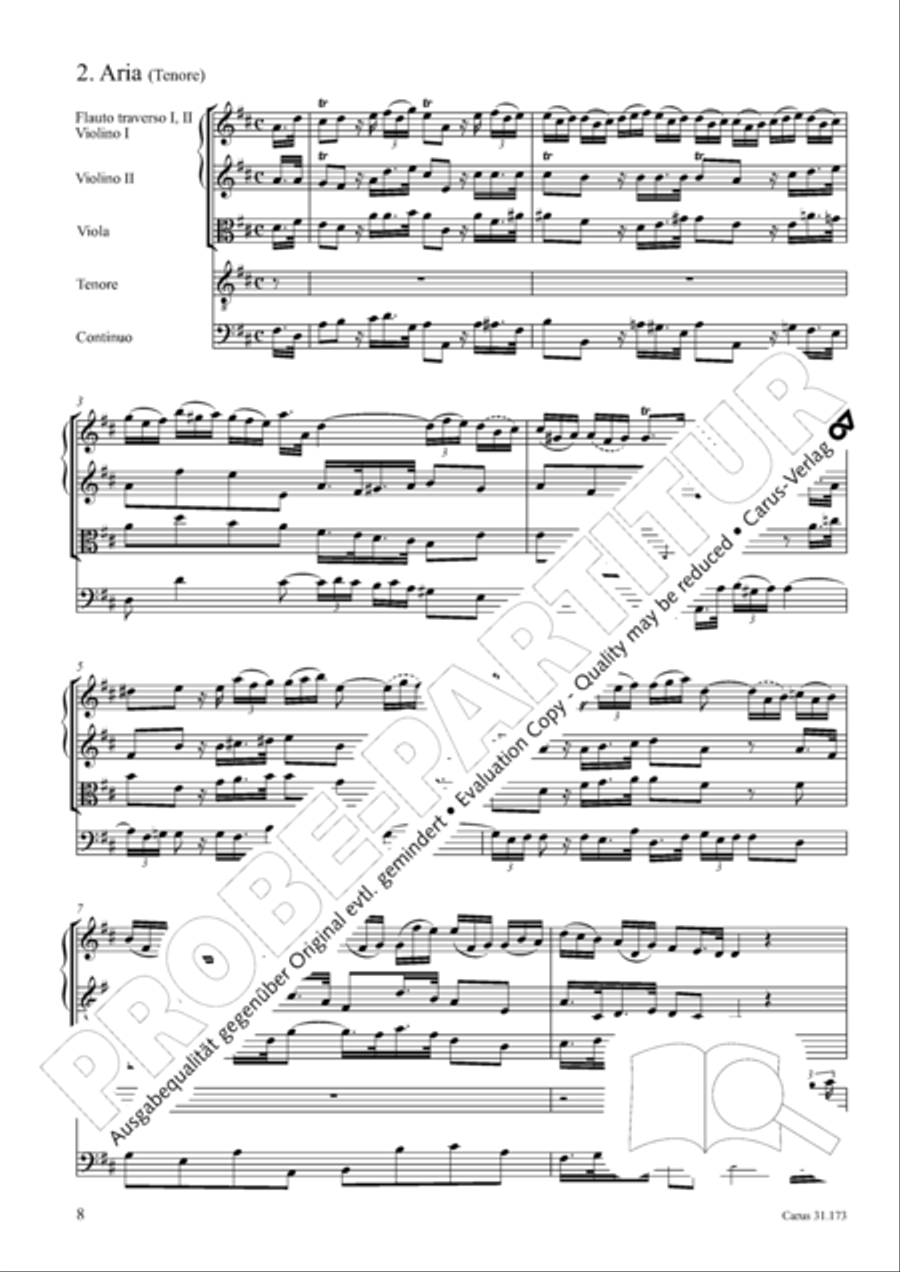
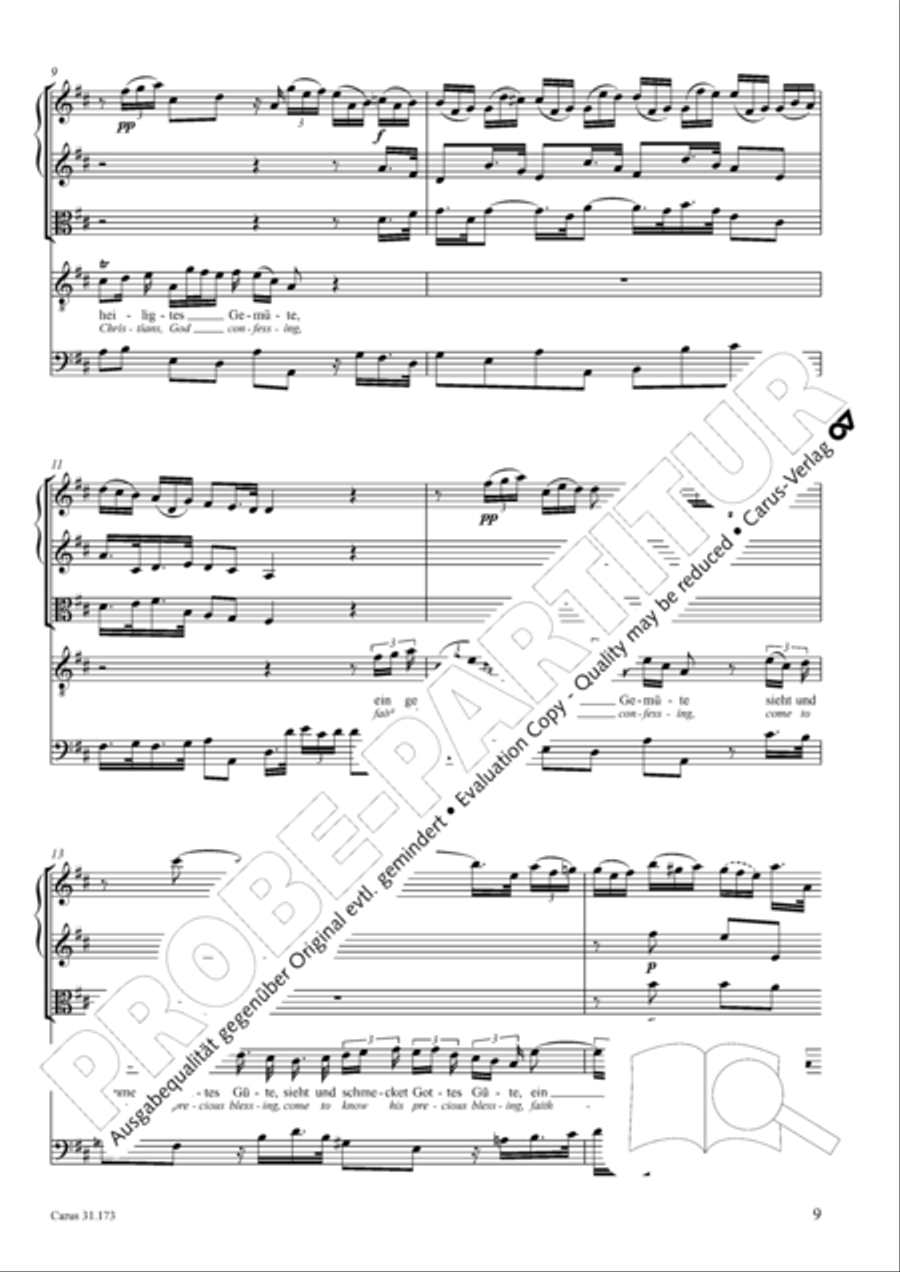
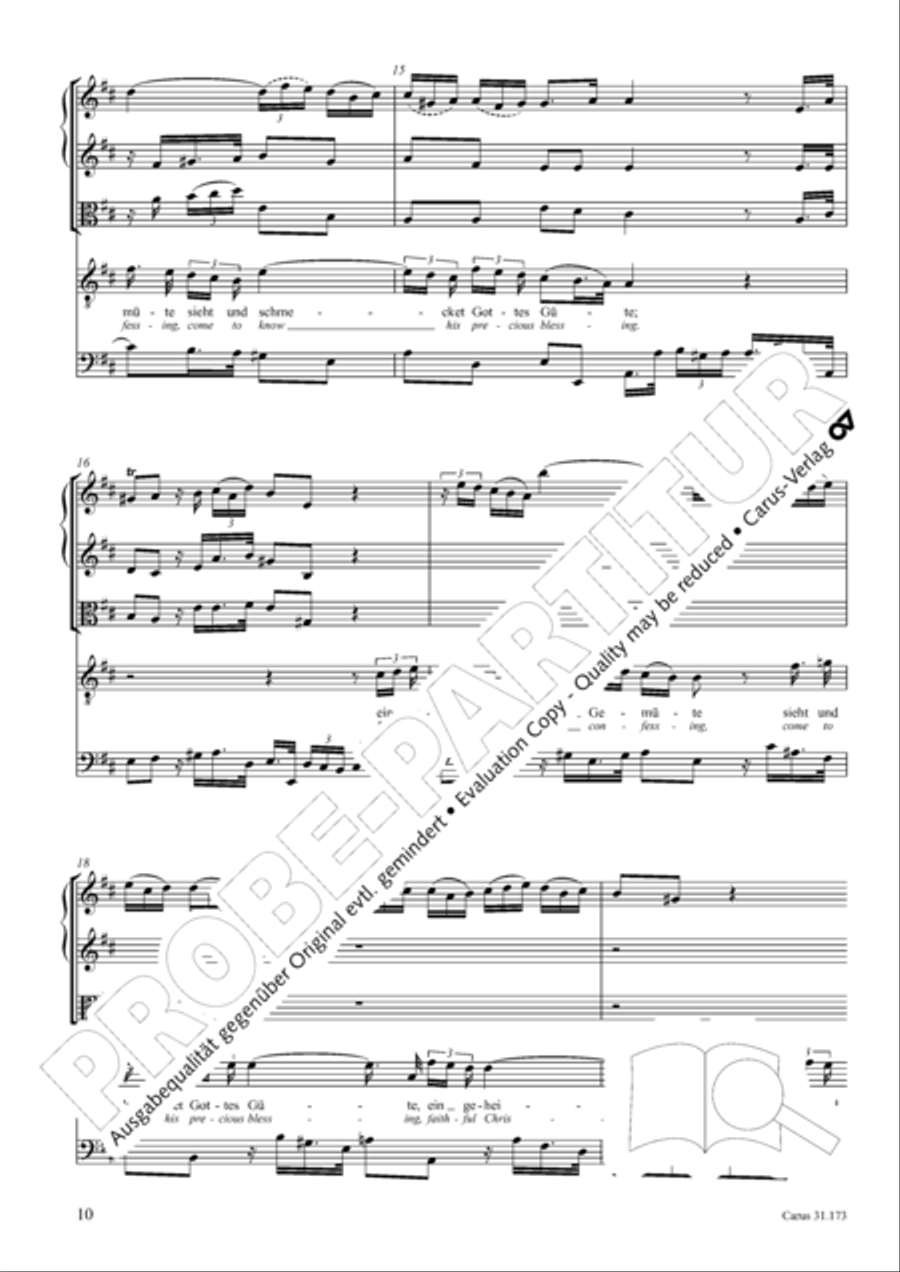
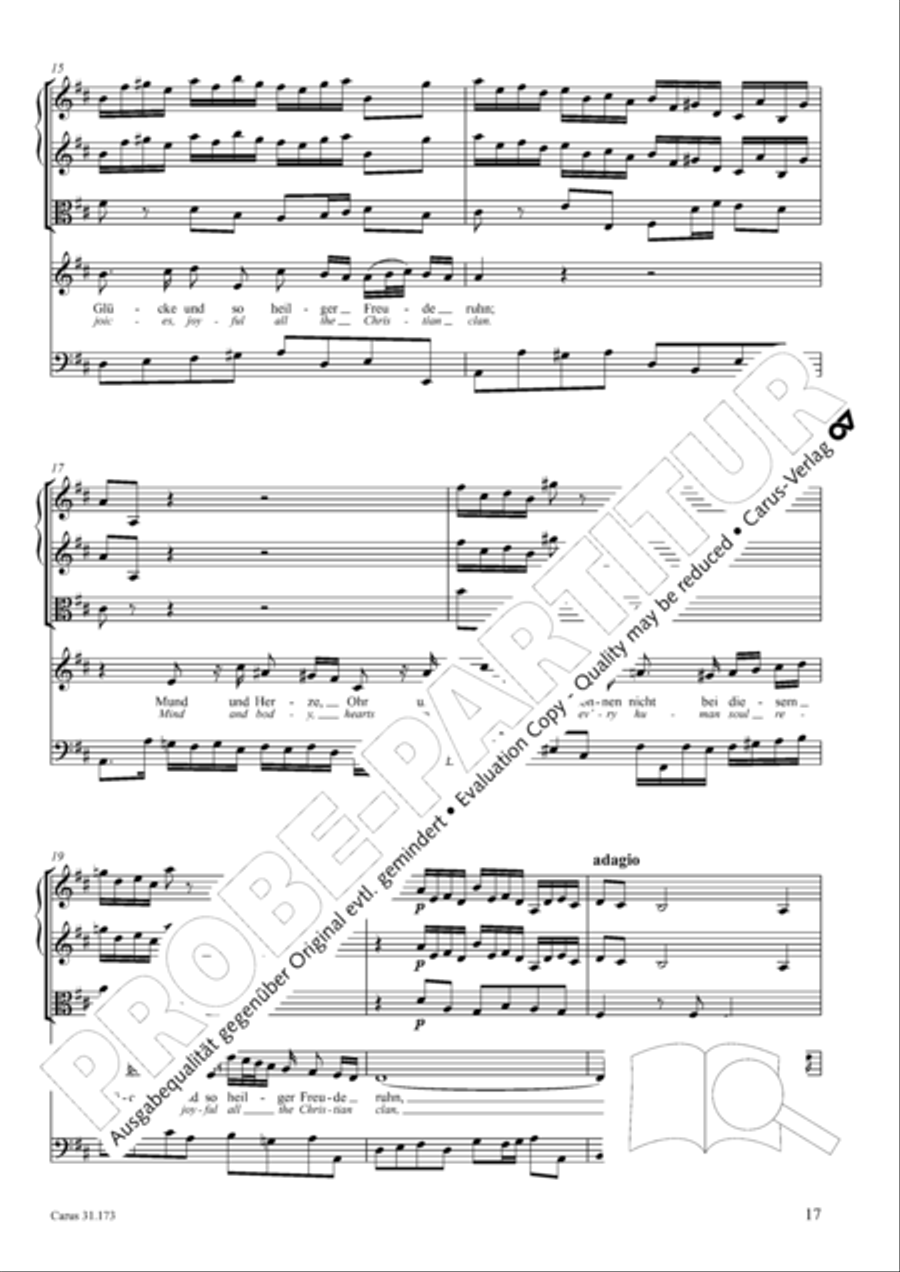
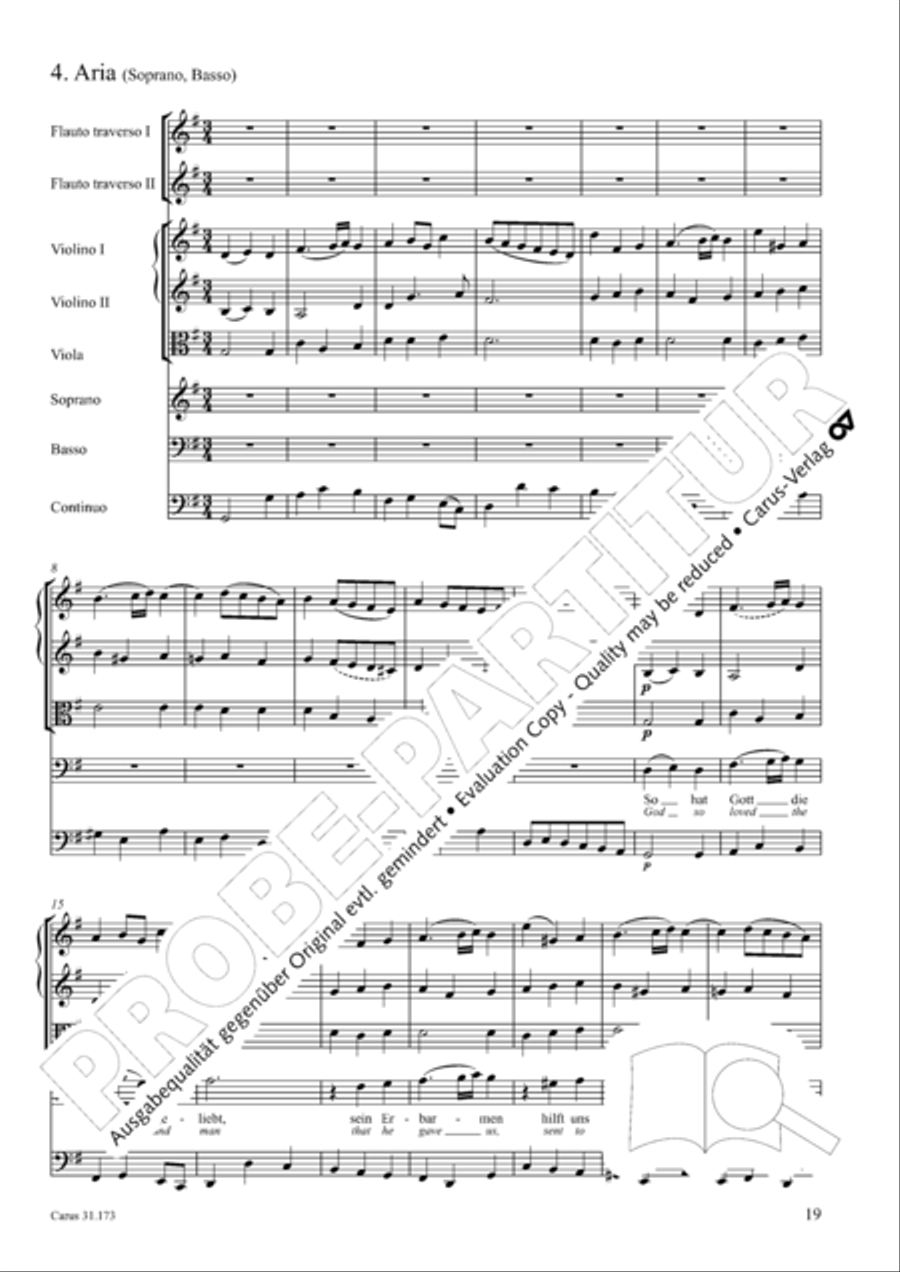
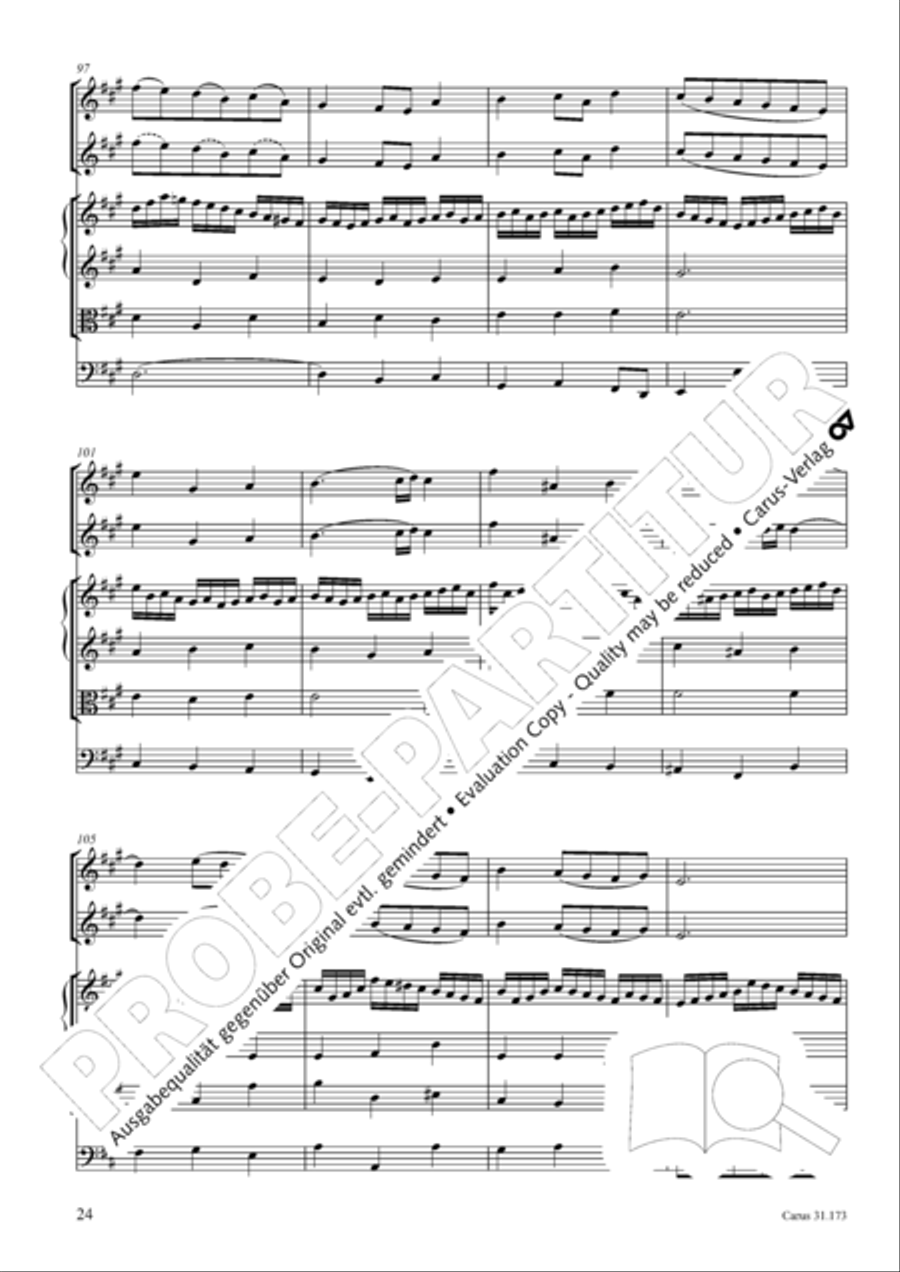
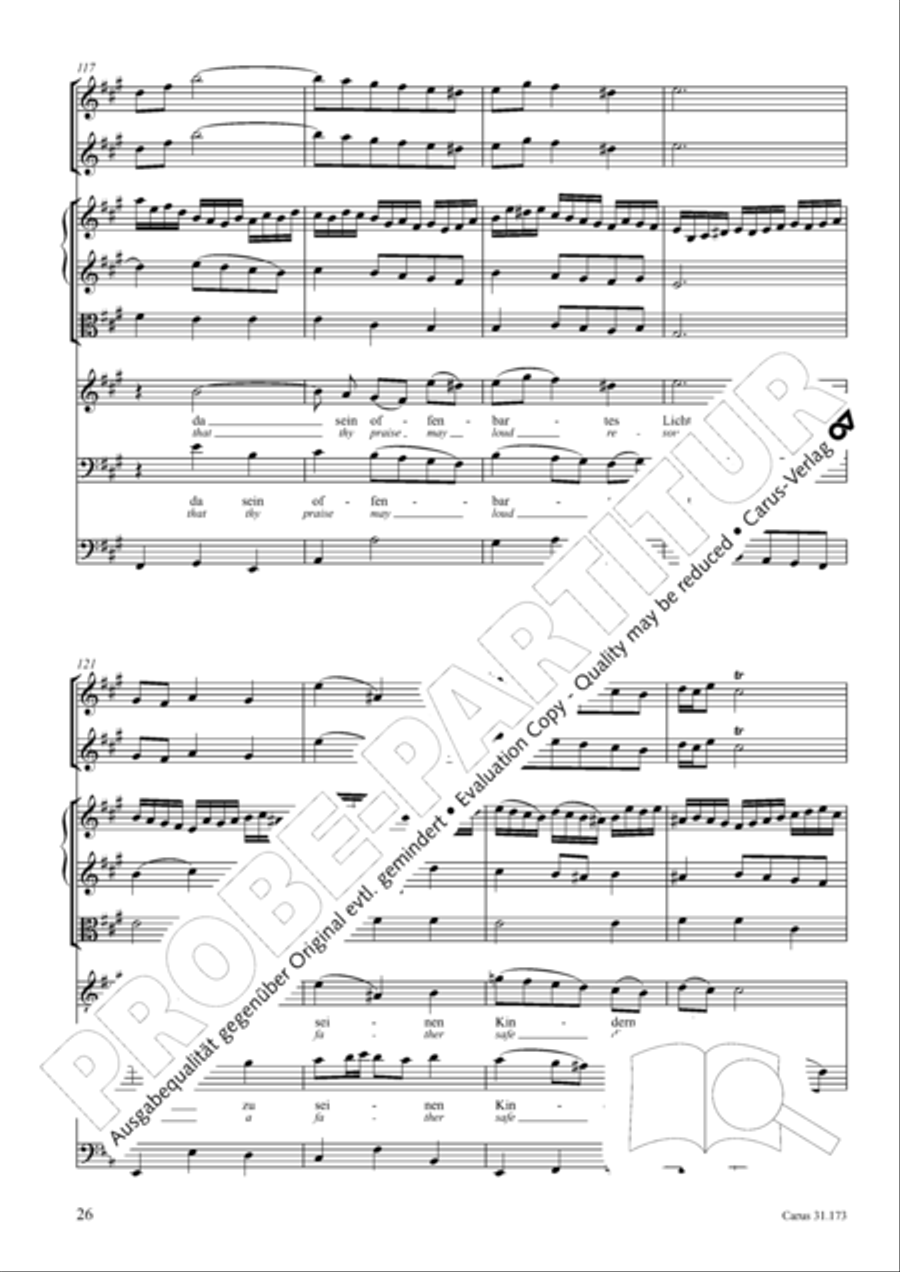
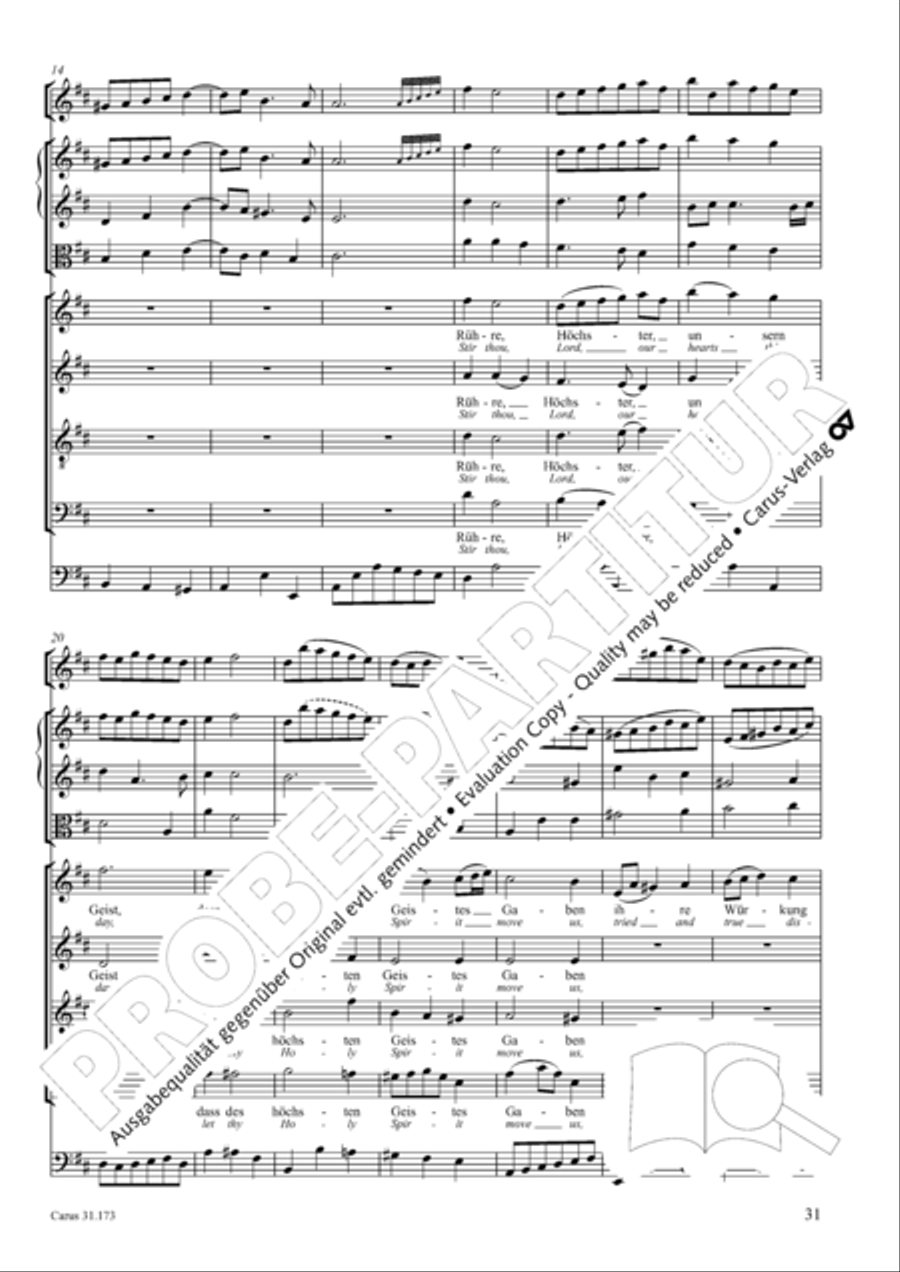
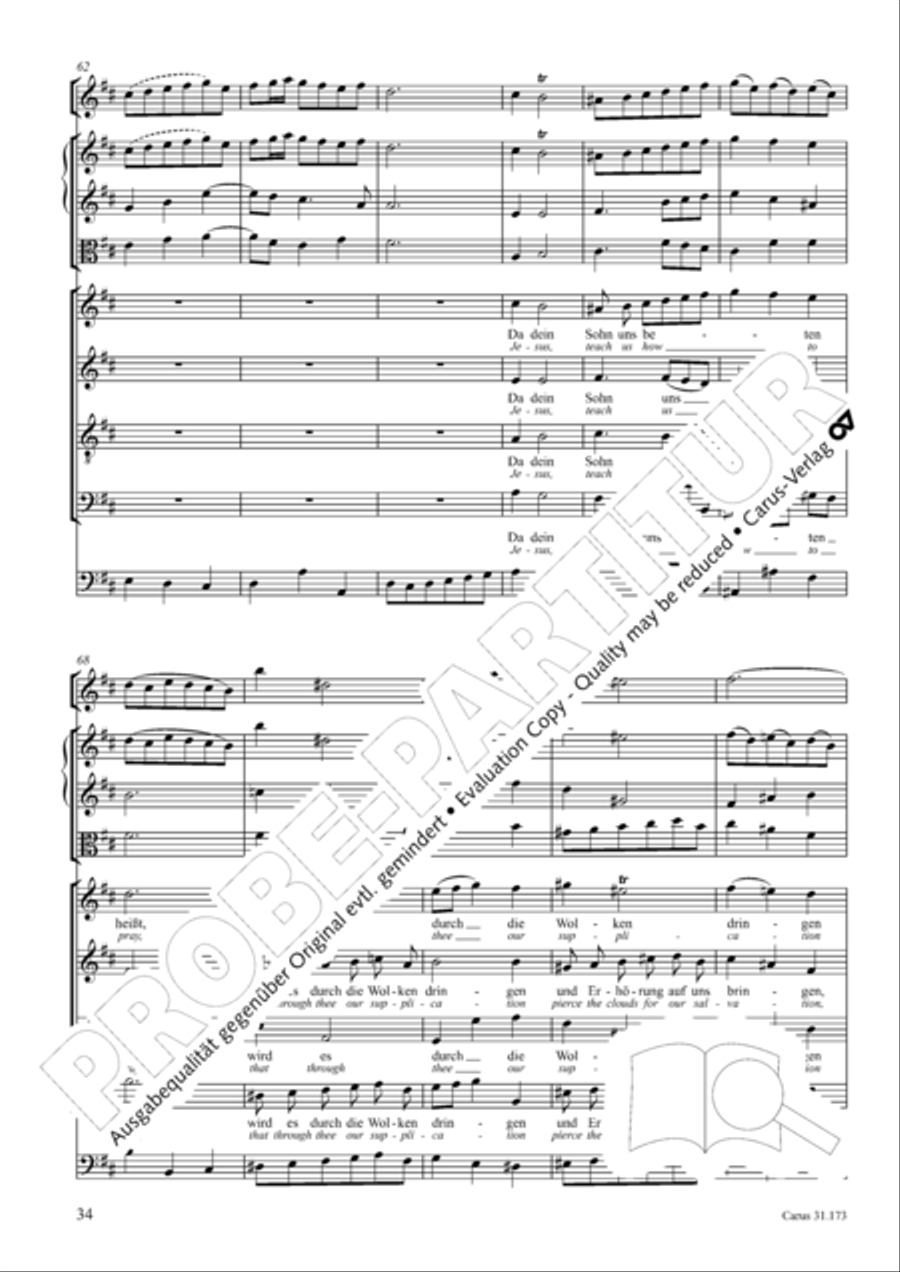
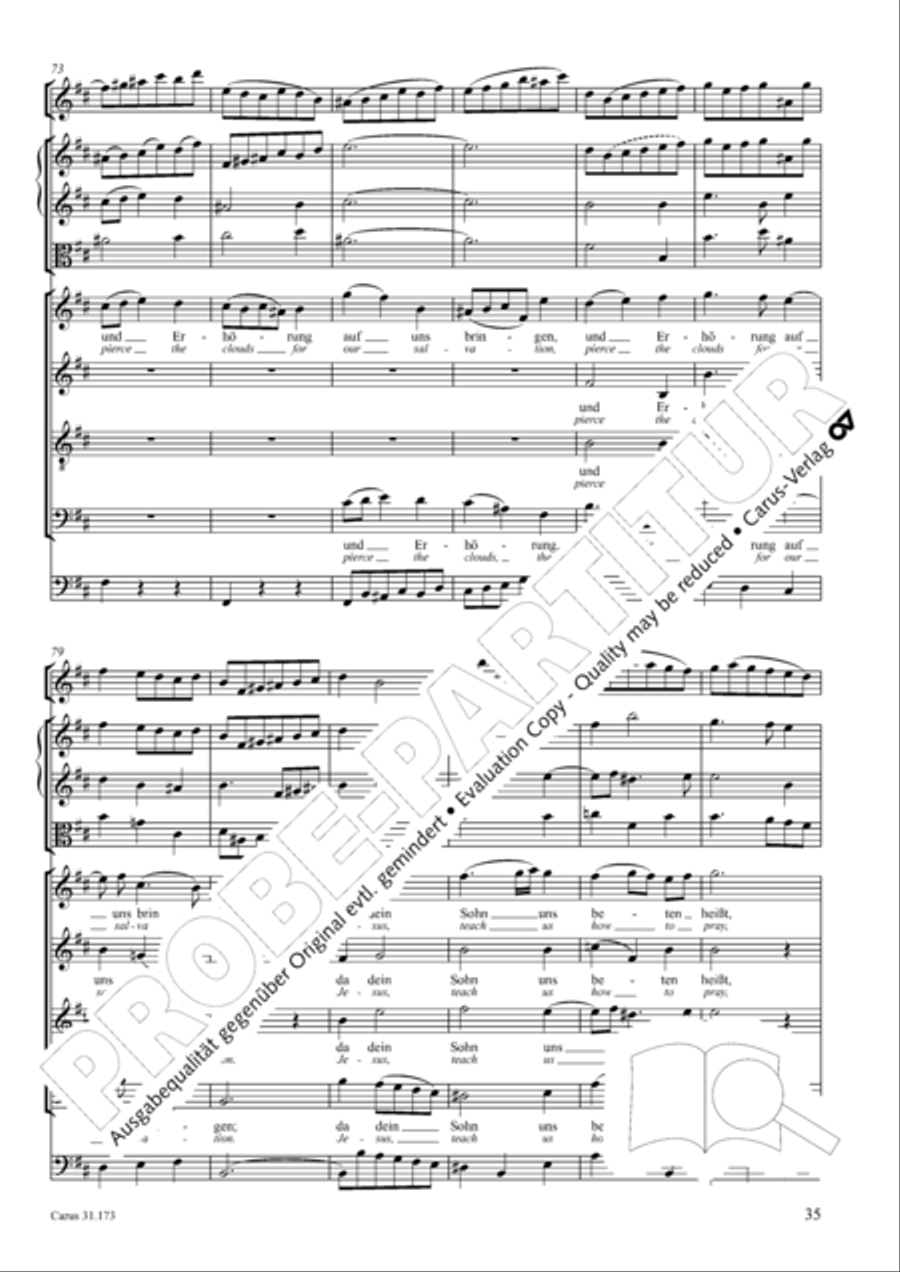
SATB vocal soli, SATB choir, 2 flute, 2 violin, viola, basso continuo (Soli SATB, Coro SATB, 2 Fl, 2 Vl, Va, Bc)
SKU: CA.3117300
Cantata for the 2nd day of Pentecost. Composed by Johann Sebastian Bach. Edited by Frauke Heinze. This edition: urtext. Stuttgart Urtext Edition: Bach vocal. Carus digital: Sheet music as PDF. Sacred vocal music, Cantatas, Whitsun. Full score. Composed 1728ca. BWV 173. 40 pages. Duration 15 minutes. Carus Verlag #CV 31.173/00. Published by Carus Verlag (CA.3117300).ISBN 9790007143213. 8.27 x 11.69 inches. Text language: German/English.
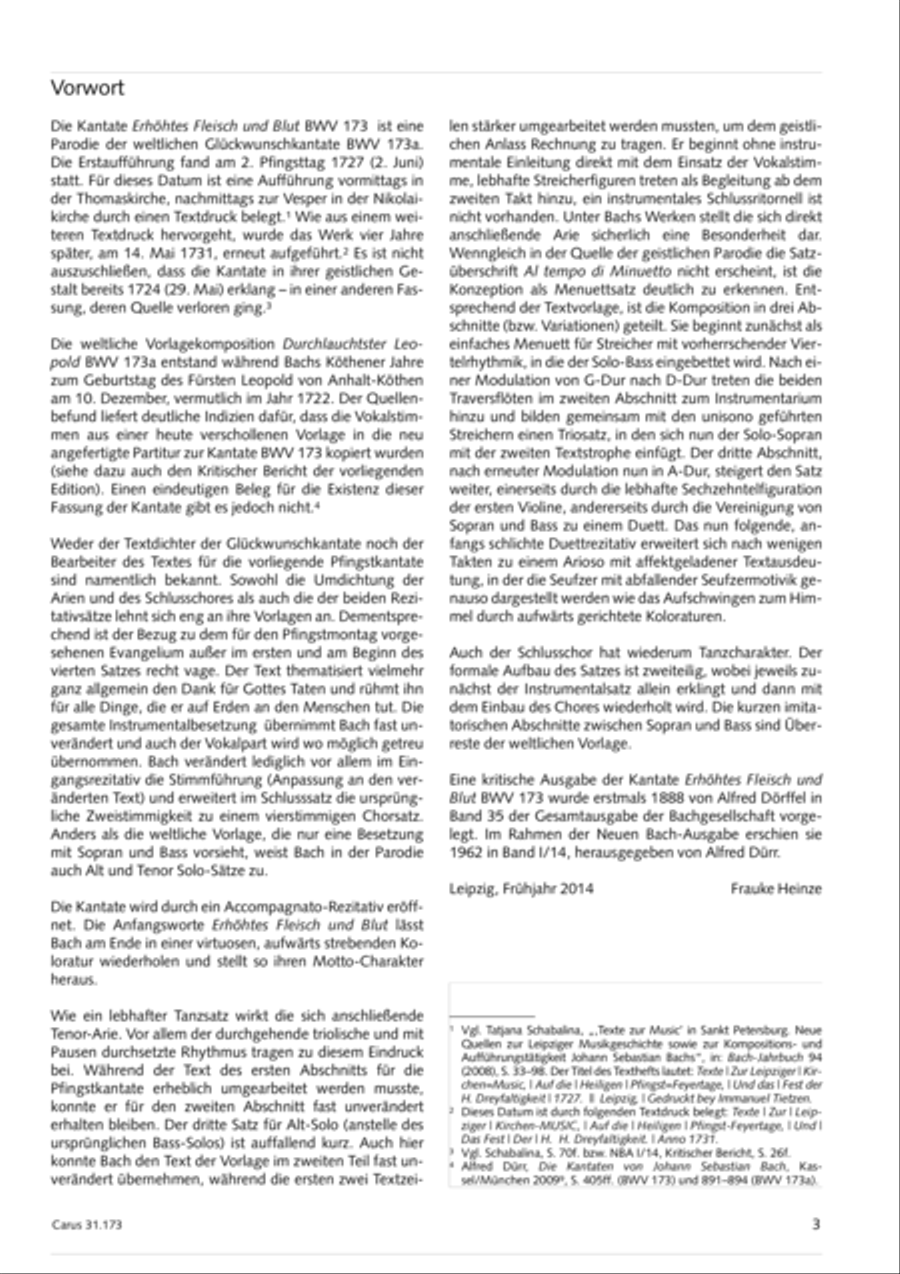
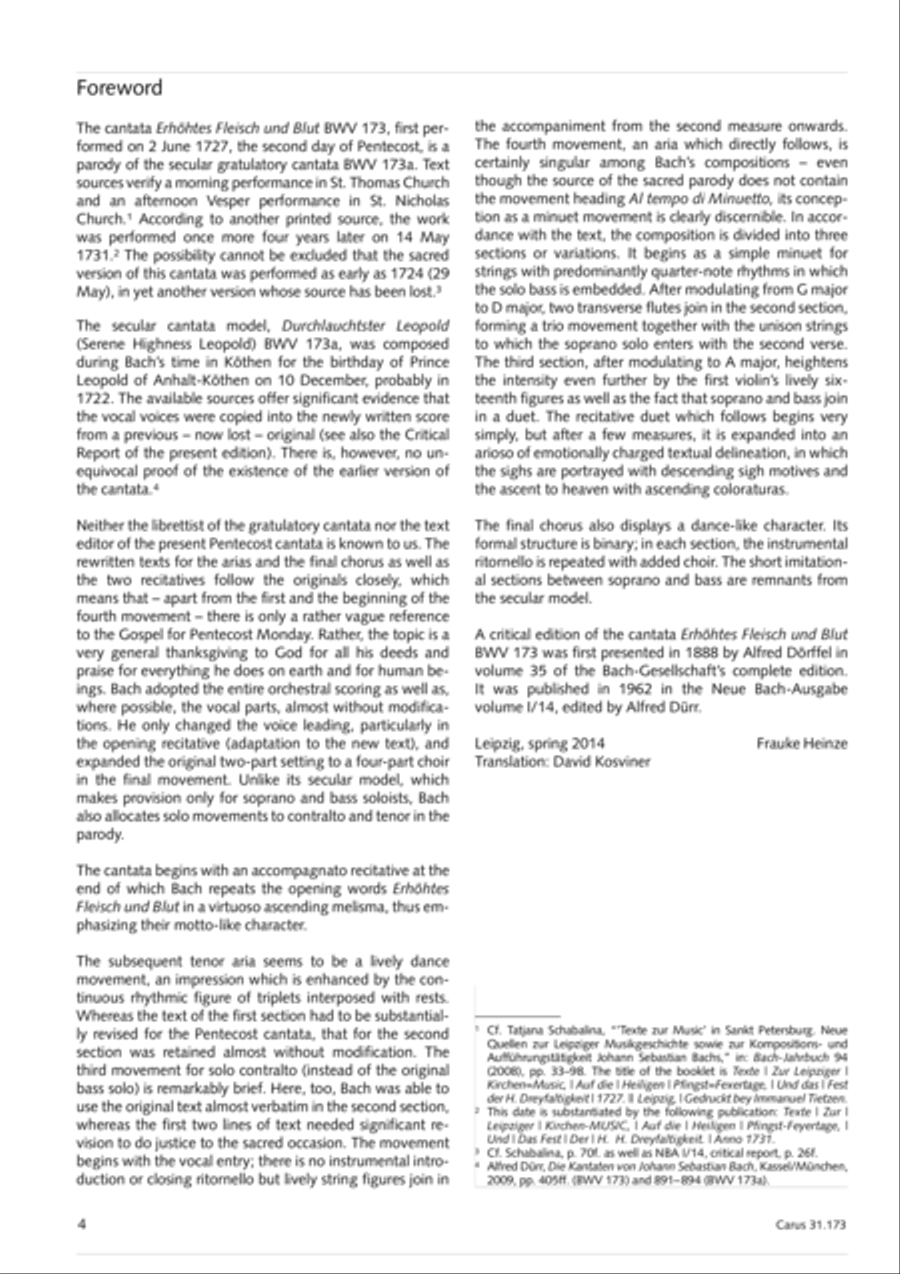
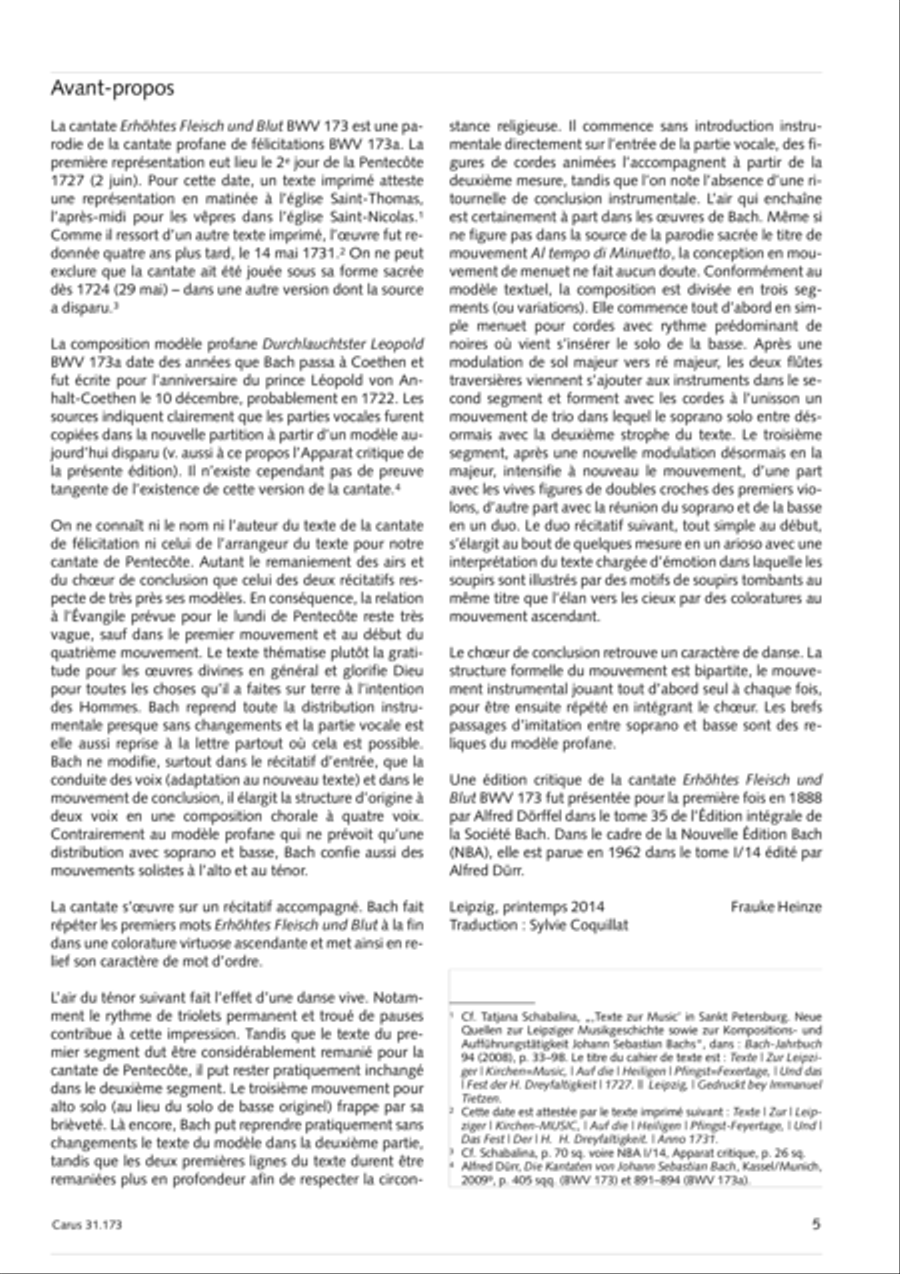
Bach created the cantata "Erhöhtes Fleisch und Blut" by setting the sacred words to what had originally been the music of a secular cantata, presumably for the festival of Pentecost in 1727. Bach made few alterations to the musical structure, but he enlarged the original solo scoring for soprano and bass to a four-voice ensemble. Particularly notable among the solo movements is the extensive duet for soprano and bass in the form of a minuet, which in its musical language is certainly unique in Bach’s cantatas. The dancelike final chorus brings the four voices together, and gives highly effective expression to the joy of Pentecost.
- More by this Composer:
- Johann Sebastian Bach Johann Sebastian Bach Choir Johann Sebastian Bach Piano Johann Sebastian Bach Piano Accompaniment
- Series:
- Stuttgart Urtext Edition
- Instrument:
- Vocal Choir Vocal Voice Piano and Keyboard Basso Continuo
- Artists:
- Johann Sebastian Bach
- Ensemble:
- 4-Part SATB Mixed Choir
- Publisher:
- Carus Verlag