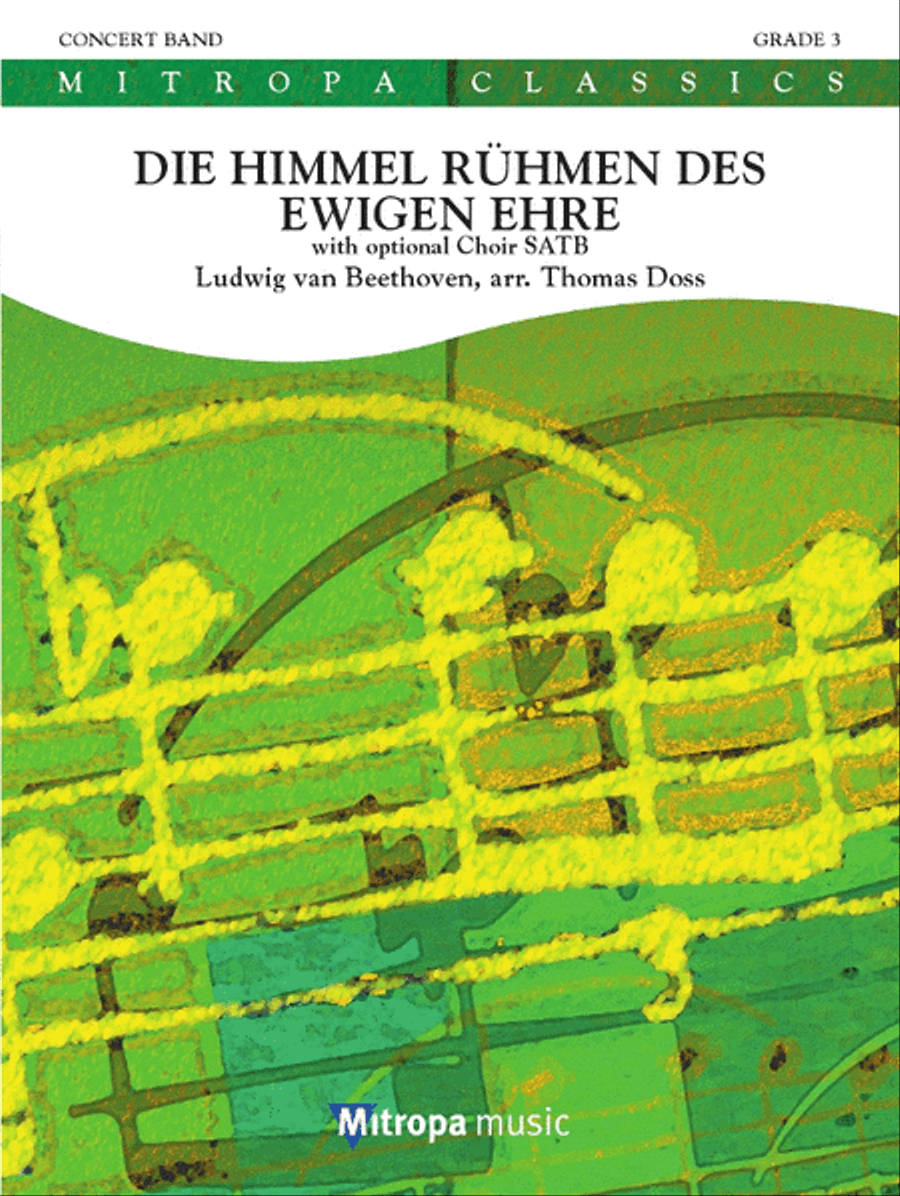
With optional Choir SATB. Composed by Ludwig van Beethoven. Arranged by Thomas Doss. Mitropa Classics. Classical. Score Only. Composed 2009. 9 pages. Mitropa Music #1589-09-140 M. Published by Mitropa Music (BT.1589-09-140-M).
9x12 inches. English-German-French-Dutch.
Master-composer Ludwig van Beethoven was born in Bonn, in 1770, but he lived in Vienna from 1792, until his death in 1827. With his innovative style, he has had a great influence on Western classical music. ‘Die Himmel rühmen des Ewigen Ehre’ (The Heavens Extol the Glory of God) is the first line of the poem ‘Die Ehre Gottes in der Natur’, which was written by Christian Fürchtegott Gellert (1715-1769). The music that Beethoven composed to the text, was published in 1803, as the fourth Lied (song) in a cycle of six (6 Lieder nach Gedichten von Gellert, opus 48). Thomas Doss has arranged the song - in which nature, as created by God, is mirrored majestically - into a wonderfulwork for concert band.Choir parts available separately: 1589-09-050 M
‘Die Himmel rühmen des Ewigen Ehre’ is de eerste regel van het gedicht ‘Die Ehre Gottes in der Natur’, dat werd geschreven door Christian Fürchtegott Gellert (1715-1769). De muziek die Beethoven bij de tekst componeerde, werd gepubliceerdin 1803, als vierde lied in een cyclus van zes (6 Lieder nach Gedichten von Gellert, opus 48). Thomas Doss arrangeerde het lied, waarin de door God geschapen natuur op majestueuze wijze wordt verklankt, tot een aansprekendwerk voor harmonieorkest.
Die Himmel rühmen des Ewigen Ehre ist die erste Zeile eines Gedichts von Christian Fürchtegott Gellert (1715 - 1769). Mit der Melodie von Beethoven wurde es 1803 im Liederzyklus Lieder nach Gedichten von Gellert, Opus 48, veröffentlicht. Thomas Doss bearbeitete das Lied - in dem die Natur, wie Gott sie schuf, in prachtvoller Weise widergespiegelt wird - zu einem wundervollen Werk für Blasorchester.Chorset separat erhältlich: 1589-09-050 M
Né Bonn en 1770, Ludwig van Beethoven quitte sa ville natale et s'installe définitivement Vienne en 1793 où il résidera jusqu’ sa mort en 1827. Reconnu pour son style innovateur, Beethoven a exercé une influence majeure dans le développement de la musique classique occidentale.Die Himmel rühmen des Ewigen Ehre (“Les cieux célèbrent ta gloire”) est le premier vers du poème Die Ehre Gottes in der Natur du fabuliste et moraliste allemand Christian Fürchtegott Gellert (1715-1769). En 1803, Beethoven composa un cycle de Six lieder sur des poèmes de Gellert, op. 48. Die Himmel rühmen est le quatrième lied du cycle.Thomas Doss a réalisé un excellentarrangement pour Orchestre d’Harmonie de ce lied majestueux qui exalte la nature, création de Dieu. [Set Chœur (SATB) optionnel vendu séparément - DHP 1589-09-050 M - Texte en allemand].
With optional Choir SATB. Composed by Ludwig van Beethoven. Arranged by Thomas Doss. Mitropa Classics. Classical. Score Only. Composed 2009. 9 pages. Mitropa Music #1589-09-140 M. Published by Mitropa Music (BT.1589-09-140-M).
9x12 inches. English-German-French-Dutch.
Master-composer Ludwig van Beethoven was born in Bonn, in 1770, but he lived in Vienna from 1792, until his death in 1827. With his innovative style, he has had a great influence on Western classical music. ‘Die Himmel rühmen des Ewigen Ehre’ (The Heavens Extol the Glory of God) is the first line of the poem ‘Die Ehre Gottes in der Natur’, which was written by Christian Fürchtegott Gellert (1715-1769). The music that Beethoven composed to the text, was published in 1803, as the fourth Lied (song) in a cycle of six (6 Lieder nach Gedichten von Gellert, opus 48). Thomas Doss has arranged the song - in which nature, as created by God, is mirrored majestically - into a wonderfulwork for concert band.Choir parts available separately: 1589-09-050 M
‘Die Himmel rühmen des Ewigen Ehre’ is de eerste regel van het gedicht ‘Die Ehre Gottes in der Natur’, dat werd geschreven door Christian Fürchtegott Gellert (1715-1769). De muziek die Beethoven bij de tekst componeerde, werd gepubliceerdin 1803, als vierde lied in een cyclus van zes (6 Lieder nach Gedichten von Gellert, opus 48). Thomas Doss arrangeerde het lied, waarin de door God geschapen natuur op majestueuze wijze wordt verklankt, tot een aansprekendwerk voor harmonieorkest.
Die Himmel rühmen des Ewigen Ehre ist die erste Zeile eines Gedichts von Christian Fürchtegott Gellert (1715 - 1769). Mit der Melodie von Beethoven wurde es 1803 im Liederzyklus Lieder nach Gedichten von Gellert, Opus 48, veröffentlicht. Thomas Doss bearbeitete das Lied - in dem die Natur, wie Gott sie schuf, in prachtvoller Weise widergespiegelt wird - zu einem wundervollen Werk für Blasorchester.Chorset separat erhältlich: 1589-09-050 M
Né Bonn en 1770, Ludwig van Beethoven quitte sa ville natale et s'installe définitivement Vienne en 1793 où il résidera jusqu’ sa mort en 1827. Reconnu pour son style innovateur, Beethoven a exercé une influence majeure dans le développement de la musique classique occidentale.Die Himmel rühmen des Ewigen Ehre (“Les cieux célèbrent ta gloire”) est le premier vers du poème Die Ehre Gottes in der Natur du fabuliste et moraliste allemand Christian Fürchtegott Gellert (1715-1769). En 1803, Beethoven composa un cycle de Six lieder sur des poèmes de Gellert, op. 48. Die Himmel rühmen est le quatrième lied du cycle.Thomas Doss a réalisé un excellentarrangement pour Orchestre d’Harmonie de ce lied majestueux qui exalte la nature, création de Dieu. [Set Chœur (SATB) optionnel vendu séparément - DHP 1589-09-050 M - Texte en allemand].
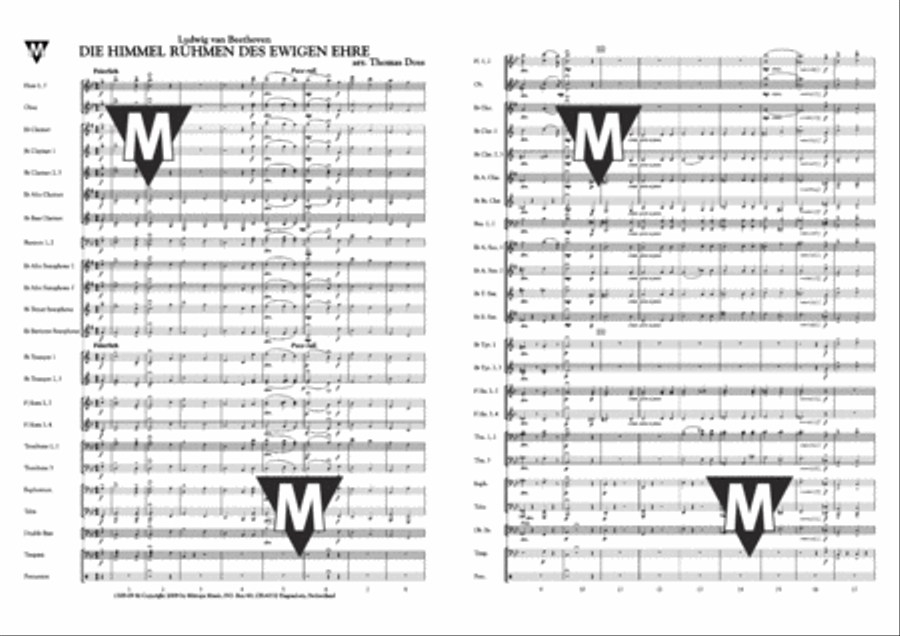
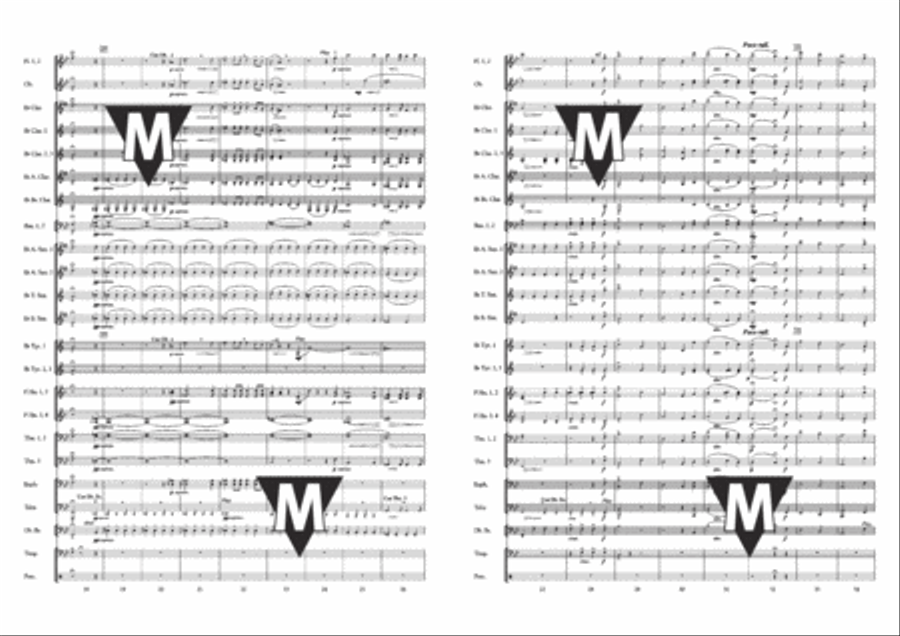
Preview: Die Himmel rühmen des Ewigen Ehre
Tell A Friend
Tell a friend (or remind yourself) about this product. We'll instantly send an email containing product info and a link to it. You may also enter a personal message.
We do not use or store email addresses from this form for any other purpose than sending your share email.
After purchase, you can download your MP3 from your Sheet Music Plus Digital Library - no software installation is necessary! You can also listen to your MP3 at any time in your Digital Library.
Learn about Smart Music
After purchase, you can download your Smart Music from your Sheet Music Plus Digital Library - no software installation is necessary! You can also download at any time in your Digital Library.
Learn about Digital Video
After purchase you can download your video from your Digital Library. Your video is in XX format and is playable on most pre-installed video players.