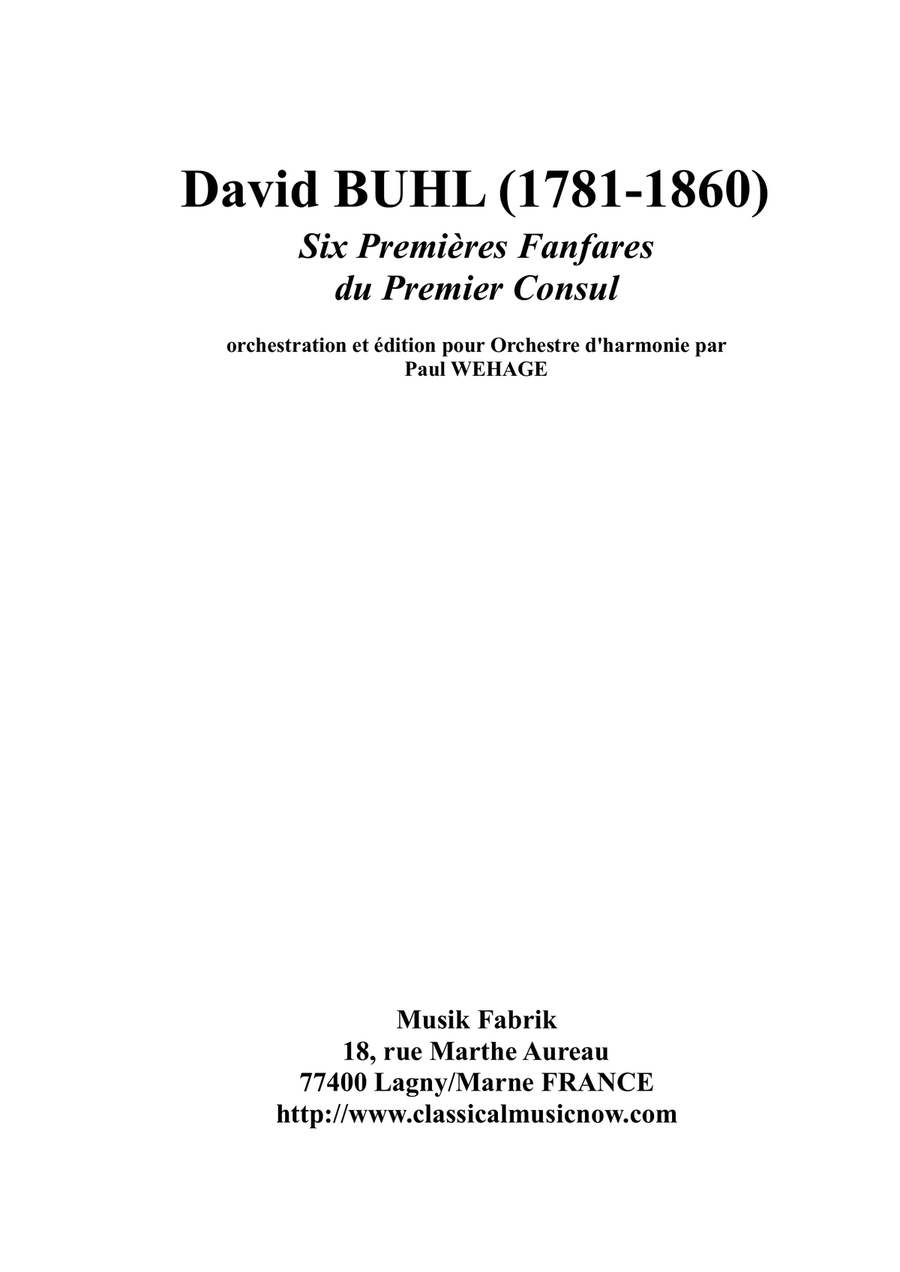
Composed by David Buhl (1781-1860). Arranged by Paul Wehage. This edition: pdf. 19th Century, Classical, Romantic Period. 159 pages. Musik Fabrik Music Publishing #1209762. Published by Musik Fabrik Music Publishing (A0.1642327).
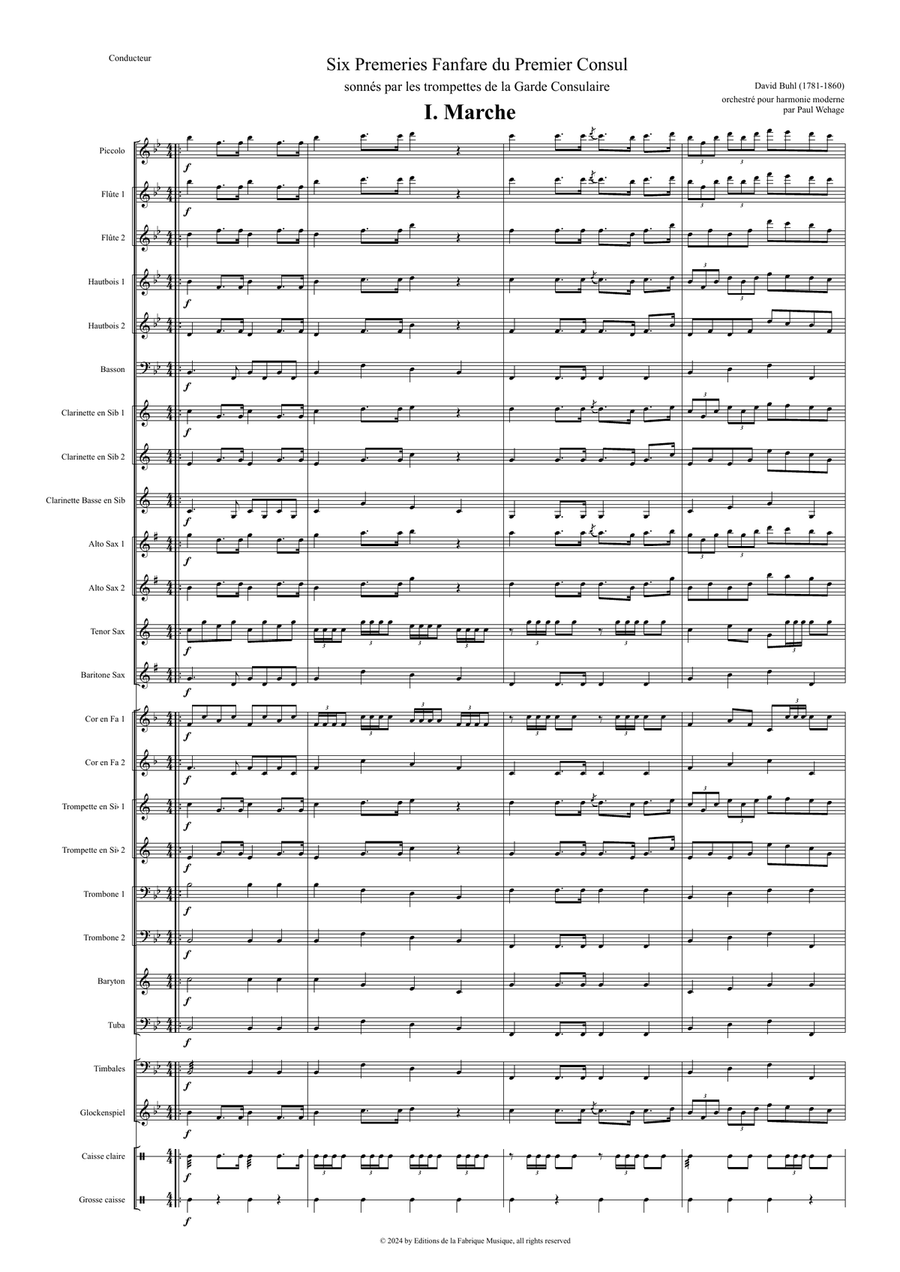
David Buhl's Six First Fanfare for the First Consul, composed in 1799, is a ceremonial suite written to honor Napoleon Bonaparte shortly after he assumed power as First Consul of France. A military musician and composer affiliated with the French Republican Guard, Buhl crafted these short fanfares to reflect the grandeur and emerging cult of personality surrounding Napoleon at the dawn of his political ascendancy. Scored for brass and percussion, the Six First Fanfare exemplifies the martial optimism of the era, with bold, declarative motifs and rhythmic precision designed to accompany official processions or military reviews. The work captures a moment when music served not just as entertainment but as a tool of political symbolism and national identity. The work has been adapted for the modern concert band by Paul Wehage
Joseph David Buhl was born on February 21, 1781, in Amboise. The son of a musician employed by the Duke of Choiseul, he joined the Parisian Guard’s band as a trumpeter at age eleven and later served with the Grenadiers of the Consular Guard. In 1803, Napoleon Bonaparte tasked him with revamping military trumpet calls. Under the First Empire, Buhl directed the Cavalry Trumpet School in Versailles from 1805 to 1811. In 1814, Louis XVIII appointed him head of music for the royal bodyguards and awarded him the Legion of Honor. He later became principal trumpet at the Paris Opera and the Théâtre Italien. One of his trumpet calls, La Retraite, was notably reused by Berlioz in Eight Scenes from Faust (1828) and The Damnation of Faust (1846). After being severely injured during Charles X’s coronation in 1825, Buhl focused more on teaching. Among his pupils was François Dauverné, who called him “the most remarkable trumpeter of his time.”
In 1828, Buhl co-founded the Société des Concerts du Conservatoire, where he played second trumpet beside Dauverné. As a composer, he authored the influential Méthode de trompette (1825), intended for both orchestral and cavalry trumpets. He also wrote suites of fanfares, some dating back to 1799, as well as marches such as the Marche du duc de Bordeaux and the Marche de Monsieur. His Quatre pas redoublés creatively contrasts cavalry fanfare with wind orchestra in the spirit of a concerto grosso. Buhl also produced numerous trumpet calls for mounted troops, helping to establish the modern French repertoire of cavalry signals. He died in Versailles on April 7, 1860.
This product was created by a member of ArrangeMe, Hal Leonard's global
self-publishing community of independent composers, arrangers, and songwriters.
ArrangeMe allows for the publication of unique arrangements of both popular
titles and original compositions from a wide variety of voices and backgrounds.
About Digital Downloads
Digital Downloads are downloadable sheet music files that can be viewed directly on
your computer, tablet or mobile device. Once you download your digital sheet music,
you can view and print it at home, school, or anywhere you want to make music, and
you don't have to be connected to the internet. Just purchase, download and play!
PLEASE NOTE: Your Digital Download will have a watermark at the bottom of each page
that will include your name, purchase date and number of copies purchased. You are
only authorized to print the number of copies that you have purchased. You may not
digitally distribute or print more copies than purchased for use (i.e., you may not
print or digitally distribute individual copies to friends or students).
Composed by David Buhl (1781-1860). Arranged by Paul Wehage. This edition: pdf. 19th Century, Classical, Romantic Period. 159 pages. Musik Fabrik Music Publishing #1209762. Published by Musik Fabrik Music Publishing (A0.1642327).
David Buhl's Six First Fanfare for the First Consul, composed in 1799, is a ceremonial suite written to honor Napoleon Bonaparte shortly after he assumed power as First Consul of France. A military musician and composer affiliated with the French Republican Guard, Buhl crafted these short fanfares to reflect the grandeur and emerging cult of personality surrounding Napoleon at the dawn of his political ascendancy. Scored for brass and percussion, the Six First Fanfare exemplifies the martial optimism of the era, with bold, declarative motifs and rhythmic precision designed to accompany official processions or military reviews. The work captures a moment when music served not just as entertainment but as a tool of political symbolism and national identity. The work has been adapted for the modern concert band by Paul Wehage
Joseph David Buhl was born on February 21, 1781, in Amboise. The son of a musician employed by the Duke of Choiseul, he joined the Parisian Guard’s band as a trumpeter at age eleven and later served with the Grenadiers of the Consular Guard. In 1803, Napoleon Bonaparte tasked him with revamping military trumpet calls. Under the First Empire, Buhl directed the Cavalry Trumpet School in Versailles from 1805 to 1811. In 1814, Louis XVIII appointed him head of music for the royal bodyguards and awarded him the Legion of Honor. He later became principal trumpet at the Paris Opera and the Théâtre Italien. One of his trumpet calls, La Retraite, was notably reused by Berlioz in Eight Scenes from Faust (1828) and The Damnation of Faust (1846). After being severely injured during Charles X’s coronation in 1825, Buhl focused more on teaching. Among his pupils was François Dauverné, who called him “the most remarkable trumpeter of his time.”
In 1828, Buhl co-founded the Société des Concerts du Conservatoire, where he played second trumpet beside Dauverné. As a composer, he authored the influential Méthode de trompette (1825), intended for both orchestral and cavalry trumpets. He also wrote suites of fanfares, some dating back to 1799, as well as marches such as the Marche du duc de Bordeaux and the Marche de Monsieur. His Quatre pas redoublés creatively contrasts cavalry fanfare with wind orchestra in the spirit of a concerto grosso. Buhl also produced numerous trumpet calls for mounted troops, helping to establish the modern French repertoire of cavalry signals. He died in Versailles on April 7, 1860.
This product was created by a member of ArrangeMe, Hal Leonard's global
self-publishing community of independent composers, arrangers, and songwriters.
ArrangeMe allows for the publication of unique arrangements of both popular
titles and original compositions from a wide variety of voices and backgrounds.
About Digital Downloads
Digital Downloads are downloadable sheet music files that can be viewed directly on
your computer, tablet or mobile device. Once you download your digital sheet music,
you can view and print it at home, school, or anywhere you want to make music, and
you don't have to be connected to the internet. Just purchase, download and play!
PLEASE NOTE: Your Digital Download will have a watermark at the bottom of each page
that will include your name, purchase date and number of copies purchased. You are
only authorized to print the number of copies that you have purchased. You may not
digitally distribute or print more copies than purchased for use (i.e., you may not
print or digitally distribute individual copies to friends or students).
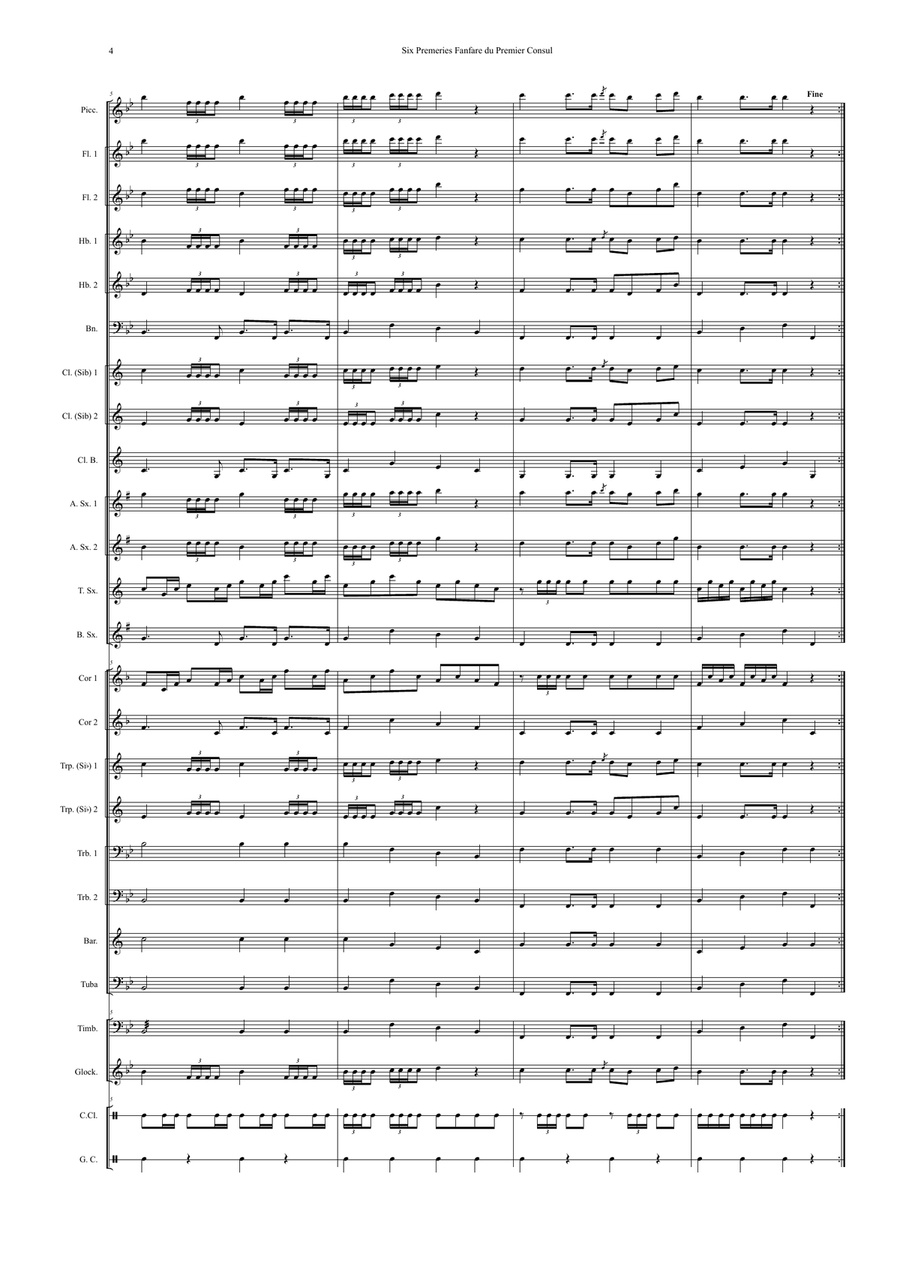
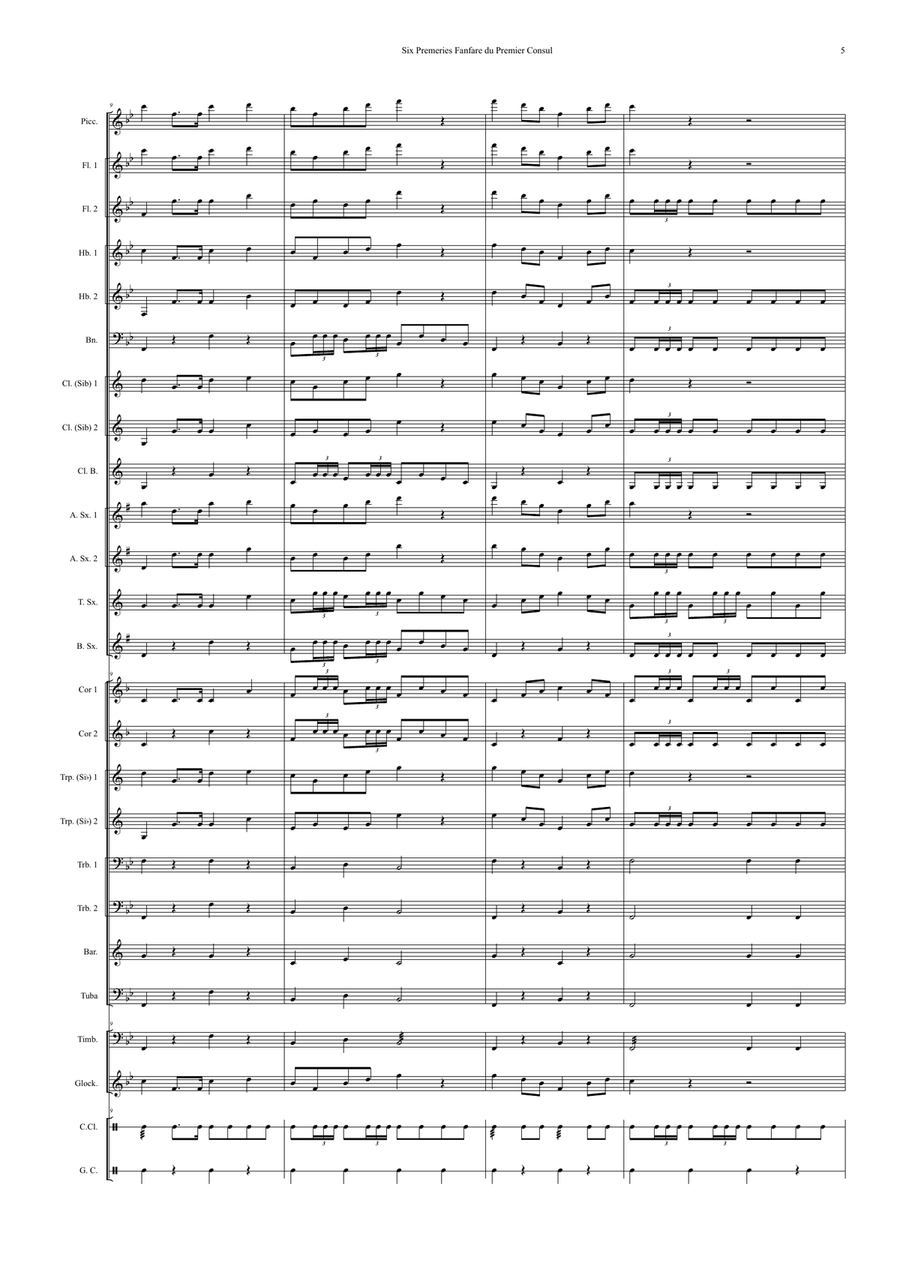
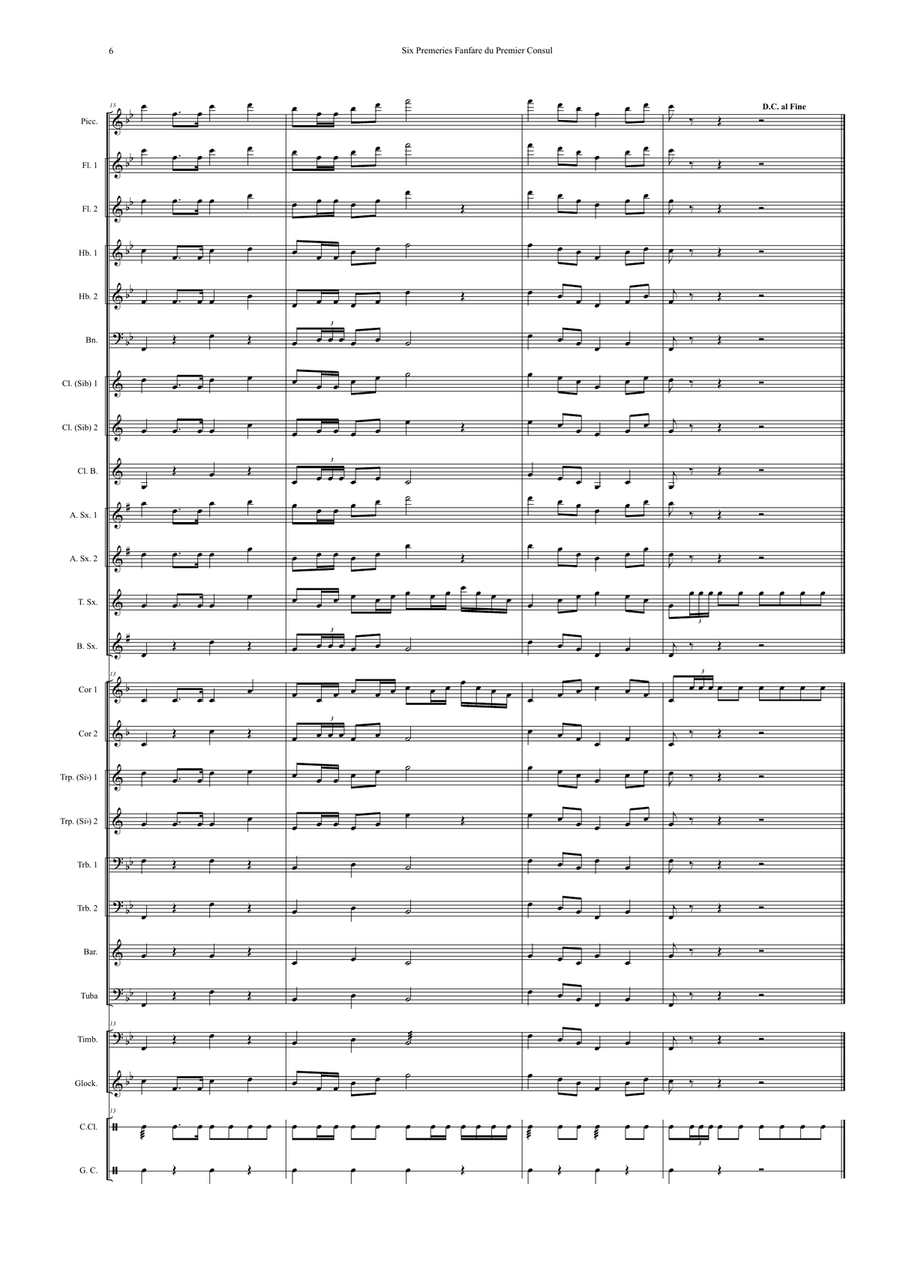
Preview: David Buhl : Six Premiers Fanfare du Premier Consul, arranged for modern concert band
Tell A Friend
Tell a friend (or remind yourself) about this product. We'll instantly send an email containing product info and a link to it. You may also enter a personal message.
We do not use or store email addresses from this form for any other purpose than sending your share email.
After purchase, you can download your MP3 from your Sheet Music Plus Digital Library - no software installation is necessary! You can also listen to your MP3 at any time in your Digital Library.
Learn about Smart Music
After purchase, you can download your Smart Music from your Sheet Music Plus Digital Library - no software installation is necessary! You can also download at any time in your Digital Library.
Learn about Digital Video
After purchase you can download your video from your Digital Library. Your video is in XX format and is playable on most pre-installed video players.