
22103902
Coventry Carol
22103902
22103902
22103902
Copyright Material for Preview Only - Sheet Music Plus
Choral TBB choir, piano
SKU: CF.CM9711
Composed by English Carol. Arranged by Noah Reese. Octavo. 12 pages. Duration 0:02:51. Carl Fischer Music #CM9711. Published by Carl Fischer Music (CF.CM9711).
ISBN 9781491160060. UPC: 680160918669. 6.875 x 10.5 inches. Key: G minor. English. English Carol.
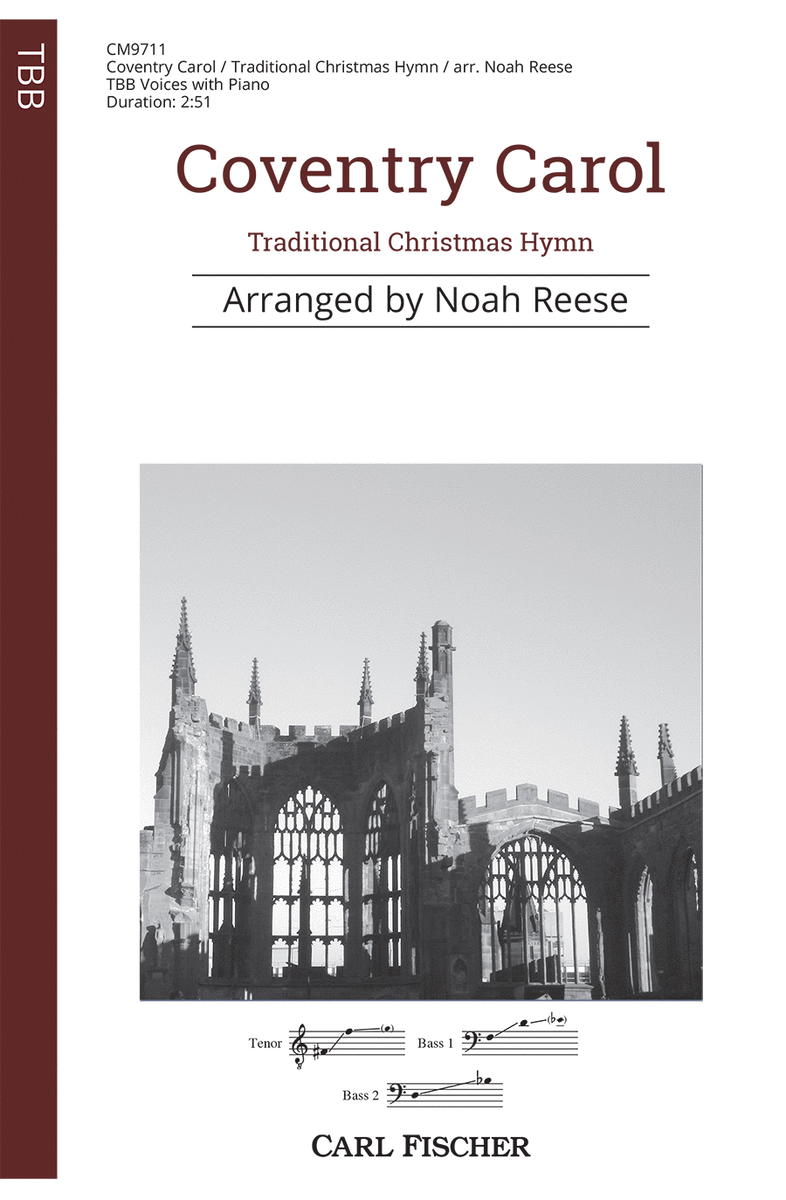
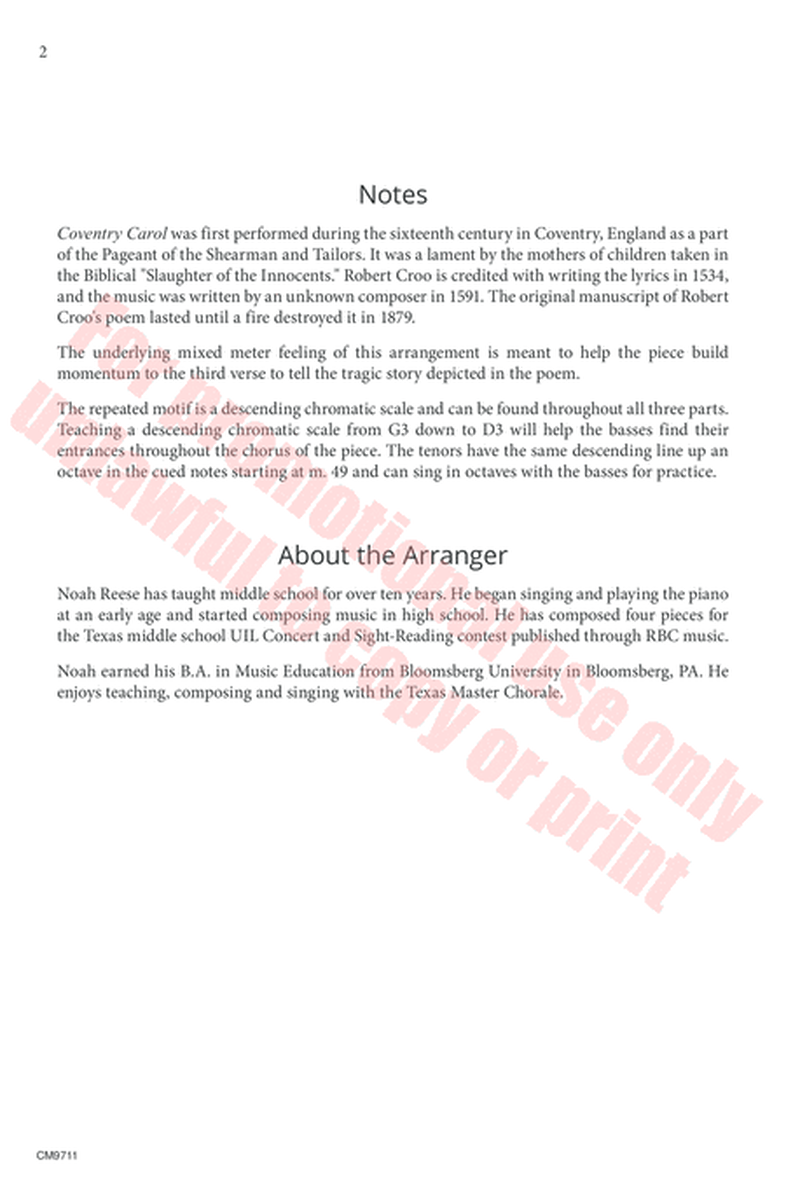
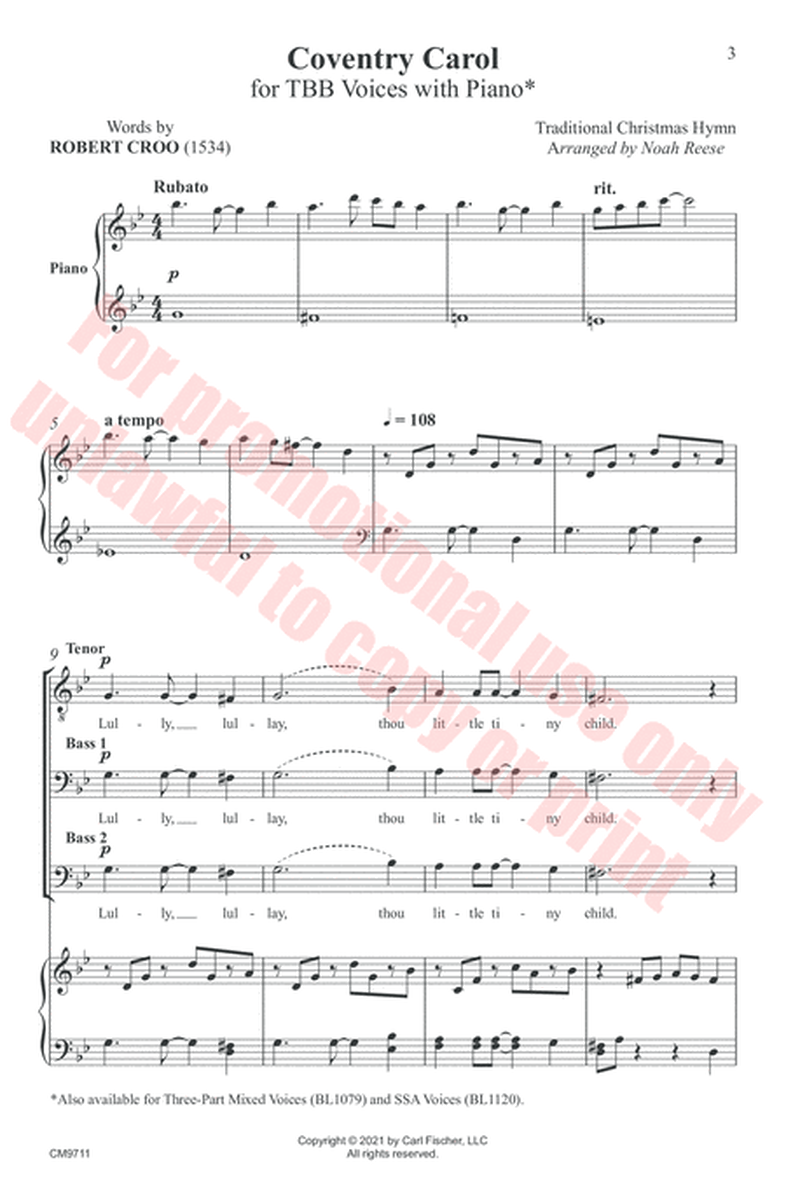
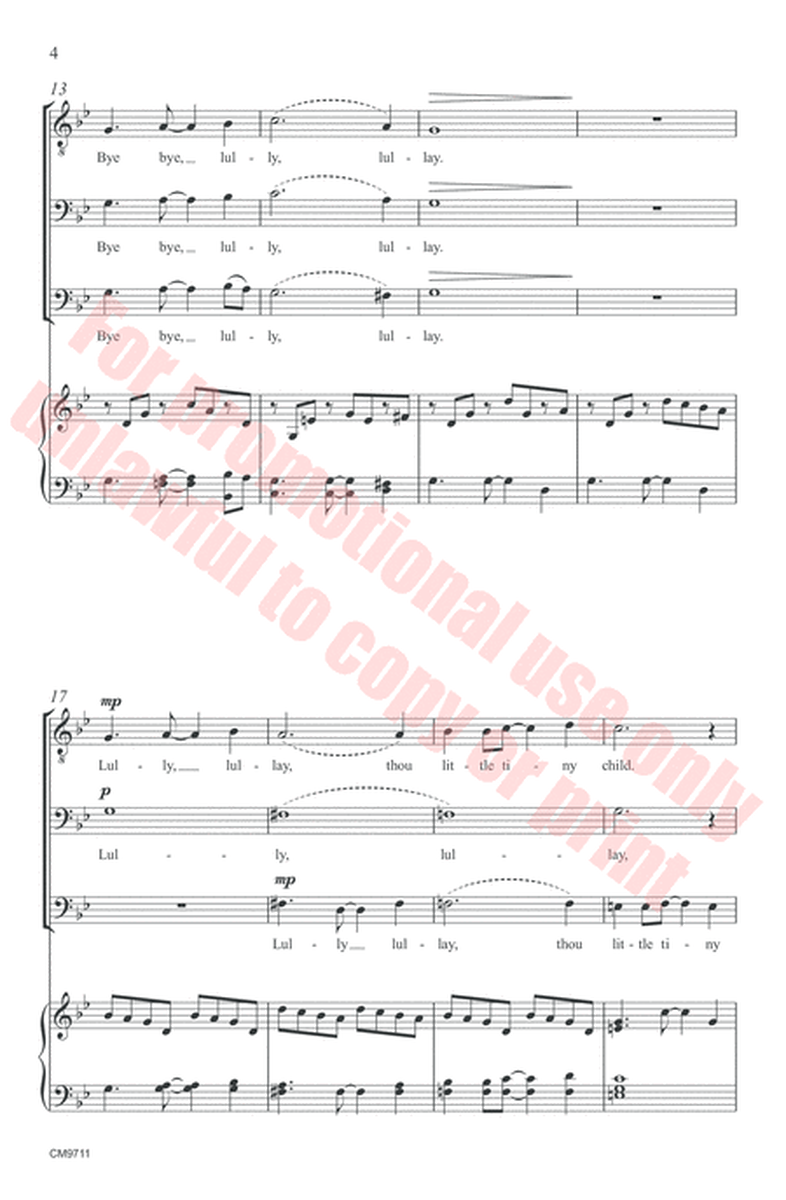
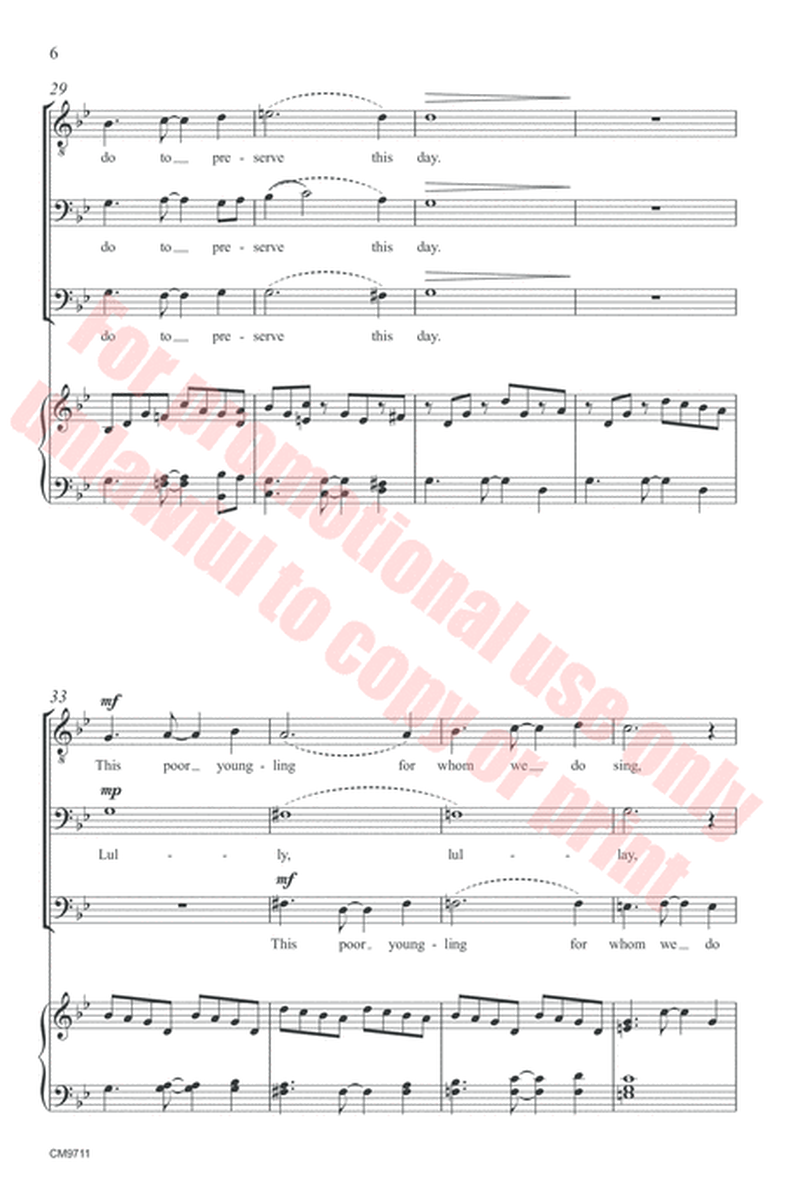
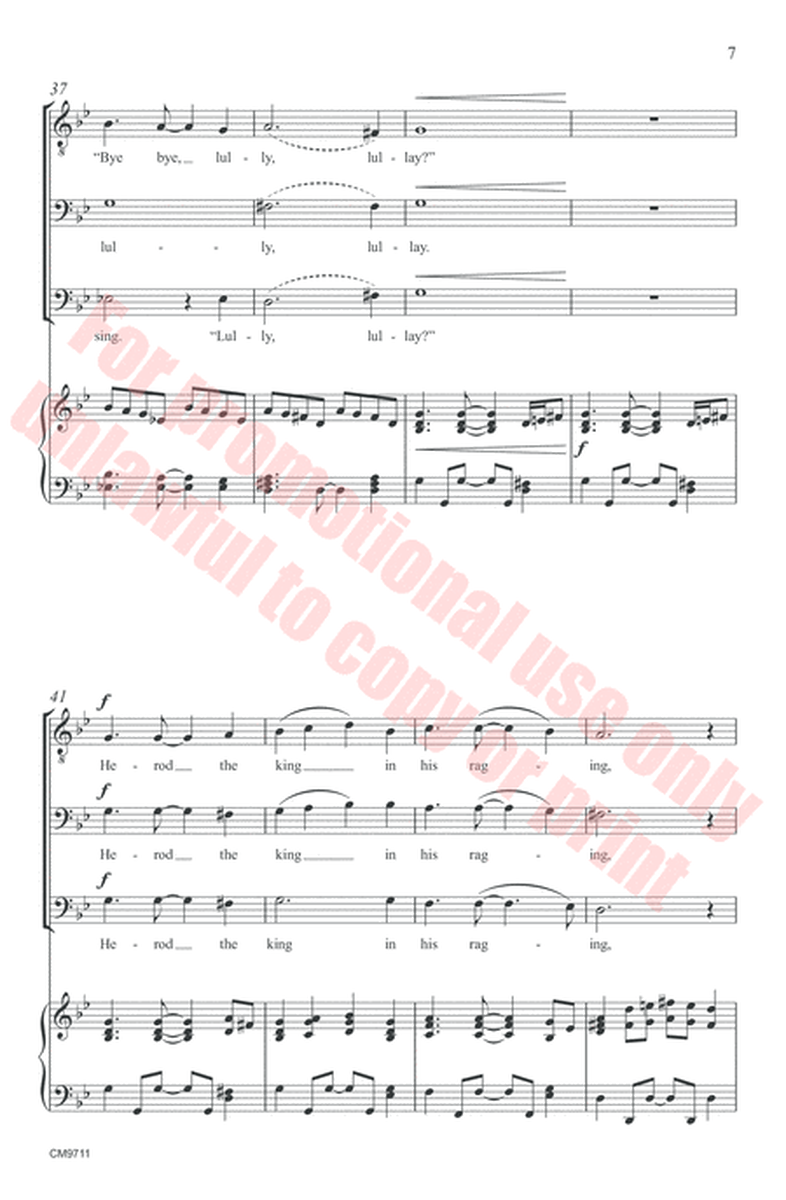
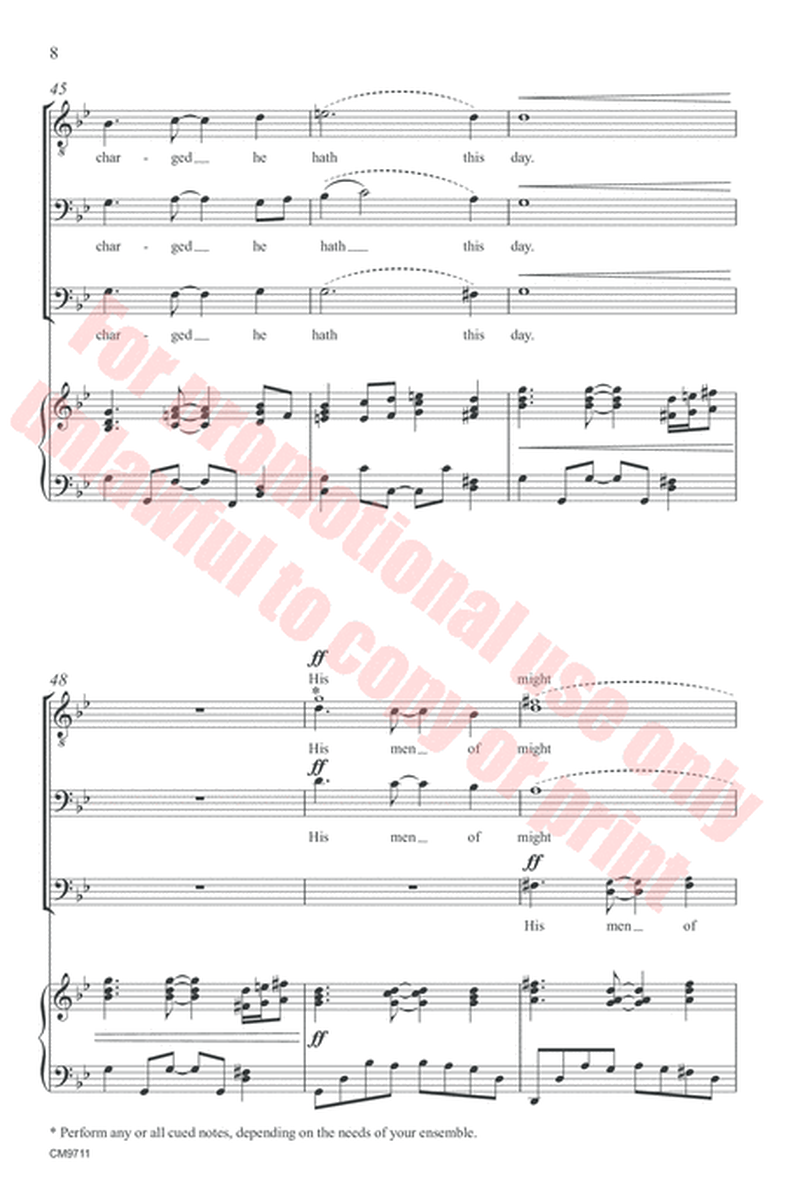
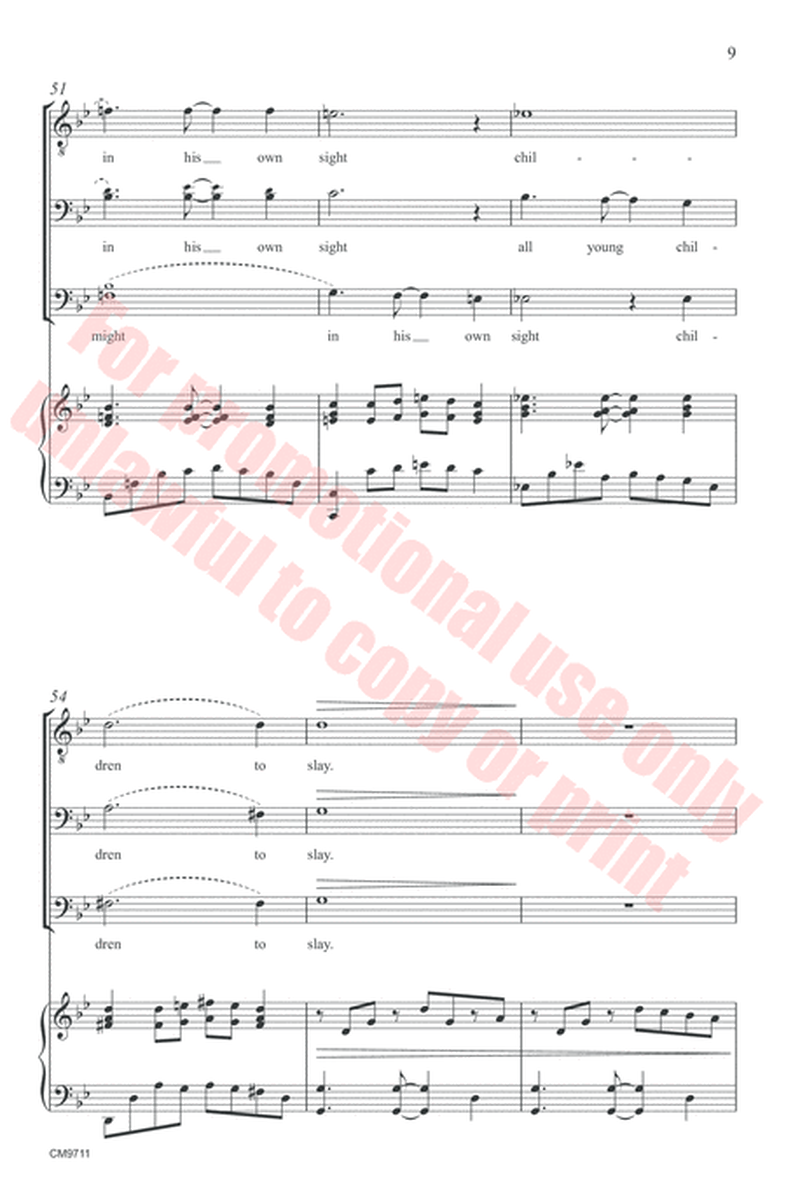
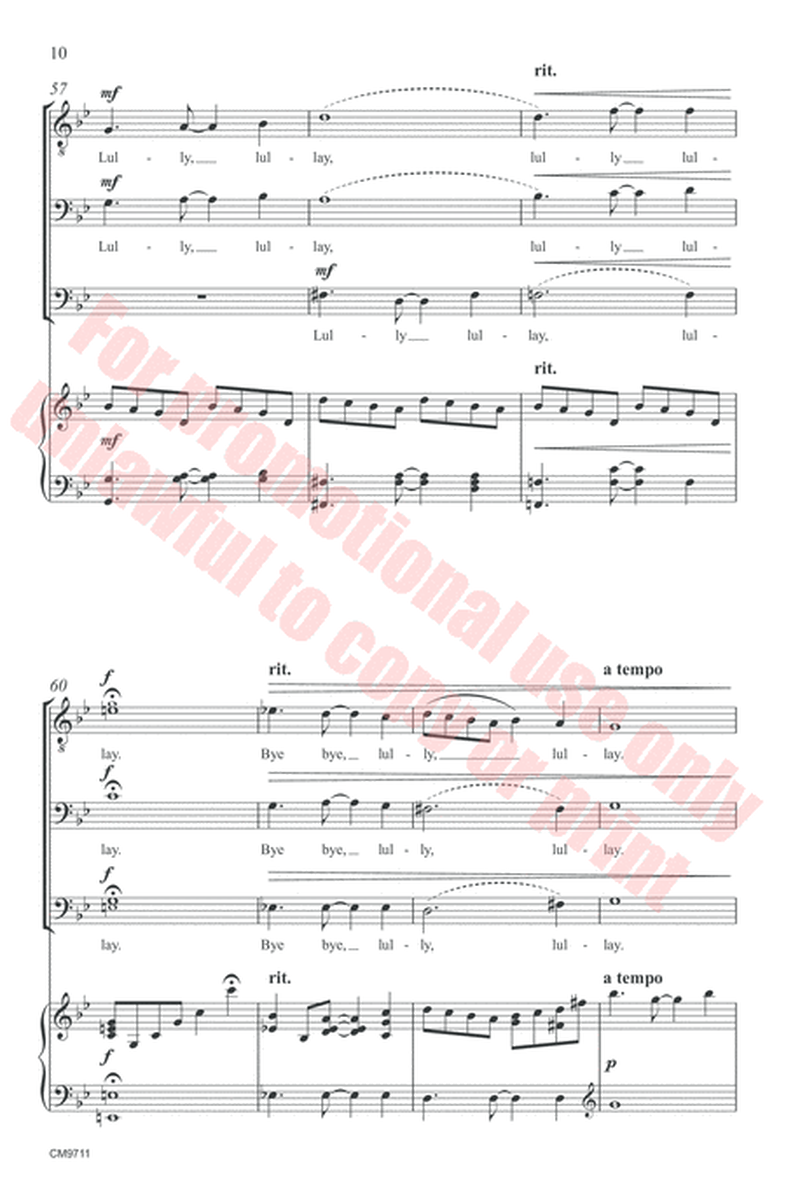
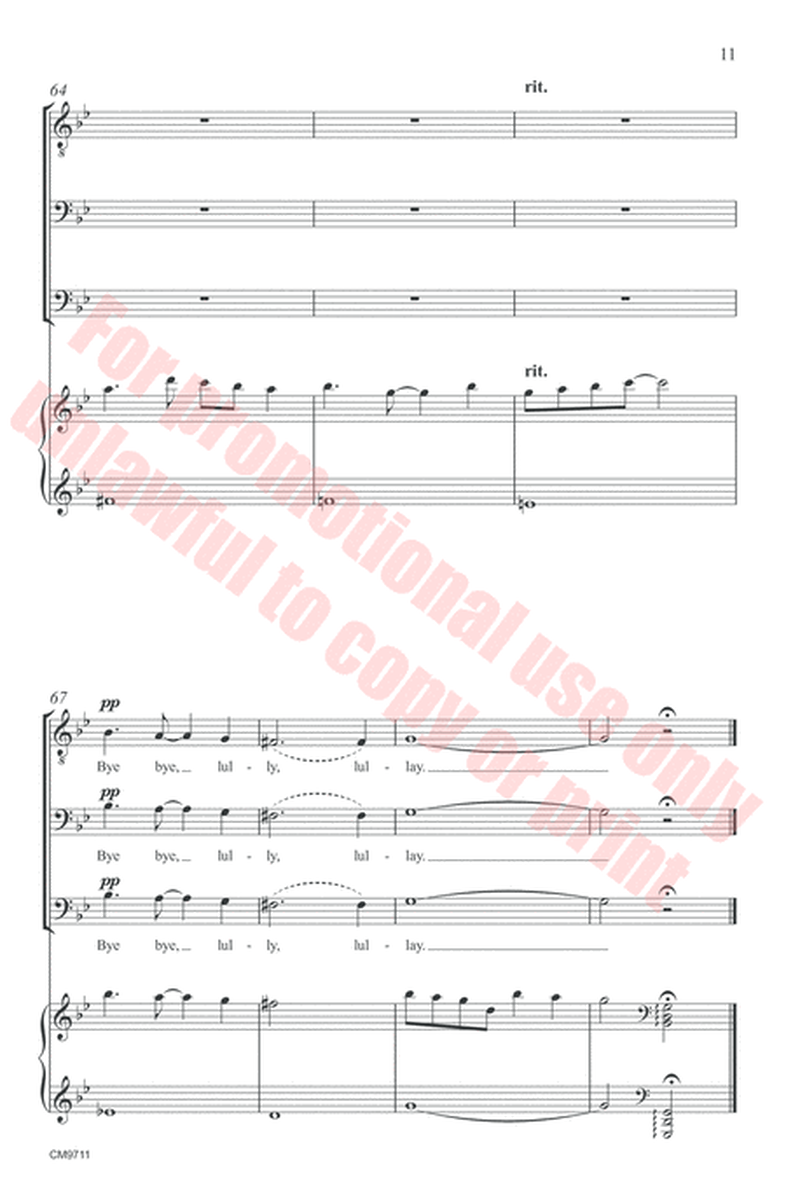
Coventry Carol was first performed during the sixteenth century in Coventry, England as a part of the Pageant of the Shearman and Tailors. It was a lament by the mothers of children taken in the Biblical "Slaughter of the Innocents." Robert Croo is credited with writing the lyrics in 1534, and the music was written by an unknown composer in 1591. The original manuscript of Robert Croo's poem lasted until a fire destroyed it in 1879. The underlying mixed meter feeling of this arrangement is meant to help the piece build momentum to the third verse to tell the tragic story depicted in the poem. The repeated motif is a descending chromatic scale and can be found throughout all three parts. Teaching a descending chromatic scale from G3 down to D3 will help the basses find their entrances throughout the chorus of the piece. The tenors have the same descending line up an octave in the cued notes starting at m. 49 and can sing in octaves with the basses for practice.  .
Coventry Carol was first performed during the sixteenth Century in Coventry, England as a part of the Pageant of the Shearman and Tailors. It was a lament by the mothers of children taken in the Biblical "Slaughter of the Innocents". Robert Croo is credited with writing the lyrics in 1534, and the music was written by an unknown composer in 1591. The original manuscript of Robert Croo's poem lasted until a fire destroyed it in 1879. The underlying mixed meter feeling of this arrangement is meant to help the piece build momentum to the third verse, helping to tell the tragic story depicted in the poem. The repeating motif is based around the altos' descending chromatic scale. The repeated motif is a descending chromatic scale and can be found throughout all three parts. Teaching a descending chromatic scale from G3 down to D3 will help the basses find their entrances throughout the chorus of the piece. The tenors have the same descending line up an octave in the cued notes starting at m. 49 and can sing in octaves with the basses for practice.
Coventry Carol was first performed during the sixteenth Century in Coventry, England as a part of the Pageant of the Shearman and Tailors. It was a lament by the mothers of children taken in the Biblical "Slaughter of the Innocents". Robert Croo is credited with writing the lyrics in 1534, and the music was written by an unknown composer in 1591. The original manuscript of Robert Croo's poem lasted until a fire destroyed it in 1879.The underlying mixed meter feeling of this arrangement is meant to help the piece build momentum to the third verse, helping to tell the tragic story depicted in the poem. The repeating motif is based around the altos' descending chromatic scale.The repeated motif is a descending chromatic scale and can be found throughout all three parts. Teaching a descending chromatic scale from G3 down to D3 will help the basses find their entrances throughout the chorus of the piece. The tenors have the same descending line up an octave in the cued notes starting at m. 49 and can sing in octaves with the basses for practice.
Choral TBB choir, piano
SKU: CF.CM9711
Composed by English Carol. Arranged by Noah Reese. Octavo. 12 pages. Duration 0:02:51. Carl Fischer Music #CM9711. Published by Carl Fischer Music (CF.CM9711).
ISBN 9781491160060. UPC: 680160918669. 6.875 x 10.5 inches. Key: G minor. English. English Carol.
Coventry Carol was first performed during the sixteenth century in Coventry, England as a part of the Pageant of the Shearman and Tailors. It was a lament by the mothers of children taken in the Biblical "Slaughter of the Innocents." Robert Croo is credited with writing the lyrics in 1534, and the music was written by an unknown composer in 1591. The original manuscript of Robert Croo's poem lasted until a fire destroyed it in 1879. The underlying mixed meter feeling of this arrangement is meant to help the piece build momentum to the third verse to tell the tragic story depicted in the poem. The repeated motif is a descending chromatic scale and can be found throughout all three parts. Teaching a descending chromatic scale from G3 down to D3 will help the basses find their entrances throughout the chorus of the piece. The tenors have the same descending line up an octave in the cued notes starting at m. 49 and can sing in octaves with the basses for practice.  .
Coventry Carol was first performed during the sixteenth Century in Coventry, England as a part of the Pageant of the Shearman and Tailors. It was a lament by the mothers of children taken in the Biblical "Slaughter of the Innocents". Robert Croo is credited with writing the lyrics in 1534, and the music was written by an unknown composer in 1591. The original manuscript of Robert Croo's poem lasted until a fire destroyed it in 1879. The underlying mixed meter feeling of this arrangement is meant to help the piece build momentum to the third verse, helping to tell the tragic story depicted in the poem. The repeating motif is based around the altos' descending chromatic scale. The repeated motif is a descending chromatic scale and can be found throughout all three parts. Teaching a descending chromatic scale from G3 down to D3 will help the basses find their entrances throughout the chorus of the piece. The tenors have the same descending line up an octave in the cued notes starting at m. 49 and can sing in octaves with the basses for practice.
Coventry Carol was first performed during the sixteenth Century in Coventry, England as a part of the Pageant of the Shearman and Tailors. It was a lament by the mothers of children taken in the Biblical "Slaughter of the Innocents". Robert Croo is credited with writing the lyrics in 1534, and the music was written by an unknown composer in 1591. The original manuscript of Robert Croo's poem lasted until a fire destroyed it in 1879.The underlying mixed meter feeling of this arrangement is meant to help the piece build momentum to the third verse, helping to tell the tragic story depicted in the poem. The repeating motif is based around the altos' descending chromatic scale.The repeated motif is a descending chromatic scale and can be found throughout all three parts. Teaching a descending chromatic scale from G3 down to D3 will help the basses find their entrances throughout the chorus of the piece. The tenors have the same descending line up an octave in the cued notes starting at m. 49 and can sing in octaves with the basses for practice.
Tell a friend (or remind yourself) about this product. We'll instantly send an email containing product info and a link to it. You may also enter a personal message.
We do not use or store email addresses from this form for any other purpose than sending your share email.
Read our Privacy Policy.
After purchase, you can download your MP3 from your Sheet Music Plus Digital Library - no software installation is necessary! You can also listen to your MP3 at any time in your Digital Library.
After purchase, you can download your Smart Music from your Sheet Music Plus Digital Library - no software installation is necessary! You can also download at any time in your Digital Library.
After purchase you can download your video from your Digital Library. Your video is in XX format and is playable on most pre-installed video players.