Details
- Instrument:
- Piano Accompaniment Soprano Recorder
- Genres:
- Classical
- Composers:
- John Baston
- Publishers:
- Schott Music
- UPC:
- 073999334883
- ISBN:
- 9790220117077
- Item types:
- Physical
- Level:
- Intermediate Advanced
- Musical forms:
- Concerto
- Artist:
- John Baston
- Usages:
- School and Community
- Number of Pages:
- 16
- Size:
- 9.0x12.0x0.049 inches
- Shipping Weight:
- 0.21 pounds
Piano; Soprano Recorder - intermediate to advanced
SKU: HL.49011202
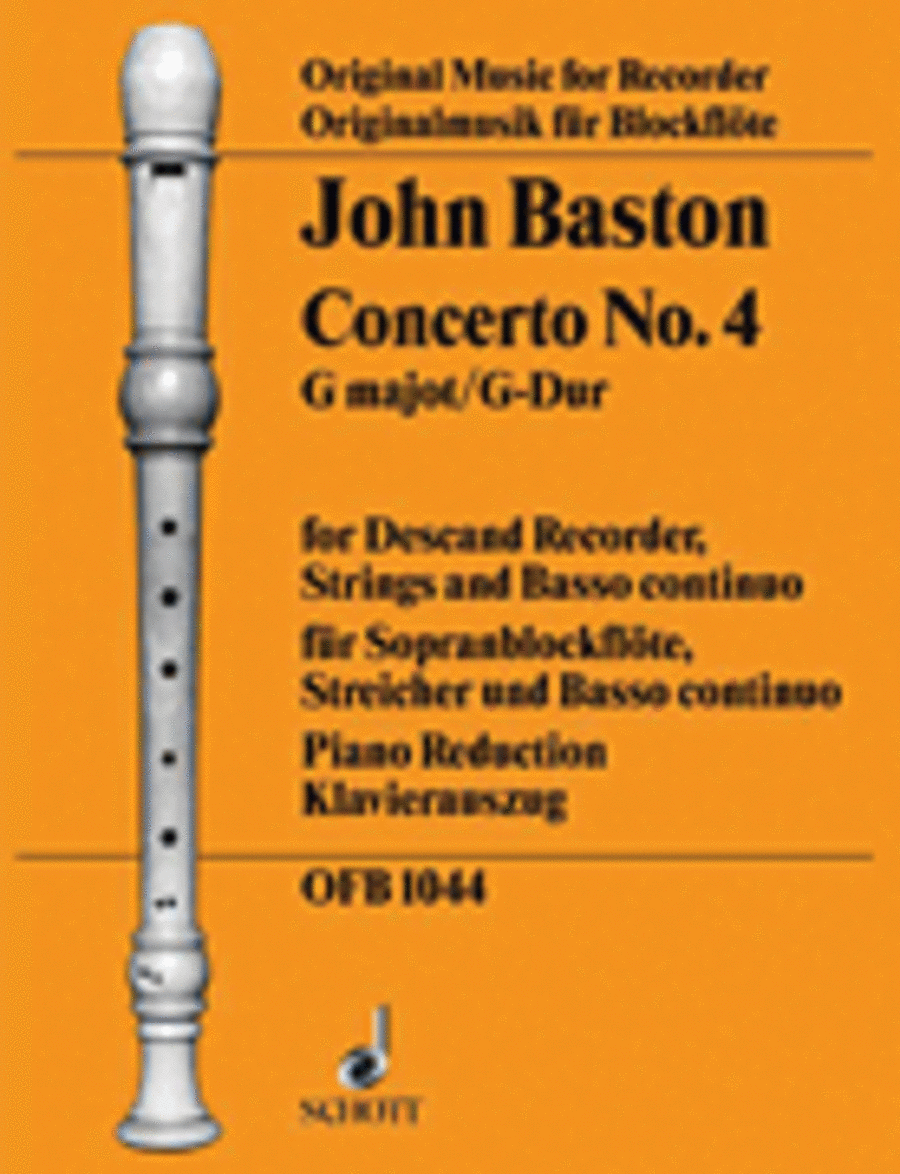
For Soprano Recorder and Piano Reduction. Composed by John Baston. Edited by Bernard Thomas. This edition: Saddle stitching. Sheet music. Originalmusik fur Blockflote (Recorder Library). Classical. Piano Reduction with Solo Part. 16 pages. Duration 4'. Schott Music #OFB1044. Published by Schott Music (HL.49011202).ISBN 9790220117077. UPC: 073999334883. 9.0x12.0x0.049 inches.
With these new editions, all six recorder concertos of John Baston are now available, each with score, piano score and parts. The thor-oughly edited scores follow essentially the first edition printed by John Walsh in London in 1729. Baston was regarded as an excellent recorder and flute player who worked with London opera orchestras in the early 18th century. His easy concertos anticipating the elegant melody of the early classical period enjoy great popularity representing a rewarding task for music school orchestras and advanced recorder players.
- More by this Composer:
- John Baston John Baston Recorder John Baston Soprano Recorder John Baston Basso Continuo
- Artists:
- John Baston
- Publisher:
- Schott Music