18490281
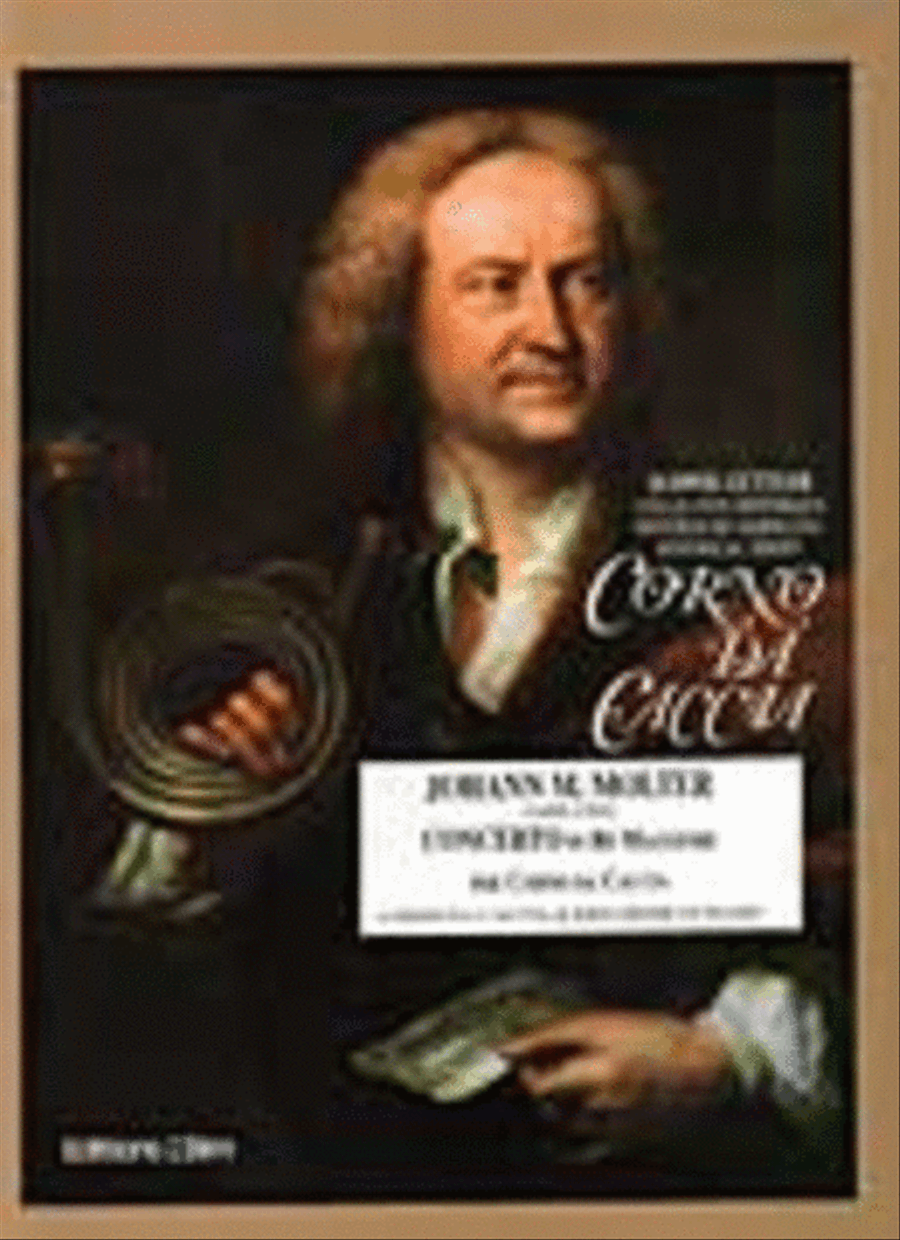
Concerto in Ré maggiore
18490281
18490281
18490281
Copyright Material for Preview Only - Sheet Music Plus
Trumpet (corno da caccia) and piano - Grade 5
SKU: ET.CO10A
Composed by Johann Melchior Molter. Arranged by Ludwig Guttler. Baroque. Piano (reduction). Duration 6'. Editions BIM #CO10A. Published by Editions BIM (ET.CO10A).
ISBN 9790207014801.
Johann Melchior Molter (ca. 1695- 1765), born in the Thuringian principality of Eisenach, became in 1717 a musicien in the service of Margrave Karl Wilhem of Baden-Durlach, who sent him in 1719 to Venice and Rome, where he was especially influenced by the compositions of A. Vivaldi. After his return in 1722, he accepted the position of director of the court orchestra in Durlach and Karlsruhe. After the outbreak of the Polish Succession War (1733), the Margrave moved out of the Karlsruhe residence and dissolved the court orchesta. Molter was sent to the Saxon-Eisenach court, where he stayed (except for a second trip to Italy in 1738) until the dissolution of the court orchestra in 1741. After 1743 we find him again in the service of the Margrave Karl Wilhelm, where as music director he had the task of re-establishing the orchestra. He remained in this post until his death. His large body of instrumental music is stylistically similar to Vivaldi, but already evidences many "gallant" touches, and it is especially notable in the use (rare at that time) of solo instruments as chalumeau and clarinet. However, Molter also wrote many works for the natural trumpet and the corno da caccia, some in extreme high register.
Trumpet (corno da caccia) and piano - Grade 5
SKU: ET.CO10A
Composed by Johann Melchior Molter. Arranged by Ludwig Guttler. Baroque. Piano (reduction). Duration 6'. Editions BIM #CO10A. Published by Editions BIM (ET.CO10A).
ISBN 9790207014801.
Johann Melchior Molter (ca. 1695- 1765), born in the Thuringian principality of Eisenach, became in 1717 a musicien in the service of Margrave Karl Wilhem of Baden-Durlach, who sent him in 1719 to Venice and Rome, where he was especially influenced by the compositions of A. Vivaldi. After his return in 1722, he accepted the position of director of the court orchestra in Durlach and Karlsruhe. After the outbreak of the Polish Succession War (1733), the Margrave moved out of the Karlsruhe residence and dissolved the court orchesta. Molter was sent to the Saxon-Eisenach court, where he stayed (except for a second trip to Italy in 1738) until the dissolution of the court orchestra in 1741. After 1743 we find him again in the service of the Margrave Karl Wilhelm, where as music director he had the task of re-establishing the orchestra. He remained in this post until his death. His large body of instrumental music is stylistically similar to Vivaldi, but already evidences many "gallant" touches, and it is especially notable in the use (rare at that time) of solo instruments as chalumeau and clarinet. However, Molter also wrote many works for the natural trumpet and the corno da caccia, some in extreme high register.
Tell a friend (or remind yourself) about this product. We'll instantly send an email containing product info and a link to it. You may also enter a personal message.
We do not use or store email addresses from this form for any other purpose than sending your share email.
Read our Privacy Policy.
After purchase, you can download your MP3 from your Sheet Music Plus Digital Library - no software installation is necessary! You can also listen to your MP3 at any time in your Digital Library.
After purchase, you can download your Smart Music from your Sheet Music Plus Digital Library - no software installation is necessary! You can also download at any time in your Digital Library.
After purchase you can download your video from your Digital Library. Your video is in XX format and is playable on most pre-installed video players.