Details
- Instrument:
- Double Bass
- Genres:
- Musicals
- Composers:
- Janice Tucker Rhoda
- Publishers:
- Carl Fischer Music
- UPC:
- 798408096984
- ISBN:
- 9780825896989
- Item types:
- Physical
- Instructionals:
- Etudes and Exercises Technique Books
- Artist:
- Janice Tucker Rhoda
- Usages:
- School and Community Sacred
- Number of Pages:
- 64
- Size:
- 9 x 12 inches
- Shipping Weight:
- 0.63 pounds
SKU: CF.BF97
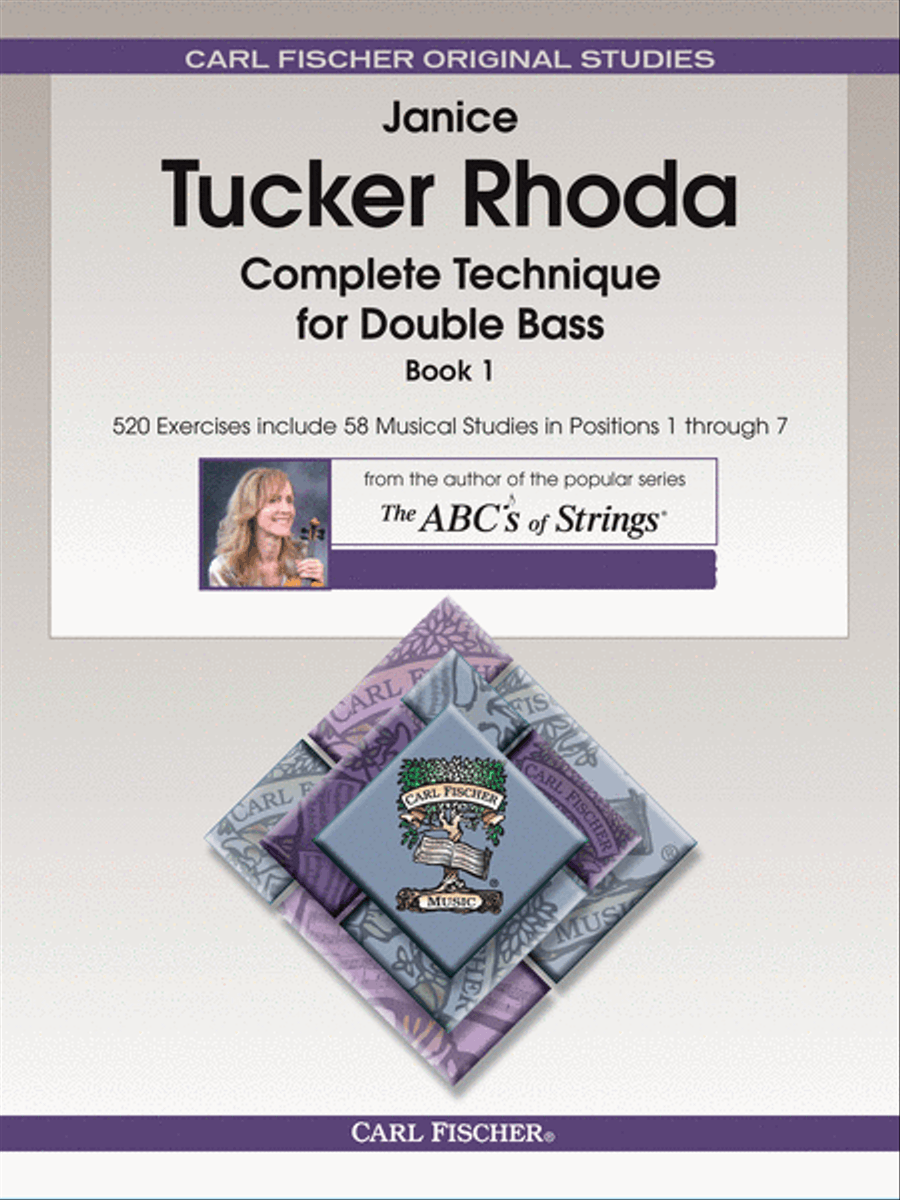
520 Exercises include 58 Musical Studies in Positions 1 through 7. Composed by Janice Tucker Rhoda. This edition: saddle-wire stitch. Sws. Back To School. Methods And Studies. With Standard notation. 64 pages. Carl Fischer Music #BF97. Published by Carl Fischer Music (CF.BF97).ISBN 9780825896989. UPC: 798408096984. 9 x 12 inches.
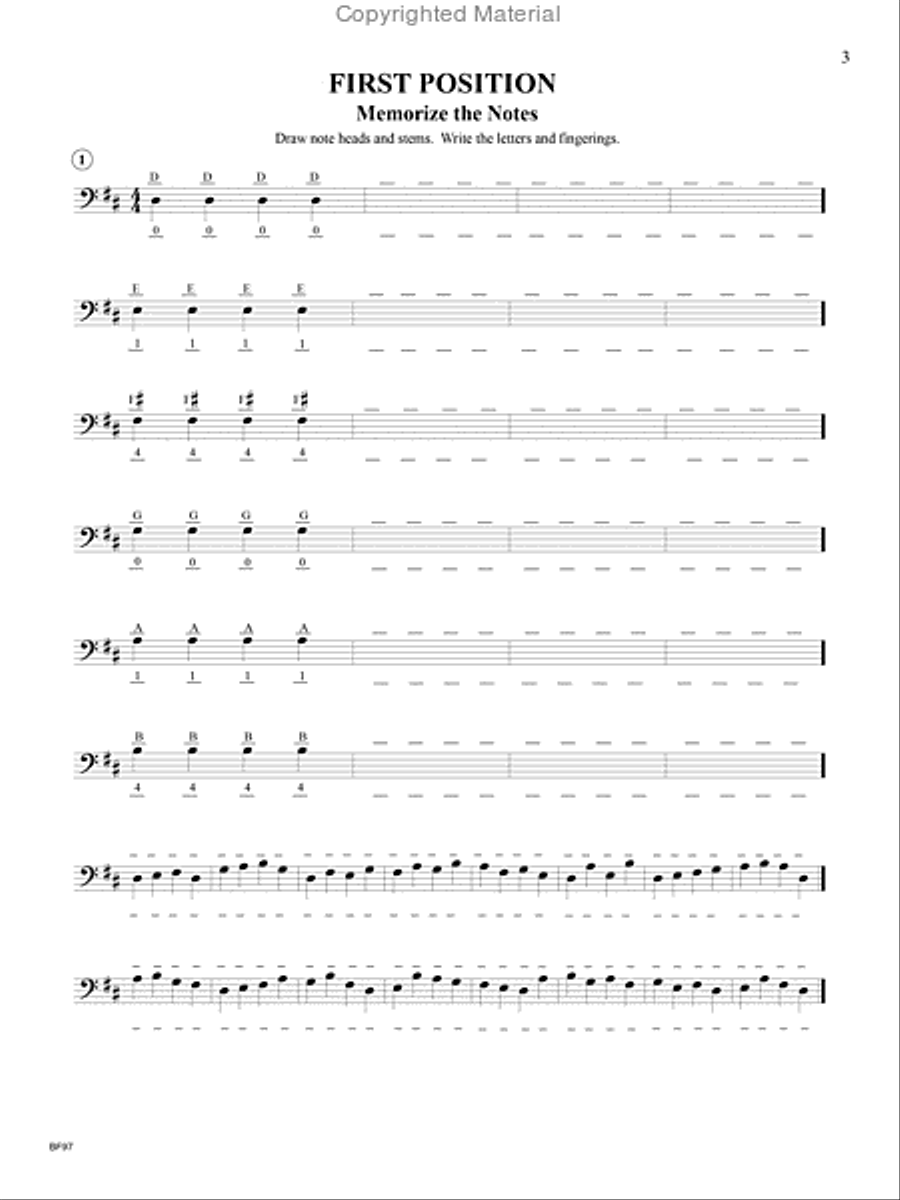
From the author of the popular ABCs of Strings method, Janice Tucker Rhoda’s Complete Technique for Double Bass suits the advanced beginner toxa0upper level student wishing to learn or improve left hand and right bow-arm skills. Starting in first position, and proceeding carefully through the higher positions, this method book uses studies and exercises to demonstrate specific technical ideas.The book starts with solidifying the combination of note reading, rhythm, and bow distribution, then quickly progresses to a variety of bowing techniques and use of positions I - V, explaining the physicality of the left and right hands, arms, elbows, and shoulders. Using a mixture of more melodic studies with purely technical exercises, this book quickly gives players information and confidenceto improve their playing.
Complete Technique for Viola suits the advanced beginner toupper level student wishing to learn or improve skills startingin first position, and proceeding carefully and methodicallythrough higher positions. The order of learning the positionsis traditional. Begin with First Position (I) for stability of basicleft-hand and right bow-arm skills, and follow with ThirdPosition (III), which has easy first finger Octave and secondfinger Unison exercises. Progress to Second Position (II), FifthPosition (V), and Fourth Position (IV). While shifting up thefingerboard, fingers look and feel closer together. This naturallyoccurs when the pitches are in tune. If fingers are placed too farapart, the pitches will sound sharp.The first finger and thumb guide the left hand while shifting fromposition to position. The D-string is the most natural-feelingstring, therefore, this book focuses on learning each new positionon D-string, then A-string, G-string, and lastly C-string.Hammock Swing Technique, utilized throughout, developsflexible body movements. See page 24. Solely stretching lefthandfingers to reach G- and C-string notes can put unnecessary,undue strain on the left hand. Freely moving the arms createsa comfortable balance while playing. Many movements arecontrolled in string instrument playing, but supple muscleaction is paramount.The four most important key aspects of disciplined concentration are:precise playing of pure intonation (playing in tune), steady rhythm,beautiful timbre (sound quality), and stable and secure posture.Pure IntonationIn addition to Checking Octaves, Playing Preparations is adevelopmental tool to use regularly. See page 20.Be sure your viola is well-tuned before every practice session.Tuning the strings before placing it in the case after sessionshelps keep it reliably in tune.Quality Practice versus Quantity PracticePlay slowly and accurately daily with a metronome. Progress throughthe suggested tempos as your technique develops. See page 4.Patient, accurate repetition is the key to developing correct, lasting,quality playing. Hasty, inattentive repetition instills mistakesand habits difficult to rectify later. It is most advantageous topractice perfectly for 30 minutes, rather than 60 minutes withimperfections.400 Exercises with 45 Musical StudiesStrengthen left-hand fingers, and improve dexterity of bothleft-hand, and right-hand and bow-arm techniques. Exercisesfor double-stops, quick fingers, rolling fingers, bow balancing,slow bow control, finger substitution, left-hand pizzicato, balletof shifting, all incorporate valuable steps in development. Thestudies include expressive text and dynamics, and preparestudents for solo student concertos, sonatas, and show pieces.
- More by this Composer:
- Janice Tucker Rhoda Janice Tucker Rhoda Double Bass Janice Tucker Rhoda Piano Accompaniment Janice Tucker Rhoda Violin
- Instrument:
- Strings Double Bass
- Artists:
- Janice Tucker Rhoda
- Publisher:
- Carl Fischer Music
Ratings + Reviews
5 Rating
1 review
John
Sep 17, 2016
If you want to improve your playing fast and not cut corners I'd highly recommend getting this book. It's been a great refresher with everything from the beginning up through thumb position at the end. I've played a few years and wanted to improve but couldn't find anything that wasn't boring or kid like. This book is interesting, comprehensive and fun, so fits the bill.