Details
- Instrument:
- Clarinet
- Ensembles:
- Chamber Orchestra Clarinet Quintet
- Composers:
- Thomas Oboe Lee
- Publishers:
- Thomas Oboe Lee
- Series:
- ArrangeMe
- Format:
- Set of Parts Score and Parts
- Item types:
- Digital
- Level:
- Late Intermediate
- Artist:
- Thomas Oboe Lee
- Usages:
- School and Community
- Number of Pages:
- 28
SKU: A0.869206
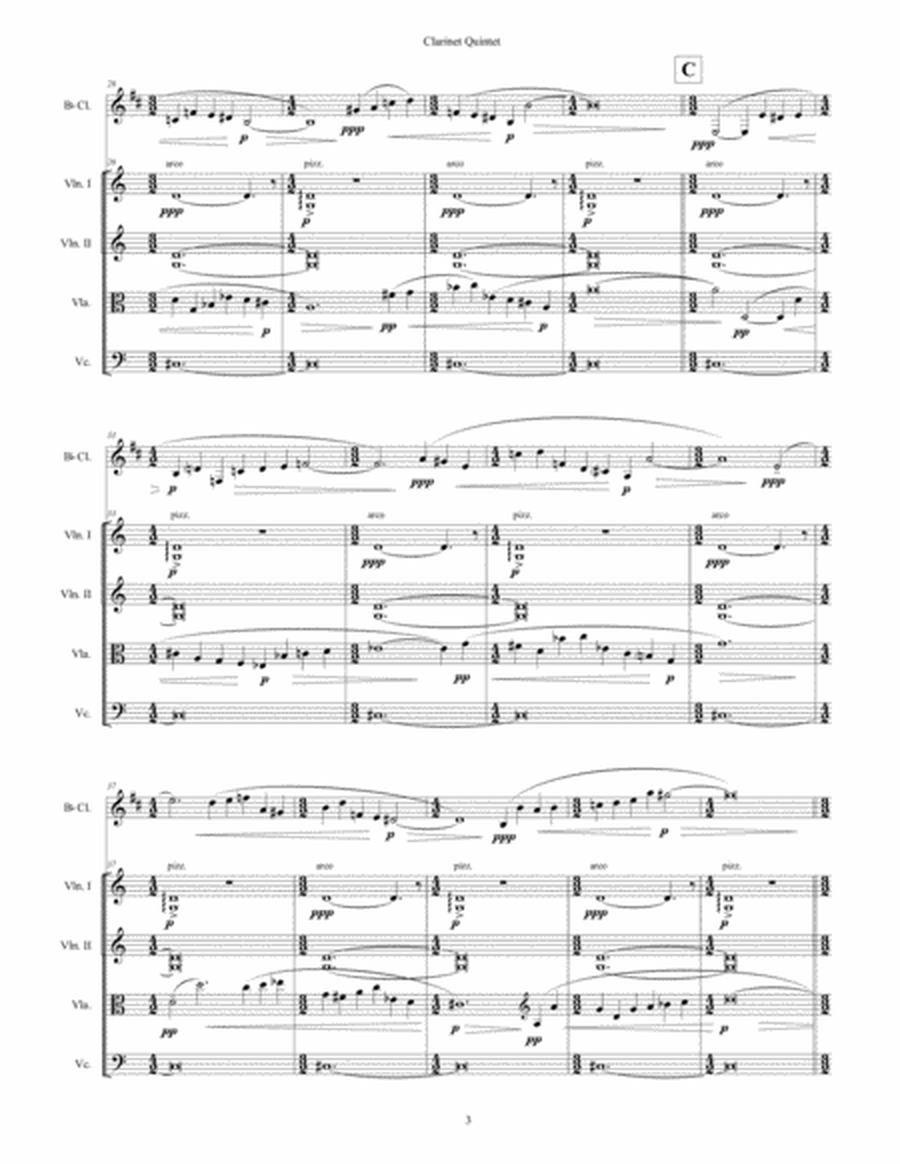
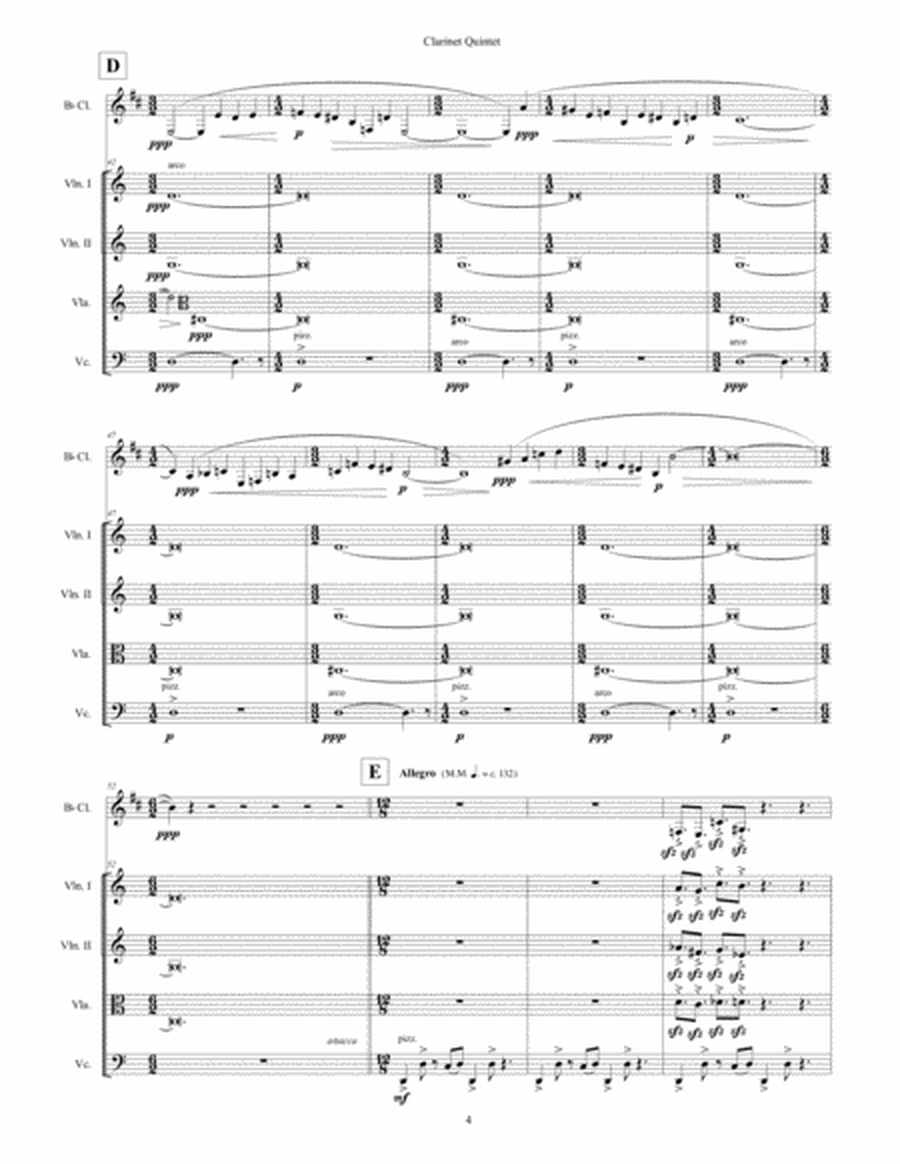
Composed by Thomas Oboe Lee. 20th Century,Baroque,Classical,Contemporary,Romantic Period. Score and parts. With Allegro III. 28 pages. Thomas Oboe Lee #30933. Published by Thomas Oboe Lee (A0.869206).Program note.
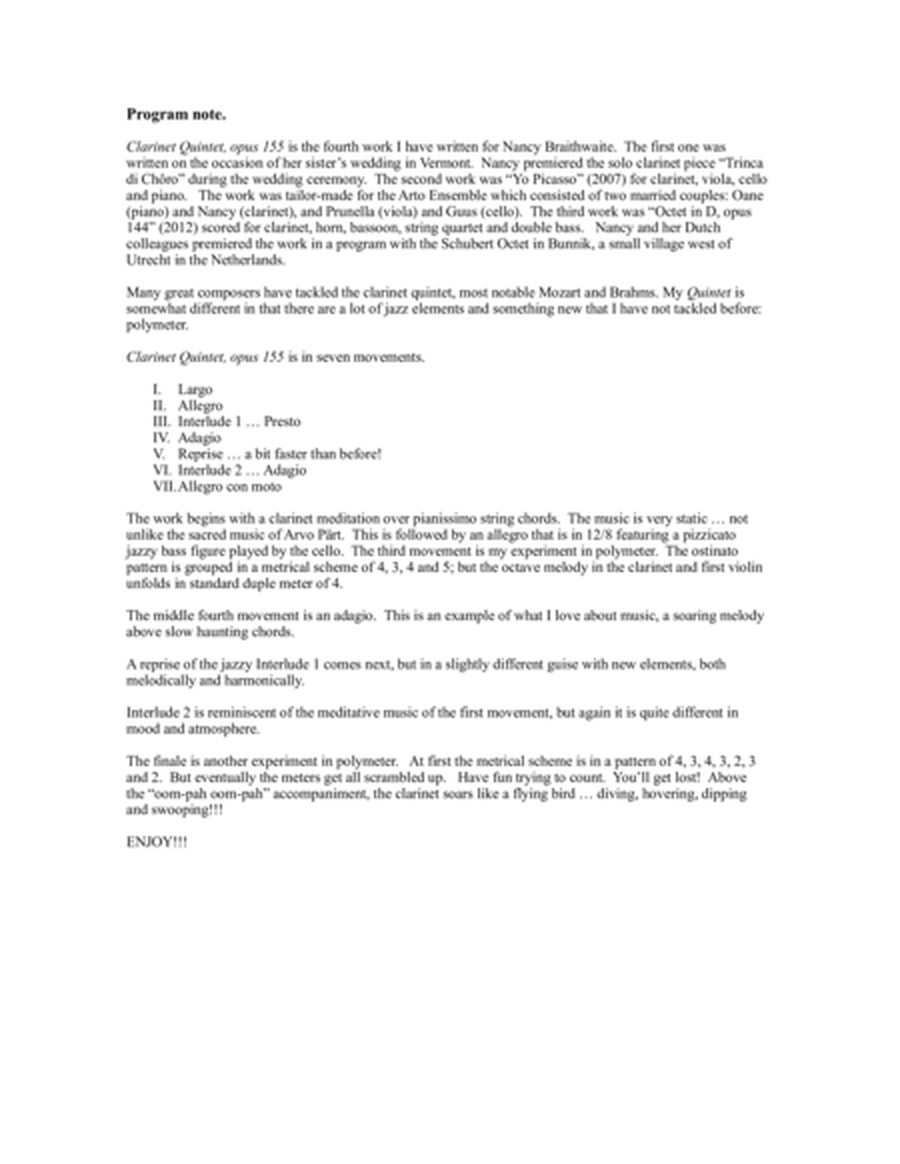
Clarinet Quintet, opus 155 is the fourth work I have written for Nancy Braithwaite. The first one was written on the occasion of her sister’s wedding in Vermont. Nancy premiered the solo clarinet piece "Trinca di Chôro" during the wedding ceremony. The second work was "Yo Picasso" (2007) for clarinet, viola, cello and piano. The work was tailor-made for the Arto Ensemble which consisted of two married couples: Oane (piano) and Nancy (clarinet), and Prunella (viola) and Guus (cello). The third work was "Octet in D, opus 144" (2012) scored for clarinet, horn, bassoon, string quartet and double bass. Nancy and her Dutch colleagues premiered the work in a program with the Schubert Octet in Bunnik, a small village west of Utrecht in the Netherlands. Many great composers have tackled the clarinet quintet, most notable Mozart and Brahms.
My Quintet is somewhat different in that there are a lot of jazz elements and something new that I have not tackled before: polymeter.
Clarinet Quintet, opus 155 is in seven movements.
I. Largo
II. Allegro
III. Interlude 1 … Presto
IV. Adagio
V. Reprise … a bit faster than before!
VI. Interlude 2 … Adagio
VII. Allegro con moto
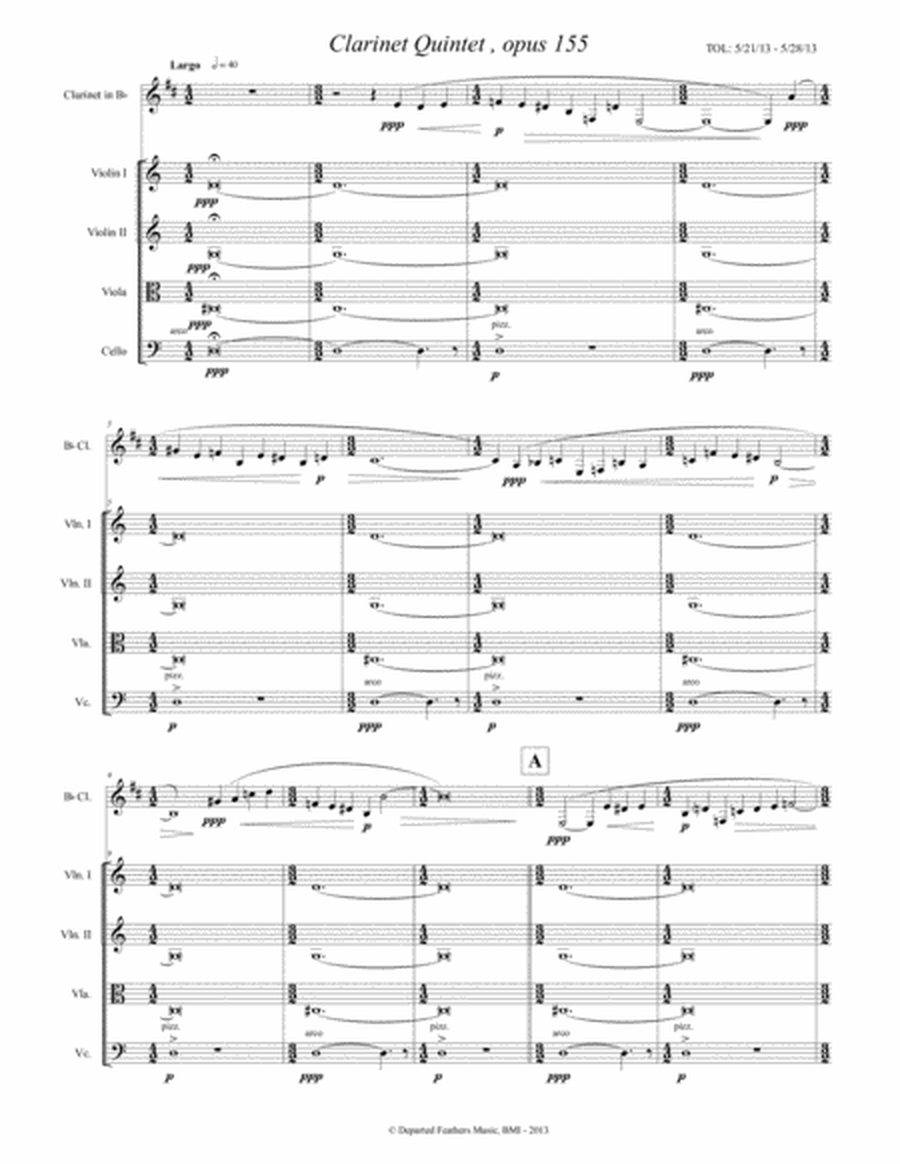
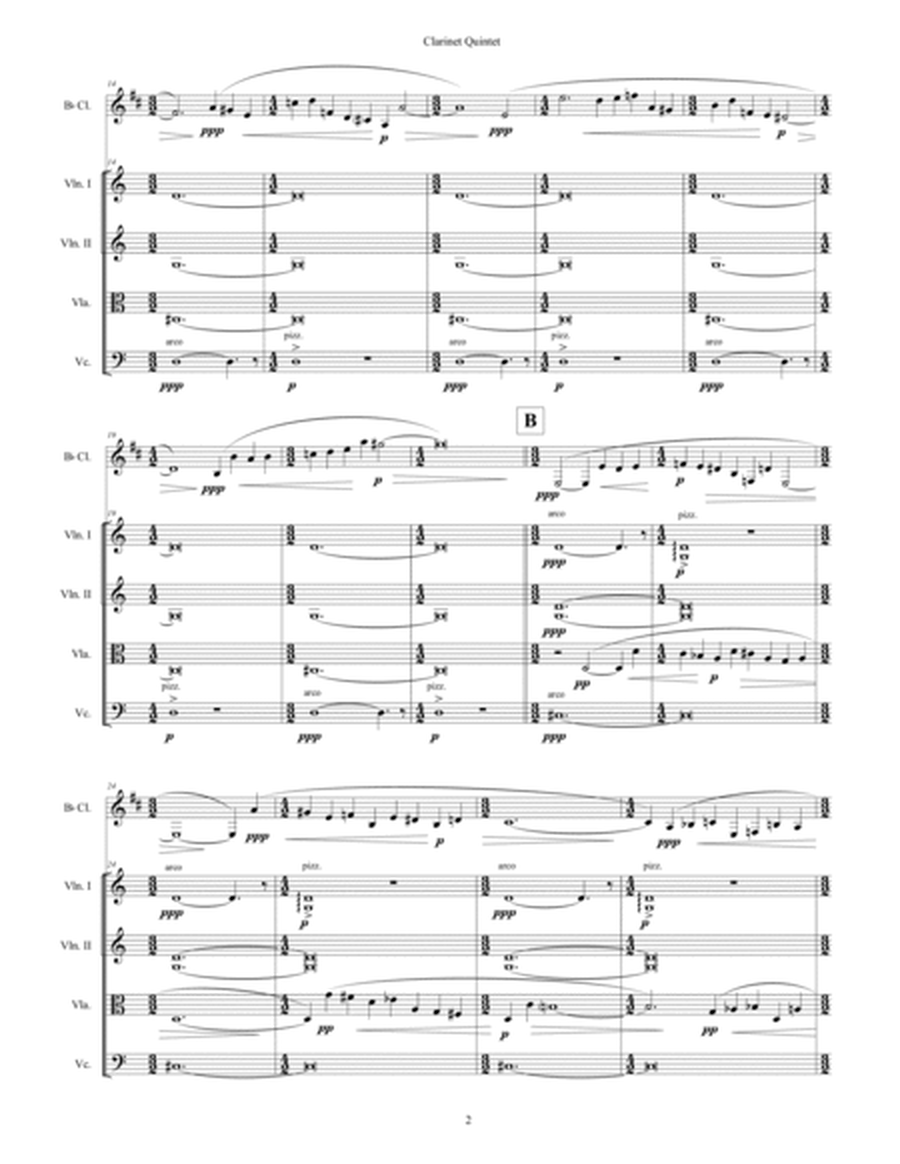
The work begins with a clarinet meditation over pianissimo string chords. The music is very static … not unlike the sacred music of Arvo Pärt. This is followed by an allegro that is in 12/8 featuring a pizzicato jazzy bass figure played by the cello. The third movement is my experiment in polymeter. The ostinato pattern is grouped in a metrical scheme of 4, 3, 4 and 5; but the octave melody in the clarinet and first violin unfolds in standard duple meter of 4. The middle fourth movement is an adagio. This is an example of what I love about music, a soaring melody above slow haunting chords. A reprise of the jazzy Interlude 1 comes next, but in a slightly different guise with new elements, both melodically and harmonically. Interlude 2 is reminiscent of the meditative music of the first movement, but again it is quite different in mood and atmosphere. The finale is another experiment in polymeter. At first the metrical scheme is in a pattern of 4, 3, 4, 3, 2, 3 and 2. But eventually the meters get all scrambled up. Have fun trying to count. You’ll get lost! Above the "oom-pah oom-pah" accompaniment, the clarinet soars like a flying bird … diving, hovering, dipping and swooping!!!
ENJOY!!!
Audio link. Copy and paste the URL link into your browser.
https://thomasoboelee.bandcamp.com/album/clarinet-quintet-opus-155-2013
Video link: https://youtu.be/2fByM3tEAqc
About ArrangeMe
This product was created by a member of ArrangeMe, Hal Leonard's self-publishing community for independent composers, arrangers, and songwriters. Discover unique arrangements of popular titles and original compositions from diverse creators. The length, difficulty, and pricing are determined by the arranger or composer.
About Digital Downloads
Digital Downloads let you instantly access sheet music on your computer, tablet, or mobile device. Print your sheet music anywhere, anytime, or play it straight from your device—no internet connection is required after download.
Each Digital Download includes a watermark with your name, purchase date, and the number of copies purchased. You may only print or use the number of copies purchased. Redistribution or unauthorized printing is prohibited.
- More by this Composer:
- Thomas Oboe Lee Thomas Oboe Lee Cello Thomas Oboe Lee Piano Thomas Oboe Lee Violin
- ArrangeMe:
- Thomas Oboe Lee
- Series:
- ArrangeMe
- Artists:
- Thomas Oboe Lee
- Ensemble:
- Chamber Orchestra Clarinet Quintet
- Publisher:
- Thomas Oboe Lee