Details
- Instrument:
- Piano Violin Solo
- Genres:
- Baroque Period March
- Publishers:
- Breitkopf and Haertel
- ISBN:
- 9790004164044
- Format:
- Reduction
- Item types:
- Physical
- Usages:
- School and Community
- Number of Pages:
- 24
- Size:
- 9 x 12 inches
- Shipping Weight:
- 0.34 pounds
Violin, piano (solo: vl – 2.2.2.2 – 2.0.2.0 – timp – org – str – bc)
SKU: BR.EB-5403
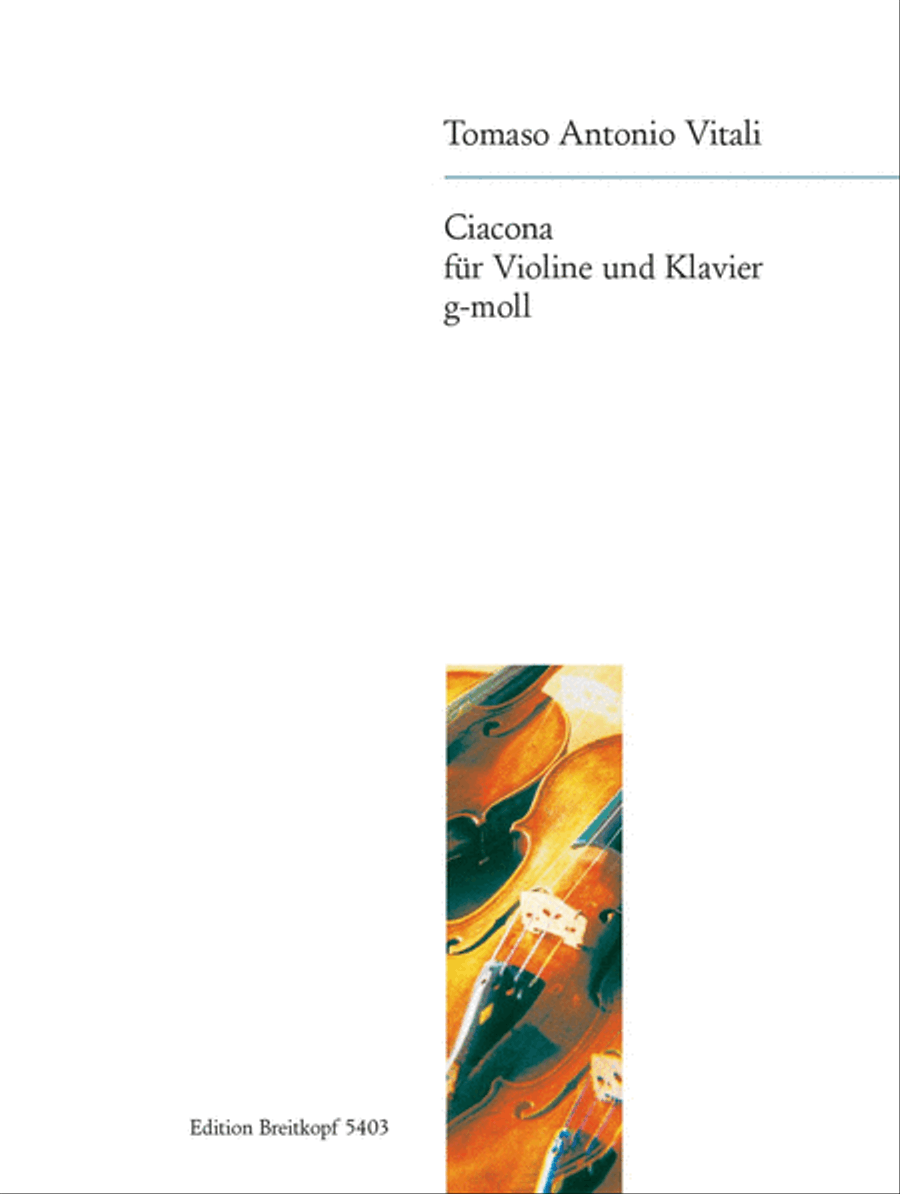
Composed by Tomaso Antonio Vitali. Edited by Ferdinand David. Arranged by Léopold (KA) Charlier. Solo instruments; stapled. Edition Breitkopf. Solo concerto; Dances/marches; Baroque. Piano reduction. 24 pages. Duration 10:00. Breitkopf and Haertel #EB 5403. Published by Breitkopf and Haertel (BR.EB-5403).ISBN 9790004164044. 9 x 12 inches.
Tomaso Antonio Vitali was an Italian violin virtuoso and chapel master who spent most of his life in Bologna and Modena. He composed mostly works for high strings with continuo accompaniment. Unfortunately, only a copy by another scribe has survived of the Chaconne in G minor, which probably also served as a model for Ferdinand David and Leopold Charlier. Although the baroque style was largely lost in their transcription, the musical idea remained intact and was transferred to the aesthetics of the 19th century. This mixture makes the work very popular with audiences and performers to this day, both in the scoring for violin and in Friedrich Hermann's arrangement for viola.
- Instrument:
- Piano and Keyboard Piano Strings Violin Violin Solo
- Artists:
- Ferdinand David
- Publisher:
- Breitkopf and Haertel