Details
- Instrument:
- Piano Accompaniment Alto Saxophone
- Ensembles:
- Small Ensemble
- Genres:
- Romantic Period 20th Century Latin Contemporary
- Composers:
- Thomas Oboe Lee
- Publishers:
- Thomas Oboe Lee
- Series:
- ArrangeMe
- Format:
- Set of Parts Score and Parts
- Item types:
- Digital
- Level:
- Late Intermediate
- Artist:
- Thomas Oboe Lee
- Usages:
- School and Community
- Number of Pages:
- 35
SKU: A0.869214
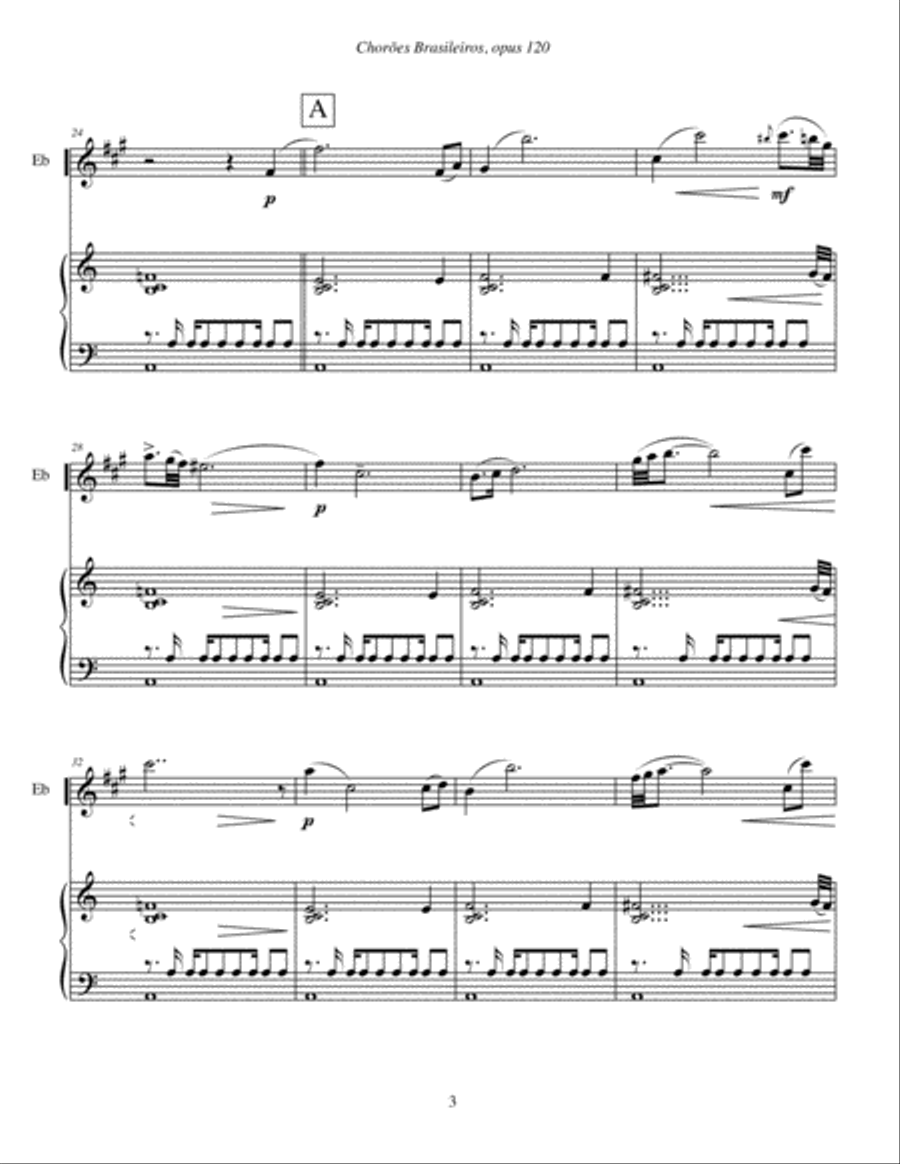
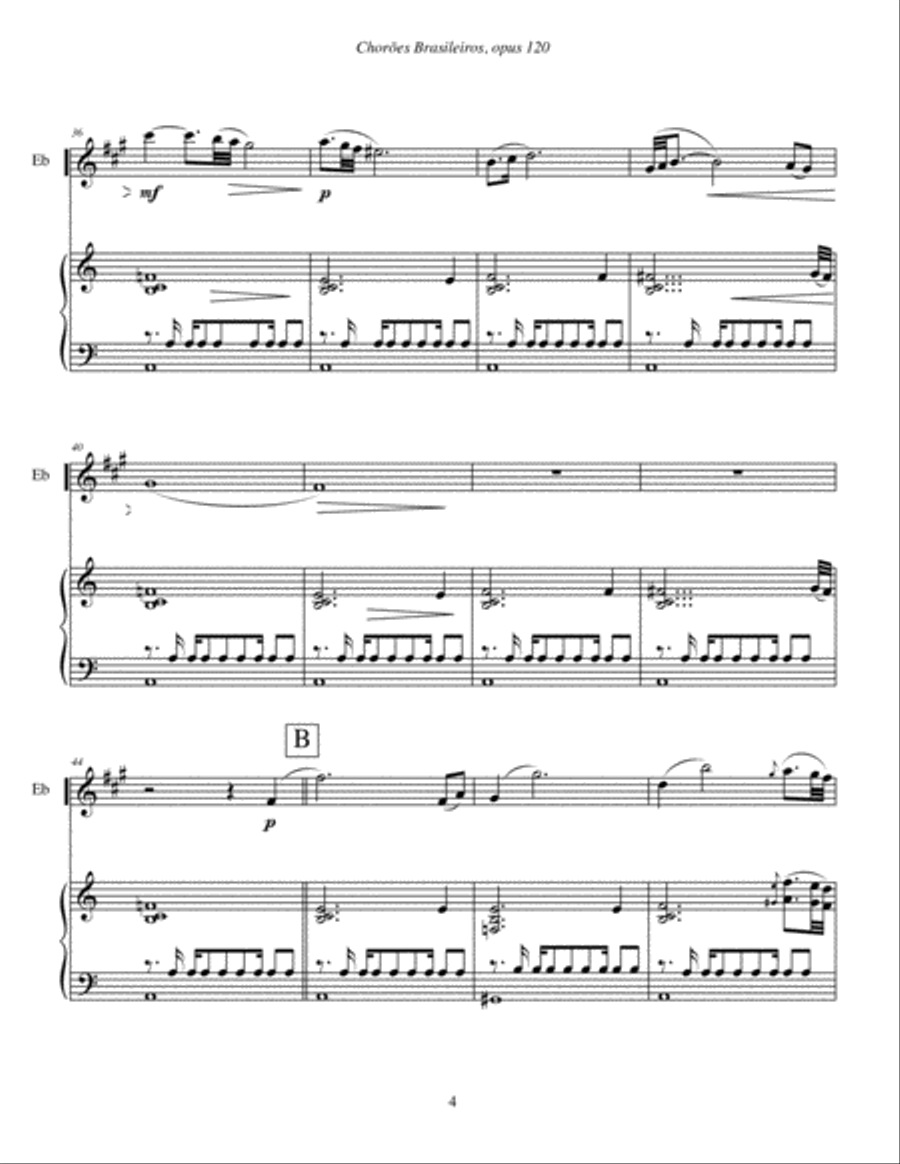
Composed by Thomas Oboe Lee. 20th Century,Classical,Contemporary,Latin,Romantic Period. Score and parts. With Jacob do Bandolim – choro samba III. 35 pages. Thomas Oboe Lee #3915. Published by Thomas Oboe Lee (A0.869214).Program note:
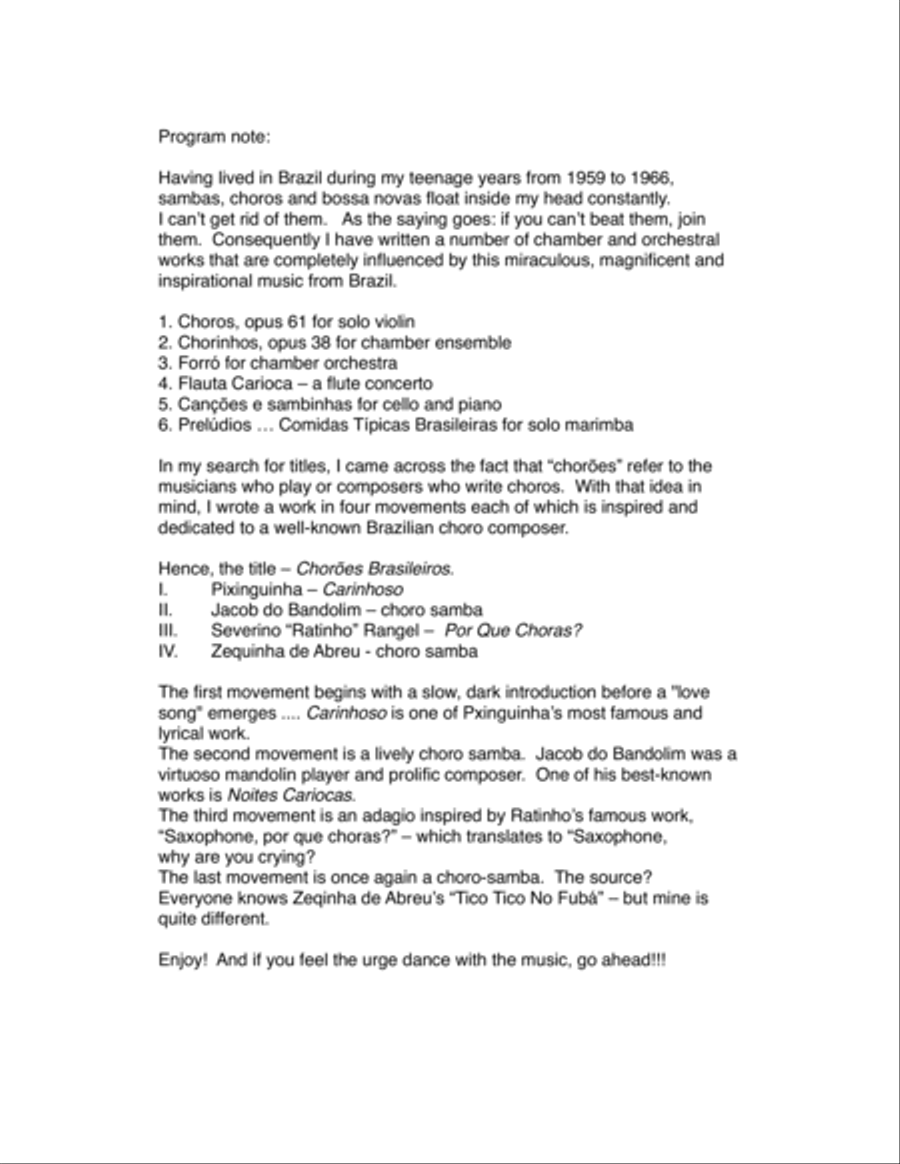
Having lived in Brazil during my teenage years from 1959 to 1966, sambas, choros and bossa novas float inside my head constantly. I can’t get rid of them. As the saying goes: if you can’t beat them, join them. Consequently I have written a number of chamber and orchestral works that are completely influenced by this miraculous, magnificent and inspirational music from Brazil.
1. Choros, opus 61 for solo violin
2. Chorinhos, opus 38 for chamber ensemble
3. Forró for chamber orchestra
4. Flauta Carioca – a flute concerto
5. Canções e sambinhas for cello and piano
6. Prelúdios … Comidas Típicas Brasileiras for solo marimba
In my search for titles, I came across the fact that "chorões" refer to the musicians who play or composers who write choros. With that idea in mind, I wrote a work in four movements each of which is inspired and dedicated to a well-known Brazilian choro composer. Hence, the title – Chorões Brasileiros.
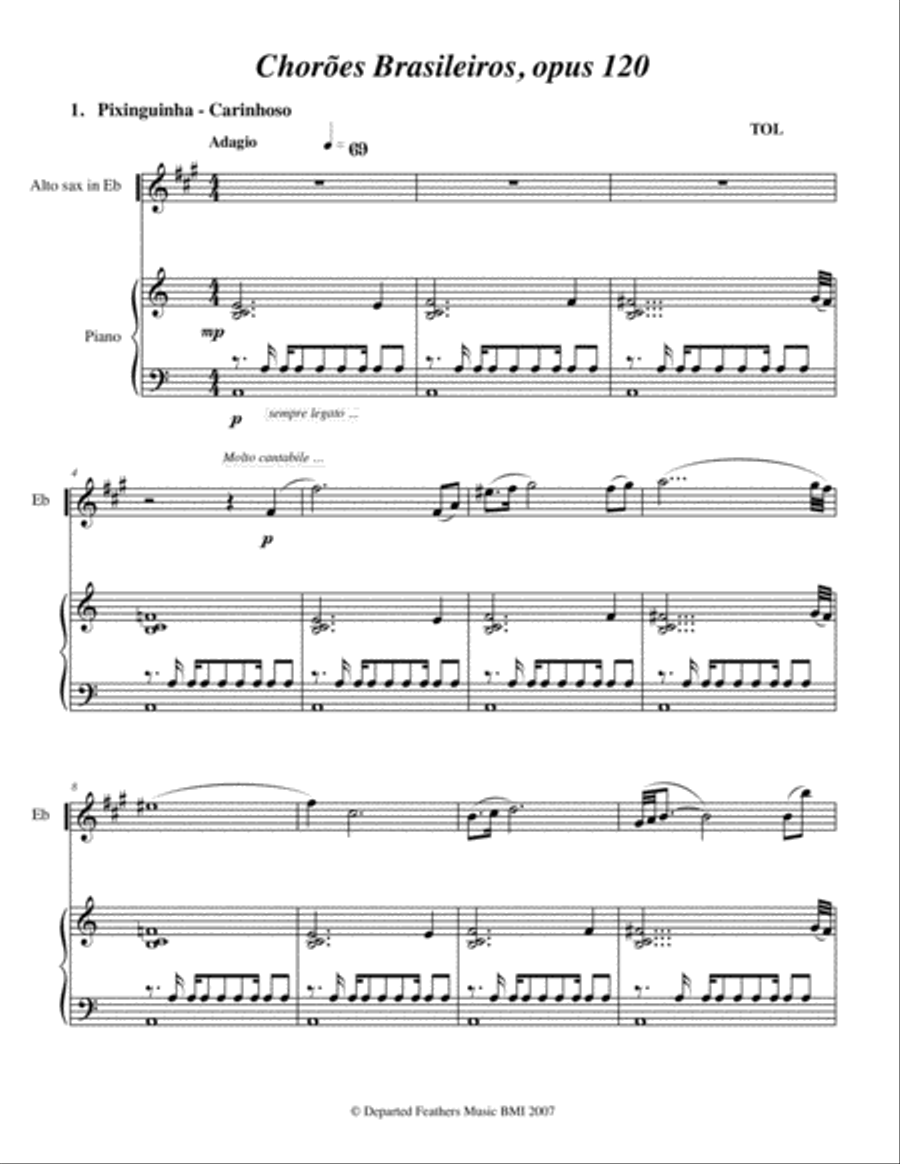
I. Pixinguinha – Carinhoso
II. Jacob do Bandolim – choro samba
III. Severino "Ratinho" Rangel – Por Que Choras?
IV. Zequinha de Abreu - choro samba
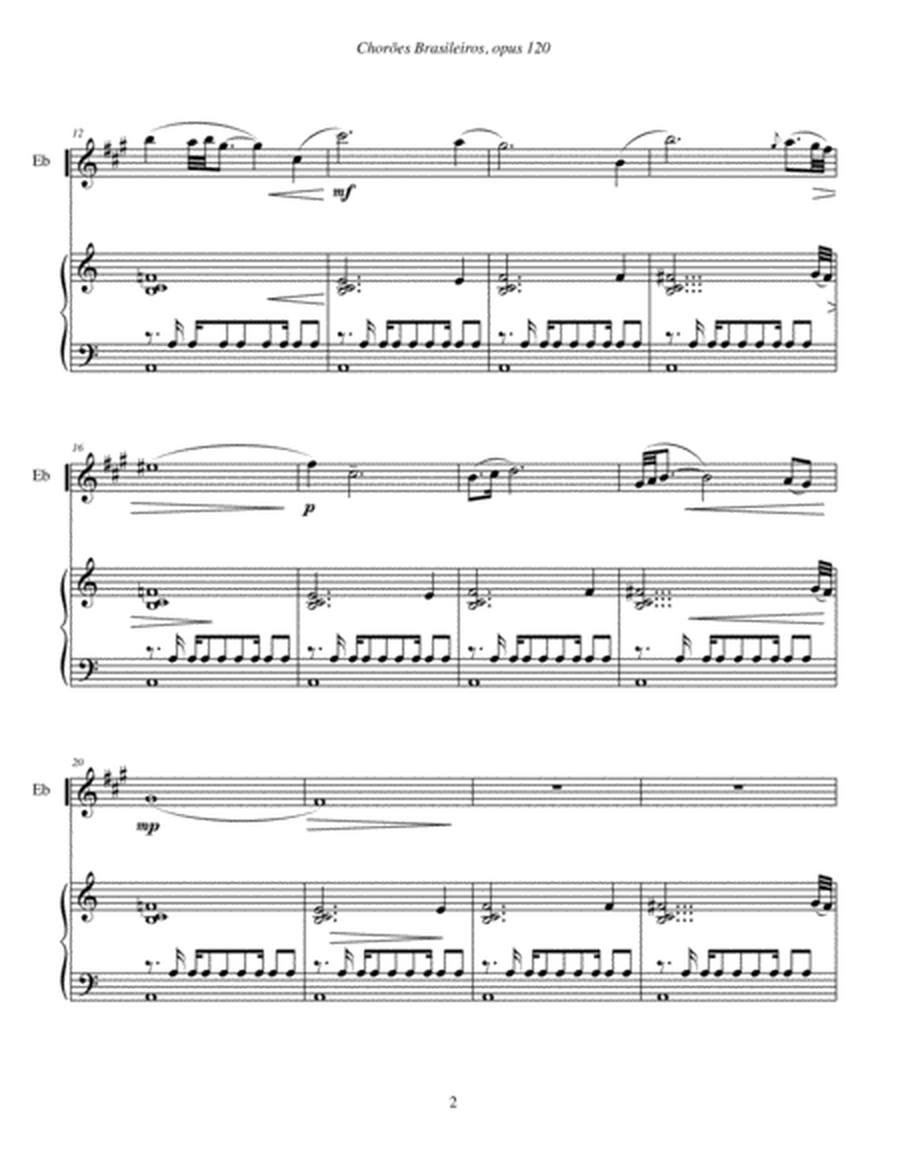
The first movement begins with a slow, dark introduction before a "love song" emerges .... Carinhoso is one of Pxinguinha’s most famous and lyrical work. The second movement is a lively choro samba. Jacob do Bandolim was a virtuoso mandolin player and prolific composer. One of his best-known works is Noites Cariocas. The third movement is an adagio inspired by Ratinho’s famous work, "Saxophone, por que choras?" – which translates to "Saxophone, why are you crying? The last movement is once again a choro-samba. The source? Everyone knows Zeqinha de Abreu’s "Tico Tico No Fubá" – but mine is quite different.
Enjoy! And if you feel the urge dance with the music, go ahead!!!
About ArrangeMe
This product was created by a member of ArrangeMe, Hal Leonard's self-publishing community for independent composers, arrangers, and songwriters. Discover unique arrangements of popular titles and original compositions from diverse creators. The length, difficulty, and pricing are determined by the arranger or composer.
About Digital Downloads
Digital Downloads let you instantly access sheet music on your computer, tablet, or mobile device. Print your sheet music anywhere, anytime, or play it straight from your device—no internet connection is required after download.
Each Digital Download includes a watermark with your name, purchase date, and the number of copies purchased. You may only print or use the number of copies purchased. Redistribution or unauthorized printing is prohibited.
- More by this Composer:
- Thomas Oboe Lee Thomas Oboe Lee Cello Thomas Oboe Lee Piano Thomas Oboe Lee Violin
- ArrangeMe:
- Thomas Oboe Lee
- Series:
- ArrangeMe
- Artists:
- Thomas Oboe Lee
- Ensemble:
- Small Ensemble
- Publisher:
- Thomas Oboe Lee