


Details
- Ensembles:
- Concert Band
- Genres:
- Traditional Pop Tango
- Composers:
- Leroy Anderson
- Publishers:
- Molenaar Edition
- Series:
- Molenaar Light Concert Pieces
- Format:
- Set of Parts Score and Parts
- Item types:
- Physical
- Level:
- Grade 3
- Musical forms:
- Tango
- Artist:
- Leroy Anderson
- Usages:
- School and Community
- Shipping Weight:
- 0.34 pounds
SKU: ML.010994040
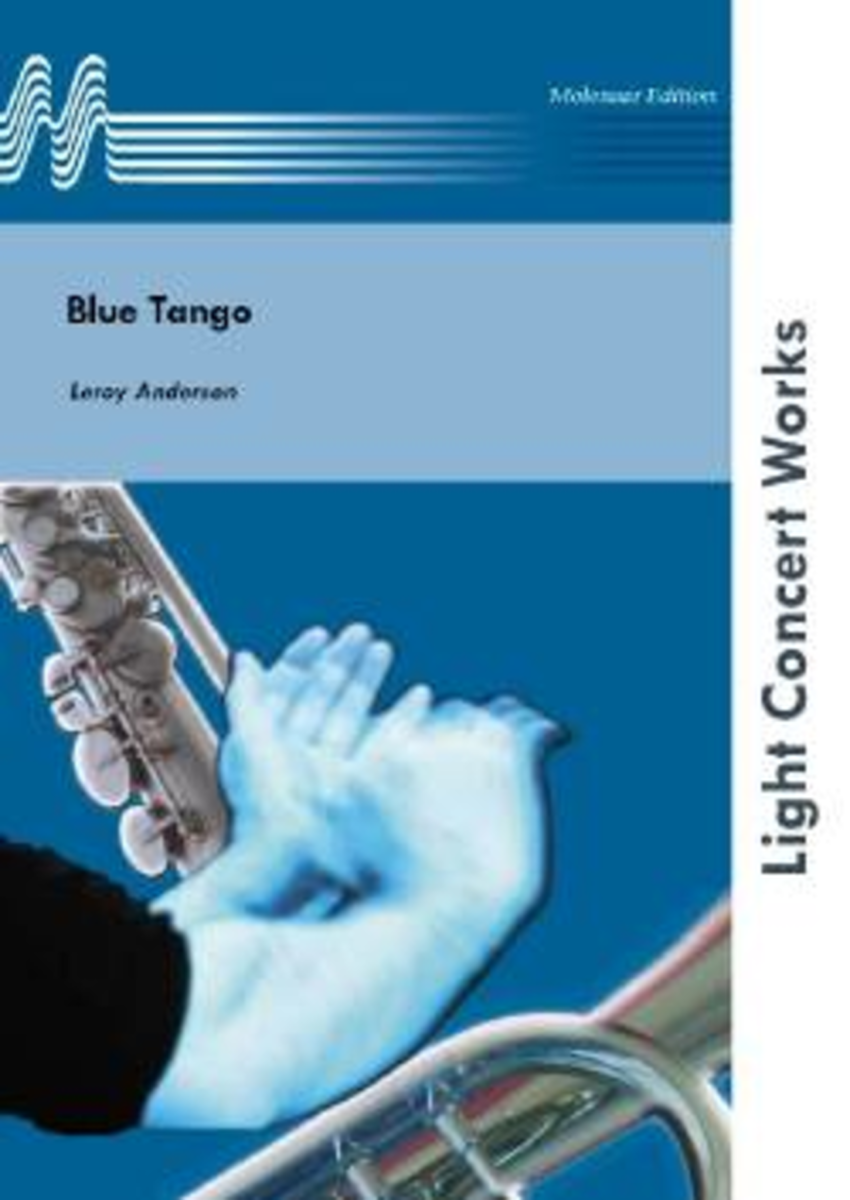
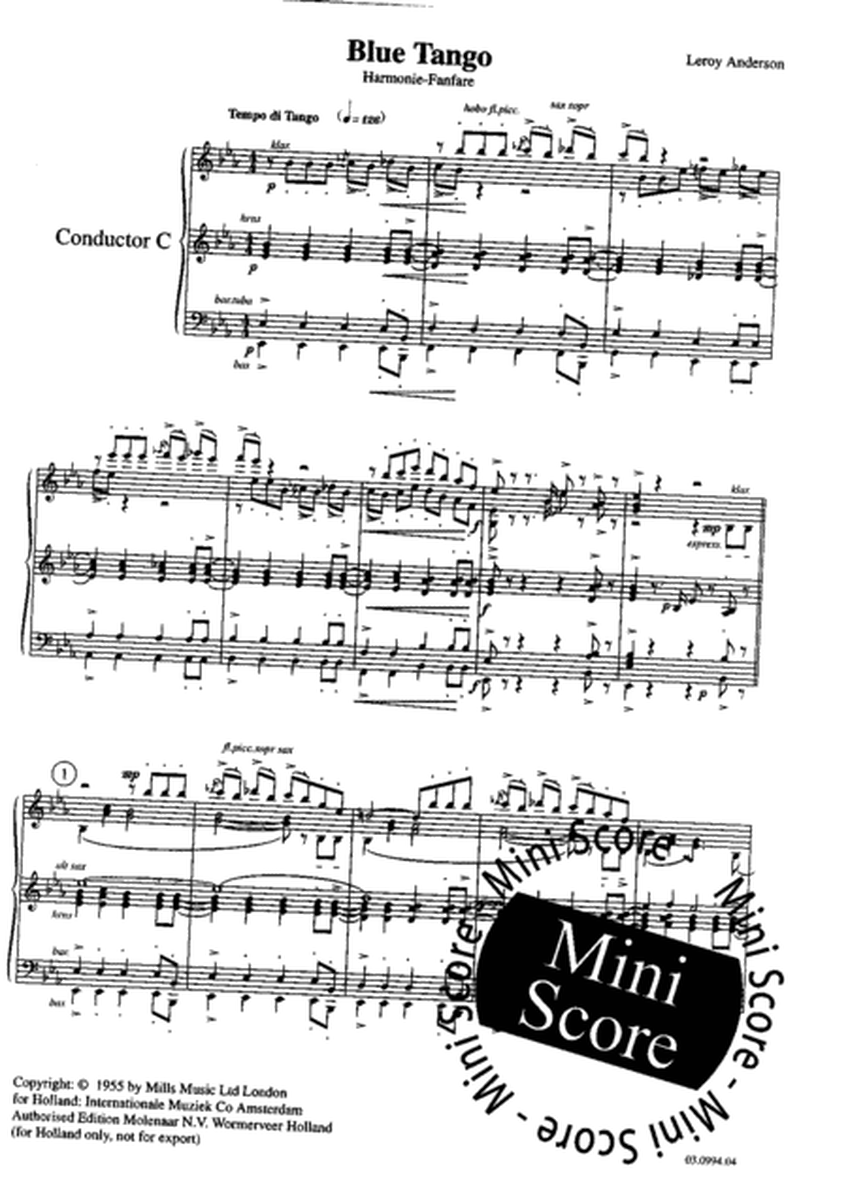
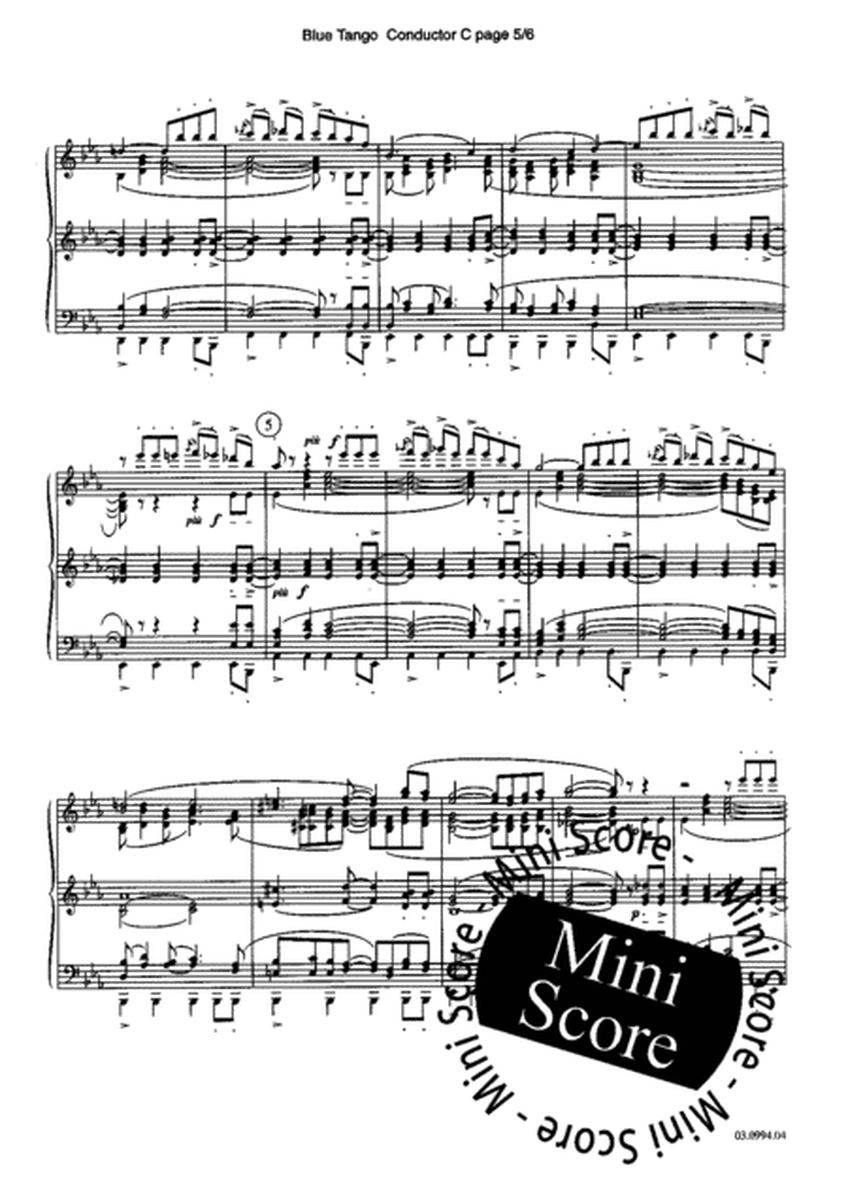
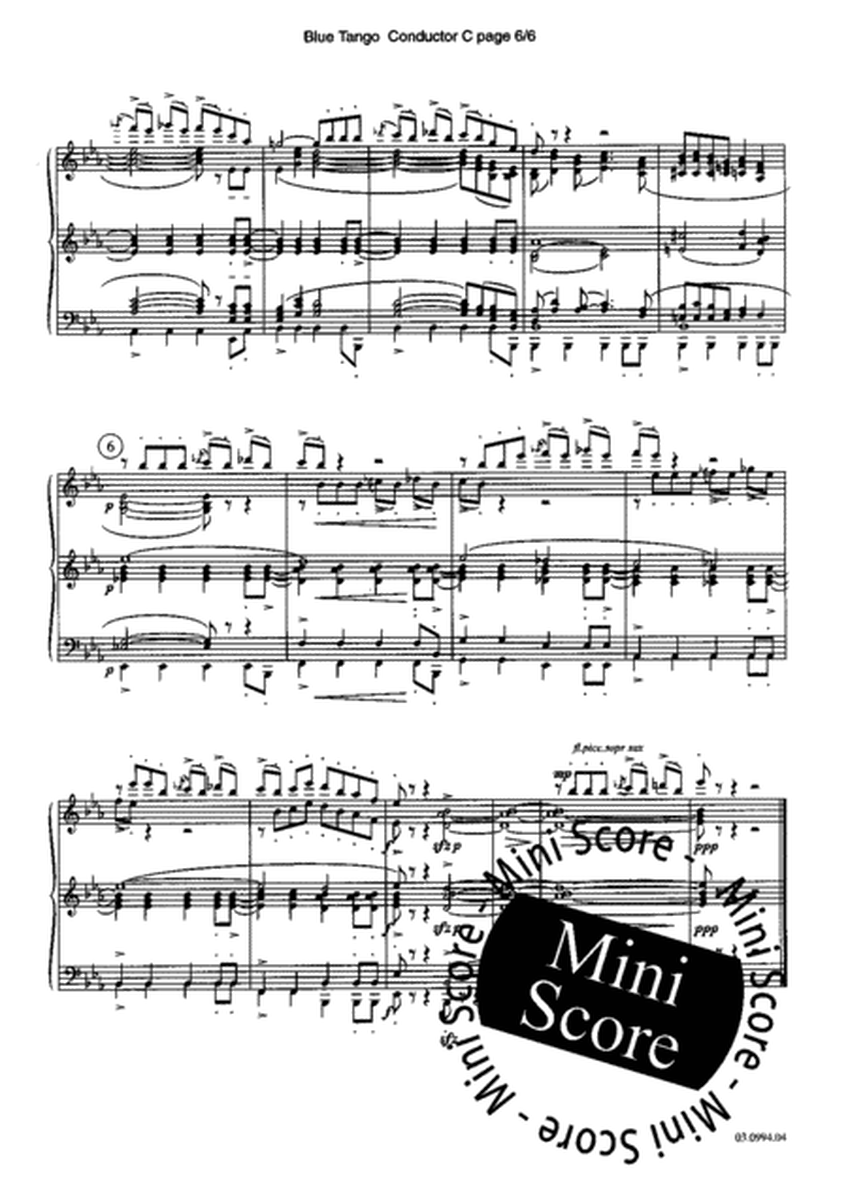
Composed by Leroy Anderson. Catalogue Light Concert Works/Novelties/Arrangements of Modern Light Music/Tango. Light Concert Pieces. Recorded on The Best of Novelties (ML.311056720). Full set. Duration 2 minutes, 49 seconds. Molenaar Edition #010994040. Published by Molenaar Edition (ML.010994040).Leroy Anderson, zoon van Zweedse immigranten studeerde muziek en vreemde talen aan de befaamde Harvard universiteit alvorens een schitterende muzikale loopbaan aan te vatten. Hij was o.m. kerkorgelist, arrangeur van het beroemde 'Boston Pops Orchestra' van dirigent Arthur Fiedler en een schitterend dirigent en componist. Hij werd één van de kampioenen van de muzikale 'novelty'. Denken we maar aan zijn composities 'Belle of the Ball', Bugler's Holiday', 'Sandpaper Ballet', 'The Syncopated Clock' en 'The Typewriter' (Alle ook bij Molenaar Edition uitgegeven!). In de jaren 1947/48 flitste een melodie door Andersons hoofd, het werd zijn wereldberoemde 'Blue Tango'. Hij koos als titel 'tango azul', maar dit leek niet commercieel. (Meestal koos Anderson eerst een titel en componeerde nadien hier deed hij het omgekeerde). De firma Decca bracht dit werk uit op de tweede Anderson elpee in oktober 1951. Tegen alle verwachtingen in werd Blue Tango hét grote succes en klom naar de Top Tien. Tussen januari en half juni 1952 werden één miljoen platen met dit werkje verkocht. Het was het allereerste instrumentale stukje dat aan de top van de hitparade geraakte; bovendien bleef Blue Tango zeven weken lang nummer één en in het totaal 15 weken lang in de Top Tien.
Leroy Anderson was the son of Swedish immigrants. He studied music and foreign languages at the famous Harvard University before starting a brilliant musical career. He was a great church organ player, a fine conductor a great composer and mostly the successful arranger for the famous 'Boston Pops Orchestra' conducted by Arthur Fiedler. He turned into one of the very big champions of the musical 'novelty' with hits such as 'Belle of the Ball', 'Bugler's Holiday', 'Sandpaper Ballet', 'The Syncopated Clock' and 'The Typewriter' (all these items have also been published by Molenaar Edition). In was in 1947/48 that Anderson was obsessed by a tune which was to become his world famous 'Blue Tango'. He choose 'tango azul' as title, but this did not sound very commercial. (Usually Anderson first choose a title and then composed a piece, but in this case he did the opposite). The Decca label released this piece on the second Anderson long playing record in october 1951. Unexpectedly Blue Tango became the big success and made its way into the Top ten. Between january and halfway june 1952 one million records with this tune were sold. It was the very first instrumental piece to reach the top of the hit parade: it was number one for seven weeks and remained fifteen weeks in the top of the charts.
Leroy Anderson, fils d'immigrés suédois, étudie la musique et les langues à la célèbre université de Harvard avant d'entamer une éblouissante carrière musicale. Il est organiste d'église, puis arrangeur du célèbre 'Boston Pops Orchestra' dirigé par Arthur Fiedler. Il est également un brillant chef d'orchestre, tout en étant un compositeur de musique légère de grand talent. Il devient un champi on des 'novelties' avec des oeuvres telles 'Belle of the Ball', 'Bugler's Holiday', 'Sandpaper Ballet', 'The Syncopated Clock' et 'The Typewriter' (toutes éditées chez Molenaar!). C'est vers 1947/48 qu'une mélodie lui passe par la tête et ainsi naît le 'Blue Tango' (le Tango Bleu). Il choisit d'abord comme titre 'tango azul', mais abandonne bientôt ce titre qui ne lui semble pas très commercial. C'était une exception à la règle car Anderson avait l'habitude de choisir d'abord un titre et puis de composer. La firme Decca sort ce titre sur le deuxième 33 tours consacré aux oeuvres d'Anderson en octobre 1951. Grande fut la surprise de retrouver cette pièce parmi les dix premiers succès du hitparade; plus d'un million de disques seront vendus entre début janvier et la mi juin 1952. Ce fut la première pièce instrumentale à obtenir une place en tête du hitparade; sept semaines en tête du classement et 15 semaines parmi les dix premiers succès.
Leroy Anderson war der Sohn schwedischer Einwanderer, er studierte Musik und Fremdsprachen an der berühmten Harvard Universität, bevor er eine brilliante musikalische Laufbahn einschlug. Er spielte Orgel unter anderem in verschiedenen Kirchen, er war Arrangeur des bekannten Orchesters 'Boston Pops Orchestra' mit dem Dirigenten Arthur Fiedler und außerdem auch ein phantastischer Dirigent und Komponist. Er wurde zu einem ‘Novelty Meister' mit Stücken wie 'Belle of the Ball', Bugler's Holiday', 'Sandpaper Ballet', 'The Syncopated Clock' und 'The Typewriter' (diese Stücke sind auch alle von Molenaar Edition verlegt worden). In den Jahren 1947/48 bekam Anderson eine musikalische Eingebung, von der er bereits seit einiger Zeit besessen war, es war sein weltberühmter 'Blue Tango'. Er wollte das Stück 'Tango azul' nennen, aber das schien nicht kommerziell zu sein. (Meistens wählte Anderson zuerst einen Titel und komponierte das Stück im Nachhinein, hier machte er es umgekehrt). Das Stück wurde im Oktober 1951 für die Firma Decca auf die erste Anderson Langspielplatte eingespielt. Wider Erwarten wurde Blue Tango ein sehr großer Erfolg und bekam es, als erste Instrumentalkomposition, einen Platz in der Hitparade. Zwischen Januar und Mitte Juni 1952 wurden über eine Million Schallplatten von diesem Stück verkauft. Blue Tango war fünfzehn Wochen in der Hitparade vertreten und davon sieben Wochen die Nummer eins.
Instrumentation
1 Condensed Score
0 Condensed Score
1 Piccolo
6 Flute
2 Oboe
2 Bassoon
1 Clarinet Eb
8 Clarinet Solo + I
4 Clarinet II
4 Clarinet III
1 Alto Clarinet Eb
1 Bass Clarinet
0 Soprano Saxophone
4 Alto Saxophone
2 Tenor Saxophone
1 Baritone Saxophone
0 Flugelhorn Eb
0 Flugelhorn Solo
0 Flugelhorn I
0 Flugelhorn II
0 Flugelhorn III
2 Cornet I
2 Cornet II
2 Trumpet I
2 Trumpet II
1 Horn I F/Eb
1 Horn II F/Eb
1 Horn III F/Eb
1 Horn IV F/Eb
2 Tenorhorn I
2 Tenorhorn II
1 Tenorhorn III
2 Trombone I C
1 Trombone I Bb (BC/TC)
2 Trombone II C
1 Trombone II Bb (BC/TC)
2 Trombone III C
1 Trombone III Bb (BC/TC)
2 Baritone C
2 Baritone Bb (BC/TC)
2 Bas Bb (BC/TC)
2 Bas Eb (BC/TC)
4 Tuba C
1 Percussion.
- More by this Composer:
- Leroy Anderson Leroy Anderson Choir Leroy Anderson B-Flat Clarinet Leroy Anderson Alto Saxophone
- Series:
- Molenaar Light Concert Pieces
- Artists:
- Leroy Anderson
- Ensemble:
- Concert Band
- Publisher:
- Molenaar Edition