
Details
- Ensembles:
- Full Orchestra
- Genres:
- 20th Century Patriotic Traditional
- Composers:
- Keith Terrett
- Publishers:
- Keith Terrett
- Series:
- ArrangeMe
- Format:
- Score and Parts
- Item types:
- Digital
- Level:
- Intermediate
- Musical forms:
- Symphony
- Artist:
- Keith Terrett
- Arrangers:
- Keith Terrett
- Usages:
- Hymn Anthems
- Number of Pages:
- 31
SKU: A0.1203283
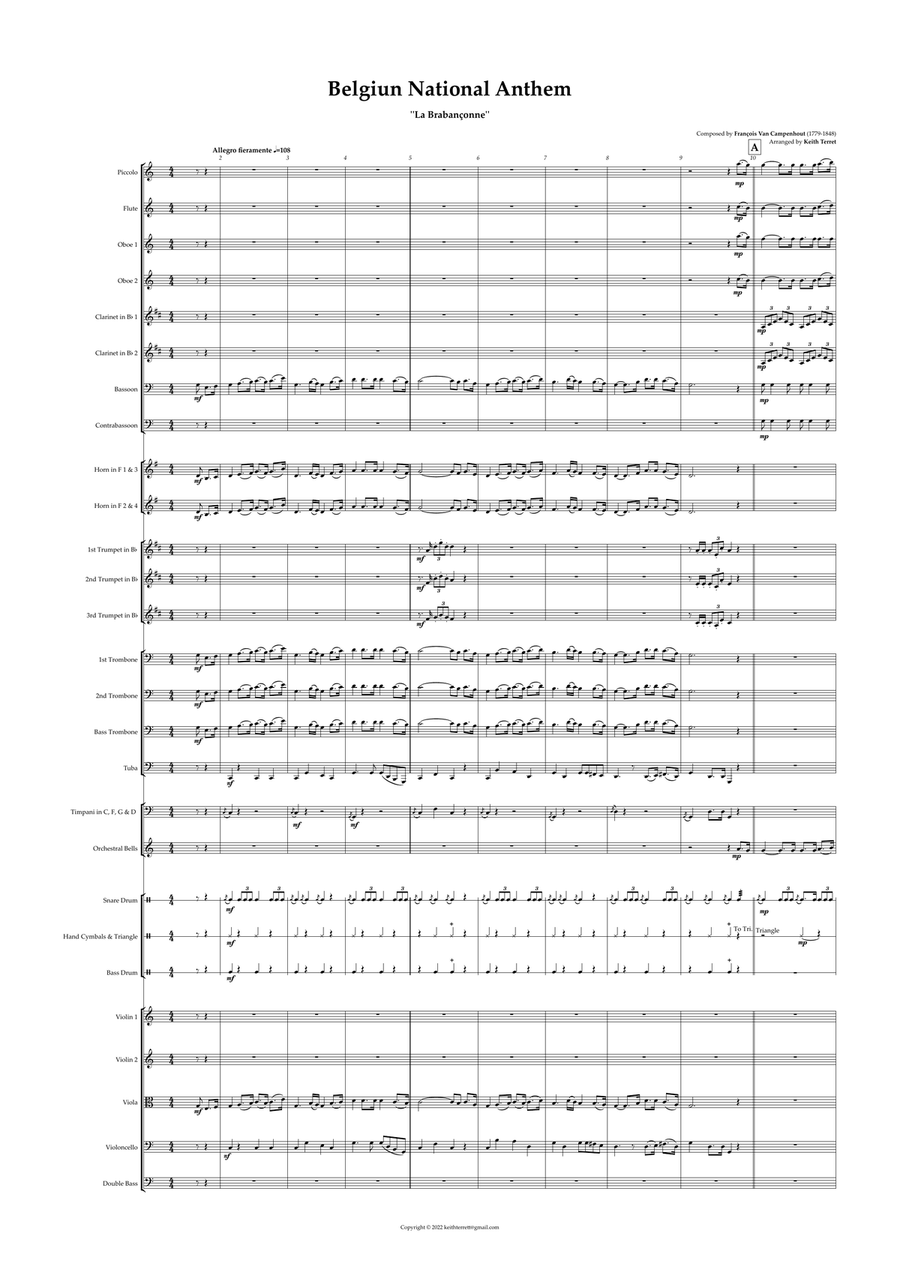
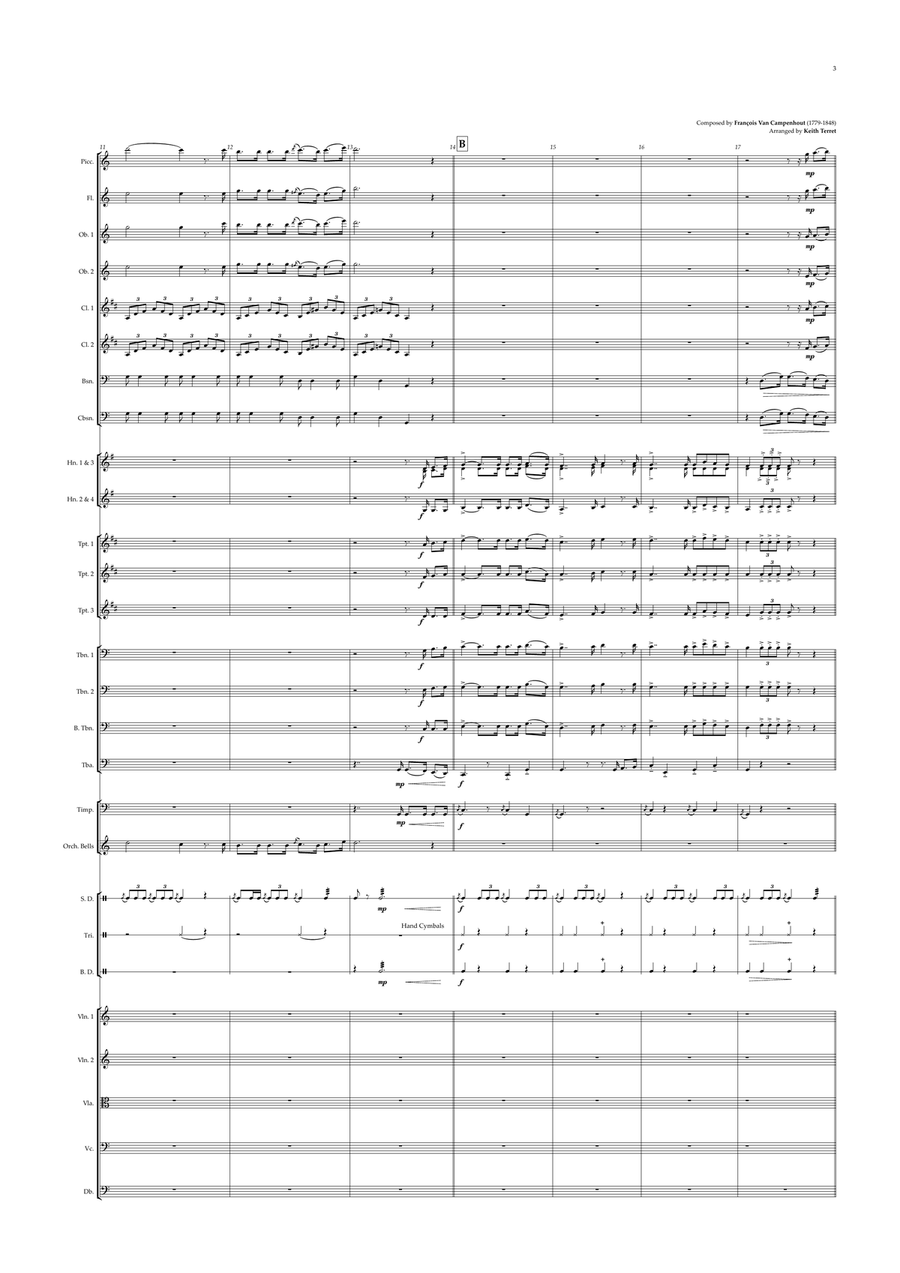
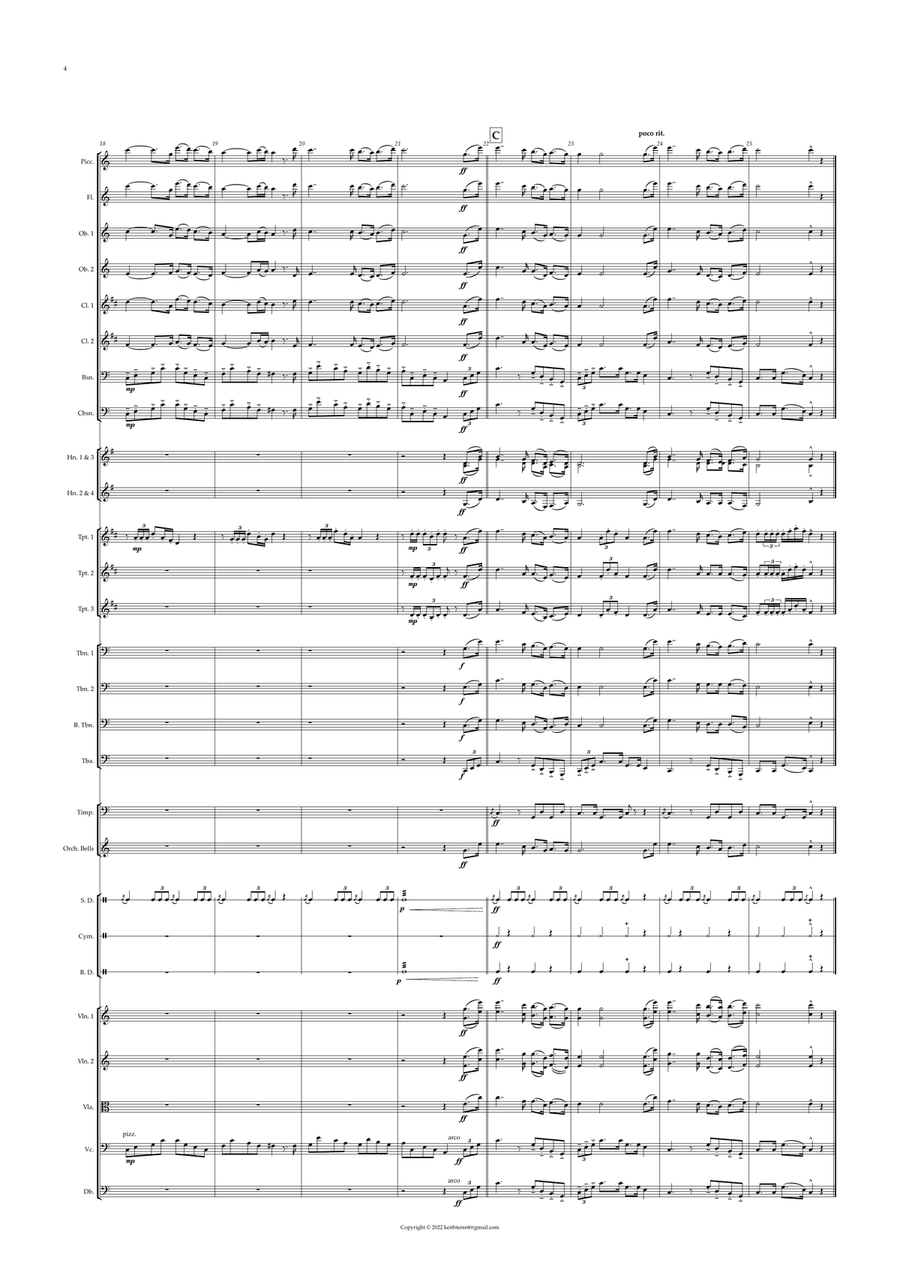
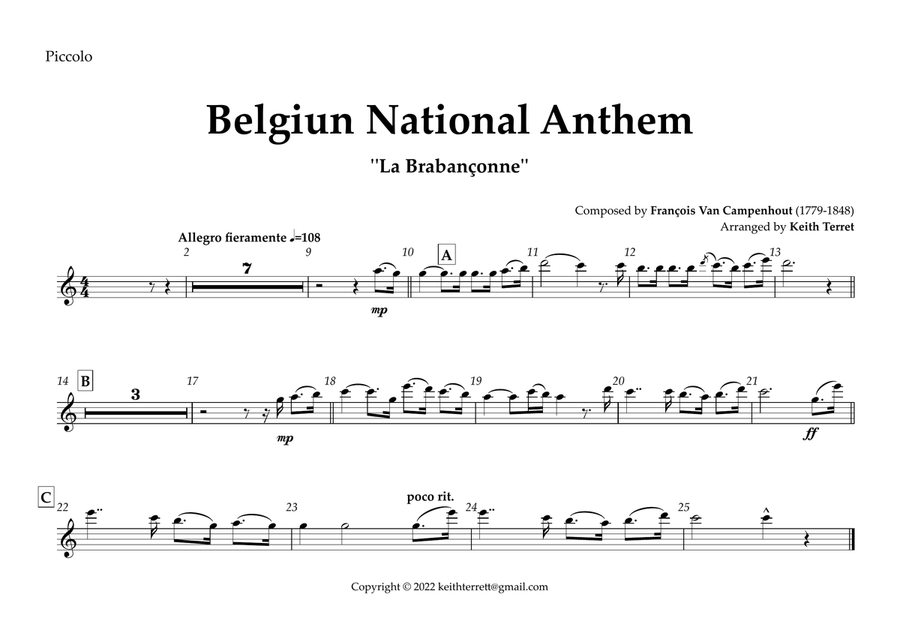
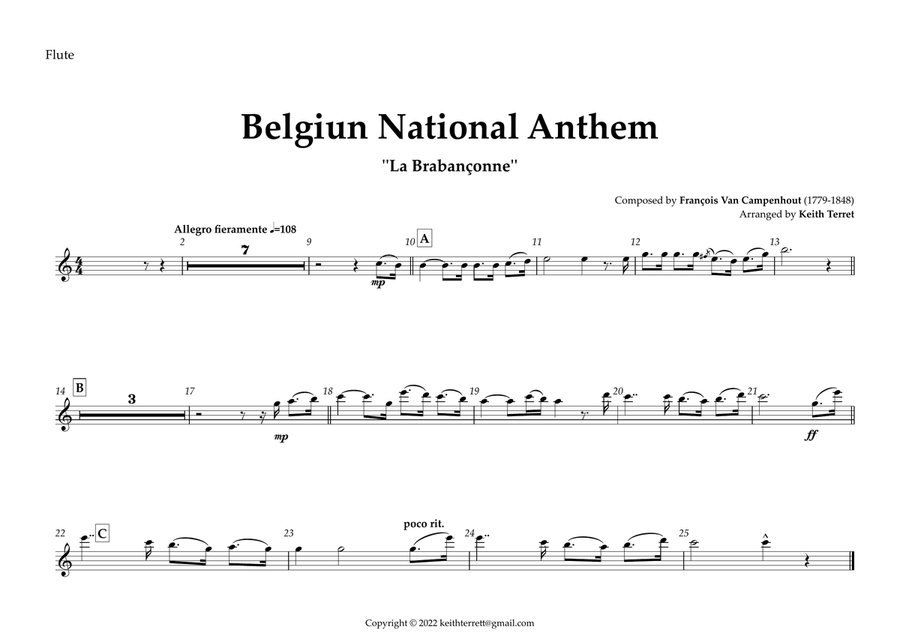
By Keith Terrett. By Keith Terrett. Arranged by Keith Terrett. This edition: pdf. 20th Century, Classical, Historic, Patriotic, Traditional. Full Orchestra. 31 pages. Keith Terrett #801957. Published by Keith Terrett (A0.1203283).An Arrangement for the Orchestre national d'Île-de-France of the Belgiun National Anthem.
"La Brabançonne" (French: [la bʁabɑ̃sɔn]; Dutch: "De Brabançonne"; German: "Das Lied von Brabant") is the national anthem of Belgium. The originally French title refers to Brabant; the name is usually maintained untranslated in Belgium's other two official languages, Dutch and German.
According to legend, the Belgian national anthem was written in September 1830, during the Belgian Revolution, by a young revolutionary called "Jenneval", who read the lyrics during a meeting at the Aigle d'Or café.
Jenneval, a Frenchman whose real name was Alexandre Dechet (sometimes known as Louis-Alexandre Dechet), did in fact write the Brabançonne. At the time, he was an actor at the theatre where, in August 1830, the revolution started which led to independence from the Netherlands. Jenneval died in the war of independence. François van Campenhout composed the accompanying score, based on the tune of a French song called "L'Air des lanciers polonais" ("the tune of the Polish Lancers"), written by the French poet Eugène de Pradel, whose tune was itself an adaptation of the tune of a song, "L'Air du magistrat irréprochable", found in a popular collection of drinking songs called La Clé du caveau (The Key to the cellar)[1][2] and it was first performed in September 1830.
In 1860, Belgium formally adopted the song and music as its national anthem, although the then prime minister, Charles Rogier edited out lyrics attacking the Dutch Prince of Orange.
The Brabançonne is also a monument (1930) by the sculptor Charles Samuel on the Surlet de Chokier square in Brussels. The monument contains partial lyrics of both the French and Dutch versions of the anthem. Like many elements in Belgian folklore, this is mainly based on the French "La Marseillaise" which is also both an anthem and the name of a monument – the sculptural group Departure of the Volunteers of 1792, commonly called La Marseillaise, at the base of the Arc de Triomphe in Paris.
About ArrangeMe
This product was created by a member of ArrangeMe, Hal Leonard's self-publishing community for independent composers, arrangers, and songwriters. Discover unique arrangements of popular titles and original compositions from diverse creators. The length, difficulty, and pricing are determined by the arranger or composer.
About Digital Downloads
Digital Downloads let you instantly access sheet music on your computer, tablet, or mobile device. Print your sheet music anywhere, anytime, or play it straight from your device—no internet connection is required after download.
Each Digital Download includes a watermark with your name, purchase date, and the number of copies purchased. You may only print or use the number of copies purchased. Redistribution or unauthorized printing is prohibited.
- More by this Composer:
- Keith Terrett Keith Terrett Horn Keith Terrett Trombone Keith Terrett Tuba
- ArrangeMe:
- Keith Terrett
- Series:
- ArrangeMe
- Artists:
- Keith Terrett
- Ensemble:
- Full Orchestra
- Publisher:
- Keith Terrett