Details
- Instrument:
- Viola Piano Solo
- Ensembles:
- Chamber Music
- Genres:
- Early Music 21st Century 20th Century
- Publishers:
- Luiz C Teixeira
- Series:
- ArrangeMe
SKU: A0.1639652
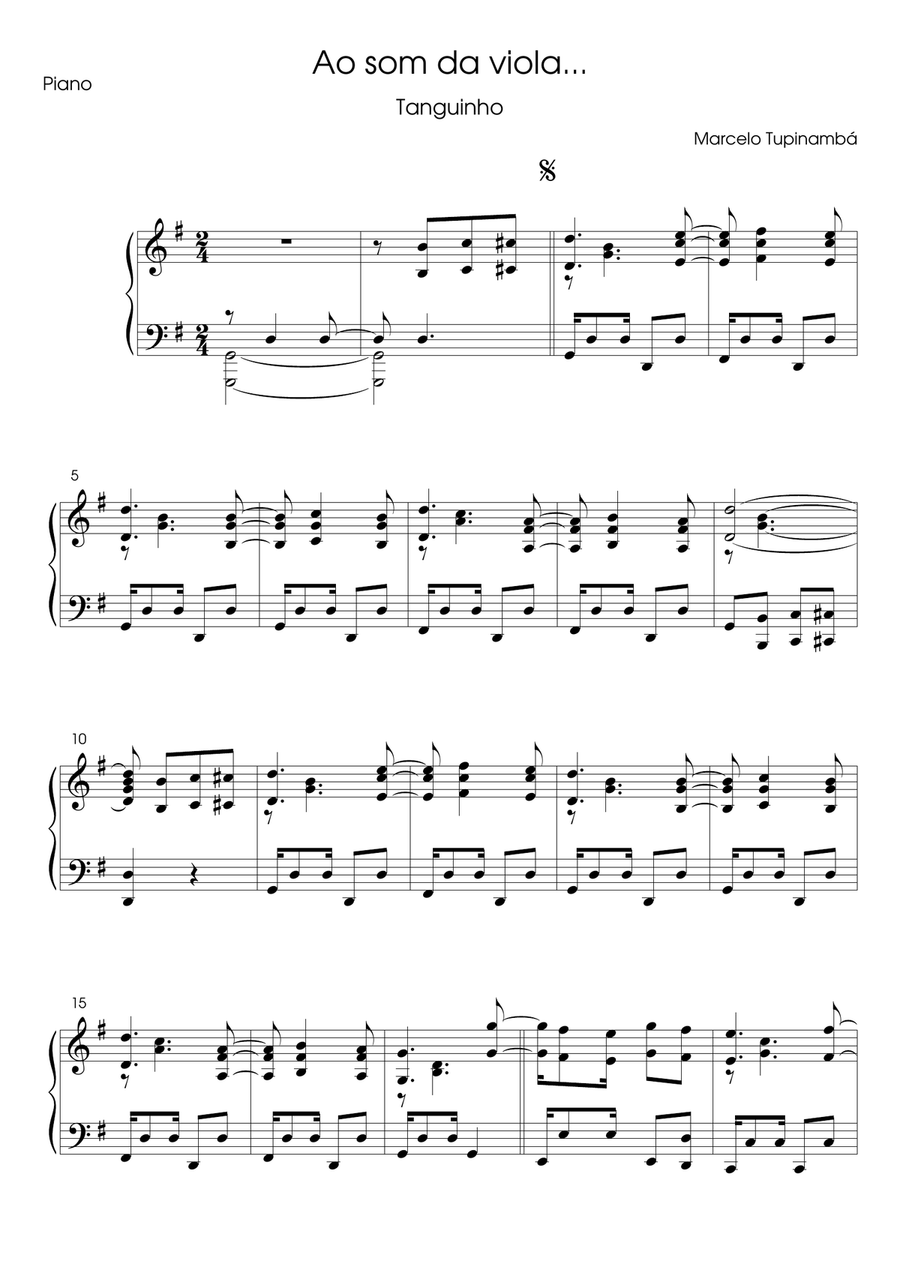
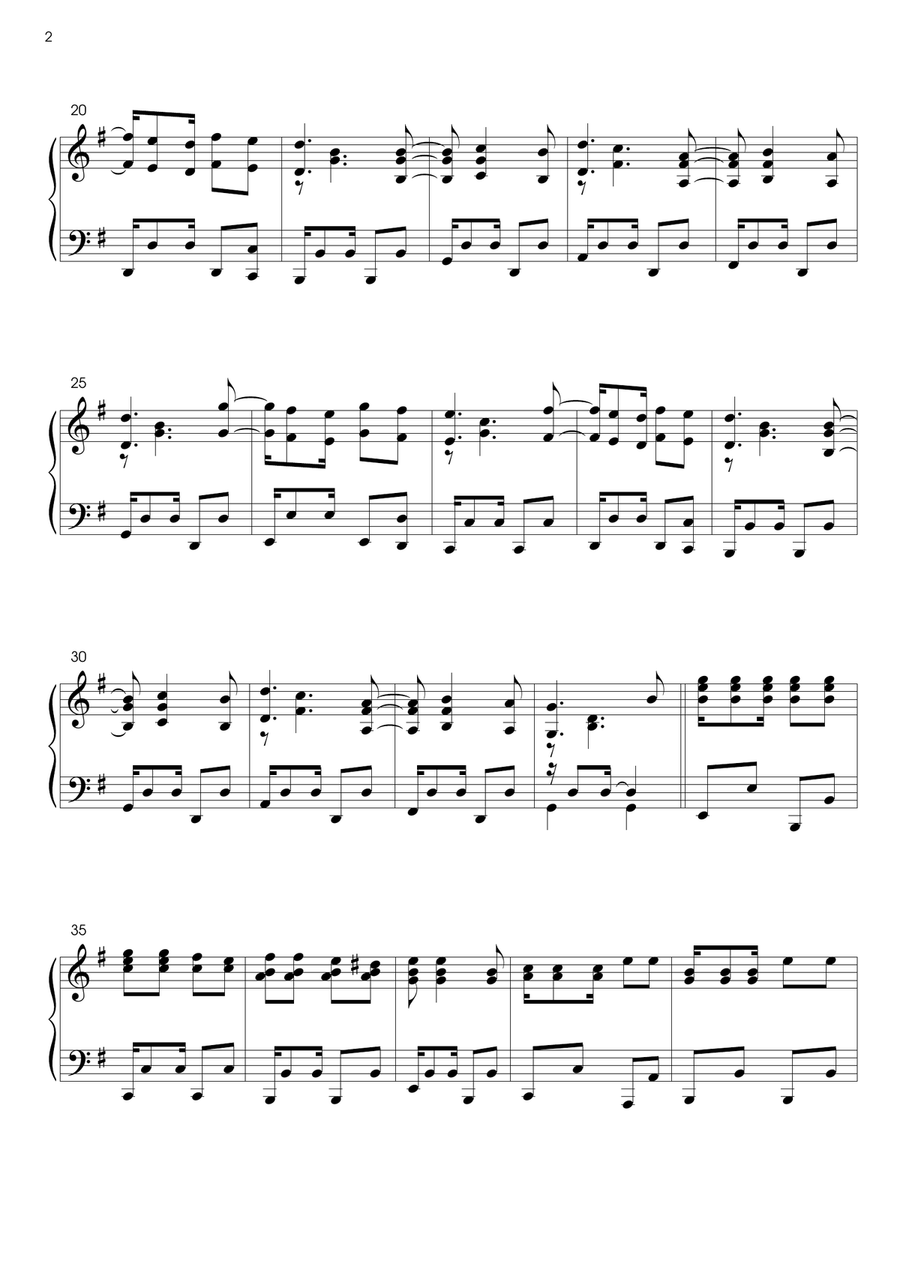
By Alexandre Dias. Composed by Marcello Tupynambá. Arranged by Luiz C. Teixeira. This edition: pdf, streaming. 20th Century, 21st Century, Chamber, Classical, Early Music. Score. 3 pages. Luiz C Teixeira #1207291. Published by Luiz C Teixeira (A0.1639652).Analysis of "Ao Som da Viola" – A Masterpiece of Brazilian Tango by Marcello Tupynambá
Marcello Tupynambá (1889–1953) was a pivotal figure in early 20th-century Brazilian popular music, blending European elegance with Afro-Brazilian soul. His "Ao Som da Viola" ("To the Sound of the Viola") exemplifies the Brazilian tango (tango brasileiro)—a genre distinct from its Argentine cousin, infused with the syncopated rhythms of maxixe and the melodic lyricism of choro.
I. Musical Structure & Form
The piece likely follows a binary (A-B) or ternary (A-B-A) form, typical of early 20th-century tangos. Each section repeats with variations, allowing for improvisation—a hallmark of Brazilian instrumental music.
Section A: A lyrical, nostalgic melody, evoking the serenades of rural Brazil (where the viola, a small guitar, is iconic).
Section B: A more rhythmic, dance-like passage, reflecting maxixe's syncopation.
II. Harmonic Language
Tupynambá’s harmonies blend:
European chromaticism (reminiscent of Ernesto Nazareth’s piano tangos)
Brazilian modulations (sudden shifts between major/minor to evoke saudade—melancholic longing)
Example: The piece likely uses diminished chords for tension and resolutions to unexpected keys, creating emotional depth.
III. Rhythmic Innovation
While Argentine tango leans on a rigid 2/4 habanera rhythm, Brazilian tango incorporates:
Maxixe syncopation (accented offbeats)
3+3+2 rhythmic cells (a Afro-Brazilian pattern also found in samba)
This gives "Ao Som da Viola" a lighter, swaying feel—more playful than dramatic.
IV. Melodic Beauty
The viola’s melody likely features:
Pitch bends (imitating the human voice)
Call-and-response between high and low registers
Ornamentation (grace notes, trills) reminiscent of serenade traditions
V. Cultural Significance
This piece bridges:
Rural and Urban Brazil: The viola symbolizes the countryside, while the tango form reflects cosmopolitan Rio.
African and European Influences: The maxixe rhythm (of African origin) merges with waltz-like phrasing.
Key Verse for Reflection:
"Sing to the Lord a new song; play skillfully, and shout for joy." (Psalm 33:3)
Music, like faith, transcends boundaries—Tupynambá’s work is a testament to Brazil’s holy fusion of cultures.
About ArrangeMe
This product was created by a member of ArrangeMe, Hal Leonard's self-publishing community for independent composers, arrangers, and songwriters. Discover unique arrangements of popular titles and original compositions from diverse creators. The length, difficulty, and pricing are determined by the arranger or composer.
About Digital Downloads
Digital Downloads let you instantly access sheet music on your computer, tablet, or mobile device. Print your sheet music anywhere, anytime, or play it straight from your device—no internet connection is required after download.
Each Digital Download includes a watermark with your name, purchase date, and the number of copies purchased. You may only print or use the number of copies purchased. Redistribution or unauthorized printing is prohibited.
- ArrangeMe:
- Luiz C Teixeira
- Series:
- ArrangeMe
- Instrument:
- Strings Viola Piano and Keyboard Piano Piano Solo
- Ensemble:
- Chamber Music
- Publisher:
- Luiz C Teixeira