Order two or more copies of the same title and we'll automatically give you 5% off list price on that title.
To get 2+ Pricing , just add two or more copies of a title to your shopping cart. Your discount will be immediately applied to your order.
Sale titles, hymnals, and ShowKits (MTI's Broadway Junior Collection, Getting to Know... Collection (G2K) and MTI's Kids Collection) do not qualify for 2+ Pricing
If you have any questions or comments regarding 2+ Pricing , please visit our Help Center to find more information or chat with our support team
SATB vocal soli, SATB choir, flute, 2 oboe d'amore, 2 trumpets, timpani, 2 violins, viola, basso continuo (Soli SAB, Coro SATB, Fl, 2 Ob (Ob I auch Obda), 3 Tr, Timp, 2 Vl, Va, Bc)
SKU: CA.3112905
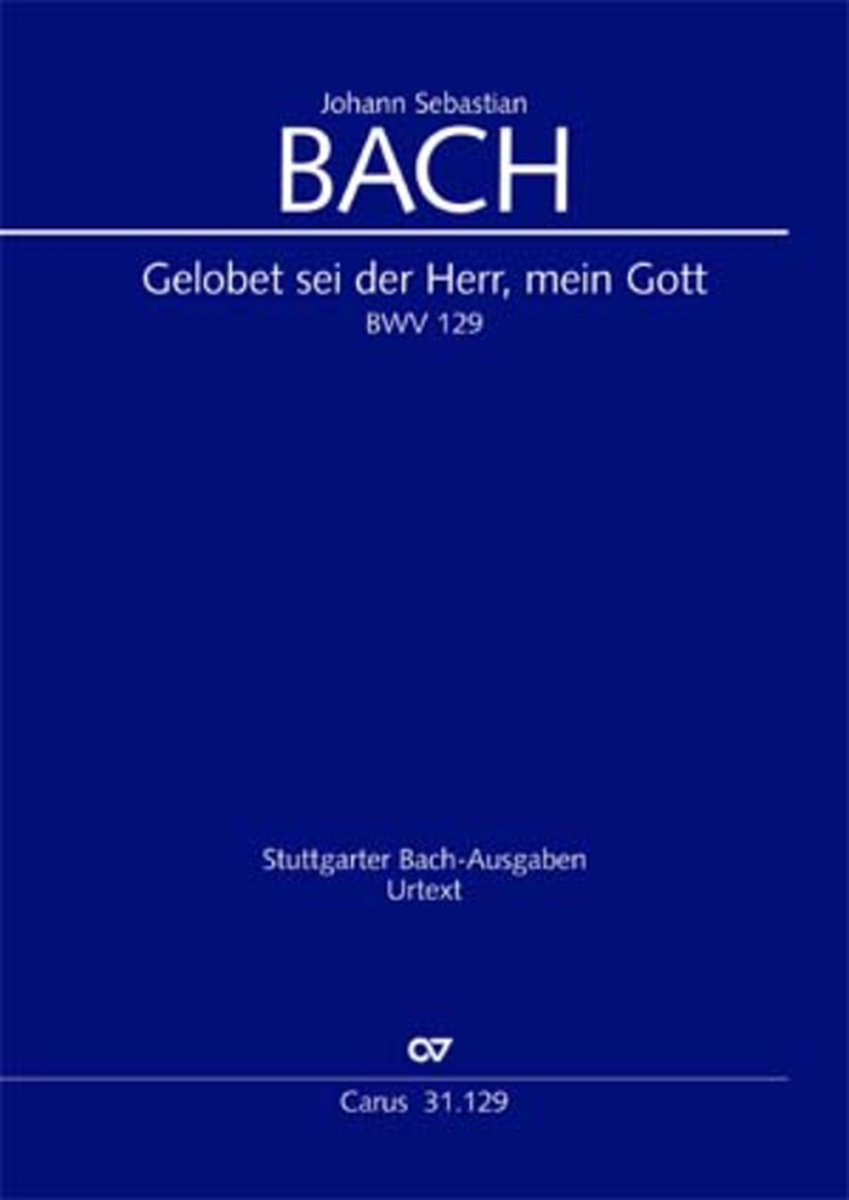
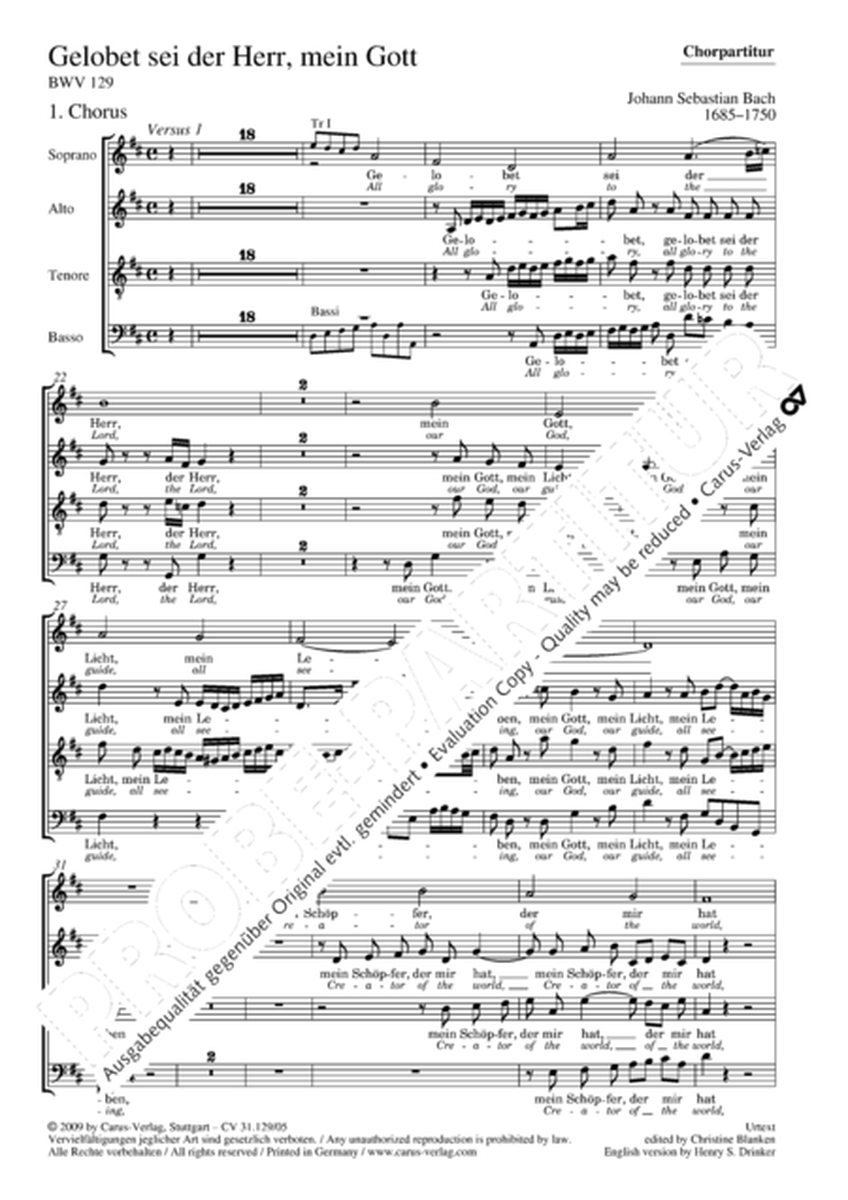
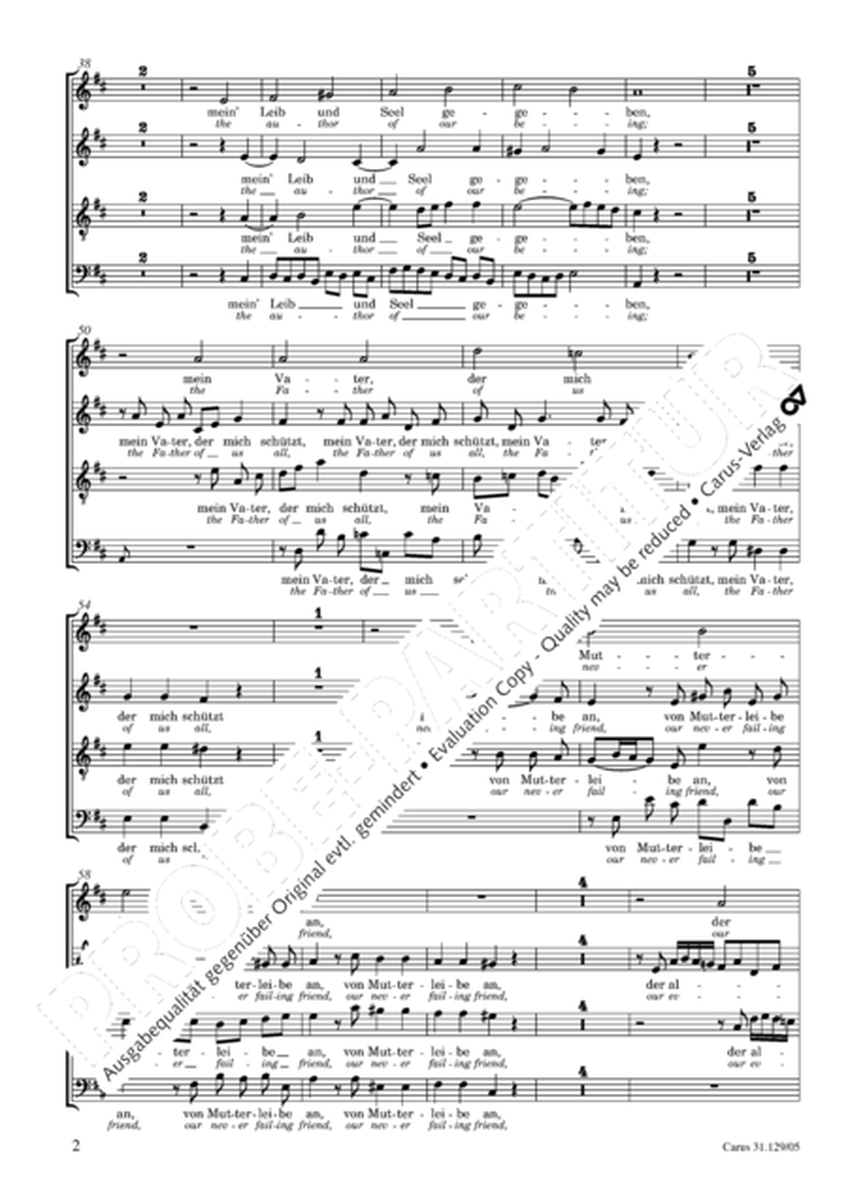
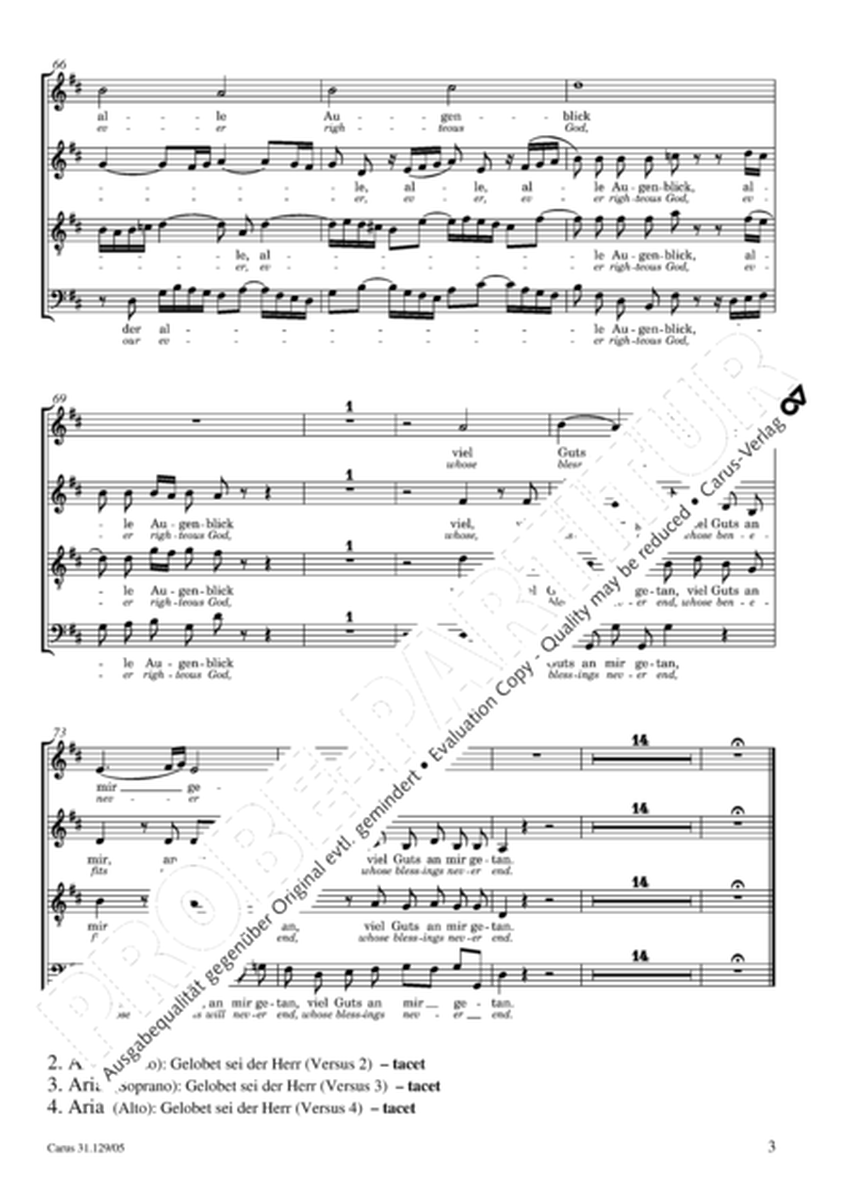
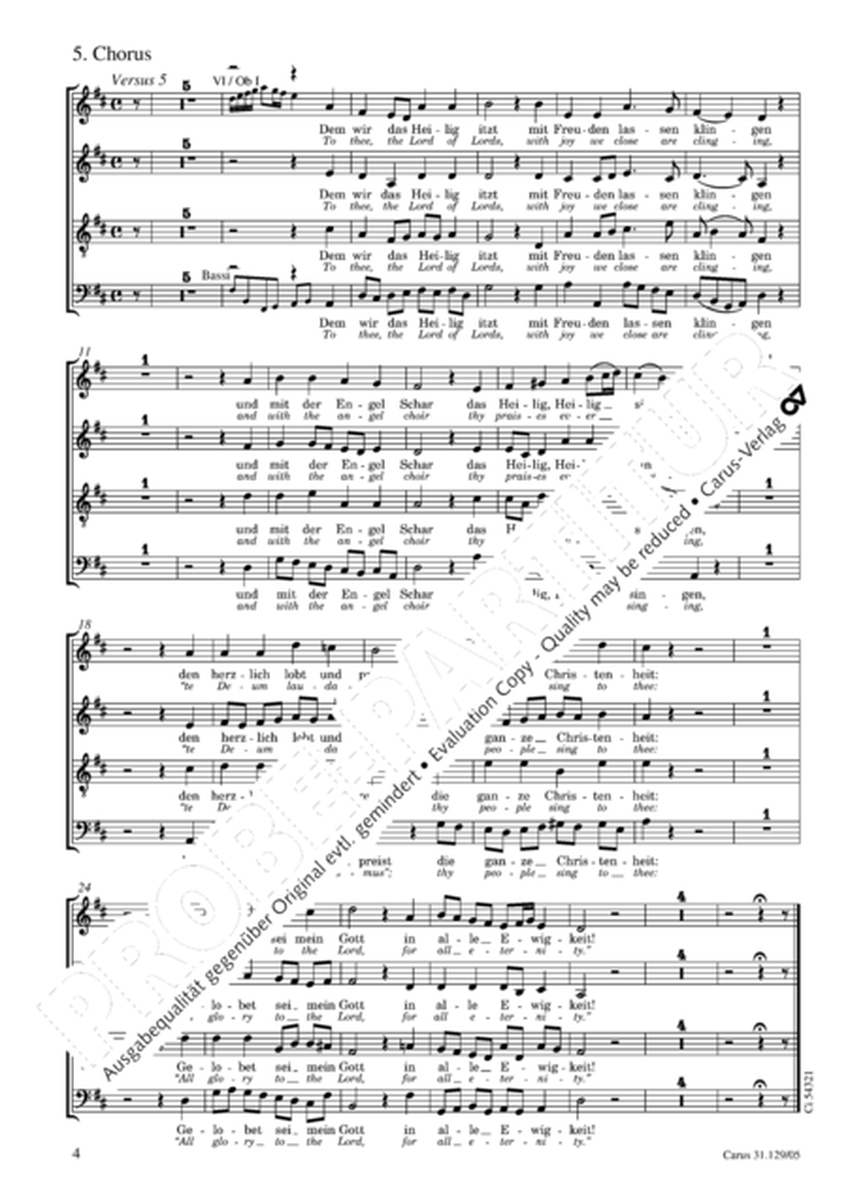
Cantata for Trinity Sunday. Composed by Johann Sebastian Bach. Edited by Christine Blanken. Arranged by Paul Horn. This edition: urtext. Stuttgart Urtext Edition: Bach vocal. German title: Gelobet sei der Herr, mein Gott. Sacred vocal music, Trinity. Choral score. Composed 1726. BWV 129. 4 pages. Duration 24 minutes. Carus Verlag #CV 31.129/05. Published by Carus Verlag (CA.3112905).
ISBN 9790007130534. 8.27 x 11.69 inches. Language: German/English.
The cantata "Gelobet sei der Herr, mein Gott" BWV 129 (All Glory to the Lord, our God) is one of several chorale cantatas that Bach later added to his chorale cantata cycle after it was discontinued at Easter 1725; it was not composed until Trinity 1727. Unlike the chorale cantatas of the 1724/25 cycle, BWV 129 lacks the usual mixture of formal chorale text in the outer movements alongside newer writing, often including paraphrases of the chorale, in the inner movements of arias and recitatives. Instead, in this cantata the text closely follows the original chorale version. Consequently Bach dispenses here with recitatives. The magnificent outer movements consist of a motet-like opening chorus (strophe 1) with a full orchestra, and a similarly scored final chorale movement (strophe 5). In between, Bach sets verses 2-4 of the song as three solo arias in the distinctive style of chamber music, but not without echoes of the chorale melody.
SATB vocal soli, SATB choir, flute, 2 oboe d'amore, 2 trumpets, timpani, 2 violins, viola, basso continuo (Soli SAB, Coro SATB, Fl, 2 Ob (Ob I auch Obda), 3 Tr, Timp, 2 Vl, Va, Bc)
SKU: CA.3112905
Cantata for Trinity Sunday. Composed by Johann Sebastian Bach. Edited by Christine Blanken. Arranged by Paul Horn. This edition: urtext. Stuttgart Urtext Edition: Bach vocal. German title: Gelobet sei der Herr, mein Gott. Sacred vocal music, Trinity. Choral score. Composed 1726. BWV 129. 4 pages. Duration 24 minutes. Carus Verlag #CV 31.129/05. Published by Carus Verlag (CA.3112905).
ISBN 9790007130534. 8.27 x 11.69 inches. Language: German/English.
The cantata "Gelobet sei der Herr, mein Gott" BWV 129 (All Glory to the Lord, our God) is one of several chorale cantatas that Bach later added to his chorale cantata cycle after it was discontinued at Easter 1725; it was not composed until Trinity 1727. Unlike the chorale cantatas of the 1724/25 cycle, BWV 129 lacks the usual mixture of formal chorale text in the outer movements alongside newer writing, often including paraphrases of the chorale, in the inner movements of arias and recitatives. Instead, in this cantata the text closely follows the original chorale version. Consequently Bach dispenses here with recitatives. The magnificent outer movements consist of a motet-like opening chorus (strophe 1) with a full orchestra, and a similarly scored final chorale movement (strophe 5). In between, Bach sets verses 2-4 of the song as three solo arias in the distinctive style of chamber music, but not without echoes of the chorale melody.
Preview: All glory to the Lord, our God
Tell A Friend
Tell a friend (or remind yourself) about this product. We'll instantly send an email containing product info and a link to it. You may also enter a personal message.
We do not use or store email addresses from this form for any other purpose than sending your share email.
After purchase, you can download your MP3 from your Sheet Music Plus Digital Library - no software installation is necessary! You can also listen to your MP3 at any time in your Digital Library.
Learn about Smart Music
After purchase, you can download your Smart Music from your Sheet Music Plus Digital Library - no software installation is necessary! You can also download at any time in your Digital Library.
Learn about Digital Video
After purchase you can download your video from your Digital Library. Your video is in XX format and is playable on most pre-installed video players.