Details
- Instrument:
- Basso Continuo
- Ensembles:
- String Orchestra
- Genres:
- Baroque Period Italian
- Composers:
- Tomaso Giovanni Albinoni
- Publishers:
- Schott Music
- ISBN:
- 9790001023207
- Format:
- Score
- Item types:
- Physical
- Level:
- Intermediate
- Musical forms:
- Symphony
- Artist:
- Tomaso Giovanni Albinoni
- Usages:
- School and Community
- Number of Pages:
- 6
- Shipping Weight:
- 0.06 pounds
3 violins and basso continuo or string orchestra (V1/OB1) - intermediate
SKU: HL.49027054
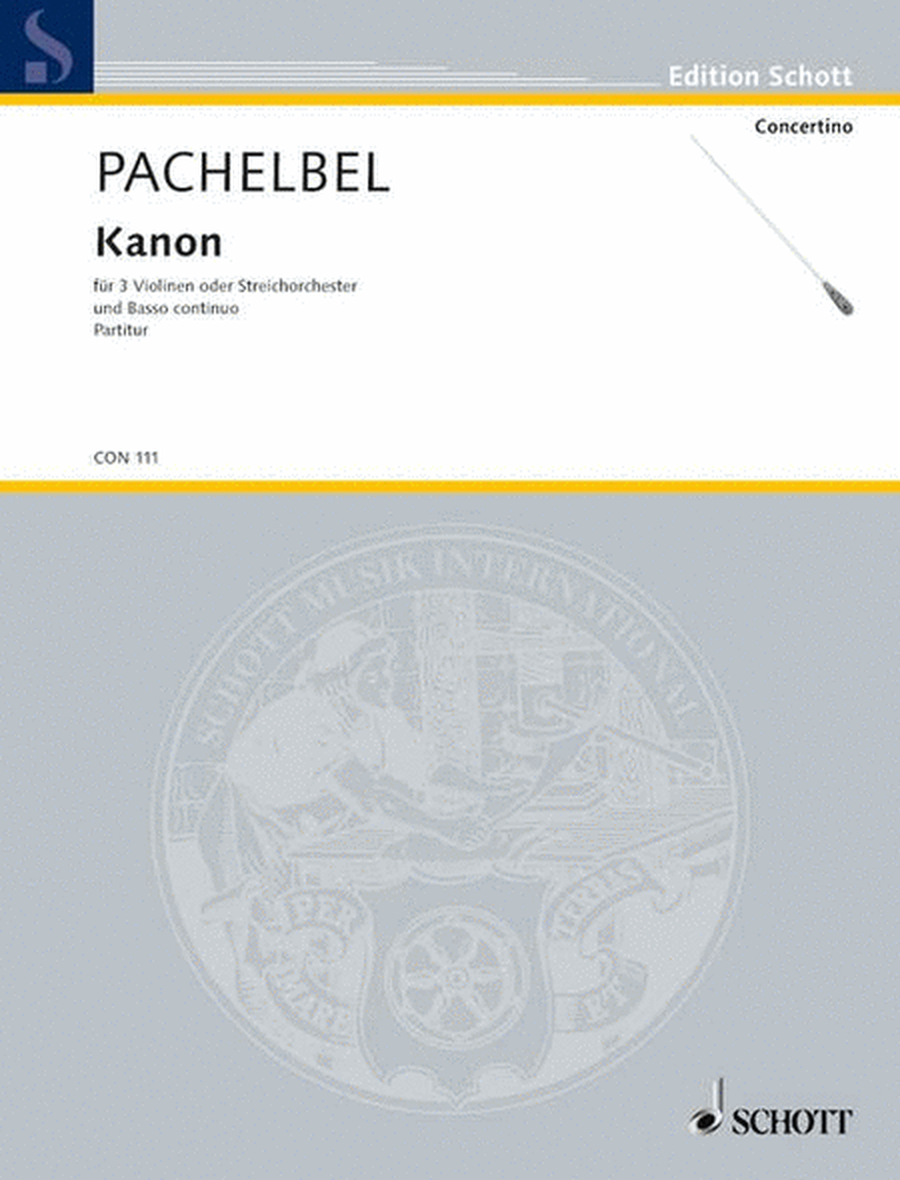
Composed by Tomaso Giovanni Albinoni. Edited by Helmut W. May. This edition: Saddle stitching. Sheet music. Edition Schott. Score, harpsichord. 6 pages. Duration 3'. Schott Music #CON1-11. Published by Schott Music (HL.49027054).ISBN 9790001023207.
With this work, Pachelbel, who was born in Nuremberg, created one of the most popular orchestral pieces of the baroque period. In the canon two of the strictest contrapuntal forms are combined: The three violin parts form an extensive canon with entries of two bars distance. To this, a ground bass (basso ostinato) has been added repeating its two-bar tone formula 28 times. The technical mastery of the piece can be ad-mired just as much as its effect lies in the melodic and sensuous power of its string tones. The modest technical demands on the musicians are diametrically opposed to the compositional level: they do not go beyond the third position.
- More by this Composer:
- Tomaso Giovanni Albinoni Tomaso Giovanni Albinoni Organ Tomaso Giovanni Albinoni Piano Tomaso Giovanni Albinoni Piano Accompaniment
- Instrument:
- Piano and Keyboard Basso Continuo
- Artists:
- Tomaso Giovanni Albinoni Helmut W. May
- Ensemble:
- String Orchestra
- Publisher:
- Schott Music