Details
- Instrument:
- Acoustic Guitar Classical Guitar
- Composers:
- Aaron Shearer
- Publishers:
- Mel Bay Publications, Inc
- UPC:
- 796279008303
- ISBN:
- 9780871668547
- Format:
- Collection / Songbook
- Item types:
- Physical
- Instructionals:
- Methods and More
- Level:
- Beginning
- Artist:
- Aaron Shearer
- Usages:
- School and Community
- Number of Pages:
- 160
- Size:
- 8.5 X 11 inches
- Shipping Weight:
- 1.4 pounds
SKU: MB.94361
Composed by Aaron Shearer. This edition: Perfect Binding. Classical Guitar, Guitar Methods, Latin, Guitar, Classical, Perfect binding. Latin. Book. 160 pages. Mel Bay Publications, Inc #94361. Published by Mel Bay Publications, Inc (MB.94361).ISBN 9780871668547. UPC: 796279008303. 8.5 X 11 inches.
Learning the Classic Guitar is a new direction in guitar instruction. Many ideas in these books break new ground. In developing this innovative method, Mr. Shearer adhered to the following concepts: 1) How and what students practice is as important as how much they practice. 2) Give information only when it is immediately useful. 3) Start with the easiest skills. 4) Approach challenging skills gradually. Part One focuses on technical development and explains the most efficient approach to study and practice. Part Two is designed to complement Part One; this book presents the elements of music and procedures for developing the ability to sight-read and memorize music. It also introduces the visualization concept. Part Three teaches the student to form clear and accurate concepts of music expression. It also teaches the guitarist how to perform in public with accuracy and confidence.
The Classic Guitar
Classic or Classical Guitar?
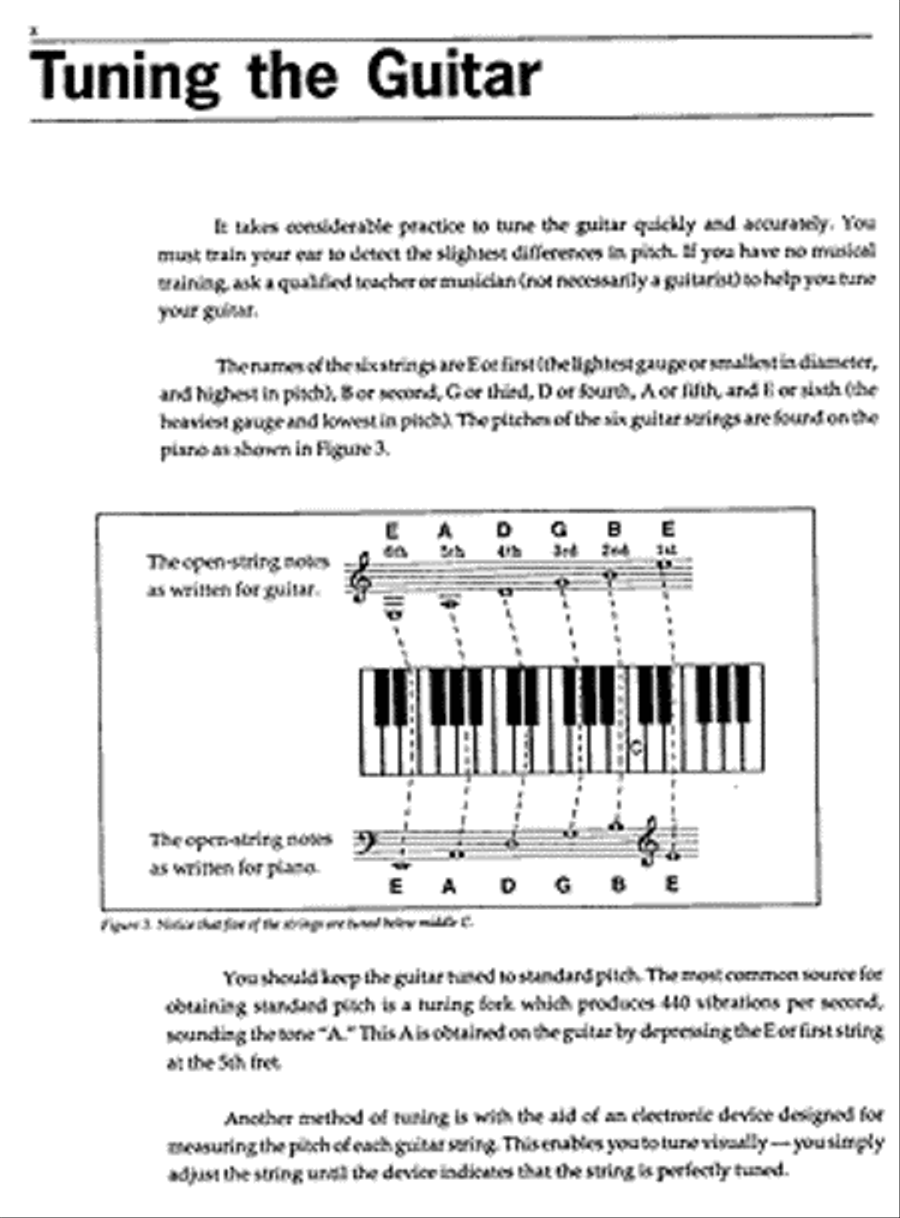
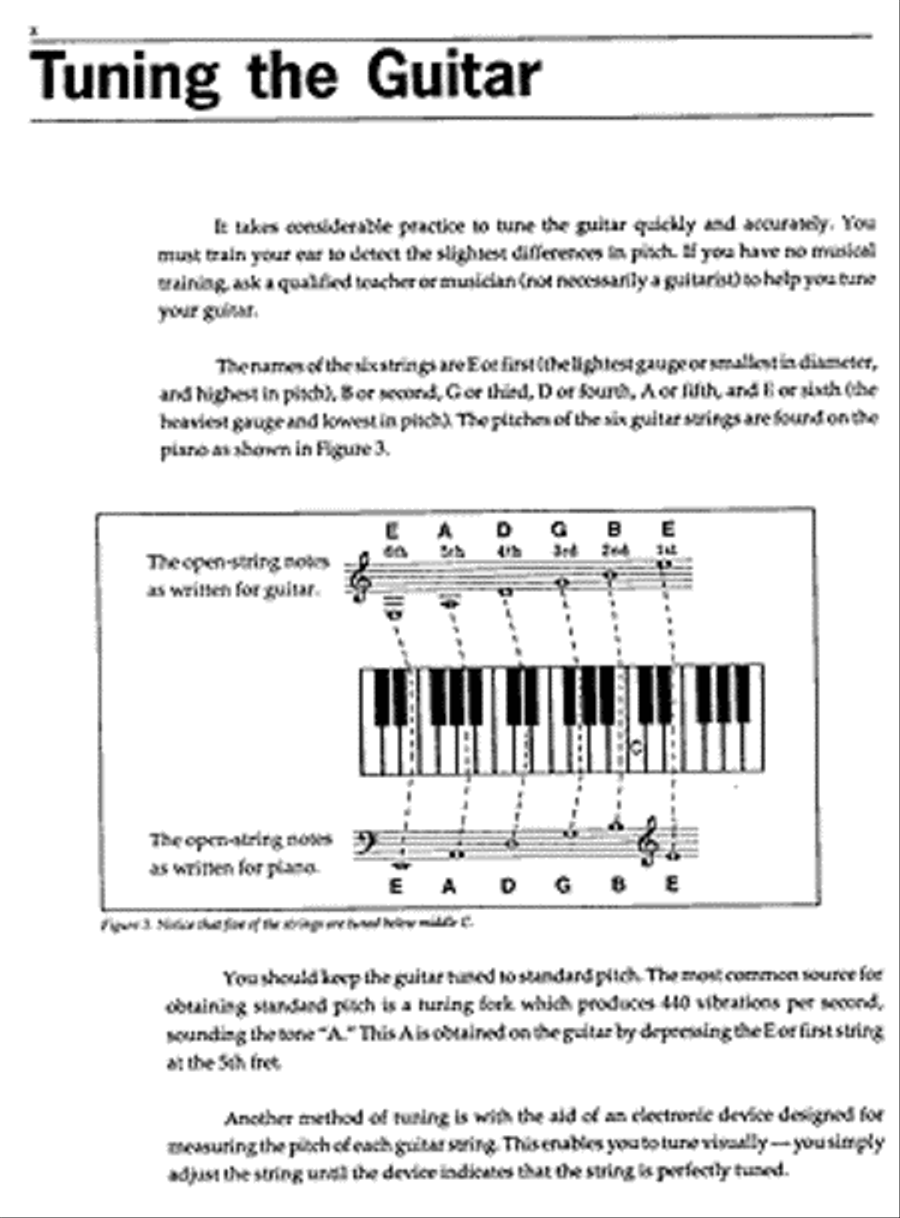
Tuning the Guitar
Playing Condition of the Guitar
Determining the Action of a Guitar
Choosing A Teacher
Approaching Guitar Study
Your Goal: Sharing Music
Essentials for Performance
Avoiding Habits of Confusion and Error
Aim-Directed Movement
Developing Sustained Concentration
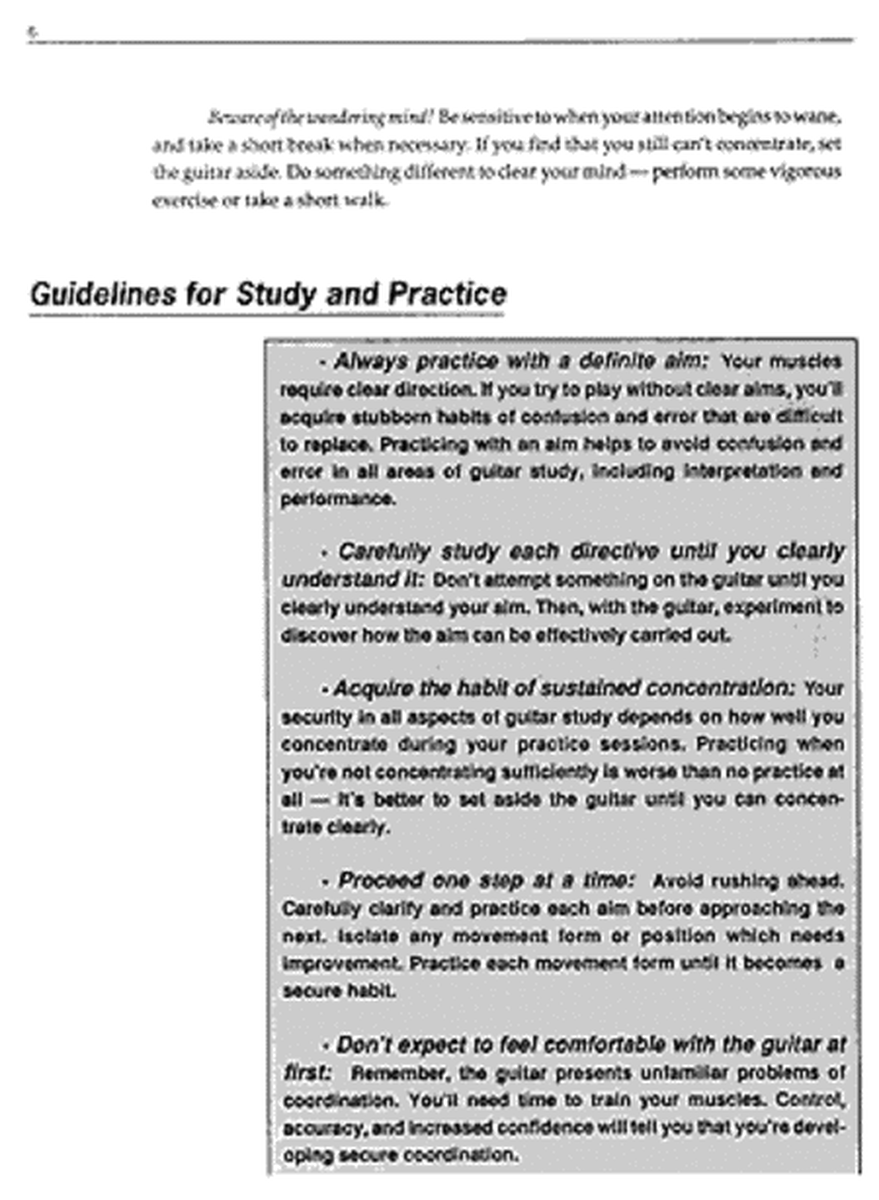
Guidelines for Study and Practice
The Four Principles of Efficient Muscle Function
Positioning the Guitar
General Positioning
The Five Ways of Moving the Guitar
The Right- and Left-Hand Position Checks
Adjusting Your Position
An Alternative to Using the Footstand Alone
Tone production
Principles of Tone Production
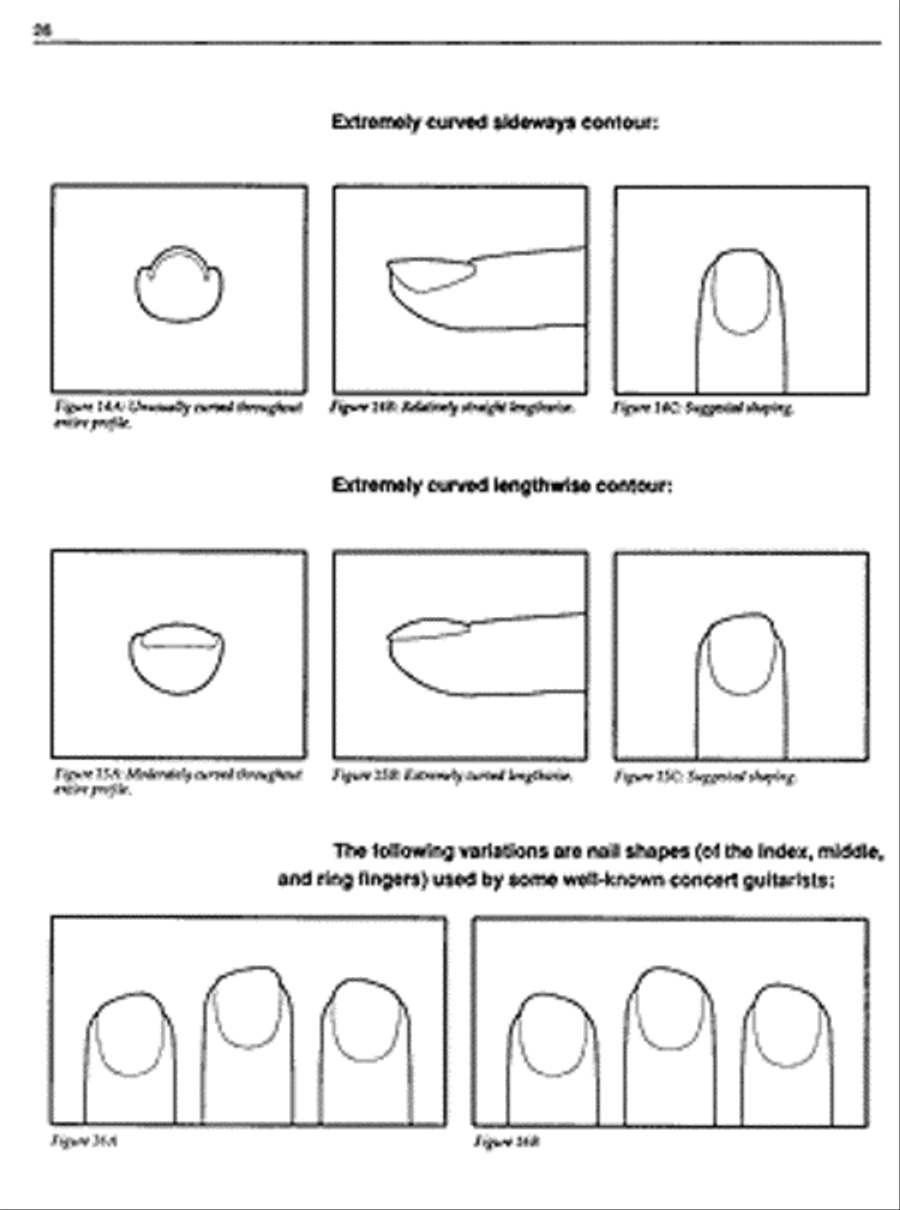
Tone Quality and Your Nails
Nail Contours and Suggested Shapings
Beginning Right-Hand Training
Terms and Symbols
Right-Hand Positioning
Rest-Stroke and Free-Stroke
The Prepared-Stroke
Training P: The Prepared Free-Stroke
Sounding the Strings
The Continuity-Stroke
Beginning Left-Hand Training
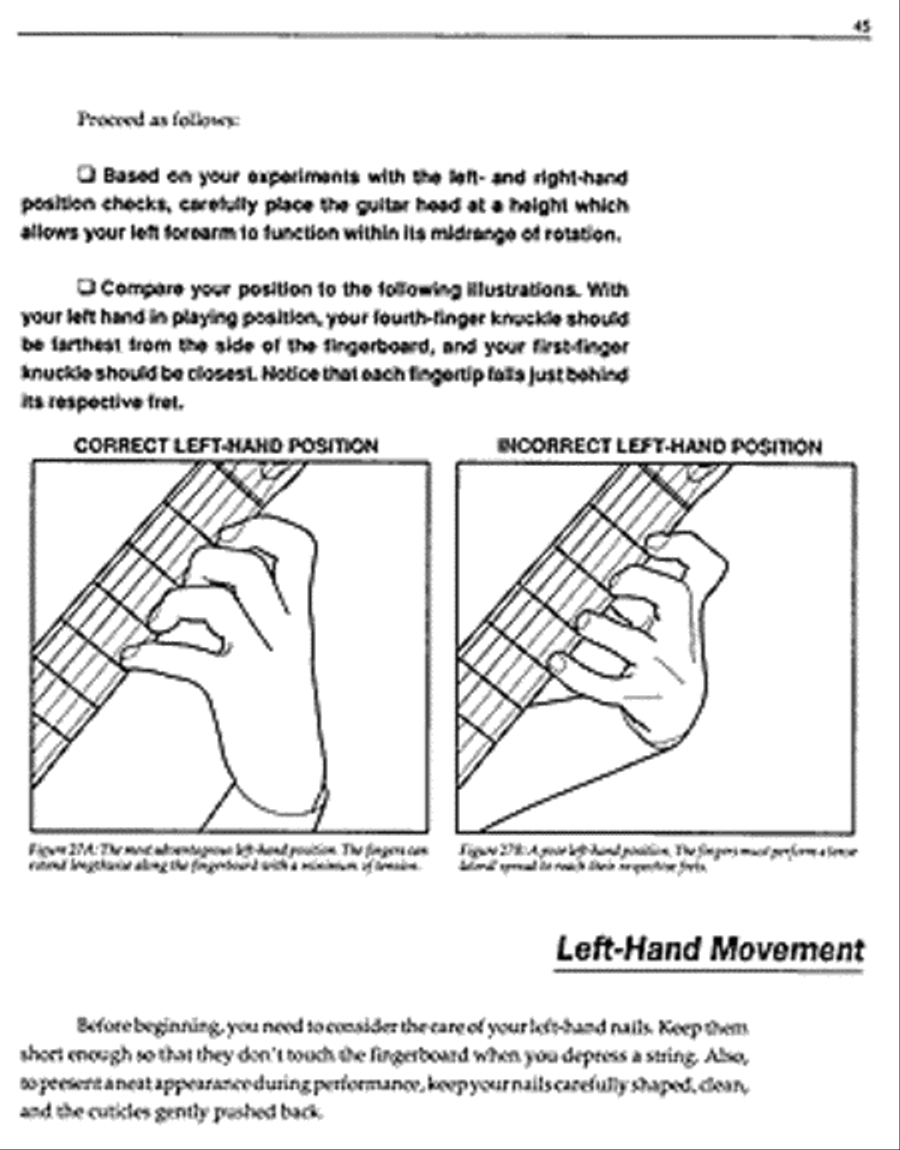
Left-Hand Positioning
Left-Hand Movement
Movement by Touch: Applying Aim-Directed Movement (ADM)
Training the Right-Hand Fingers
Training the Inactive Fingers
The Prepared Rest-Stroke
The Continuity Rest-Stroke
Alternation of a Finger Rest-Stroke and r_ Free-Stroke
Beginning Free-Stroke with Your Fingers
Before You Begin
Free-Stroke Considerations
1-M Free-Stroke
Tip Joint Considerations
1-M and r_ Alternation
1-M-A Free-Stroke
1-M-A and P Alternation
Sympathetic Movement
Elm
ELM-A
El-M,A
Alternation
Beginning Free-Stroke Alternation: ELM,Left-Hand Considerations
EL A
Alternating 1 and M on Adjacent Strings
Alternating 1 and Mon a Single String
Principles of String Crossing
Beginning String Crossing
Clarity on Wound Strings
Sounding a Single Note Free-Stroke on an Adjacent String
Mand A Alternation
Developing Right-Hand Speed
Developing Independence through Opposed-Finger Sweeps
Integrating Independence and Control
Comparing Rest-Stroke and Free-Stroke
Rest-Stroke Finger Alternation
Sounding Three Strings Together with r_ and the Fingers
Sounding Two Strings Together with r_ and One Finger
ELM,A
ELM,&M,1
Four Strings Simultaneously with f-1-M-A
Further Left-Hand Training
Applying the Principles of Efficient Muscle Function
Developing Left-Hand Mobility
Slurs
Technical Slurs
Types of Downward Slurs
Further Right-Hand Training
Conditioning and Coordination Exercise
The Importance of Stretching Exercises
Procedure for Stretching Exercises
Developing Muscular Coordination
Coordination Exercises
The Remedial Student
The Natural Approach
Determining the Most Natural Approach
The Misuse of Just Let It Happen
Economy of Movement
Repetitive Strain Inj-ury (RSI)
Coordination and Counterproductive Tension
How RSI Develops
Musicians Who Develop RSI
Questions about RSI
Overcoming RSI
Summary
Avoiding Chronic Shoulder Pain
Learning to Recognize Correct Arm Movement
Procedure for Training the Right Shoulder
- More by this Composer:
- Aaron Shearer Aaron Shearer Acoustic Guitar Aaron Shearer Classical Guitar Aaron Shearer Lute
- Instrument:
- Guitar Acoustic Guitar Guitar Classical Guitar
- Artists:
- Aaron Shearer
- Publisher:
- Mel Bay Publications, Inc
Ratings + Reviews
5 Rating
1 review
Anonymous
Oct 17, 2013
I was very disappointed in this book. There is no information on notes, no diagram's on how to play chords. It is helpful if you want to trim your fingernails to the right length (not joking this is in the book) or can't figure out how to hold your guitar. A total waste of money