Details
- Instrument:
- Piano Accompaniment Viola Solo
- Genres:
- Romantic Period
- Composers:
- Friedrich Kiel
- ISBN:
- 9790004482643
- Format:
- Score
- Item types:
- Physical
- Artist:
- Friedrich Kiel
- Usages:
- School and Community
- Size:
- 9 x 12 inches
- Number of Pages:
- 24
- Shipping Weight:
- 0.35 pounds
SKU: BR.MR-1570
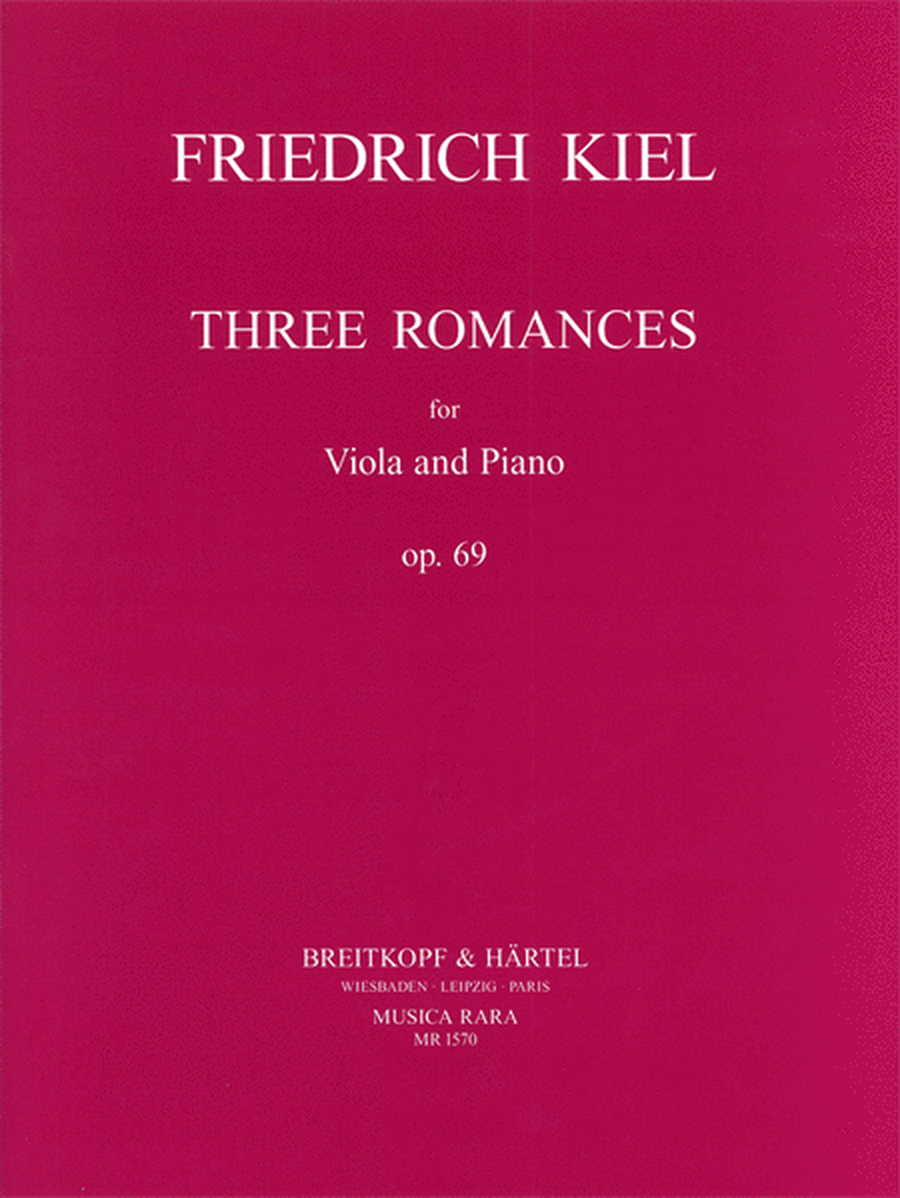
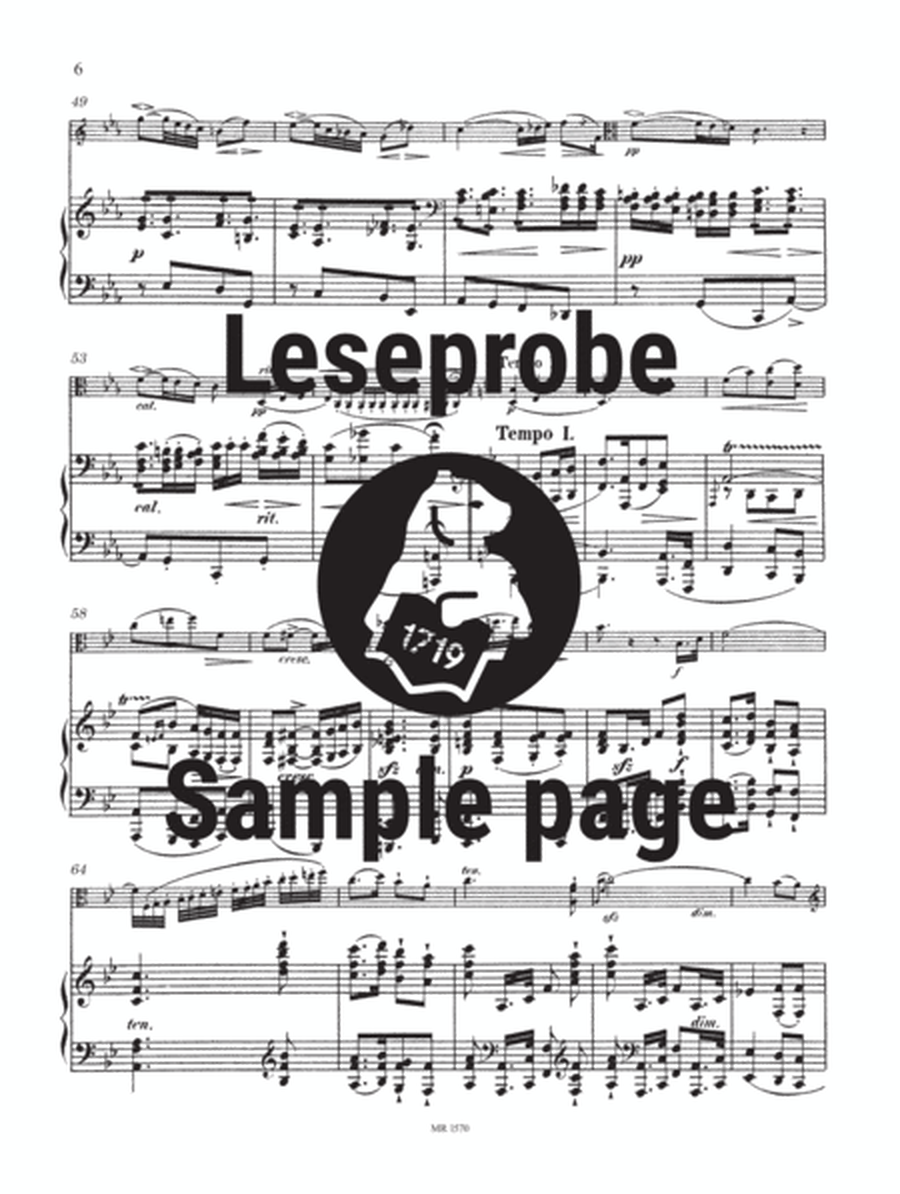
Composed by Friedrich Kiel. Edited by Harold Truscott. Solo instruments; stapled. Musica Rara. Romantic period. Score. 24 pages.ISBN 9790004482643. 9 x 12 inches.
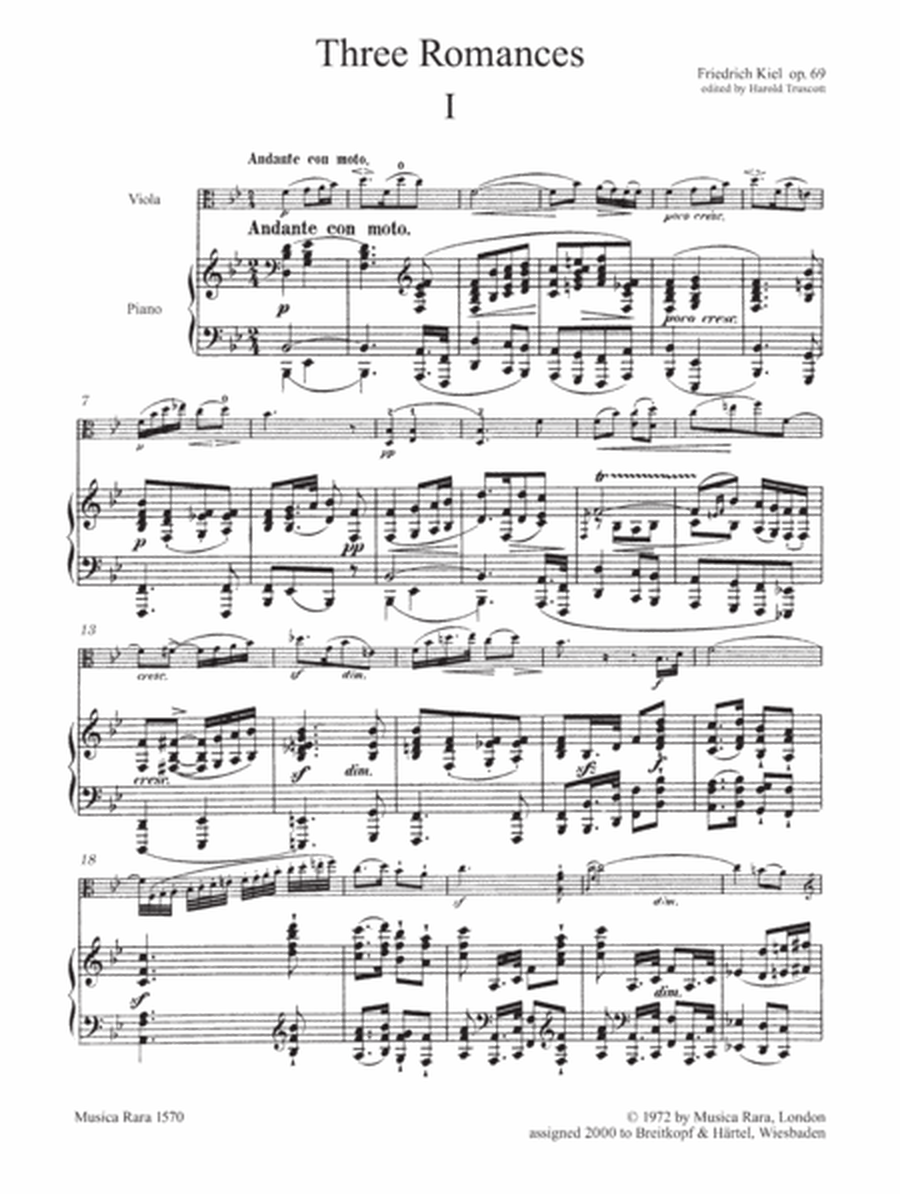
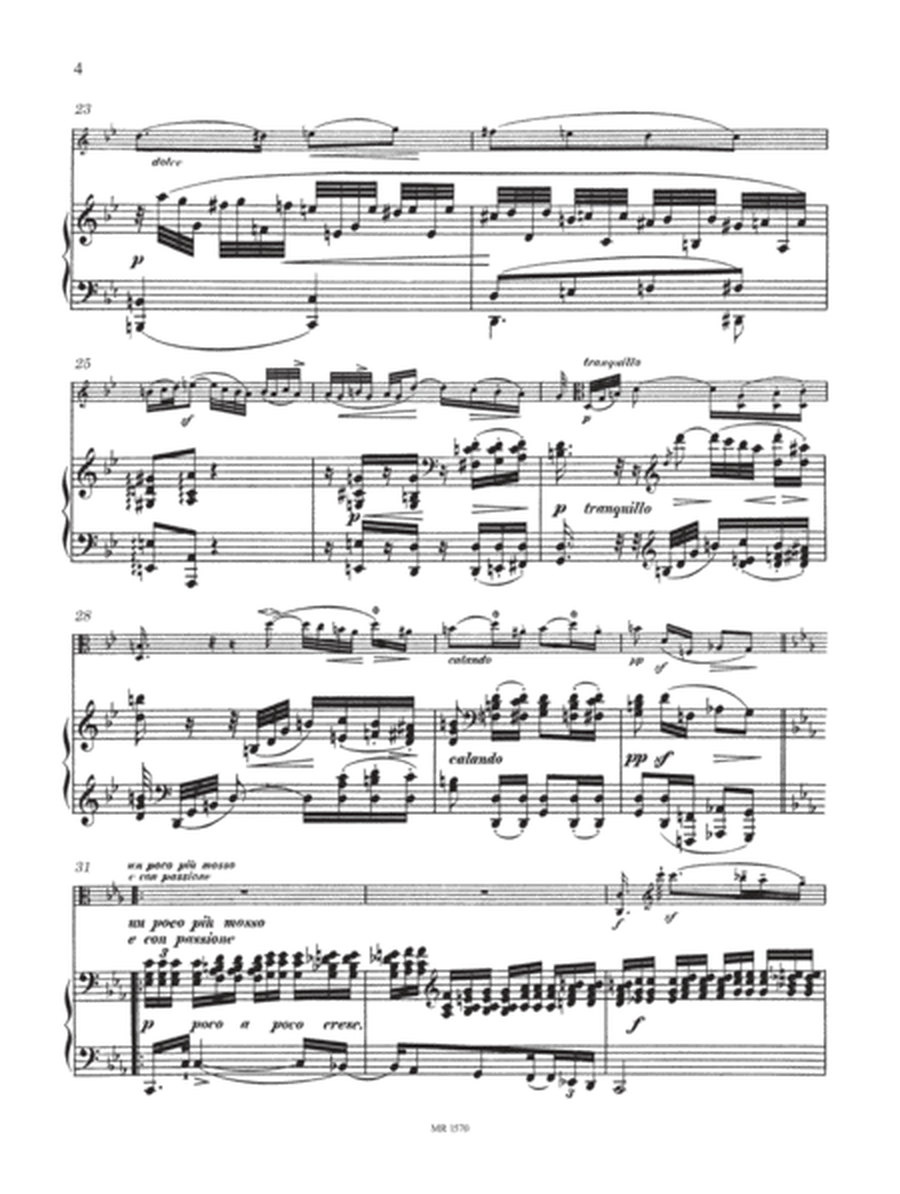
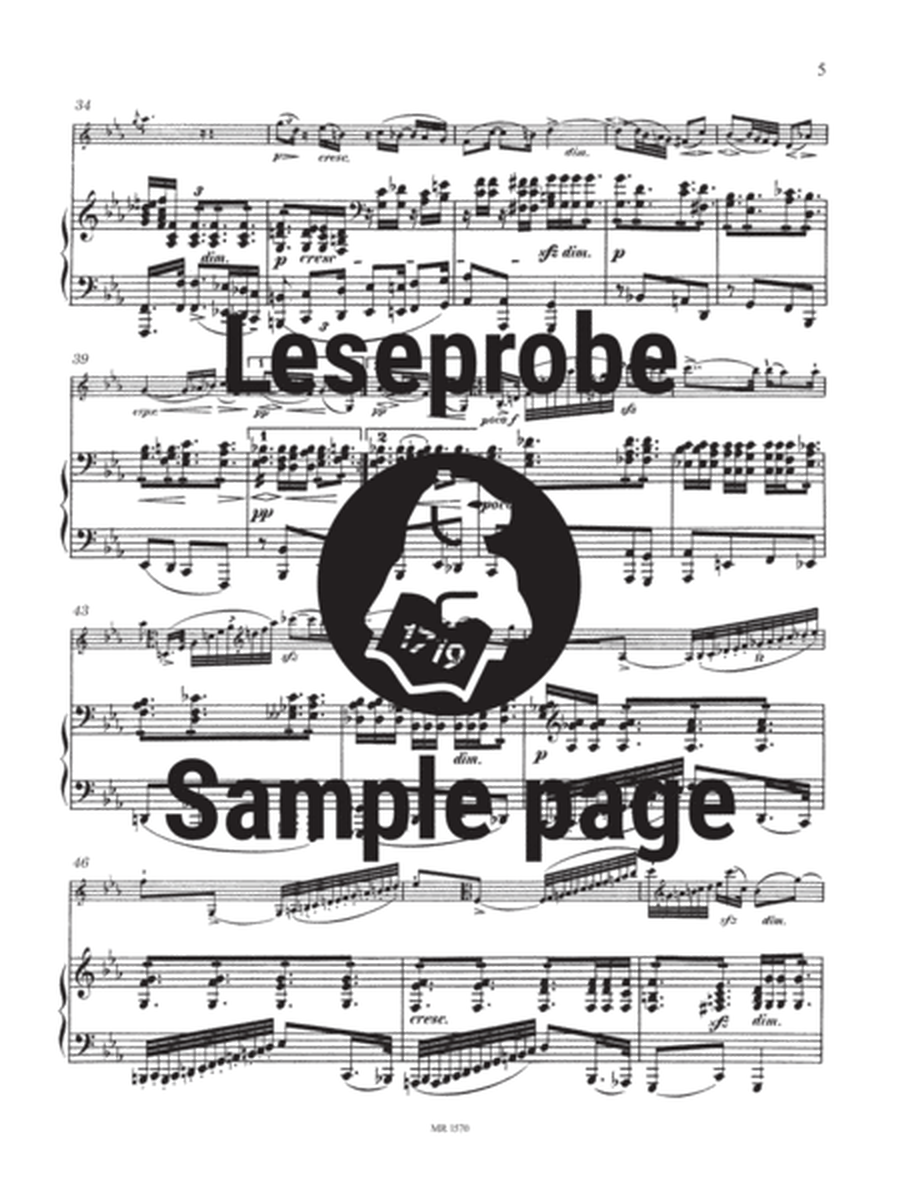
Written around 1870, the Three Romances op. 69 for viola and piano are not amongst Kiel's major chamber works, but they show many of his most positive qualities in a small space. The pieces are well contrasted, but they also react on each other to form one work, rather than three separate pieces. They are beautifully balanced in style and texture between the quite large, slow first movement (Andante con moto), with its broad but restrained main melody and the more impassioned minor middle part, the lighter mood of the second piece (Allegretto semplice, the shortest of the three), and the final appassionato. The balancing concerns also the key scheme of B flat major (with the unusual but convincing C minor in the middle), G major and E minor. This composition is superb for both instruments, separately and as a team, and the work is worth any violist's while to master.
- More by this Composer:
- Friedrich Kiel Friedrich Kiel Piano Friedrich Kiel Piano Accompaniment Friedrich Kiel Piano Solo
- Instrument:
- Piano and Keyboard Piano Accompaniment Strings Viola Viola Solo
- Artists:
- Friedrich Kiel