About Zdenek Fibich
Zdeněk Fibich (1850–1900) was a significant Czech composer of classical music from the second half of the 19th century. Primarily writing in the vein of German Romanticism, he was influenced by composers such as Weber, Mendelssohn, Schumann, and Wagner, yet he also skillfully incorporated Bohemian folk melodies and dance rhythms into his chamber works. Though often overshadowed by his contemporaries Smetana and Dvořák, Fibich was a prolific composer notably recognized for his operas, orchestral pieces, and piano music, and he is considered a master of melodrama, contributing a unique repertoire to Czech music.
- Fibich received a bi-cultural education, being fluent in both German and Czech due to his Czech father and ethnic German Viennese mother, and spending his formative years in Germany, France, and Austria, as well as Bohemia.
- He was a pioneer in Czech music, being the first to write a Czech nationalist tone poem, Záboj, Slavoj a Luděk, which is said to have inspired Smetana's Má vlast. He was also the first to introduce the polka into a chamber work.
- Fibich composed a vast cycle of nearly 400 piano pieces titled "Moods, Impressions, and Reminiscences," which functioned as a personal musical diary chronicling his love for a piano pupil, Anežka Schulzová, who also wrote libretti for his later operas.
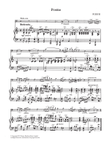
- His most widely recognized short instrumental piece, "Poème," originated from an unnamed piano composition within his "Moods, Impressions, and Reminiscences" cycle, later adapted from his symphonic idyll At Twilight.
Performing Zdeněk Fibich's sheet music offers a rewarding experience for musicians across various skill levels and instruments, particularly pianists, orchestral players, and chamber ensembles. His repertoire includes a rich array of chamber works, symphonies, operas, and a substantial collection of piano pieces, notably the "Moods, Impressions, and Reminiscences" cycle, which contains works accessible to advanced pianists while offering profound musicality. Musicians will find his compositions appealing for their lucid dramatic portrayals, effective melodic lines, and a blend of rich German Romanticism with subtle Czech folk influences, providing a distinctive and engaging voice often overlooked in the broader classical canon.