About William Schuman
William Schuman (1910-1992) was a towering figure in 20th-century American music, renowned as both a prolific composer and an influential arts administrator. His primary musical style is characterized by a distinctive adaptation of European compositional models to American themes, often incorporating elements of jazz and folk traditions into a language that ranged from harmonically conservative to dissonant and polytonal. Schuman's compositions are celebrated for their sharply defined sense of structure, compelling linear development, and dynamic energy, establishing him as one of the most significant and recognized American composers for over half a century.
- Before fully committing to classical composition at age 20, William Schuman initially pursued a business degree at New York University and wrote around forty popular songs, including collaborations with lyricist Frank Loesser.
- He had a profound impact on American music education and administration, serving as President of the Juilliard School from 1945 to 1962, where he founded the acclaimed Juilliard String Quartet, and later as the first President of Lincoln Center for the Performing Arts from 1962 to 1969.
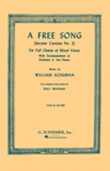
- Schuman was the recipient of the first-ever Pulitzer Prize for Music in 1943 for his secular cantata, "A Free Song," adapted from poems by Walt Whitman. He later received a special Pulitzer Prize in 1985 for his lifetime contributions to American music.
- A lifelong baseball enthusiast, Schuman even penned an opera titled "The Mighty Casey" (1953), based on Ernest Lawrence Thayer's famous poem "Casey at the Bat," reflecting his passion for the sport.
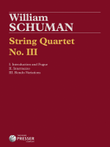
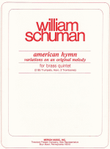
Performing William Schuman's music offers a deeply rewarding experience for musicians across various skill levels, though many of his works are suited for intermediate to advanced players. His extensive catalog includes significant works for orchestra, band, chorus, chamber ensembles, and piano, providing a rich repertoire for diverse instrumentalists and vocalists. Musicians will find his sheet music challenging yet engaging, characterized by vibrant rhythms, dramatic contrasts, and powerful emotional resonance. Schuman's commitment to expressive communication within a modernist framework ensures that his compositions remain vital and profoundly impactful for both performers and audiences.