About Walter Kolneder
Walter Kolneder (1910–1994) was a distinguished Austrian musicologist, violist, and conductor whose extensive work significantly shaped the understanding of music history and performance practices. While an accomplished performer and conductor, his primary impact lies in his scholarly contributions, particularly his detailed analyses of Baroque and early 20th-century composers. His rigorous research and editorial projects established him as a leading authority in musicology, making complex musical traditions accessible to both academics and performers.
- Kolneder received a comprehensive musical education at the Mozarteum in Salzburg, studying conducting, violin, and composition.
- He held several prominent academic leadership positions, including director of the Conservatoire de Luxembourg, director of the Akademie für Tonkunst in Darmstadt, and Rector of the Hochschule für Musik Karlsruhe, where he also founded the Institute for Musicology.
- He was a leading expert on the works of Antonio Vivaldi and Anton Webern, publishing significant studies on both composers, including a book offering a comprehensive study of Webern's life and music.
- His doctoral dissertation from the University of Innsbruck focused on vocal polyphony in the folk music of the Austrian Alpine regions, demonstrating his diverse musical interests beyond the established classical canon.
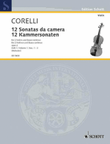
Performing music through the lens of Walter Kolneder's editions and scholarly arrangements offers a profoundly enriching experience for musicians across various skill levels. His meticulous editorial work, often focusing on Baroque instrumental music for instruments like the violin, cello, and basso continuo, provides performers with historically informed and authoritative scores. Musicians, from dedicated students to seasoned professionals, will find his editions rewarding as they offer insights into period performance practices and the structural integrity of these timeless compositions, fostering a deeper connection to the music's original intent and expressive possibilities.