About Vladimir Rebikov
Vladimir Rebikov (1866–1920) was a prominent Russian composer and pianist of the late Romantic and early 20th-century. Recognized as a founding figure among modern Russian musicians, he holds significant importance for his pioneering use of innovative musical techniques. Rebikov actively explored and incorporated elements such as the whole-tone scale, non-functional harmony, and polytonality into his compositions, anticipating many harmonic and structural advancements later associated with Impressionist and modernist composers.
- Rebikov claimed to have originated the use of the whole-tone scale and augmented triad, asserting his priority over Western European composers like Debussy; his piano piece "Les Démons s'amusent" is entirely based on the whole-tone scale.
- He developed new genres, including "Mélomimiques" (short lyrical piano pieces meant to be accompanied by mime) and "Rythmodéclamations" (combining music with rhythmic speech, akin to Sprechstimme).
- From 1901 to 1904 in Moscow, Rebikov managed what is believed to be the first composer-controlled record label, releasing early phonograph recordings of his own works and those of others performed by singers from the Moscow Opera.
- Despite his innovations, Rebikov died feeling largely unrecognized and embittered, believing that composers like Debussy, Scriabin, and Stravinsky had gained fame by appropriating his musical ideas.
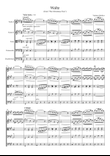
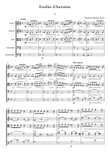
Sheet music for Vladimir Rebikov's compositions offers a fascinating and rewarding experience for musicians of various levels. His repertoire includes lyrical piano miniatures, children's choruses, and songs, providing approachable pieces for intermediate players. For those interested in exploring the evolution of 20th-century music, his more experimental works feature whole-tone scales, quartal and quintal harmonies, and even passages without traditional meter or bar lines. Performing Rebikov's music allows musicians to delve into the unique sound world of a composer who bravely pushed harmonic boundaries, bridging the gap between late Romanticism and early modernism, with his popular waltz from the children's opera "The Christmas Tree" remaining a cherished piece.