Vladimir Rebikoff Sheet Music

About Vladimir Rebikoff

Vladimir Rebikov (also spelled Rebikoff) was a pioneering Russian composer and pianist of the late Romantic and early 20th-century eras, often recognized for his innovative harmonic language and experimental approach to musical form. A significant figure in Russian musical modernism, Rebikov delved into early impressionistic techniques, making him an important, though sometimes overlooked, bridge between the Romantic tradition and the revolutionary sounds of the 20th century.

  • Rebikov is credited with being a significant early innovator in the use of the whole-tone scale, augmented triads, and other advanced harmonies like quartal and quintal chords, preceding many of his more famous European contemporaries in these explorations.
  • He developed unique genres he termed "Mélomimiques," which combined music with mime, and "Rhythmodéclamations," involving rhythmic vocal writing similar to Sprechstimme, aiming for a synthesis of the arts.
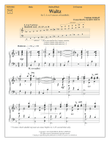
  • His most popular and enduring work is a melodious waltz from his children's opera, The Christmas Tree (Yolka), which has remained a staple in the repertoire.
  • Between 1901 and 1904 in Moscow, Rebikov even ran the first composer-controlled record label, issuing early phonograph records of his own and other composers' works.

Rebikov's sheet music offers a fascinating journey for pianists and musicians interested in the transitional period of music history. His lyrical piano miniatures, often in a late Romantic style with touches of Impressionism, are suitable for intermediate to advanced players seeking expressive and harmonically rich repertoire. Students of music history will find his works particularly rewarding as they offer accessible examples of early whole-tone scales, unresolved harmonies, and experimental forms, making them excellent pieces for exploring the origins of 20th-century modernism.

Search all Vladimir Rebikoff