About Max Bruch
Max Bruch (1838–1920) was a German Romantic composer, conductor, and teacher, renowned for his significant contributions to classical music through his rich melodies and profound emotional depth. He composed over 200 works, encompassing concertos, symphonies, and a wide array of choral pieces. Bruch is widely celebrated for his unwavering commitment to the German Romantic musical tradition, positioning him alongside figures like Johannes Brahms, rather than the "New Music" of Liszt and Wagner. His Violin Concerto No. 1 in G minor, Op. 26, stands as his most famous composition and a cherished staple of the solo violin repertoire.
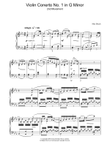
- Max Bruch's Violin Concerto No. 1 in G minor, Op. 26, completed in 1866, is his most celebrated work and remains one of the most frequently performed Romantic violin concertos. Although he composed two other violin concertos, neither achieved the same level of fame.
- Beyond his iconic violin concerto, Bruch also created other enduring works, including "Kol Nidrei" for cello and orchestra, which is based on Jewish liturgical themes, and the "Scottish Fantasy" for violin and orchestra, notable for its incorporation of Scottish folk melodies.
- Bruch had a distinguished career as an educator, serving as a professor of composition at the Berlin Hochschule für Musik from 1890 until his retirement in 1910. His students included notable figures like Ralph Vaughan Williams.
- Despite the immense popularity of his First Violin Concerto, Bruch sometimes expressed frustration that it overshadowed his other compositions, once writing, "I cannot listen to this concerto any more – did I perhaps write just this one?".
Max Bruch's sheet music offers a rewarding experience for intermediate to advanced musicians, particularly violinists, cellists, and those involved in orchestral or choral ensembles. Performers can explore his highly regarded concertos, such as the Violin Concerto No. 1 and the "Kol Nidrei" for cello, as well as his orchestral works and choral compositions. His music is characterized by its lyrical beauty, rich harmonies, and deep emotional resonance, offering performers the opportunity to engage with expressive melodies and technically brilliant passages.