About Louis Bourgeois
Louis Bourgeois (c. 1510 – 1559) was a prominent French composer and music theorist of the Renaissance era, primarily celebrated for his profound contributions to Calvinist hymnody. He played a pivotal role in shaping the musical landscape of the Reformation, most notably through his work on the Genevan Psalter. His enduring legacy is perhaps best encapsulated by his widely attributed melody for the "Old 100th," also known as the Doxology, a tune that has become one of the most famous and universally sung in all of Christendom.
- Bourgeois moved to Geneva around 1541, serving as cantor and master of the choristers under the pastoral leadership of John Calvin, and was instrumental in teaching new psalm tunes to the congregation.
- He was briefly imprisoned in December 1551 for altering the tunes of some well-known psalms without official authorization, but was released the following day due to the personal intervention of John Calvin.
- In 1550, Bourgeois published "Le Droict Chemin de Musique" (The Direct Road to Music), which was a significant didactic manual on singing and sight-reading in French.
- While his original compositions for the Genevan Psalter were monophonic, adhering to Calvin's preference for single-part music, Bourgeois also created four-part harmonizations intended for private singing and playing at home.
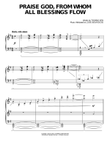
Performing the music of Louis Bourgeois offers a unique connection to the foundations of Protestant church music and the rich heritage of the Renaissance. His melodies, often simple yet profoundly moving, are suitable for a wide range of musicians, from beginner vocalists and instrumentalists to intermediate choirs and ensembles. Sheet music for his works, particularly arrangements of the Doxology and other hymns, is readily available for instruments such as piano, organ, and various vocal settings, making them accessible for church services, personal reflection, and educational purposes. The rewarding experience lies in performing historically significant tunes that continue to resonate with audiences, offering both musical beauty and spiritual depth.