About Leonard Cohen
Leonard Cohen was a Canadian singer-songwriter, poet, and novelist, widely revered for his deeply contemplative and profound body of work. His primary musical style is often categorized as folk and folk-rock, though he masterfully incorporated elements of country, pop, jazz, and even electro-pop throughout his extensive career. Cohen’s lasting significance stems from his distinctive baritone voice and poetic lyricism, which explored complex themes of love, loss, faith, isolation, and redemption with unparalleled eloquence and emotional depth.
- Cohen embarked on his music career relatively late, at the age of 32, having already established himself as a respected poet and novelist for more than a decade prior.
- His most famous composition, "Hallelujah," took him roughly two years to write, with approximately 80 verses, and was initially rejected by his American record label for release.
- In 1996, Cohen was ordained as a Rinzai Zen Buddhist monk, adopting the Dharma name Jikan, meaning "silence," after spending five years living in seclusion at the Mt. Baldy Zen Center.
- Despite his initial shyness about his singing and guitar playing abilities, his songs have garnered immense admiration and have been covered by over 900 artists worldwide.
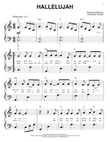
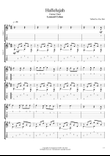
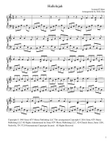
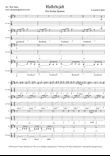
Performing Leonard Cohen’s music offers a profoundly enriching experience for musicians of various skill levels and instrumental focuses, including piano, guitar, and voice. His sheet music, available from beginner to advanced arrangements, allows performers to connect with the intricate beauty of his melodies and the masterful construction of his lyrics. Delving into Cohen's compositions is rewarding as it provides an opportunity to explore narratives that are at once melancholic and vulnerable, yet deeply hopeful, offering a unique avenue for emotional expression and musical interpretation.