About Karel Husa
Karel Husa (1921–2016) was a distinguished Czech-born American classical composer and conductor, celebrated for his innovative musical language that seamlessly blended elements of serialism, neoclassicism, and avant-garde techniques. His compositions are characterized by their dramatic power, profound expressiveness, and often deeply personal narratives. Husa's significant contributions to 20th and 21st-century music earned him prestigious accolades, cementing his place as one of the era's major composers, particularly recognized for his influential works for wind ensemble and orchestra.
- Karel Husa initially pursued engineering studies in Prague but pivoted to music when universities were closed during the Nazi occupation of Czechoslovakia, enrolling in the Prague Conservatory.
- He was awarded the 1969 Pulitzer Prize for Music for his String Quartet No. 3 and the 1993 Grawemeyer Award for Music Composition for his Concerto for Cello and Orchestra.
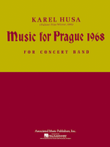
- Husa's most renowned composition, "Music for Prague 1968," was a powerful artistic response to the Soviet bloc invasion of his homeland and has since been performed over 10,000 times worldwide by both wind ensembles and orchestras.
- He served as a professor at Cornell University from 1954 until his retirement in 1992, influencing generations of aspiring composers and musicians.
Performing Karel Husa's music offers a profoundly rewarding experience for musicians seeking repertoire with depth and emotional resonance. His extensive catalog includes works for a wide array of ensembles, from demanding concert band and orchestral pieces (often graded 4-5 for difficulty) to intricate chamber music, solo piano works, and vocal compositions, suitable for intermediate to advanced players. Musicians will find his sheet music challenging yet engaging, as it encourages exploration of modern compositional techniques and provides a powerful vehicle for artistic expression, often conveying themes of freedom and human experience.