About Hector Berlioz
Hector Berlioz (1803-1869) was a pivotal French Romantic composer and conductor, renowned for his innovative approach to orchestration, programmatic music, and dramatic flair. He is celebrated as one of the most influential figures in the development of 19th-century classical music, expanding the scope of the orchestra and profoundly shaping the Romantic movement with his vivid musical narratives and expressive harmonies.
- Berlioz initially pursued a medical career, a path his physician father encouraged, before ultimately abandoning it to dedicate his life to music.
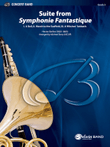
- His revolutionary "Symphonie fantastique" (1830) is a programmatic symphony that tells a vivid story, famously incorporating an "idée fixe" (a recurring musical theme) to represent the object of the artist's obsession, inspired by his unrequited love for the Irish actress Harriet Smithson.
- Berlioz authored the influential "Treatise on Instrumentation and Modern Orchestration" (1844), a seminal work that cataloged instruments and explored their expressive capabilities, significantly impacting generations of composers, including Wagner, Mahler, and Rimsky-Korsakov.
- Despite his innovative genius, he never learned to play the piano proficiently, which was unusual for a composer of his era, instead conceiving musical ideas directly for the orchestra.
Berlioz's sheet music offers a thrilling challenge for advanced musicians and ensembles. His works are particularly suited for orchestras, choirs, and solo instrumentalists (especially strings and winds) and vocalists who thrive on dramatic expression and technical complexity. Performing Berlioz provides a rewarding experience, allowing musicians to delve into expansive melodies, intricate rhythms, and groundbreaking orchestral textures that push the boundaries of traditional performance and offer a deep connection to the rich narratives embedded within his scores.