Gottfried August Homilius Sheet Music

About Gottfried August Homilius

Gottfried August Homilius was an eminent German composer, organist, and cantor of the mid-to-late 18th century. He is recognized as a significant church composer of the generation immediately following Johann Sebastian Bach, and a primary exponent of the empfindsamer Stil (sensitive style). His extensive output predominantly comprises sacred vocal works, including numerous passions, oratorios, cantatas, and motets, which showcase a transitional musical language bridging the High Baroque and early Classical eras.

  • Homilius studied law at Leipzig University and also pursued studies in organ and composition. Contemporary accounts, notably by Johann Adam Hiller and J.N. Forkel, suggest he was a pupil of Johann Sebastian Bach during his time in Leipzig.
  • He held highly influential musical positions in Dresden, serving as organist at the Frauenkirche from 1742. From 1755 until his death, he was the esteemed Kreuzkantor and music director for Dresden's three principal churches: the Kreuzkirche, Sophienkirche, and Frauenkirche.
  • Homilius was a prolific composer, known for over 150 cantatas, more than 60 motets, and numerous Passions and oratorios, including a notable St. Matthew Passion composed in a preclassical style reminiscent of C.P.E. Bach.
  • His vocal compositions, particularly his motets, were widely popular and performed well into the 19th century, with many copies of his works circulated, reflecting his significant influence.

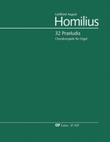
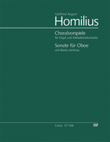
Performing the music of Gottfried August Homilius offers a rewarding experience for musicians seeking to explore the expressive depth of 18th-century German church music. His sheet music, available for various skill levels from easy to advanced, includes challenging and beautiful organ chorale preludes, as well as rich choral works like motets and cantatas. Performers, particularly vocal ensembles and organists, will find his compositions, characterized by a lyrical melodic style and balanced textures, to be both musically engaging and historically insightful, providing a vital link between the Baroque mastery of Bach and the nascent Classical style.

Search all Gottfried August Homilius