Top Sellers
-
![Classical Hymn Blends, BOOK 1 (A Collection of 14 Piano Solo Medleys)]()
-
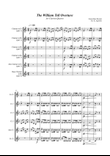
![William Tell Overture - For Clarinet Quartet]()
$12.99 $11.69
-
![Overture from William Tell-the Gallop- for Brass Quintet]()
-
![William Tell Overture for Flute and Double Bass Duet]()
-
![The Barber of Seville in Full Score]()



-
![William Tell Overture - String Quartet (Full Score and Parts)]()
-
![William Tell Overture (Easy Piano Solo)]()
-
![Largo al factotum]()
$3.99
-
![Five Great Overtures in Full Score]()
$24.95 $22.46
-
![Crucifixus - Petite Messe Solennelle (Ab Major)]()


-
![ONWARD, CHRISTIAN SOLDIERS with William Tell Overture by Rossini]()
-
![Overture from the Barber of Seville: 1st Violin]()
$5.99 $5.39
-
![Album for Adolescent Children, Part 1: from Peches de Vieillesse (Sins of Old Age), Vol. 5]()
-
![Album for Adolescent Children, Part 2: from Peches de Vieillesse (Sins of Old Age), Vol. 5]()
-
![Cottage Album, Part 1: from Peches de Vieillesse (Sins of Old Age), Vol. 7]()