About Friedrich von Flotow
Friedrich von Flotow (1812–1883) was a German Romantic composer best known for his operas, particularly "Martha." His musical style often blended German lyrical Romanticism with the charm and accessibility of French opéra comique, making his works widely popular in the 19th century. He holds significance as one of the notable German opera composers bridging the era between Carl Maria von Weber and Richard Wagner, contributing tuneful and often lighthearted pieces to the operatic repertoire.
- Despite his German nationality, Flotow received his musical training in Paris, studying with Anton Reicha, and was heavily influenced by French composers like Auber and Rossini.
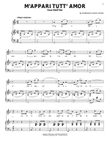
- His most enduring work, the opera "Martha," premiered in Vienna in 1847 and features the beloved aria "Ach! so fromm, ach! so traut" (also known by its Italian title "M'apparì tutt'amor") and incorporates the Irish folk song "The Last Rose of Summer."
- Flotow composed approximately 30 operas in total, though most, apart from "Martha" and occasionally "Alessandro Stradella," have largely fallen into obscurity.
- He held the significant administrative position of Intendant of the Court Theatre in Schwerin from 1856 to 1863.
Playing the music of Friedrich von Flotow offers a delightful and rewarding experience for musicians. His operatic works, especially "Martha," are well-suited for intermediate to advanced singers, providing opportunities to explore beautiful, lyrical vocal lines and engaging dramatic narratives. Instrumentalists, particularly pianists, can find joy in performing piano reductions of his overtures and popular arias, which are rich in melody and often technically accessible. Ensemble musicians can also discover charming chamber music and excerpts from his ballets. Flotow's music, with its elegant melodies and accessible romantic style, provides a wonderful entry point into 19th-century German and French operatic traditions, offering expressive depth and a sense of historical charm that remains appealing to performers and audiences alike.