About Franz Biebl
Franz Biebl (1906–2001) was a distinguished German composer of classical music, celebrated primarily for his profound contributions to choral literature. While he composed numerous works, his legacy is largely defined by his globally renowned setting of "Ave Maria," which has become a staple in the repertoire of choirs worldwide. Biebl's compositions often reflect a rich, accessible style that deeply resonates with both performers and audiences, solidifying his significance in 20th-century sacred music.
- Biebl studied composition at the Musikhochschule in Munich and held positions as a choir director at St. Maria in München-Thalkirchen and as an assistant professor of choral music at the Mozarteum in Salzburg.
- During World War II, Biebl was drafted into the military and subsequently became a prisoner of war in the United States, an experience that introduced him to American culture and folk songs.
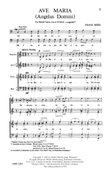
- His most famous work, the "Ave Maria" (1964), was originally composed for a firemen's chorus with male voices and gained international acclaim after being introduced to the United States by the Cornell University Glee Club in 1970.
- After the war, Biebl served as a choral music consultant for Bavarian Broadcasting, where he actively promoted and facilitated choral programming and encouraged amateur choral singing.
Performing Franz Biebl's sheet music offers a deeply rewarding experience for choral ensembles of various configurations, including mixed (SATB), women's (SSA), and men's choirs. His works are suitable for intermediate to advanced choirs looking to explore lush harmonies and expressive vocal lines. Pieces like his "Ave Maria" are particularly cherished for their rich chord structures, dynamic crescendos, and an antiphonal style that creates a compelling dialogue between voices, making them both challenging and immensely gratifying to master.