About Claude Debussy
Achille Claude Debussy (1862–1918) was a groundbreaking French composer, widely regarded as a pivotal figure in ushering in 20th-century music. While he famously rejected the label, his distinctive style is often termed musical Impressionism, characterized by its dreamlike quality, emphasis on tone color, and atmospheric harmonies. Debussy's revolutionary approach to composition offered a significant alternative to the prevailing German Romantic tradition, profoundly influencing subsequent generations of composers.
- Despite coming from a family with modest means and little cultural involvement, Debussy exhibited sufficient musical talent to be admitted to the prestigious Conservatoire de Paris at the age of ten.
- He was deeply influenced by the Javanese gamelan music he encountered at the 1889 Paris Exposition Universelle, and echoes of these exotic scales and textures can be heard in works such as "Pagodes" from his piano suite Estampes.
- Debussy vigorously rejected the term "Impressionist" to describe his music, preferring to focus on the unique soundscapes and the feeling his compositions evoked rather than an association with visual art.
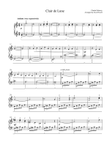
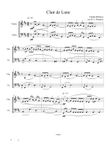
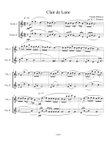
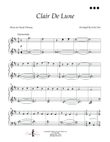
- His most iconic and frequently performed composition is "Clair de lune," the third movement from his Suite Bergamasque, which beautifully exemplifies his lyrical and atmospheric style.
Performing Debussy's music offers a uniquely rewarding experience for musicians, particularly pianists. While many of his works, such as the Études and most Préludes, lean towards advanced skill levels due to their intricate textures, nuanced pedaling, and interpretive demands, pieces like "Clair de lune" are available in simplified versions for intermediate players. His Children's Corner suite also includes pieces at easier difficulty levels, such as "Jimbo's Lullaby" and "The Little Shepherd," suitable for early advanced students. Debussy's compositions, spanning solo piano, orchestral, chamber, and vocal works, challenge traditional musical structures, inviting performers to explore innovative harmonies, fluid rhythms, and a rich palette of sound colors. Playing his music is highly rewarding as it fosters a deep connection with atmospheric beauty and expressive melodies, creating a sound that is both intellectually stimulating and emotionally powerful.